Cedar Wood Bark Uses Benefits and Tips
Cedar bark is the reddish-brown, fibrous shedding from cedar trees that most people either sweep off the driveway or buy by the bag at a garden center — and it turns out to be useful in both directions. The same natural oils that make cedar smell the way it does also happen to repel moths, resist rot, and slow-release nutrients into garden soil as it breaks down. Here’s how to actually put it to work.
Why Cedar Bark Works: The Chemistry in Plain English
Easiest Way to Get the Moth-Repellent Benefit
 |
HOUNDSBAY Cedar Blocks for Clothes Storage (12-Pack) If you just want the pest-control and fragrance benefits of cedar bark without collecting and processing your own, this is the low-effort version — 100% aromatic cedar, ready to drop in a drawer or closet.
|
Cedar trees defend themselves with a cocktail of volatile compounds locked into the bark and outer wood: thujaplicins, cedrol, and terpenes like alpha-pinene and beta-pinene. Thujaplicins are the real workhorses — they disrupt the life cycle of moths, carpet beetles, and silverfish, and they also slow the growth of mold and mildew. Cedrol is what gives cedar its calming, woody smell and is the compound most often cited in aromatherapy research for a mild relaxing effect. None of this works by poisoning anything the way mothballs do; it’s an olfactory deterrent, which is why it’s considered safe around kids and pets in normal household amounts.
Not every cedar is equally strong. Eastern Red Cedar (Juniperus virginiana) has the highest oil content and the sharpest scent, which is why it’s the species used in cedar closets, chests, and most commercial cedar blocks. Western Red Cedar (Thuja plicata) carries less oil but is prized instead for rot resistance, which is why it ends up as shingles and fencing rather than moth-repellent sachets. Older bark and inner-bark layers also tend to hold more concentrated oil than young, outer bark — one reason a fresh bag of cedar shavings smells stronger than a scrap of bark that’s been sitting in a shed for a year.
Cedar Bark for Pest Control and Home Fragrance
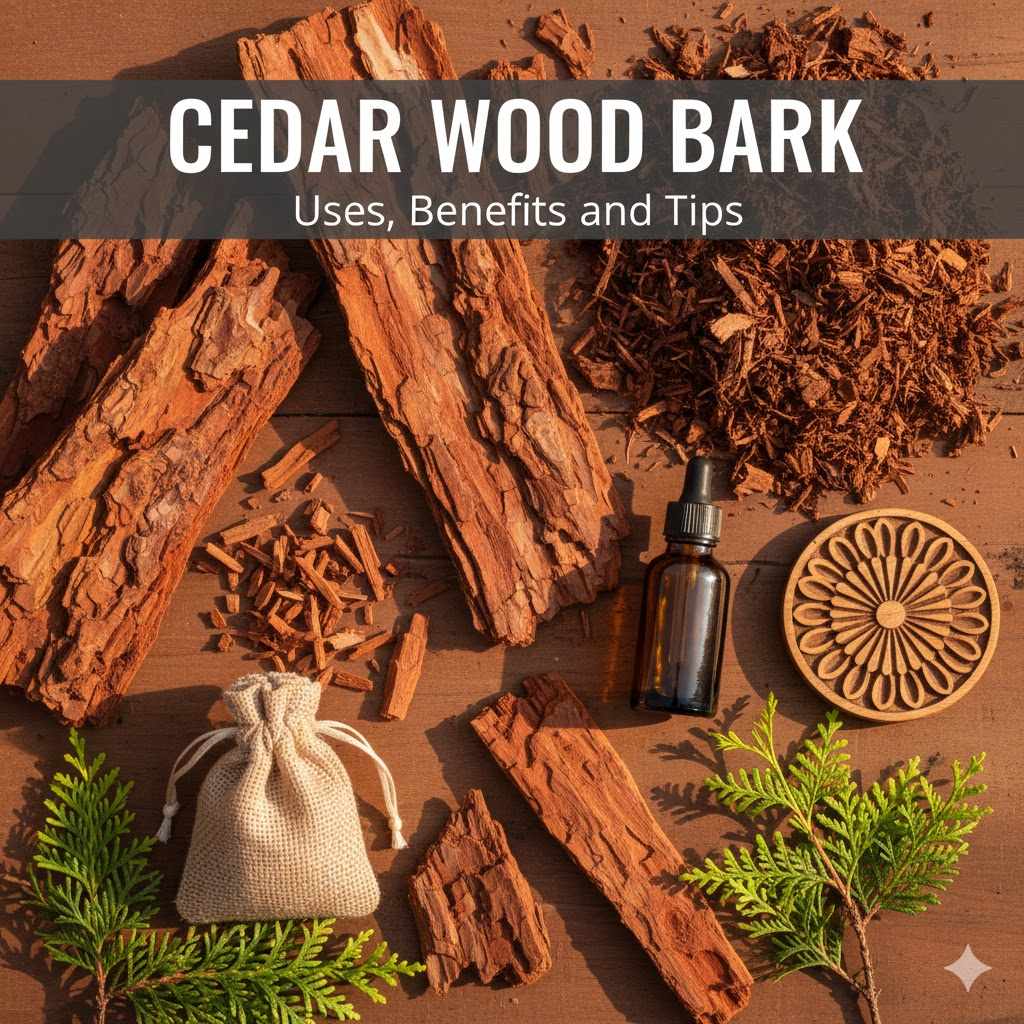
The classic use is a cedar sachet: fill a small muslin or cotton pouch with cedar shavings or chips, tie it off, and tuck it into a drawer, closet, or suitcase. Solid cedar blocks and balls do the same job with less mess and a longer working life. For a stronger, faster hit of scent, a few drops of cedar essential oil in a diffuser will fill a room without any wood at all. Cedar potpourri — shavings mixed with dried flowers and a splash of essential oil — is the decorative version of the same idea.
Whatever form you use, the scent fades as the surface oils evaporate, not because the cedar is used up. A light pass with fine-grit sandpaper exposes fresh wood fibers and restores most of the original smell in under a minute of work. Do this every two to four months, or as soon as you notice the scent has faded, and a set of cedar blocks can realistically last several years before you need to replace them.
- Cedar sachets: shavings or chips in a cloth pouch, for drawers, closets, and luggage
- Cedar blocks or balls: solid pieces you can sand and reuse for years
- Cedar essential oil: fastest way to scent a whole room via a diffuser
- Cedar potpourri: shavings plus dried flowers and a few drops of oil, for a decorative bowl
Using Cedar Bark as Mulch
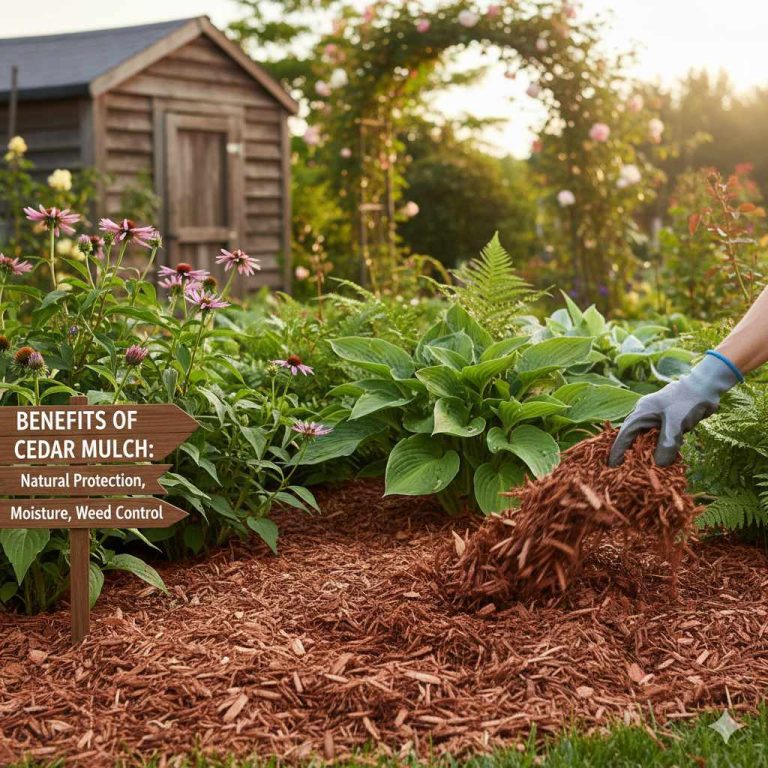
Outside, cedar bark earns its keep as mulch. A 2-3 inch layer slows moisture loss from the soil, which cuts down how often you need to water in hot weather, and it blocks enough light to keep most weed seeds from germinating. Because cedar bark is dense and resists decay, it breaks down slower than bark mulches from softer woods — often lasting a full season or two longer before it needs topping up — and as it does finally decompose, it adds organic matter back into the soil. The same natural oils that repel moths indoors give some resistance to soil-borne pests and fungal issues in the garden bed, and the reddish-brown color reads as a deliberate landscaping choice rather than bare dirt.
- Keep mulch 2-3 inches deep and pulled back from direct contact with stems and trunks, where trapped moisture invites rot
- Don’t rely on mulch alone for drainage — cedar bark holds moisture, but waterlogged beds still need real drainage underneath
- Plan to top up once a year or every other year, depending on how fast it breaks down in your climate
- Shredded or chipped bark suppresses weeds better than large chunks; save the bigger pieces for pathways
Simple Cedar Bark DIY Projects
Beyond sachets, flat pieces of cedar bark sand down into usable coasters or trivets — seal them with a food-safe finish if they’ll sit under hot dishes. Small, dry bark scraps also make surprisingly good fire starters, since the same oils that carry the scent ignite easily. If you have access to a cedar tree that’s already shedding, cut liner pieces to fit the bottom of a drawer for a passive, permanent version of a sachet.
- Cedar drawer liners: bark cut to fit the drawer bottom, for ongoing freshening
- Cedar fire starters: small dry scraps, easy to ignite thanks to the natural oils
- Cedar coasters or trivets: sanded flat bark pieces, sealed if used for hot dishes
Where to Get It
If you have access to cedar trees, naturally shed bark on the ground (especially after a storm) is free for the taking — just don’t strip bark off a living tree, which can seriously injure it. Garden centers and landscaping suppliers sell cedar mulch by the bag or by the yard for outdoor use. For sachets, blocks, or essential oil, craft stores and online retailers carry pre-packaged options; look for products labeled 100% cedar with no added synthetic fragrance if you want the real repellent effect rather than a scented-only imitation.
Frequently Asked Questions
What is the best way to use cedar wood bark for moth repellent?
Cedar shavings or solid blocks placed directly in closets, drawers, and storage containers work best. Lightly sand the surface every few months to release fresh oil and keep the repellent effect active.
Can cedar wood bark be used as mulch in vegetable gardens?
Yes. It retains soil moisture, suppresses weeds, and its natural oils deter some soil-dwelling pests. Just confirm the bark hasn’t come from chemically treated wood before using it near edible plants.
How long does the scent of cedar wood bark last?
Anywhere from several months to a year or more, depending on the cedar species and storage conditions. Sanding the surface periodically refreshes the aroma and extends the useful life well beyond that.
Are there any safety concerns with using cedar wood bark around pets?
Cedar bark is generally considered safe around pets, but a pet that chews on it could get an upset stomach from the splinters or oils. Keep cedar products out of reach of pets known to chew on unusual objects.
Can I use cedar wood bark indoors for air freshening?
Yes — sachets, solid blocks, or a few drops of cedar essential oil in a diffuser all work well as a natural alternative to synthetic air fresheners, without releasing the VOCs those products typically add to indoor air.
The Bottom Line
Cedar bark’s value comes down to one thing: the same natural oils that give it a woody scent also happen to repel moths, resist decay, and slowly feed the soil as they break down. Used fresh and refreshed occasionally with a light sanding, a batch of cedar bark, shavings, or blocks can protect stored clothing and dress up a garden bed for years before it needs replacing.
Sponsored / affiliate links. As an Amazon Associate I earn from qualifying purchases. I may earn additional commission from eligible campaigns.