How Much Does a Cedar Pergola Cost?
A cedar pergola is often reported at roughly $3,000 to $12,000 installed, while a DIY build often runs about $1,500 to $6,000. In most cases, the price is driven by footprint, roof style, and footing work. Skipping footing and finish costs often leads to sagging posts, rot, and repair bills that can exceed the savings. This guide breaks down materials, labor, foundations, and upkeep so you can compare quotes with a clear budget.
Typical cost range

For a quick frame of reference, a cedar pergola often lands around $25 to $70 per square foot installed, with simpler open-rafter builds often on the lower end and attached or more complex builds often on the higher end. Small footprints and easy site access keep pricing down. Larger spans, deeper footings, and electrical work move it up fast.
Most Utah homeowners spend $4,000-$8,000 for a professionally built 10×12 cedar pergola. A custom cedar pergola, ~10×12, installed costs $4,000-$8,000, while a 12×16 cedar pergola in NYC starts around $8,000 installed. Larger custom work or attached builds often lands at $8,000-$15,000+.
What changes the total fastest
Size, attachment, and roof style usually move the price first. Post count changes lumber, hardware, and footing cost. Then labor rises with cutting, leveling, flashing, and code work. Finishes, electrical, and poor access can add more than many homeowners expect.
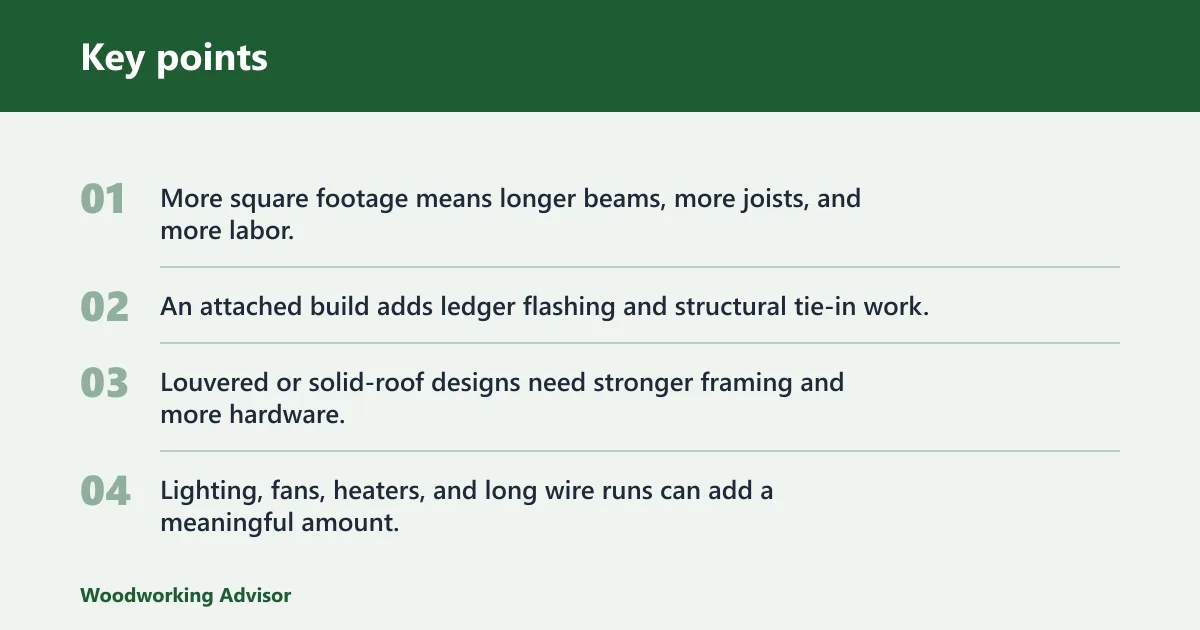
- More square footage means longer beams, more joists, and more labor.
- An attached build adds ledger flashing and structural tie-in work.
- Louvered or solid-roof designs need stronger framing and more hardware.
- Lighting, fans, heaters, and long wire runs can add a meaningful amount.
What you get in this cedar pergola worksheet
This worksheet breaks a cedar pergola into separate line items so you can see where money goes. It includes cedar lumber, hardware, concrete footings, stain or sealer, labor, permit allowance, and optional electrical. The estimates below are meant as planning numbers, not fixed quotes.
How to use the 10×10, 10×12, and 12×16 estimates
Start with the footprint that matches your yard and shade goal. Then compare the line items to a contractor quote or your own DIY parts list. If your build is attached, add ledger flashing and extra structural labor. If your site is sloped or hard to reach, raise the footing and labor allowance.
| Line item | 10×10 | 10×12 | 12×16 |
|---|---|---|---|
| Cedar lumber | $900-$1,600 | $1,100-$1,900 | $1,600-$2,800 |
| Hardware and fasteners | $250-$500 | $300-$600 | $400-$800 |
| Concrete footings | $500-$1,000 | $600-$1,200 | $900-$1,800 |
| Stain or sealer | $150-$300 | $175-$350 | $250-$500 |
| Labor | $1,500-$3,000 | $1,800-$3,800 | $3,000-$6,000 |
| Permit allowance | $100-$500 | $100-$600 | $150-$700 |
| Optional electrical | $0-$1,200 | $0-$1,500 | $0-$2,500 |
| Estimated total | $3,400-$8,100 | $4,075-$9,950 | $6,300-$15,100 |
What the worksheet leaves out
Some quotes include demolition, new concrete pads, drainage fixes, or stain upgrades. Others leave them out. The biggest budget misses are oversized beams, hard digging, utility conflicts, and electrical runs that stretch far from the panel. Those items can move a project out of the “simple pergola” category.
- Measure the footprint and decide whether the pergola is freestanding or attached.
- Check whether the site needs new footings, trenching, or slope correction.
- Add hardware, stain, and permit costs before comparing bids.
- Price electrical only after you know the fixture count and wire distance.
How much does a cedar pergola cost installed?
Installed cedar pergolas usually fall into a broad range because labor, footing work, and roof style change quickly from one job to the next. A small freestanding build can start near $4,800 to $9,000, while a medium freestanding 10×16 cedar pergola is priced at $9,000 to $16,000. Larger custom or attached work often costs more.
Freestanding pricing
Freestanding pergolas avoid ledger flashing and house tie-ins, so the build is usually simpler. Footing costs typically add $1,200 to $2,500 for a four-post freestanding pergola. A small freestanding cedar pergola, 8×10, is priced at $4,800 to $9,000, and a large freestanding cedar pergola, 12×20, is priced at $12,000 to $22,000.
Attached pricing
Attached pergolas need structural connection work, flashing, and careful load transfer to the house framing. That extra labor is why attached custom builds often sit in the $8,000-$15,000+ band. If the wall assembly needs reinforcement or the siding must be opened and reworked, the total climbs again.
Why labor and hardware push the total up
Cedar still needs steel connectors, anchors, structural screws, and post bases. Labor covers layout, digging, concrete placement, beam cuts, alignment, and finish work. A simple frame is quick to assemble; a level, code-ready structure is not. That gap shows up in the invoice.
What drives cedar pergola pricing?
Three items usually drive cedar pergola pricing more than anything else: size, roof style, and site conditions. A 10×10 open-rafter build is one thing. A 12×16 attached structure with lighting and a difficult footing layout is another. Material grade and finish choices add a second layer of cost.
Size and post count
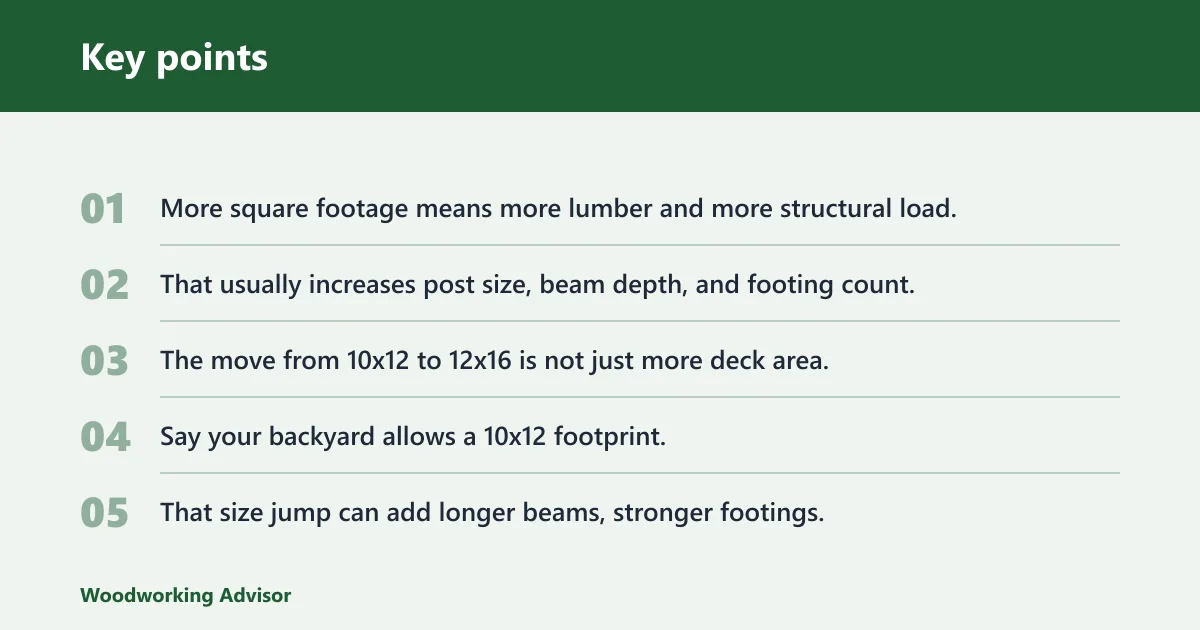
More square footage means more lumber and more structural load. That usually increases post size, beam depth, and footing count. The move from 10×12 to 12×16 is not just more deck area; it often changes the whole framing package.
Say your backyard allows a 10×12 footprint, but you want a 12×16 span because the dining table needs more clearance. That size jump can add longer beams, stronger footings, and higher labor even if the style stays simple.
Roof style and beam layout
Open slats and classic open-rafter designs are the least expensive because they use less material and simpler carpentry. Lattice adds more cutting and fastening. Retractable canopies and louvered roofs cost more because the system includes extra parts, tighter tolerances, and more installation time. A solid-roof pavilion is a different budget tier altogether.
A classic open-rafter pergola ranges from $3,500 to $16,000. A louvered pergola ranges from $12,000 to $35,000. For broader material comparison, a cedar or wood pergola for comparison runs $12,000 to $30,000 installed, while a fixed-roof aluminum pergola runs $15,000 to $30,000 installed.
Site prep, access, and finishes
Level ground is cheaper than a sloped yard. Easy access is cheaper than hauling materials through a narrow side yard. Good drainage is cheaper than digging around buried obstructions. Finish work also matters, because stain or sealer adds both material and labor.
Cedar pergola materials and kit options
Cedar is popular because it resists rot better than many common softwoods, works cleanly with hand and power tools, and takes stain well. Common species sold for outdoor builds include Western red cedar and similar cedar grades, though availability changes by region. Not all cedar boards are equal, so clear grades and straighter stock usually cost more.
Cedar species and performance
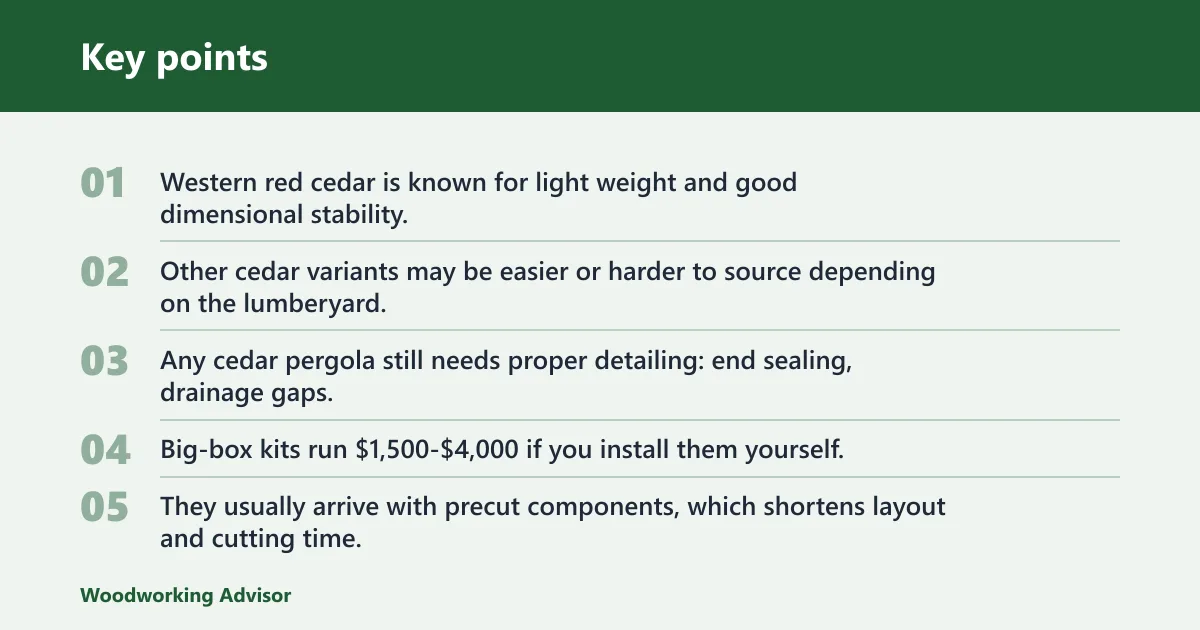
Western red cedar is known for light weight and good dimensional stability. Other cedar variants may be easier or harder to source depending on the lumberyard. Any cedar pergola still needs proper detailing: end sealing, drainage gaps, and finish maintenance if you want the structure to age evenly.
Pergola kit price and assembly factors
Big-box kits run $1,500-$4,000 if you install them yourself. They usually arrive with precut components, which shortens layout and cutting time. Assembly is still demanding because you have to square the frame, anchor the posts, and confirm the structure meets local code.
Should I buy a kit or hire a builder? Buy a kit if you want a smaller open-slat pergola and can handle anchoring, layout, and basic carpentry. Hire a builder if you need attached framing, custom sizing, difficult footings, or a permit that requires structural details.
Anchoring and fastening requirements
Even a kit needs a real foundation. Most require post anchors or footings, not just surface brackets. Hardware quality matters because cedar framing can split if fasteners are undersized or placed poorly. For a taller build, better anchors and heavier connectors reduce movement over time.
Do footings and permits raise the price?
Yes. Footings and permits can add a real chunk to the budget, especially for a freestanding structure with deep post support or any pergola tied to a house. Footings must reach the depth your local code requires, often based on frost depth. Attached builds also trigger structural review in many areas.
Concrete footing depth and frost line
Footing depth matters because shallow piers can shift with freeze-thaw movement. In cold climates, the footing bottom must generally sit below the frost line. That is why digging, concrete volume, and inspection requirements can change from one region to the next.
Do footings and permits raise the price? Yes, because they are structural items, not optional extras. Concrete footing costs typically add $1,200 to $2,500 for a four-post freestanding pergola, and deeper holes or poor soil can push that higher.
Permit triggers for posts and attachments
Many municipalities require permits for attached structures, larger footprints, or any build with electrical. Freestanding pergolas may also need permits once they cross a size threshold or sit close to a property line. Local rules vary, so the permit allowance in your budget should not be zero by default.
Ledger flashing and structural connections
An attached pergola usually needs ledger flashing to keep water out of the wall assembly and proper structural connection to transfer load safely. That adds framing labor and inspection risk. It also increases the chance that the contractor will need to open siding or adjust existing trim.
Cedar pergola maintenance costs
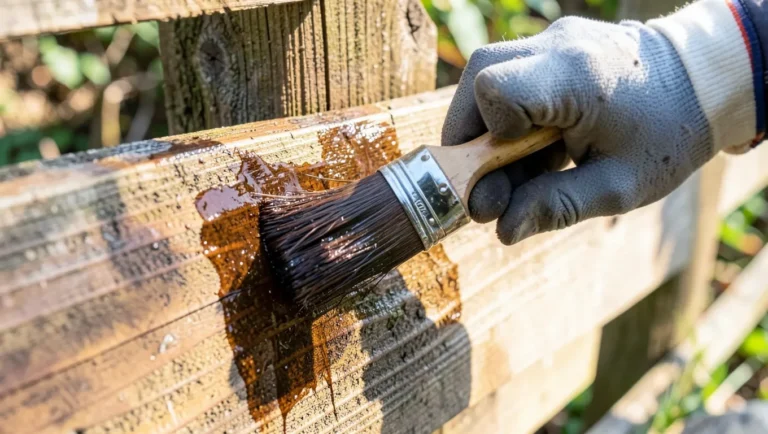
Cedar is not maintenance-free. Most cedar pergolas need stain or sealer every 2 to 4 years, depending on sun, rain, and finish quality. That upkeep protects appearance and slows moisture damage. If you skip it, the frame can gray unevenly and weather faster.
Stain or sealer timing
Plan on a recurring finish cost, not a one-time task. A basic recoat may only involve cleaning and one finish application, while a full refresh can include light sanding and prep. The longer you wait, the more labor the next coat usually takes.
Routine upkeep budget
A practical ownership budget is $150-$500 per maintenance cycle for a modest cedar pergola, with larger structures costing more. That range depends on the product used, the amount of prep, and whether you hire the work out. A bigger attached structure can also mean more ladder time and more masking.
Picture a 10×12 cedar pergola with full sun exposure on one side. If the finish breaks down early, the exposed faces may need attention before the shaded side does. That uneven wear is common and is one reason stain timing matters.
How maintenance changes ownership cost
When you compare a cedar pergola with aluminum or vinyl, the upfront price is only part of the decision. Cedar may cost less than some premium systems at purchase, but it carries recurring finish and inspection costs. That tradeoff makes sense for many homeowners, but only if you budget for it.
Frequently asked questions
How much does a pergola cost installed?
Installed pergolas commonly range from a few thousand dollars for a simple kit-style build to well above that for custom, attached, or louvered systems. For cedar, the practical installed range is often $3,000 to $12,000, with larger or more complex projects moving higher because of labor, footings, and finish work.
How much is a cedar pergola?
A cedar pergola price depends on whether you mean materials only or a complete installed build. Big-box kits run $1,500-$4,000 if you install them yourself. Custom cedar builds start higher because you are paying for lumber grade, structure design, labor, anchoring, and often a permit allowance.
How much to build a pergola?
To build a pergola, budget for lumber, hardware, footings, finish, and labor if you are hiring help. DIY kit projects may stay near $1,500 to $4,000 before site work. Custom cedar builds usually cost more once you include concrete, code compliance, and the time needed for accurate framing.
Why are pergolas so expensive?
Pergolas cost more than many homeowners expect because the price is not just posts and beams. You are paying for structural lumber, connectors, concrete, skilled layout, and often permit-related work. Attached, louvered, or electrical-equipped versions add more labor and more parts, which quickly changes the total.
Do cedar pergolas need permits?
Often yes, especially for attached pergolas, larger footprints, or projects with electrical. Local rules vary, and frost-depth footings may also trigger inspection requirements. A permit allowance belongs in the budget unless your local building department clearly says otherwise after reviewing the plan.
Sponsored / affiliate links. As an Amazon Associate I earn from qualifying purchases. I may earn additional commission from eligible campaigns.