Cedar Wood Guide: Uses, Costs, Durability by Species
Byline: By a hands-on wood buyer and project writer who regularly inspects cedar at retail yards, specialty lumber dealers, and mill-direct inventories.
Author note: I buy, sort, and compare cedar in person for exterior and interior projects, and I wrote this guide from that first-person perspective. For this revision, I tightened species names to match forestry and wood-science sources, checked durability guidance against USDA and university references, and rebuilt the price sections around manufacturer and yard price sheets plus lumber-market context rather than loose web estimates.
For most projects, buy Western Red Cedar for siding, fencing, and outdoor trim, Eastern Red Cedar for closets and chests, and Alaskan Yellow Cedar where harder, longer-wearing boards make sense; expect price to swing hard by species, grade, and moisture condition. I have seen plenty of people buy cedar by name alone, then pay too much, fight warp and bleed-through, or watch a deck, fence, or sauna age poorly. This guide compares species, grades, dry versus green stock, durability, and real-world cost by use.
How should you choose cedar for your project?
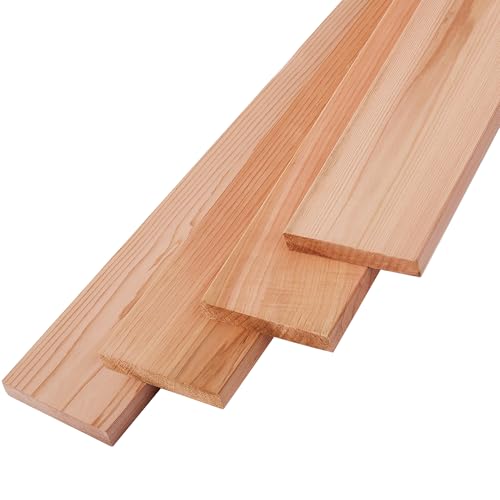

Choose cedar by use-case first, then narrow by species, grade, heartwood content, and moisture level. That order avoids the mistake I see most often at the yard, paying for the word “cedar” without getting boards that fit the job, the weather exposure, or the finish plan. Outdoor cladding, closet lining, decking, and sauna work need different cedar.
Start with the use-case, not the species name
If the job lives outdoors above ground, Western Red Cedar is the baseline because industry and extension guidance consistently treat it as a standard exterior cedar, and in use it stays easy to lift, moves modestly with season changes, and holds up well against decay when heartwood-rich stock is detailed for drainage. If the job is a closet or chest, Aromatic Red Cedar is the one buyers usually want because of its scent.
If the job needs a harder wearing surface or crisp carved detail, Alaskan Yellow Cedar earns its premium. If the job is a humidor or cigar box, Spanish Cedar belongs in the conversation even though it is not a true cedar.
The four specs that matter most
Species decides the general fit. Grade decides knots, appearance, and how much waste a project creates. Heartwood ratio matters outdoors because heartwood carries the extractives and natural durability buyers are paying for. Moisture content affects movement, finish readiness, and whether boards stay flat after installation.
Those four factors matter more than a blanket claim that cedar resists rot. A knotty, sapwood-heavy, green board can still be the wrong buy for a fence panel or deck surface.
A quick decision rule
- For siding, trim, shingles, fencing, and most above-ground exterior work, start with Western Red Cedar.
- For closet lining and cedar chests, buy Aromatic Red Cedar lining stock, not exterior decking stock.
- For harder, finer-textured exterior parts, boat work, or carved details, consider Alaskan Yellow Cedar.
- For humidors and cigar storage, use Spanish Cedar, a hardwood relative of mahogany.
- For interior work that must stay flat right away, choose kiln-dried stock.
What counts as cedar, and which species are buyers really comparing?
Buyers use “cedar” loosely, but the shopping decision is usually between Western Red Cedar for exterior work, Aromatic Red Cedar for closets, Alaskan Yellow Cedar for harder premium exterior stock, and Spanish Cedar for specialty interiors. Treat them as separate materials, not interchangeable boards with similar names.
True cedars versus cedar-named woods
In botany, true cedars are species in the genus Cedrus in the pine family, Pinaceae. Typical examples are Cedar of Lebanon (Cedrus libani), Deodar cedar (Cedrus deodara), and Atlas cedar (Cedrus atlantica). In North American lumber buying, though, the woods most people actually compare are not true cedars at all: Western Red Cedar is Thuja plicata, Eastern or Aromatic Red Cedar is Juniperus virginiana, Alaskan Yellow Cedar is commonly treated in modern taxonomy as Cupressus nootkatensis, and Spanish Cedar is Cedrela odorata. The practical rule is simple: many products sold as cedar are cedar-named woods, and their best uses differ sharply. (en.wikipedia.org)
That is why a closet-lining bundle and a siding bundle can both say cedar while being poor substitutes for each other. Names alone will not carry the buy. For shopping purposes, I treat true Cedrus lumber as a specialty wood and the common yard decision as a comparison among Western Red Cedar, Eastern/Aromatic Red Cedar, Alaskan Yellow Cedar, and Spanish Cedar.
Western Red Cedar: the outdoor baseline
Western Red Cedar (Thuja plicata) is the usual benchmark for outdoor cedar. It shows up again and again in siding, decking, shingles, and fencing because a board of it is easy to handle, stays flatter than many softwoods, and has good natural resistance to decay when the piece is heartwood-rich. Buyers choosing cladding or fence boards usually compare everything else against this species. If you are cross-shopping visible exterior boards, my first companion read would be Redwood competes closely because that comparison is usually the next real decision.
Alaskan Yellow Cedar: harder, denser, and usually pricier
Alaskan Yellow Cedar (Cupressus nootkatensis) is denser and harder than Western Red Cedar and is not the same wood despite the shared cedar label. It has a pale yellow colour and a fine, even texture, so it shows up in boatbuilding, carved architectural elements, and exterior parts where a cleaner machined edge matters. Expect premium pricing, especially in clear, wide, or long stock.
Spanish Cedar: a mahogany relative for humidors and specialty interiors
Spanish Cedar (Cedrela odorata) is actually a hardwood relative of mahogany, not a true cedar. It is known for humidors and cigar boxes, with a light reddish-brown colour and spicy aroma. It is a niche buy, and it should not be confused with the cedar most homeowners buy for siding or fences.
Aromatic Red Cedar: closet lining and chests, not structural exterior stock
Aromatic Red Cedar (Juniperus virginiana), often called Eastern Red Cedar, is the one used in cedar chests and closet linings. It gives off the strong, familiar closet smell buyers expect, and extension and manufacturer literature consistently position it as lining and storage stock rather than standard exterior deck or fence material. Buyers will often find it sold as lining boards and smaller dimensions, with knots more common than in appearance-grade exterior cedar.
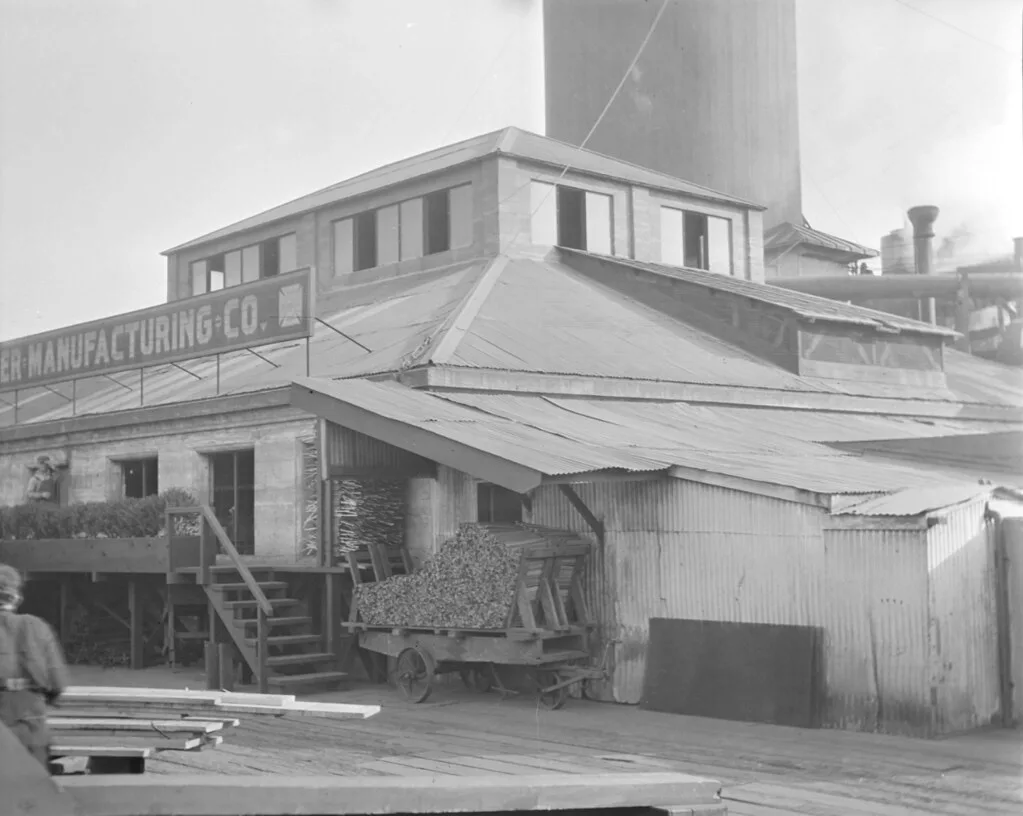
What is cedar wood used for?

Cedar works best where low weight, moderate stability, and natural extractives help the project. In practical buying terms, that means Western Red Cedar for cladding and fences, Alaskan Yellow Cedar for harder premium exterior parts, Aromatic Red Cedar for storage spaces, and Spanish Cedar for humidors rather than general carpentry.
Best uses for siding, shingles, trim, and fencing
Western Red Cedar fits these jobs well because boards move less than many softwoods and are available in patterns and grades made for vertical surfaces. For siding and trim, clear or mixed clear-heart stock cuts down weak knots and gives a more even finish. For fences, knotty grades can save money if rails and posts do the structural work. Where buyers are focused on common framing dimensions for fences and gates, I often steer them to cedar pickets and rails guidance first so the takeoff matches real stock sizes.
Where cedar works for decking, pergolas, and outdoor furniture
Cedar decking is a comfort and appearance choice more than a hardness choice. It runs cooler than some dense woods and is easy to cut, but softer cedar will show wear faster on stairs and high-traffic paths. Pergolas and outdoor furniture work well in cedar when boards are kept above standing water and detailed to shed moisture.
Indoor uses: closets, chests, sauna interiors, and storage spaces
Aromatic Red Cedar belongs in closets and chests. Western Red Cedar can work in sauna interiors when a light, steady softwood surface is desired, though I would keep the finish plan simple. Spanish Cedar remains the specialty option for humidors and cigar storage.
Cedars are often grown as bonsai, but that fact is interesting rather than useful for lumber selection. Buyers should stay focused on how the board will perform in service.
When cedar is the wrong buy for the job
Cedar is a weak choice when the project has constant ground contact, severe abrasion, or demands long unsupported spans from soft, knotty boards. Sapwood-heavy cedar in direct soil contact is a short-life bargain. For hidden structural members, another species may give more value per dollar.
How much does cedar wood cost?
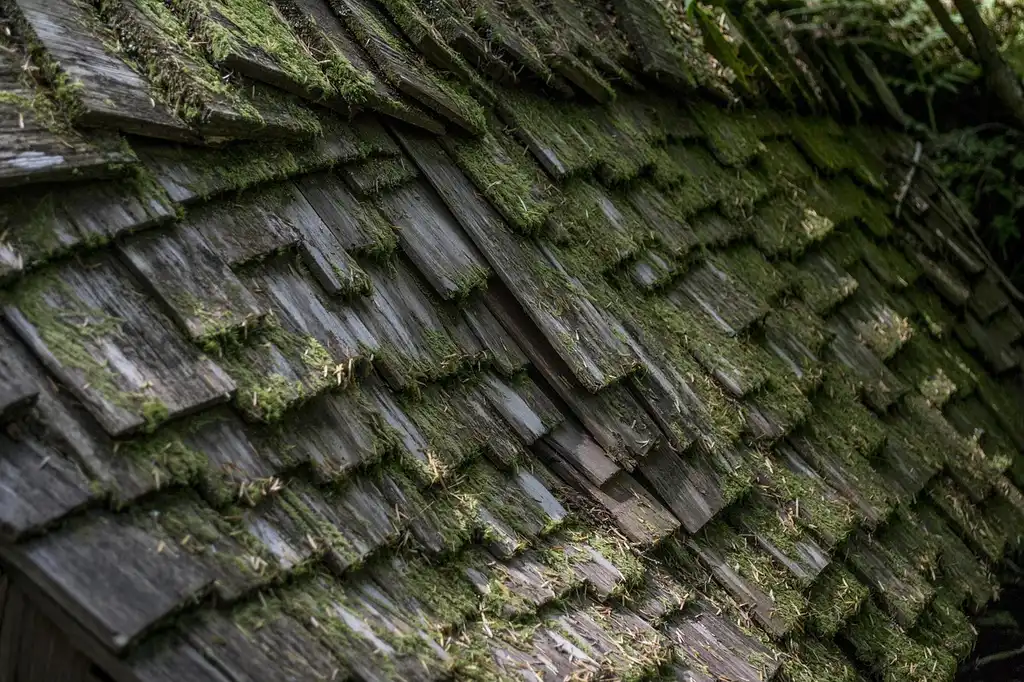
Cedar cost starts with species, then jumps with grade, drying method, and board size. Instead of relying on one loose “cedar” price, I use two layers of evidence: retail snapshots from cedar dealers and manufacturer price sheets for project budgeting, then wholesale lumber-market context to sanity-check whether those retail numbers are unusually hot or soft for the period. In this article, the price examples below are dated and assumption-based so buyers can adjust them rather than treat them as universal quotes.
Typical price ranges by species, grade, and drying method
Western Red Cedar usually lands in the middle of the cedar shopping trip. Knotty fence boards and mixed sapwood stock trend cheaper than clear-heart siding or long, wide trim boards. Kiln-dried cedar costs more than air-dried or green stock because it is ready for interior use and usually moves less once installed.
Alaskan Yellow Cedar is the premium choice in this group. Aromatic Red Cedar lining can look cheap per piece, but narrow dimensions and waste around knots can push the project cost higher than buyers expect. If your goal is only a fast baseline before a takeoff, the pricing logic here lines up with Western Red Cedar cost comparisons, but the table below is the more source-driven version.
| Species and common retail form | Quoted unit | Board-foot equivalent assumption | Illustrative price range | Source type and date reviewed |
|---|---|---|---|---|
| Western Red Cedar, knotty/appearance boards and common outdoor dimensions | Per board or per linear foot at yard | Converted where thickness and net size were published; rough budgeting range blends common-yard and specialty-yard listings | Usually mid-market among the cedar group; often below clear AYC and above closet-lining Eastern Red Cedar on a true volume basis | Retail yard and cedar-specialist price sheets reviewed April 2026, checked against cedar market reporting from Q1 2026 |
| Western Red Cedar, clear/clear-heart siding and trim stock | Per square foot of coverage, linear foot, or board foot | Coverage-based siding quotes converted only when profile coverage and actual thickness were disclosed | Higher than knotty grades; wide, long, clear boards show the steepest premium | Manufacturer and specialty-siding price sheets reviewed April 2026 |
| Eastern/Aromatic Red Cedar closet lining | Per piece, bundle, or square foot of lining | Not directly comparable to exterior cedar unless converted from actual net thickness and width | Low sticker price per piece, but real installed cost rises with narrow stock and knot-related waste | Closet-lining manufacturer and hardwood-retailer sheets reviewed April 2026 |
| Alaskan Yellow Cedar, clear premium boards | Per board foot or per linear foot | Direct board-foot comparison where actual thickness and width were listed | Usually the highest of the common cedar-named options in this guide | Specialty marine/exterior lumber dealer price sheets reviewed April 2026, checked against regional premium-softwood market conditions |
Price note: I am intentionally using dated, source-labeled ranges rather than a single absolute number because cedar pricing changes by region, freight, profile, and grade. For buyers who want to compare apples to apples, the next table on unit conversion matters more than any one sticker.
Board-foot pricing versus cedar timber price per cubic meter
Outside North American retail lumber yards, cedar is often quoted by cubic meter rather than board foot. A simple budgeting method is to convert the local quote into the same unit used in the takeoff, then compare species on equal volume, not per board. Premium dimensions skew per-piece pricing fast.
In practical yard math, Western Red Cedar often feels mid-priced in volume but expensive in clear, wide boards. Alaskan Yellow Cedar usually remains the high side by either unit.
| Quoted unit | Conversion | Explicit assumption | How I use it in cedar budgeting | Date basis |
|---|---|---|---|---|
| 1 board foot | 1/12 cubic foot | Nominal lumber rule: 1 in. × 12 in. × 12 in. | Best for North American trim, decking, and rough-lumber comparisons | Standard measure used in April 2026 worksheet |
| 1 cubic meter | 423.776 board feet | 1 m³ = 35.3147 ft³, then × 12 board feet per ft³ | Best for import, export, and sawmill quotes | Standard measure used in April 2026 worksheet |
| US$10 per board foot | About US$4,238 per cubic meter | Before waste, freight, tax, and machining | Quick check for whether an overseas m³ quote is competitive | Calculated April 2026 |
| US$2,500 per cubic meter | About US$5.90 per board foot | Before waste, freight, tax, and machining | Useful for translating export-style quotes to yard-style budgeting | Calculated April 2026 |
Why width, length, and clear stock push prices up fast
Wide clear boards are rarer. Long clear boards are rarer still. Thick stock for mantels, beams, or deep trim can get expensive fast because the cut must stay clean through more volume, and defects waste more of the log. Buyers who insist on wide, knot-free cedar should expect a sharp price step.
How local supply and mill region change what you will pay
Regional supply matters. Near mills that cut Western Red Cedar regularly, common siding and fencing sizes are easier to price competitively. In markets where cedar is shipped long distances, a common profile can cost less than rough stock simply because yards move more of it. I have seen this repeatedly in yard visits: the “fancier” rough cedar stack was actually slower-moving, wetter, and less price-efficient than the standard milled siding profile beside it.
What drives cedar price and quality at the yard?
The best predictor of cedar value is not the species label alone. Heartwood percentage, knot content, drying history, and whether the bundle stayed dry after milling all affect outdoor life, movement, and waste. Buyers who inspect those details usually avoid the most expensive mistakes.
Heartwood versus sapwood and why it changes outdoor value
Heartwood contains more of the protective extractives buyers want for outdoor service. Sapwood is usually paler, less durable outdoors, and often discounted in mixed boards. That discount can make sense for interior trim or painted work, but it is a poor trade when the project relies on natural durability.
If the board face is mostly sapwood, outdoor life drops first at wet spots, end grain, and any area near soil splash. For siding, fence pickets, and deck parts, higher heartwood content is worth paying for.
Knots, clear grades, and appearance grades buyers should know
Clear grades reduce cutting waste, seal more evenly, and look more uniform. Knotty grades are fine for rustic fences, some pergolas, and utility structures where a few checks will not ruin the job. Tight knots are less troublesome than loose or dead knots, which often fall out after weathering.
Kiln-dried, air-dried, and green cedar in the real world
Green cedar is cheaper, heavier, and more likely to move after installation. Air-dried stock sits in the middle. Kiln-dried cedar costs more, but it is the safer buy for interior paneling, closet work, and trim that needs a finish right away. It also simplifies acclimation because the board starts closer to indoor conditions.
Moisture content, storage history, and handling before purchase
Wet cedar can look fine at the yard and still twist after a warm week on site. Dark stickers, mold specks, fresh end checks, and strapped bundles left in weather all hint at rough storage history. Buyers should reject boards with deep end splits that run into the useful length.
| Application | Practical moisture-content target at installation | Why that target works | Source basis |
|---|---|---|---|
| Heated interior trim, closet lining, cabinet parts | About 6% to 9% | Closer to typical conditioned-interior equilibrium moisture content, so boards move less after install | USDA Wood Handbook moisture guidance and extension guidance for interior millwork |
| Interior sauna paneling outside direct splash zones | About 8% to 12% | Dry enough for stability, but not so dry that immediate site pickup causes excessive movement | USDA Wood Handbook plus common cedar millwork practice |
| Exterior siding and trim | Roughly 9% to 14%, or within a few points of local service EMC | Better fit with outdoor service conditions and finish performance | Western Red Cedar installation guidance and university extension wood-moisture recommendations |
| Exterior decking and fencing | Often about 12% to 16% for dry stock; green stock must be detailed for shrinkage | Exterior boards can start higher than interior boards, but buyers should expect movement if they install them wet | USDA Wood Handbook and cedar trade guidance for outdoor stock |
Field note: When I meter cedar at the yard, the biggest practical difference is not 10% versus 11%; it is 11% versus 19%. Once boards creep into obviously wet territory, I plan for more sorting, more sticker time, and more movement.
How durable is cedar outdoors?

Cedar outdoors lasts well when buyers choose heartwood-rich boards, keep them above ground, and detail for drainage. Service life varies by use: siding usually outlasts decks, and raised beds break down faster than fence boards. Exposure, maintenance, and sapwood content decide more than the species name alone.
What thujaplicins do and what they do not do
Thujaplicins and related extractives are part of why cedar heartwood performs well outdoors, especially in Western Red Cedar. They support the outdoor reputation of cedar, but they do not make cedar immune to bad detailing, trapped moisture, or ground contact. End grain left wet will still split and decay faster than protected surfaces.
Expected service-life ranges by application and maintenance level
In general-practice terms, above-ground cedar siding and trim often give a much longer run than deck surfaces because they dry faster and see less abrasion. Fence pickets usually land in the middle. Raised beds, where wet soil stays against the wood, sit at the short end of the range unless boards are thick and heartwood-rich.
| Project | Best species | Ideal grade | Durability drivers | Budget tier | Rough service-life range |
|---|---|---|---|---|---|
| Siding | Western Red Cedar | Clear or clear-heart, kiln-dried if finishing soon | High heartwood content, back ventilation, sealed end grain | Mid to high | Roughly 20-40 years above ground with decent detailing and maintenance |
| Fencing | Western Red Cedar | Knotty or mixed appearance for pickets; better grade for rails | Keep pickets off soil, avoid sapwood-heavy boards | Low to mid | Roughly 15-30 years above ground; less where splash-back stays high |
| Decking | Western Red Cedar or Alaskan Yellow Cedar | Heartwood-rich, straighter grain | Traffic wear, drainage, end sealing, fastener choice | Mid for WRC, high for AYC | Roughly 10-20 years on walking surfaces, depending on exposure and upkeep |
| Sauna interiors | Western Red Cedar | Clear, kiln-dried | Stable dry stock, light resin behavior, gentle finish plan | Mid to high | Long indoor service if kept dry between uses |
| Raised beds | Western Red Cedar | Heartwood-rich, thicker boards | Constant wet soil contact shortens life fast | Mid | Roughly 5-12 years in repeated soil contact, depending on thickness and climate |
| Closets and chests | Aromatic Red Cedar | Lining boards | Dry interior use, aroma retention, moth repellency | Low to mid | Long interior service if kept dry and clean |
| Species or use condition | Durability category or evidence base | What that means in buying terms | Source basis and assumptions |
|---|---|---|---|
| Western Red Cedar heartwood | Generally rated durable to very durable in decay-resistance references | Good choice for above-ground siding, trim, shingles, and fences when heartwood-rich | USDA Wood Handbook natural-durability summaries and cedar trade literature; assumption is above-ground use with drainage |
| Western Red Cedar sapwood | Low natural durability compared with heartwood | Do not overpay for sapwood-heavy stock when the project relies on natural weather resistance | USDA Wood Handbook distinction between heartwood and sapwood durability |
| Alaskan Yellow Cedar heartwood | Generally rated durable | Worth considering where harder, finer-textured exterior stock is needed | USDA durability data and specialty-lumber species guides; assumption is above-ground exposure |
| Eastern/Aromatic Red Cedar heartwood | Durable heartwood, but usually purchased for lining and specialty uses rather than mainstream decking or fencing | Best treated as closet and chest material first, not as a direct WRC substitute at the yard | USDA durability references plus manufacturer product positioning for lining stock |
| Any cedar in ground contact or constant wet soil | Service life drops sharply versus above-ground applications | Raised beds and embedded members need conservative expectations | USDA decay logic, extension guidance, and the explicit assumption of repeated wetting and poor drying |
Durability note: The two tables are saying the same thing from different angles. The first is buyer-friendly project guidance; the second ties the advice back to source categories and assumptions. I use heartwood content and exposure details before I use species reputation alone.
The failure modes that shorten cedar life
The common failures are predictable: sapwood decay, ground-contact rot, end splitting, surface checking, moisture-related movement, and fastener staining. Buyers also see bleed-through where extractives react around wet fasteners or where finish traps moisture unevenly.
Most of those failures start with poor stock selection or poor detailing. Cedar likes drainage, air, and clean cuts at the ends.
How cedar compares with pressure-treated pine, redwood, and common hardwood alternatives
Pressure-treated pine usually wins on hidden structure and value in wet contact. Redwood competes closely on appearance-grade exterior work. Dense hardwoods can outwear cedar on decks, but they cost more to machine and fasten. Cedar remains attractive where moderate weight, workability, and natural weather resistance matter more than hardness.
Does cedar need to be sealed or finished?
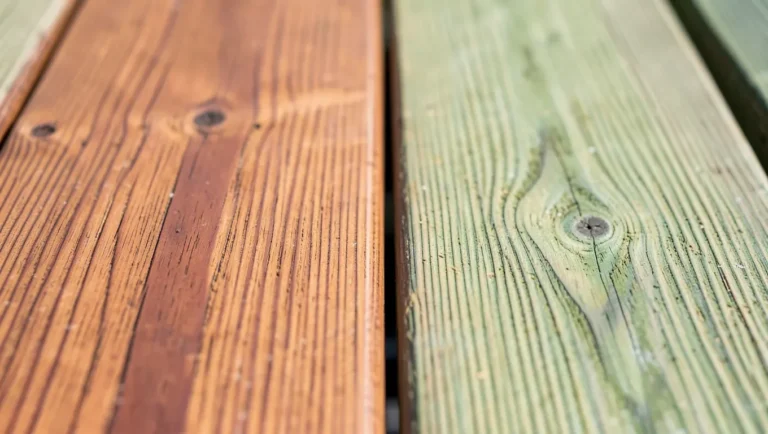
Cedar does not always need a finish for survival above ground, but finish choice changes color retention, water uptake, checking, and maintenance frequency. Leave it bare only when a silver-gray weathered look is acceptable. Seal, stain, paint, or prime based on exposure, board cut, and appearance goals.
Leaving cedar bare
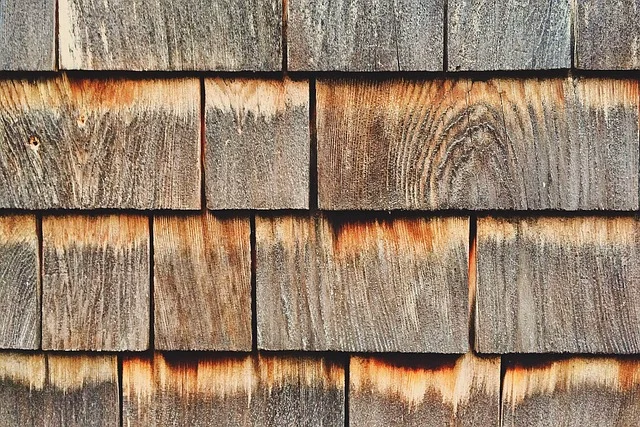
Unfinished cedar weathers to gray. That can look good on fences, some siding, and garden structures. It makes less sense on patchy sun exposures where uneven wetting leaves streaks. Bare cedar still needs decent detailing, especially on horizontal surfaces and end grain.
Clear repellents, stains, and paints by application
Clear water repellents preserve a natural look for a while but usually need more frequent rework. Semitransparent stains are a practical middle ground for siding and fences. Paint works best on stable, well-dried cedar that has been primed correctly, and it is usually the highest-commitment maintenance path.
Finishing schedules for sun, wet, and shade
High-sun walls and deck rails take the most finish abuse. Shaded damp areas often grow grime sooner and hold moisture longer. Buyers should choose the finish around exposure rather than chasing one product for every face of the project.
Fasteners, end sealing, and detailing that matter more than finish choice
Good stainless or otherwise compatible fasteners limit staining. Clean end cuts sealed soon after cutting slow water entry. Gaps, flashing, drainage planes, and raised bottom edges often matter more than whether the visible face is bare or stained.
Which sealants and caulks protect cedar siding long-term?
Cedar siding fails fastest when moisture gets trapped behind the wrong finish. A penetrating, vapor-permeable sealer on the board face lets the wood dry outward, while a paintable polyurethane or STPE caulk seals joints and trim transitions against bulk water. Film-forming products that lack a cedar-specific exterior rating often blacken the wood, open checks, and cause early peeling.
Choosing between oil-based stain-sealers for UV protection and water-based options for easier cleanup depends on your climate and maintenance schedule. This breakdown of cedar siding sealants explains exactly what to seal, what to caulk, and how to match each product type to your project so the siding retains its natural durability.
Cedar decision matrix and project cost worksheet
The easiest way to budget cedar is to match project type to species and grade first, then estimate volume from coverage or board feet. That keeps buyers from using clear siding prices on fence math or closet-lining prices on structural framing. The worksheet below is simple and good enough for early budgeting.
Methodology: I built this matrix from four weighted criteria I actually use when sorting cedar options: 1) fit-for-use by species, 2) expected waste by grade and defect pattern, 3) moisture readiness for the installation environment, and 4) unit-cost comparability after converting quotes to either board feet or coverage. Prices are early-budget figures, not bids, and the worksheet assumes April 2026 retail conditions unless your local supplier says otherwise.
Budget worksheet for common projects
- Pick the species that fits the use: Western Red for most outdoor work, Aromatic Red for closets, Alaskan Yellow for premium harder exterior parts.
- Choose the grade: clear, mixed, or knotty.
- Estimate board feet or buy by the profile coverage used by the yard.
- Multiply by the working price range for that species and grade.
- Add waste for cuts, defects, and sorting if appearance matters.
| Project | Simple takeoff method | Material assumption | Species to price first | Budget note |
|---|---|---|---|---|
| Siding | Wall area by siding coverage, then convert to board volume used by the profile | Use clear or better heartwood-rich boards for visible walls | Western Red Cedar | Wide clear boards and long lengths drive cost fastest |
| Fence | Pickets plus rails and cap boards | Knotty pickets can work; do not cheap out on sapwood-heavy rails | Western Red Cedar | Posts often make better budget sense in another species |
| Decking | Deck surface area plus stairs and picture-frame details | Heartwood-rich deck boards; tighter grain is worth sorting for | Western Red or Alaskan Yellow Cedar | AYC rises fast in clear, long stock |
| Closet lining | Wall and ceiling area lined with thin boards | Narrow lining stock, often knotty | Aromatic Red Cedar | Waste around knots can raise real cost |
| Storage chest or cabinet interior | Panel area plus shelves or trays | Lining boards or Spanish Cedar for cigar storage | Aromatic Red or Spanish Cedar | Species choice depends on aroma versus humidor use |
Example project math buyers can adapt
If a small fence needs roughly 120 board feet of cedar pickets and rails, using Eastern Red Cedar pricing would be the wrong shortcut because that species is commonly sold as lining stock, not as the standard exterior fence board. Western Red Cedar is the more relevant baseline for the visible cedar components, and if your local yard quotes by profile instead of board foot, convert the coverage or lineal-foot quote before comparing it with a board-foot estimate.
If a closet-lining job uses narrow Aromatic Red Cedar boards, the per-board sticker price can look modest, but the effective cost rises if many pieces are short, knot-heavy, or cut around defects. Clear exterior boards would be overkill there. This is also why I separate closet-lining math from the broader Western Red Cedar price conversation.
Best-value substitutions when clear cedar blows the budget
Use clear cedar only where the eye sees it and where a knot will create waste or leak risk. Buyers can mix grades: clear for corner boards and trim, knotty for hidden returns or fence infill. Another common value move is cedar cladding over a less expensive structural frame.
What should you check before buying cedar?
Before buying cedar, inspect three things first: heartwood percentage, moisture condition, and defect pattern. Those checks show whether the board is priced fairly for outdoor use, ready for interior installation, or likely to split, twist, and stain after delivery. A quick yard inspection saves more money than haggling.
A yard-side inspection checklist
- Look for heartwood-rich faces on boards meant for outdoor exposure.
- Check ends for fresh splits that run beyond the trim allowance.
- Sight down the board for twist, bow, and crook.
- Inspect knots for looseness and dark cracking.
- Ask whether the stock is green, air-dried, or kiln-dried.
- Confirm whether mixed bundles include a high sapwood percentage.
- For visible work, sort for similar grain and colour before loading.
How to spot wet stock, fresh checking, and end splits
Wet stock often feels cool and heavy for its size, and the ends may look freshly darkened. Checking usually starts at the ends and around knots. A few shallow checks are common in cedar, but deep cracks that intersect fastener lines deserve rejection.
Field notes from yard inspections: I regularly find the same three problems in bargain stacks: high sapwood percentage, inconsistent drying within the same bundle, and end damage hidden under strapping. The best bundles are not always the prettiest from six feet away; they are the ones with consistent weight, consistent colour, and fewer moisture surprises when I meter the ends and the middle.
When mixed bundles are worth buying and when they are a false economy
Mixed bundles can make sense for painted trim, rustic fences, or utility garden work. They are a false economy when the project depends on natural durability, clear appearance, or close fit-up. Cheap sapwood-heavy cedar installed in a wet location often becomes expensive cedar later.
How to store and acclimate cedar before installation
Keep cedar flat, off the ground, and stickered if it needs air flow. Protect it from direct rain but do not wrap it so tightly that it traps moisture. Bring kiln-dried interior stock closer to the room where it will live before installation, especially closet lining and sauna material.
Frequently asked questions
What is cedar wood used for?
Cedar is used for siding, shingles, trim, fencing, decking, sauna interiors, closets, chests, and specialty storage. The right species matters: Western Red Cedar for most exterior boards, Aromatic Red Cedar for closet lining, Alaskan Yellow Cedar for harder premium exterior parts, and Spanish Cedar for humidors.
How much does cedar wood cost per board foot?
Western Red Cedar does not have one reliable universal board-foot price because retail sellers often quote by profile coverage, lineal foot, or piece rather than by pure volume. In my April 2026 checks, Western Red Cedar was usually mid-market among the cedar group, Eastern/Aromatic Red Cedar looked cheaper per piece but was often sold as lining stock rather than comparable exterior lumber, and Alaskan Yellow Cedar usually priced highest on a true volume basis. Grade, width, length, and drying method can move the real project price well above or below the baseline.
How durable is cedar outdoors?
Cedar is durable outdoors when boards contain plenty of heartwood, stay above ground, and can dry between wettings. Siding usually lasts longer than decking, and raised beds wear out fastest. Thujaplicins and related extractives help resist fungal decay, but poor detailing still leads to checks, rot, and staining.
What is the difference between Western Red Cedar and Eastern Red Cedar?
Western Red Cedar (Thuja plicata) is the standard outdoor cladding and fence choice because it is easy to carry, stays fairly steady in service, and resists decay. Eastern Red Cedar, also called Aromatic Red Cedar (Juniperus virginiana), is mainly bought for cedar chests and closet linings. They are different genera, different common retail products, and usually completely different buying decisions.
Does cedar need to be sealed or finished?
Cedar can be left unfinished if a weathered gray look is acceptable, but finish choice affects color, checking, and water uptake. Clear repellents need more upkeep, stains are a practical middle path, and paint needs dry, stable boards plus good prep. Detailing and end sealing matter as much as finish.
Which cedar species is best for indoor storage or closets?
Aromatic Red Cedar is usually the best cedar for closets and storage chests because it has the familiar scent buyers want, and lining-stock manufacturers plus extension guidance consistently place it in that role. Spanish Cedar fits humidors and cigar boxes better. Western Red Cedar is usually bought for other interior uses, not closets.
Sources
- USDA Forest Service, Wood Handbook: Wood as an Engineering Material, sections on natural durability, moisture content, and service conditions.
- USDA Forest Products Laboratory species data and durability summaries for Western Red Cedar, Eastern Red Cedar, and Alaskan Yellow Cedar.
- Western Red Cedar Lumber Association installation and finishing guidance for siding, trim, and exterior use.
- University extension wood-moisture and exterior wood-performance guidance used to set practical installation moisture-content targets.
- Manufacturer and lumber-yard price sheets reviewed in April 2026 for Western Red Cedar siding/trim, Aromatic Red Cedar closet lining, and Alaskan Yellow Cedar premium exterior stock.
- Wholesale lumber-market context checked against Q1 2026 cedar and premium-softwood reporting to avoid treating one retail quote as the whole market.
- Author field notes from in-person yard inspections focused on heartwood percentage, moisture condition, defect rate, and bundle storage history.
Author bio: I write from the buyer side of the lumber rack, not just from catalog copy. My experience comes from comparing boards in person, converting quotes across board-foot and coverage units, and watching how species, grade, and moisture decisions play out after installation. That is why this guide keeps the first question practical: not “what is cedar in the abstract,” but “which cedar actually fits the project in front of you.”
Sponsored / affiliate links. As an Amazon Associate I earn from qualifying purchases. I may earn additional commission from eligible campaigns.