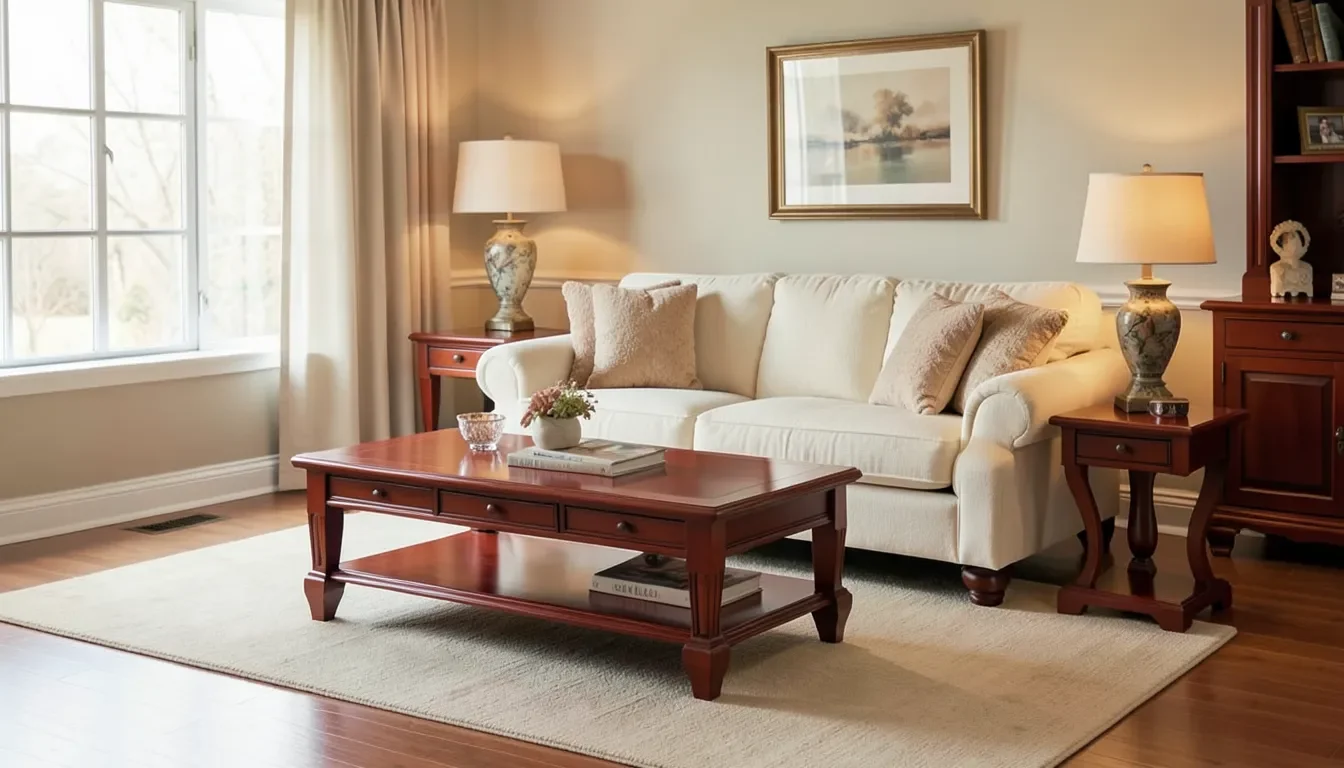
Cherry Wood Living Room Ideas: Colors, Care and Styling Tips
Cherry wood brings a warm, reddish-brown tone to a living room that few other hardwoods can match, but it is also one of the pickier woods to decorate around: pair it with the wrong wall color or the wrong finish care and it can look dated or blotchy fast. This guide covers the wall colors, furniture pairings, and finish care that actually keep a cherry wood living room looking rich instead of heavy, plus the one thing about cherry wood that almost no other guide explains: why the color you buy is never the color you keep.
Understanding Cherry Wood’s Finish and Color
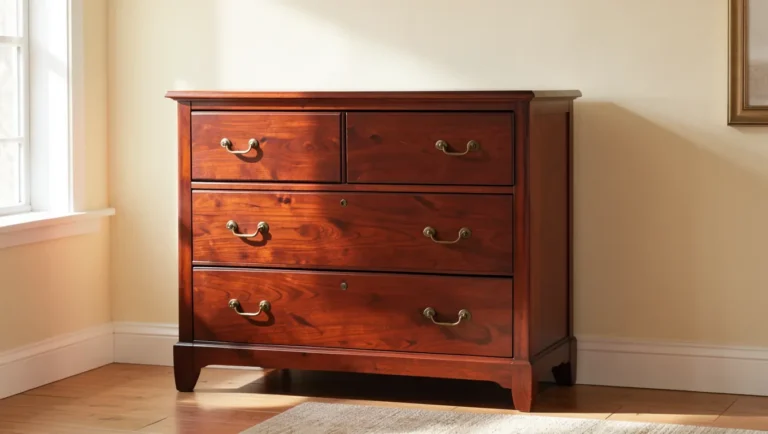
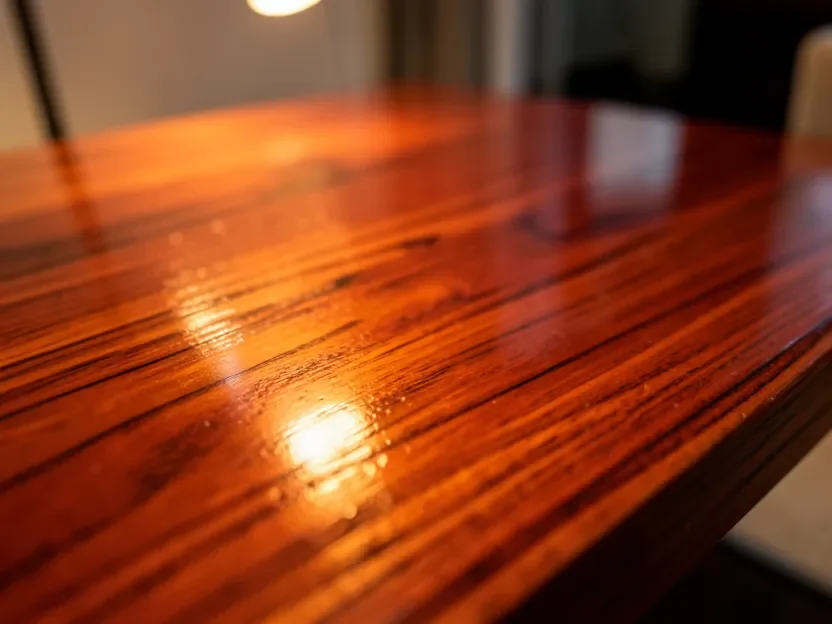
Most cherry wood furniture is finished with an oil, wax, or hand-rubbed varnish rather than a thick polyurethane, because part of cherry’s appeal is letting the grain and color show through. That means the finish needs occasional feeding and buffing to stay even, especially on pieces that get direct sun or handling, like a coffee table or a console under a window.
Best Wax for Reviving Cherry Wood’s Color
 |
Howard Feed-N-Wax Wood Polish & Conditioner – $10.88 A beeswax-and-carnauba polish made for cherry, walnut, and other fine hardwoods, it feeds the wood instead of leaving a plastic-looking film.
|
Why Cherry Wood Darkens Over Time
Cherry wood is famous for changing color after it leaves the store, and this is not a myth or a finish problem. It is a real chemical reaction called photo-oxidation: UV light and, to a lesser extent, room light trigger a reaction in the wood’s natural compounds that shifts its color from a light pink-tan toward a deeper amber-red over the first six months to two years. This is why a brand-new cherry side table often looks noticeably lighter than an older cherry bookshelf sitting right next to it, even if both pieces came from the same manufacturer. We cover the full timeline and how to slow or even out the process in our breakdown of how cherry wood darkens over time. The practical upshot for a living room: if you are buying cherry pieces gradually, expect a mismatch for the first year or two, and use a rotation of sunlight exposure (or a UV-filtering window film) to even out the color across pieces faster.
Best Wall Colors for a Cherry Wood Living Room
Cherry wood’s warm red-brown undertone competes with warm wall colors and gets muddy next to dark ones, so the most reliable approach is a neutral or cool backdrop that lets the wood stay the focal point. Soft whites, warm greige, light gray, and sage green all work because they sit far enough from cherry’s red undertone on the color wheel to create contrast instead of competition.
| Wall Color | Vibe | Why It Works |
|---|---|---|
| Warm White / Cream | Bright, airy | Neutral backdrop that doesn’t fight cherry’s red tones |
| Light Warm Gray | Modern, calm | Cools the room down without going cold or stark |
| Sage or Soft Olive Green | Fresh, grounded | Sits opposite red-brown on the color wheel for natural contrast |
| Soft Blue-Gray | Crisp, classic | Complements cherry the way it complements mahogany antiques |
Colors to avoid: true red, terracotta, or rust walls, which push cherry’s undertone into a clash rather than a complement, and very dark charcoal or espresso walls, which can make a cherry piece look heavy and shrink the room visually.
Furniture Pairings That Work With Cherry Wood
Cherry wood adapts to more styles than people expect, as long as the surrounding pieces don’t add more visual weight on top of it.
- Modern: pair a cherry coffee table with a glass or matte-black metal side table and simple, light-colored upholstery to keep the room from feeling too traditional.
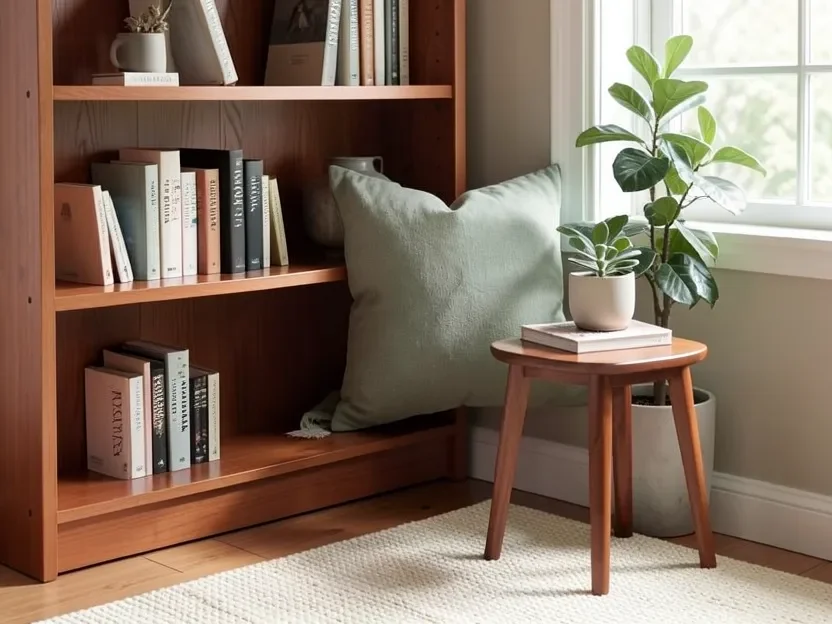
- Rustic: a woven jute or wool rug and linen upholstery soften cherry’s formal edge without hiding the grain.
- Classic / traditional: leather or velvet seating and brass hardware lean into cherry’s original Queen Anne and Chippendale roots.
If you already own a cherry wood piece that feels too traditional for your space, you don’t have to replace it. See how to make cherry wood furniture look modern for finish and hardware changes that update the look without repainting the wood.
Rugs, Textiles and Lighting
Warm, low-color-temperature lighting (around 2700K) brings out cherry’s red tones the way daylight-balanced LED bulbs (5000K) tend to wash them out or make them look orange and dull. Floor lamps and table lamps placed near cherry pieces do more for the room’s warmth than overhead lighting alone.
- Choose a light beige, cream, or subtly patterned rug rather than a bold one, so it doesn’t compete with the wood grain.
- Add texture with linen or cotton curtains and a mix of two or three throw pillow fabrics (velvet, wool, woven cotton).
- Keep at least one warm-toned (2700K-3000K) light source in the room, even if the overhead fixture is cooler.
Common Mistakes to Avoid
- Matching new and old cherry pieces and expecting them to look identical: because of photo-oxidation (see above), a new piece needs time, not a different stain, to catch up in color.
- Silicone-based spray polishes: they build up a hazy film over time and can make later refinishing harder. A beeswax-based polish avoids this.
- Full sun exposure on one side of a piece only: this causes uneven darkening (a visible line or blotch). Rotate rugs, furniture, or use a UV window film if a piece sits in direct sun.
- Pairing with true red or very dark accent colors: both fight cherry’s own undertone instead of framing it.
Cherry Wood vs. Other Living Room Woods
If cherry wood’s red undertone feels too bold for your space, it helps to know how it actually compares to the woods people usually consider instead. Walnut has a similar formality but skews cooler and darker from day one, so it doesn’t go through the same dramatic color shift cherry does. Mahogany is closer in warmth but tends to run darker and more uniformly reddish-brown even when new, without cherry’s lighter starting point. Maple sits at the other end entirely: a light, blonde tone with almost no red undertone, which is why it’s the usual substitute when someone wants cherry’s grain pattern without the color intensity.
| Wood | Undertone | Color Change Over Time |
|---|---|---|
| Cherry | Warm red-brown | Darkens noticeably in the first 1-2 years (photo-oxidation) |
| Walnut | Cool brown-purple | Minimal; stays close to its original tone |
| Mahogany | Deep reddish-brown | Slight darkening, less dramatic than cherry |
| Maple | Light, near-neutral | Can yellow slightly with age, but no red shift |
For a deeper side-by-side, see our comparisons of walnut vs. cherry wood color and cherry vs. mahogany color if you’re deciding between them for a specific piece.
Frequently Asked Questions
What wall colors go best with cherry wood furniture?
Warm white, light warm gray, sage green, or soft blue-gray work best. They sit far enough from cherry’s red-brown undertone to create contrast instead of competing with it. Avoid true red, terracotta, or very dark walls.
Why does my new cherry wood furniture look lighter than my old pieces?
Cherry wood darkens through photo-oxidation, a light-triggered chemical reaction, not a finish difference. New cherry furniture typically takes six months to two years of normal light exposure to reach the deeper amber-red tone of older pieces.
Can I use cherry wood furniture in a small living room?
Yes, one or two cherry pieces work well in a small room if the walls and rug stay light. Overloading a small space with multiple large cherry pieces is what makes it feel cramped, not the wood itself.
How do I care for cherry wood furniture?
Dust weekly with a soft, dry cloth and feed the wood every one to two months with a beeswax-based polish like Feed-N-Wax. Avoid silicone spray polishes and keep pieces out of direct, all-day sun exposure on one side only.
Does cherry wood fit modern decor?
Yes, when paired with simple, light-colored upholstery and matte-black or glass accents. The wood’s grain and color provide enough visual interest on their own without heavier traditional details.
What rugs match cherry wood furniture or floors?
Light beige, cream, or subtly patterned rugs in cool tones work best. A bold or dark rug pulls focus away from the wood grain and can make the red undertone look heavier than it is.
What light bulb color works best with cherry wood?
Warm white bulbs around 2700K to 3000K bring out cherry’s red tones. Cooler, daylight-balanced bulbs (5000K+) tend to wash the color out and make it look flatter or slightly orange.
Conclusion
A cherry wood living room works best when the walls, rug, and lighting stay neutral and warm-toned, and the furniture’s finish gets fed every couple of months instead of left to dry out. If you’re mixing new and older cherry pieces, give the new ones time: photo-oxidation, not a mismatched stain, is almost always why they don’t match yet.
Sponsored / affiliate links. As an Amazon Associate I earn from qualifying purchases. I may earn additional commission from eligible campaigns.