Cherry Vs Mahogany Color: Which Wood Tone Suits Your Style?
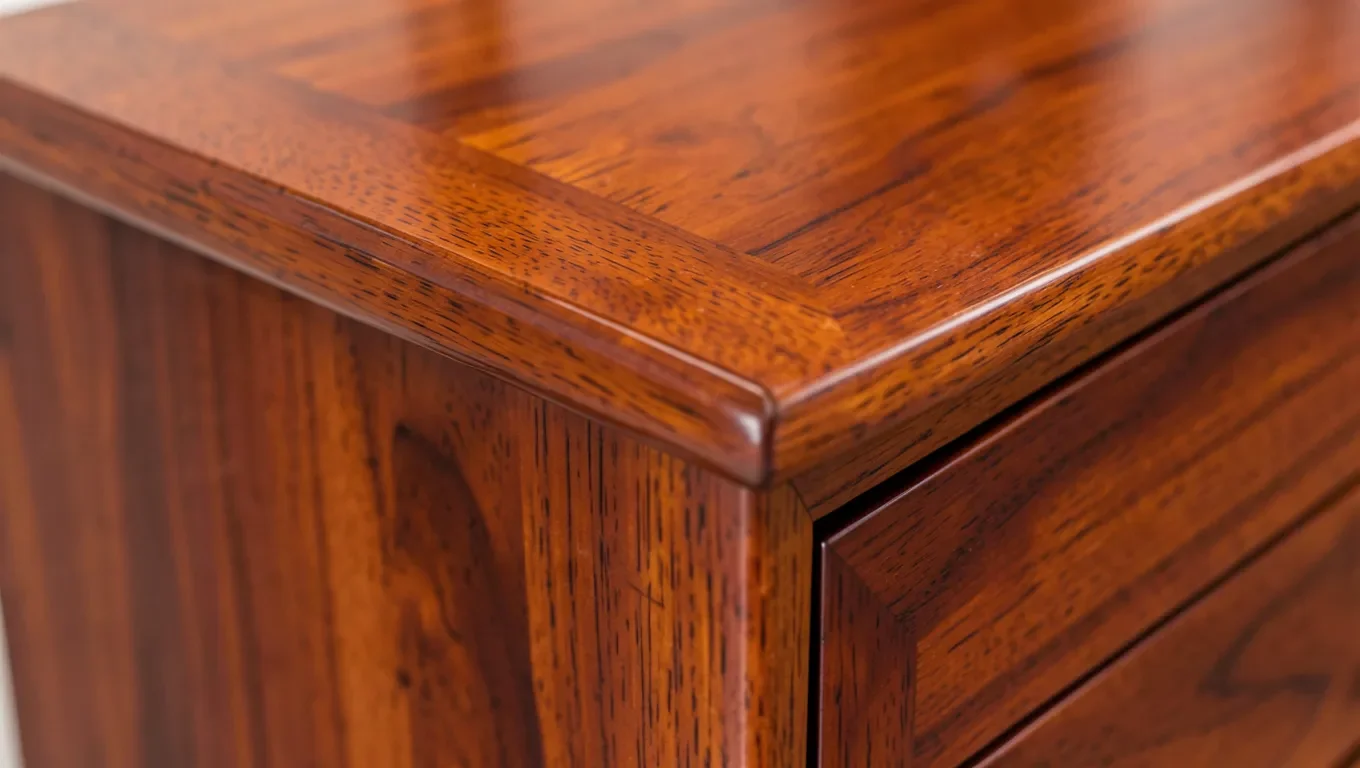
Cherry and mahogany are both warm reddish-brown woods, but cherry starts noticeably lighter (a pale pinkish-tan) and darkens dramatically with age and light exposure, while mahogany starts already medium-to-dark reddish-brown and stays comparatively stable in color. If you’re comparing a cherry piece to a mahogany piece side by side today, the mahogany will usually look richer and darker right away; a cherry piece bought at the same time will catch up in depth of color over the next several years as it ages.
The Real Difference: How Each Wood Changes Over Time
Cherry’s color transformation is the most distinctive thing about it. Fresh-cut cherry is a light pinkish-tan, almost blonde in places, and it darkens through exposure to UV light and simple air oxidation – this isn’t staining, it’s the wood itself changing. Within a year of regular light exposure, cherry typically deepens to a warm amber-red; over a decade or more it can reach a deep reddish-brown that’s easy to mistake for mahogany. This is why furniture makers sometimes warn against covering part of a cherry tabletop (with a rug or tablecloth) for extended periods – the covered area ages more slowly and creates a visible tan line once uncovered.
Mahogany starts closer to its final color and shifts less dramatically – a medium reddish-brown that deepens somewhat with age but doesn’t undergo the same light-driven transformation cherry does. This relative stability is part of why mahogany has historically been favored for fine furniture meant to look consistent for generations without the “aging window” cherry needs.
Best For Matching Cherry’s Color Without Waiting Years
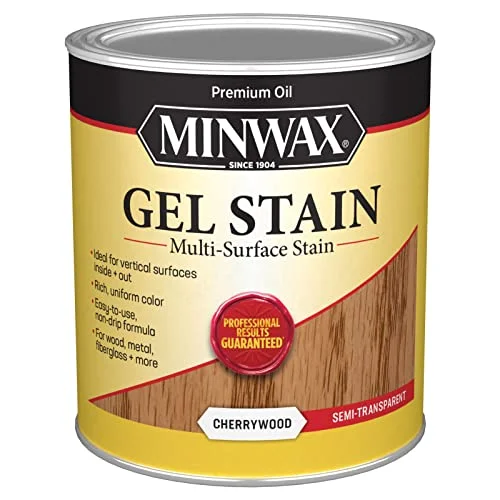 |
Minwax Gel Stain, Cherry Wood, Quart – $19.99 If you want cherry’s aged color on a new piece right away, rather than waiting years for natural darkening, a cherry-toned gel stain gets you there on cherry or a similar-toned wood.
|
Grain and Texture
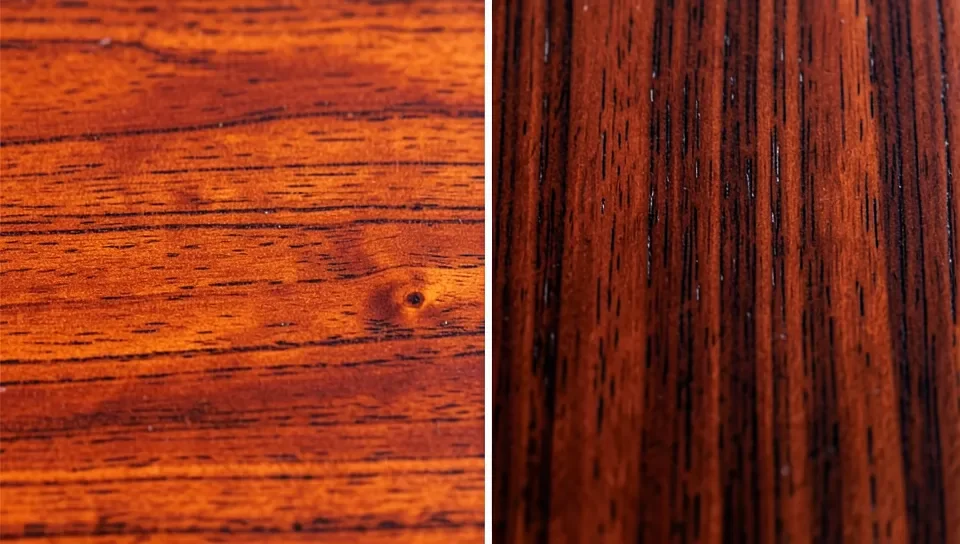
Cherry has a fine, tight, mostly straight grain with occasional gentle waves and small gum pockets (tiny dark flecks), giving pieces a smooth, refined look. Mahogany’s grain is typically straighter and can show a more pronounced ribbon or interlocked figure depending on how it’s cut, which is part of why quarter-sawn mahogany is prized for its shimmer under light. Both take a range of finishes well, from oil to varnish, though cherry’s changing base color means a clear finish will look different in five years than it does on day one – something to plan for if color-matching to existing furniture.
Durability
Both are solid choices for furniture-grade durability, though neither is a top-tier hardness pick – cherry and mahogany are moderately hard, dent-resistant enough for everyday furniture but softer than oak or hard maple. Mahogany has a longstanding reputation for dimensional stability (resisting warping and movement with humidity changes), which is part of why it was historically used in boat building and fine cabinetry. Cherry is also reasonably stable but benefits from consistent indoor humidity to avoid seasonal movement.
Which Style Each Suits
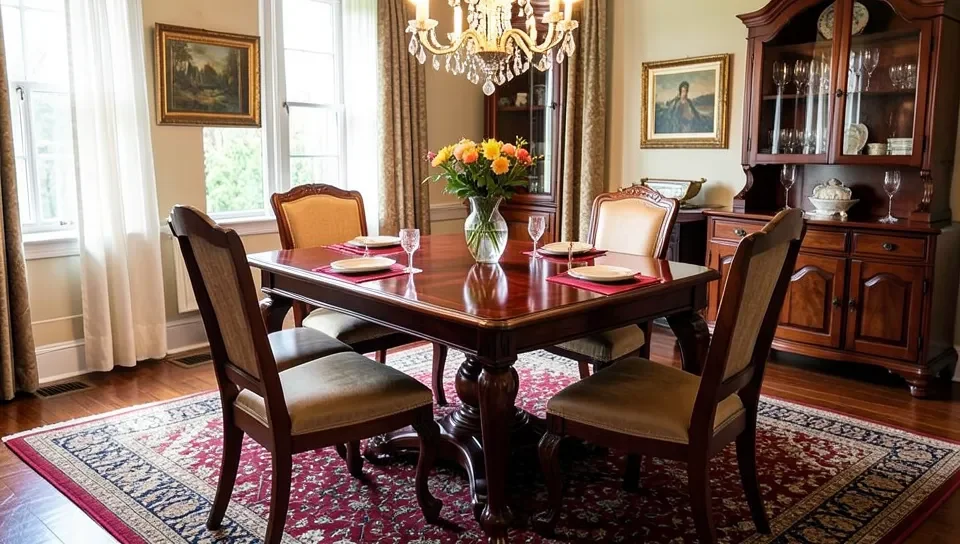
Cherry’s warmer, lighter starting tone works well in both traditional and contemporary rooms – it pairs easily with metal and glass in a modern space, and its aging color adds character in a classic setting. Mahogany’s deeper, more formal color leans traditional or luxury; it can read as heavy in a bright, minimalist room but adds real presence in a formal dining room or study. Neither is inherently “better” – the choice comes down to whether you want a wood that visibly evolves over the years (cherry) or one that looks essentially the same in year one and year twenty (mahogany).
Cost
Cherry typically runs $3-$8 per board foot depending on grade and source. Mahogany costs more – roughly $6-$28 per board foot – reflecting slower growth, import costs for genuine mahogany species, and its long-standing reputation in high-end furniture.
Conclusion
The real distinction between cherry and mahogany isn’t just “lighter vs. darker” – it’s that cherry changes dramatically over time while mahogany stays comparatively consistent. Choose cherry if you want a wood that develops richer color as it ages; choose mahogany if you want that rich, formal color from day one with minimal visual change down the road.
Frequently Asked Questions
What is the difference between mahogany and cherry color?
Mahogany starts as a medium-to-dark reddish-brown and stays fairly consistent. Cherry starts much lighter (pale pinkish-tan) and darkens dramatically over years of light exposure, eventually reaching a deep reddish-brown of its own.
What color is mahogany similar to?
Mahogany’s medium-to-dark reddish-brown is similar to aged cherry or redwood, though mahogany reaches that color immediately rather than developing it over time.
What color wood is closest to cherry?
Alder is the closest natural match to cherry’s color and is a common, more affordable substitute in furniture. Maple is naturally much paler than cherry and only resembles it once stained to match.
Is mahogany or cherry more expensive?
Mahogany is generally more expensive – roughly $6-$28 per board foot versus cherry’s $3-$8 – due to slower growth, import costs, and its established reputation in high-end furniture.
Sponsored / affiliate links. As an Amazon Associate I earn from qualifying purchases. I may earn additional commission from eligible campaigns.