Circular Saw Parts Explained: What Each One Does and Why It Fails
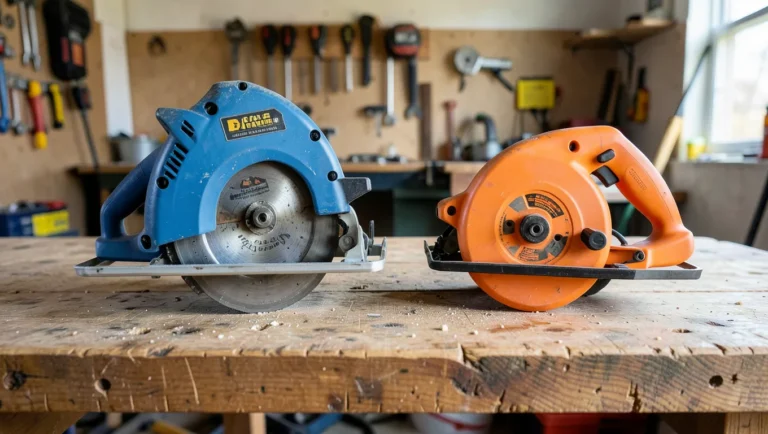
A circular saw is really just five parts working together: the blade, the motor, the base plate (shoe), the guard, and the depth/bevel adjustment hardware. When a saw “isn’t cutting right,” it’s almost always one of these five failing or being mismatched to the job — not the whole tool going bad.
Start With the Part That Actually Fails First: the Blade
Best General-Purpose Replacement Blade
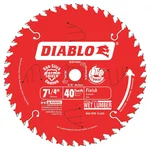 |
Diablo D0740A 7-1/4″ 40-Tooth Finish Blade – $22.17 The single most-replaced part on this list — a dull or wrong-tooth-count blade is the #1 reason a circular saw suddenly cuts poorly even though nothing else is broken.
|
Compare More Circular Saw Parts
 Diablo D0760A 60T Ultra Finish Blade, 2-Pack – $48.99 Higher tooth count for splinter-free cuts in plywood, veneer, and trim — two blades so a backup is always sharp. View on Amazon |
 AIXIHZ 40-Pc Carbon Brush Replacement Kit – $9.88 Covers 10 common brush sizes — the fix when a corded saw’s motor sparks or loses power, not the blade. View on Amazon |
 Oshlun LG-M01 Laser Guide Replacement Flange – $23.84 Swaps in for the outer blade flange to add a cut-line laser on saws that didn’t come with one. View on Amazon |
Blades are the part you’ll replace most often, and tooth count matters more than most buying guides admit. A 24-tooth blade (the “framing” blade many saws ship with) clears sawdust fast and cuts fast, but it leaves a rough, splintery edge. A 40-tooth blade is the everyday middle ground for general carpentry. A 60-tooth blade slows the cut down but leaves an edge clean enough for trim and plywood without a backer board. Arbor size is the detail people miss: nearly every 7-1/4″ consumer circular saw uses a 5/8″ arbor, but some pro and metric models don’t — check your saw’s manual before ordering a blade, because a blade that “almost fits” with a bushing adapter is a common cause of vibration and inaccurate cuts.
Motor: Brushed vs. Brushless
Most circular saws use a universal brushed motor, which relies on two spring-loaded carbon brushes to conduct electricity to the spinning armature. Those brushes wear down with use and are the actual, physical reason an old corded saw starts sparking, smells hot, or randomly loses power — not a dying motor. Brush kits like the one above are cheap and the swap takes minutes on most models, which is worth trying before you assume the saw is dead. Newer cordless saws increasingly use brushless motors, which skip the brushes entirely by switching current electronically. Brushless motors last longer and run more efficiently per battery charge, but there’s no field-replaceable “wear part” the way there is with a brushed motor — when a brushless motor fails, it’s usually a full motor or saw replacement, not a $10 part.
Base Plate (Shoe): Where Accuracy Actually Comes From
The base plate’s job is simple but unforgiving: it has to stay perfectly flat and stay square to the blade at whatever bevel angle you set. Stamped-steel shoes flex more than cast aluminum or magnesium shoes, which is why a saw that cut accurately out of the box can start drifting off a straight line after it’s been dropped or knocked around in a truck bed. Before you blame the blade for a crooked cut, lay a straightedge across the shoe — a warped base plate will show a gap you can see, and no blade will fix that.
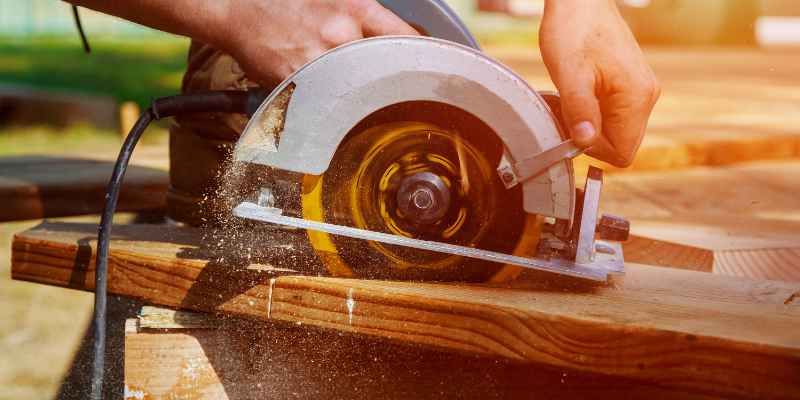
The Guard System: What’s Actually Required vs. What’s a Nice-to-Have
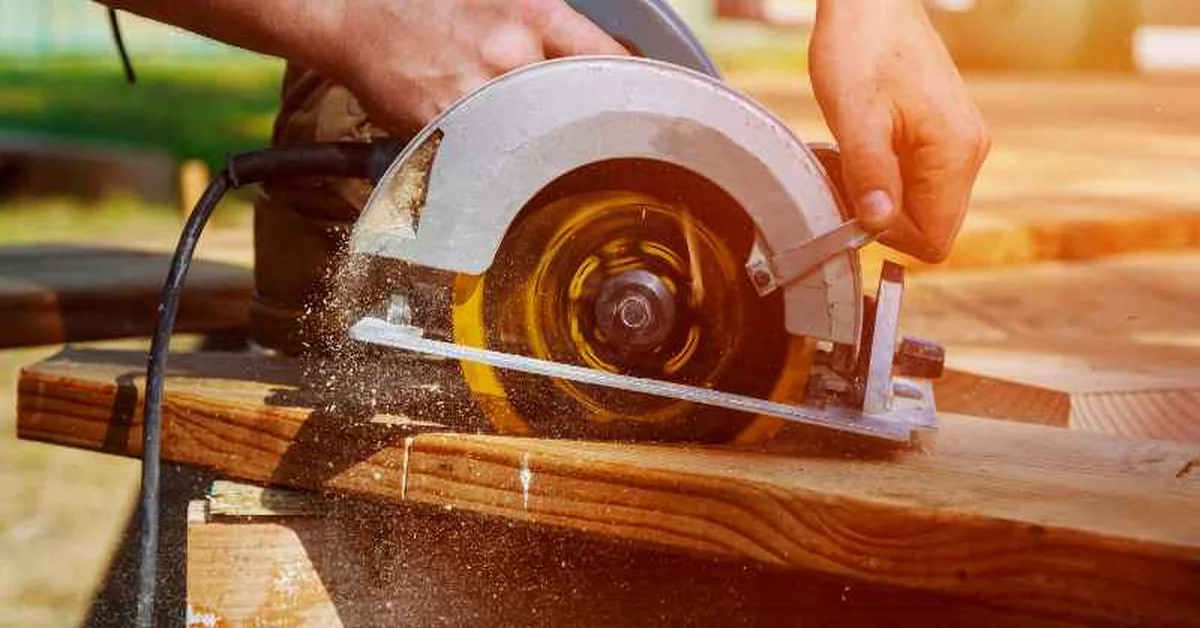
Every circular saw sold in the US has two required guards: a fixed upper guard that permanently covers the top half of the blade, and a retracting lower guard that automatically covers the exposed teeth the instant the saw comes off the material. The retracting guard is spring-loaded, and that spring is a wear part — if it gets gummed up with pitch and sawdust or the return spring weakens, the guard can hang up in the open position, which defeats the entire safety system. It should snap shut on its own every time you lift the saw; if it doesn’t, that’s a repair, not something to work around by propping it open. A separate feature, an electric blade brake, stops the blade’s rotation within a couple of seconds of releasing the trigger (instead of coasting for 10+ seconds) and is required on most saws sold today — it’s a motor-control feature, not a physical guard, so it can fail silently without any visible sign until you notice the blade keeps spinning too long.
Depth and Bevel Adjustment
Depth adjustment sets how far the blade drops below the shoe, and the rule of thumb worth remembering is to set it so no more than about a quarter-inch to a half-inch of tooth clears the bottom of your material. Cutting with the blade set too deep doesn’t cut faster — it exposes more blade above the material, which is both a bigger kickback risk and a bigger finger-safety risk for no benefit. Bevel adjustment tilts the shoe (not the blade) relative to the base, typically from 0° up to 45° or 56° depending on the model. Both adjustments lock with a lever or knob that clamps against a scale; if that scale reads 0° but your test cut isn’t actually square, the fix is usually recalibrating the scale’s zero point with a square, not replacing any part.
Frequently Asked Questions About Circular Saw Parts
What are the main parts of a circular saw?
The blade, the motor, the base plate (shoe), the guard system (fixed upper guard plus retracting lower guard), and the depth/bevel adjustment hardware. Most performance or safety problems trace back to just one of these five failing or being mismatched to the material.
Why does my corded circular saw spark or lose power?
Almost always worn carbon brushes, not a failing motor. Brushed motors use two spring-loaded brushes to conduct power to the spinning armature, and they wear down with normal use. A brush replacement kit is inexpensive and usually a 10-minute fix, and it’s worth trying before assuming the saw needs to be replaced.
What tooth count blade should I use?
24 teeth for fast, rough framing cuts; 40 teeth for everyday general carpentry; 60 teeth for clean cuts in plywood, veneer, and trim where splintering matters. Higher tooth counts cut slower but leave a smoother edge.
Why doesn’t my saw cut a square 90° or 45° angle even though the scale says so?
The bevel scale’s zero point can drift out of calibration over time or after an impact. Check the actual blade-to-shoe angle with a square rather than trusting the printed scale, and re-zero the scale’s indicator if it doesn’t match what the square shows.
Sponsored / affiliate links. As an Amazon Associate I earn from qualifying purchases. I may earn additional commission from eligible campaigns.