Circular Saw Size Guide: Maximize Your Cutting Precision!
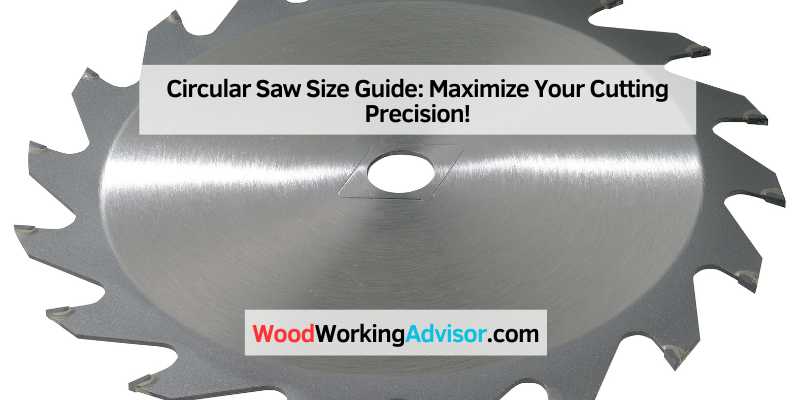
Circular saw sizes are determined by the diameter of the blade, which refers to the length between the tips of two opposite teeth, passing through the center of the saw blade. This measurement is typically given in inches, and it is used to rate all saws and saw blades.
The size of a circular saw blade can vary depending on the specific application and cutting needs. It is important to choose the right size circular saw for your DIY projects or professional use to ensure efficient and accurate cutting.
By considering the diameter of the blade, you can select the appropriate circular saw size for your woodworking or construction tasks.
Choosing The Right Circular Saw Size
When it comes to choosing a circular saw, size plays a crucial role in determining its usability and effectiveness. The right circular saw size can make all the difference in the success of your woodworking projects. In this article, we will explore the key factors to consider and the importance of blade size when choosing a circular saw.
Key Factors To Consider
When selecting the right circular saw size, several factors should be taken into account:
- Project Requirements: Consider the type and scale of projects you will be working on. Smaller saws are ideal for light-duty tasks, while larger saws are better suited for heavy-duty applications.
- Blade Capacity: Check the maximum blade size that the saw can accommodate. It’s important to choose a saw that can handle the size of blades needed for your projects.
- Portability: If you need to carry the saw to different job sites, consider the weight and size of the saw. A compact and lightweight saw can be more convenient for transportation.
- Power Source: Circular saws are available in corded and cordless options. Cordless saws offer mobility but may have limited power compared to corded models.
Importance Of Blade Size
The blade size of a circular saw is a crucial factor that directly impacts its cutting capacity and versatility. The diameter of the blade determines the depth of cut the saw can make. When choosing a circular saw, it’s essential to match the blade size to the requirements of your projects.
A larger blade size allows for deeper cuts, making it suitable for thick materials such as hardwood or plywood. On the other hand, a smaller blade size offers more precision and control, making it ideal for intricate cuts and smaller projects.
Moreover, the blade size also affects the overall performance and efficiency of the saw. A larger blade size typically requires a more powerful motor to maintain cutting speed, while a smaller blade size may be more energy-efficient.
It’s important to note that circular saw blades are rated based on their diameter, typically measured in inches. Common blade sizes range from 5 ½ inches to 7 ¼ inches, with the latter being the most widely used size in both professional and DIY applications.
Ultimately, choosing the right circular saw size is a balance between the type of projects you will be working on, the desired cutting depth, and the portability of the saw. By considering these key factors and understanding the importance of blade size, you can make an informed decision and select the perfect circular saw for your needs.
Types Of Circular Saws
When it comes to circular saws, there are various types to choose from, each offering unique features and benefits. Understanding the different types of circular saws can help you make an informed decision when purchasing one for your woodworking projects. Let’s explore the various types of circular saws in detail.
Corded Vs. Cordless
One of the primary distinctions among circular saws is whether they are corded or cordless. Corded circular saws are powered by electricity and are suitable for tasks that require continuous power without the need for recharging. On the other hand, cordless circular saws are powered by rechargeable batteries, offering the convenience of portability and freedom from cords. They are ideal for projects in locations where power outlets may not be readily accessible.
Compact Vs. Full-size Models
Another key consideration is the size of the circular saw. Compact models are lightweight and easy to maneuver, making them suitable for intricate or overhead cutting tasks. They are also ideal for DIY enthusiasts and hobbyists. Full-size models, on the other hand, are designed for heavy-duty cutting tasks and are equipped with larger blades for enhanced cutting capacity. They are commonly used in professional woodworking and construction projects where power and cutting depth are crucial.
When selecting a circular saw, it’s important to evaluate your specific requirements and the nature of your projects to determine whether a corded or cordless saw, as well as a compact or full-size model, would best suit your needs.
Understanding Blade Dimensions
When it comes to circular saws, understanding the blade dimensions is crucial for achieving precise and efficient cuts. Blade dimensions encompass various factors, including the diameter, cutting depth, arbor size, and their significance in different woodworking applications.
Blade Diameter And Cutting Depth
The blade diameter is the measurement of the circular saw blade from one side to the other through the center, typically expressed in inches. The size of the blade directly influences the cutting capacity of the saw. Larger blades are suitable for making deeper cuts, while smaller blades are ideal for more intricate and detailed cuts.
Arbor Size And Its Significance
The arbor size of a circular saw refers to the diameter of the hole at the center of the blade where it attaches to the saw’s arbor. It is crucial to ensure that the arbor size of the blade matches the arbor size of the saw to prevent any compatibility issues. Using a blade with an incorrect arbor size can lead to safety hazards and compromised cutting performance.
Matching Saw Size To Project Needs
Choosing the right circular saw size is crucial for ensuring the success of your woodworking projects. Whether you are a DIY enthusiast or a professional, understanding the appropriate saw size for your specific task is essential. In this section, we will explore the different saw sizes and their suitability for various projects.
DIY Projects And Appropriate Saw Sizes
For DIY projects, it’s important to select a circular saw size that matches the scale of your task. Here are some common DIY projects and the recommended saw sizes:
- Small Woodworking Projects: For smaller projects such as crafting wooden boxes or picture frames, a compact circular saw with a blade size of 4-1/2 inches or 5-1/2 inches would be ideal. These saws offer maneuverability and precision for intricate cuts.
- Furniture Building: If you are building furniture pieces like tables or chairs, a circular saw with a blade size of 7-1/4 inches would be suitable. This size provides the necessary power and versatility to handle larger cuts and thicker materials.
- Deck Construction: When it comes to building or repairing decks, a circular saw with a blade size of 7-1/4 inches or even 8-1/4 inches would be recommended. These larger saws have the capacity to handle pressure-treated lumber and make quick work of cutting through thick boards.
Professional Tasks And Heavy-duty Saws
For professional tasks and heavy-duty projects, it’s essential to invest in a circular saw with a larger blade size and more power. Here are some examples of professional tasks and the appropriate saw sizes:
- Remodeling and Construction: For remodeling projects, such as cutting through plywood or framing walls, a circular saw with a blade size of 7-1/4 inches or 8-1/4 inches would be suitable. These saws offer the necessary cutting depth and power to handle demanding tasks.
- Commercial Construction: In commercial construction projects, where cutting through thick beams or heavy materials is common, a circular saw with a blade size of 10 inches or larger would be recommended. These heavy-duty saws provide the strength and cutting capacity required for such tasks.
- Industrial Applications: For industrial applications that involve cutting large sheets of metal, concrete, or other heavy materials, specialized circular saws with even larger blade sizes and specific cutting capabilities may be required. It’s important to consult with experts in the field to determine the appropriate saw size for these unique tasks.
Remember, choosing the right circular saw size for your project is crucial for achieving accurate and efficient cuts. Always consider the size and type of materials you will be working with, as well as the complexity of the cuts you need to make. By matching the saw size to your project needs, you’ll ensure the best possible results and a smoother woodworking experience.
Circular Saw Features For Precision
When choosing a circular saw, consider the size of the blade for precision cutting. Different blade sizes offer varying cutting depths, so selecting the right size is crucial for your specific woodworking needs. Be sure to match the blade size with the material thickness for accurate and efficient cutting results.
Circular saws are powerful tools that come in different sizes and types. Choosing the right one for your project is important to ensure precision and accuracy. When it comes to circular saw features for precision, there are several things to consider. In this post, we will be focusing on two important features: laser guides and LED lights, and bevel capacity and cutline indicators.
Laser Guides And Led Lights
One of the most important features for precision in a circular saw is the use of laser guides and LED lights. These features help to provide a clear visual guide for the user, making it easier to follow the cutline accurately.
The laser guide emits a beam of light that indicates the exact location of the blade. This is especially useful when making angled cuts or cutting through thicker materials. On the other hand, LED lights illuminate the cutting area, making it easier to see the cutline clearly.
Bevel Capacity And Cutline Indicators
Another important feature for precision in a circular saw is the bevel capacity and cutline indicators. Bevel capacity refers to the angle at which the saw blade can be tilted, allowing for angled cuts. Cutline indicators, on the other hand, are markings on the base plate that help to guide the user when making cuts.
Both of these features are important for precision because they help to ensure that the user is making accurate cuts at the desired angle. With the help of these features, you can easily make precise cuts, even if you are a beginner.
In conclusion, when it comes to circular saw features for precision, laser guides and LED lights, and bevel capacity and cutline indicators are two important features to look for. By choosing a circular saw with these features, you can ensure that your cuts are accurate and precise, no matter what type of project you are working on.
Material Considerations
When it comes to material considerations for circular saws, size is an important factor to take into account. The diameter of a circular saw blade determines its overall size, and all saws and blades are rated on this size. It’s essential to choose the right size that fits your needs and the type of project you’re working on.
When it comes to choosing the right circular saw size for your project, it’s important to consider the type of material you will be cutting. Each material requires a different type of blade and circular saw size to ensure a clean and precise cut. Here are the material considerations to keep in mind:
Wood
Wood is one of the most common materials used in woodworking projects. When cutting wood, it’s important to choose a circular saw blade with a high tooth count and a large diameter to ensure a clean and accurate cut. A 7 1/4-inch circular saw blade is ideal for most wood cutting projects. However, if you are working with thicker pieces of wood, a larger circular saw size may be necessary.
Metal
When cutting metal, it’s important to choose a circular saw blade with a low tooth count and a smaller diameter to ensure a smooth and clean cut. A 6 1/2-inch circular saw blade is ideal for most metal cutting projects. However, if you are working with thicker pieces of metal, a larger circular saw size may be necessary.
Masonry
When cutting masonry materials such as brick, concrete, or stone, it’s important to choose a circular saw blade specifically designed for masonry cutting. These blades typically have a diamond-tipped edge and a large diameter to ensure a clean and precise cut. A 7-inch circular saw blade is ideal for most masonry cutting projects.
Choosing The Right Blade For The Material
In addition to choosing the right circular saw size for the material, it’s important to choose the right blade as well. Each blade is designed for a specific material and using the wrong blade can result in a poor-quality cut or even damage to the blade or saw. Always refer to the manufacturer’s instructions to choose the right blade for the material you will be cutting.
In conclusion, choosing the right circular saw size and blade for the material you will be cutting is essential for a successful and high-quality project. Keep these material considerations in mind and refer to the manufacturer’s instructions to ensure a clean and precise cut every time.
Safety And Handling
When it comes to using a circular saw, safety should always be a top priority. Understanding proper grip and handling techniques, as well as having essential safety gear, is crucial to ensure a safe and successful woodworking experience.
Proper Grip And Handling Techniques
Having a proper grip on the circular saw is essential for maintaining control and preventing accidents. Here are some key grip and handling techniques to keep in mind:
- Hold the saw firmly with both hands, ensuring that your dominant hand is on the handle and your non-dominant hand is supporting the base.
- Position your body in a stable stance with your feet shoulder-width apart to maintain balance.
- Keep your fingers away from the blade area and use the provided safety features, such as the blade guard, to minimize the risk of accidental contact.
- Ensure that the saw’s power switch is easily accessible and that you can turn it off quickly in case of an emergency.
- Always make sure the blade is not in contact with the material before starting the saw.
By following these grip and handling techniques, you can significantly reduce the risk of accidents and operate the circular saw safely.
Essential Safety Gear
Wearing the appropriate safety gear is vital when working with a circular saw. Here are some essential safety items to consider:
| Safety Gear | Description |
|---|---|
| 1. Safety Glasses | Protect your eyes from flying debris and potential hazards. |
| 2. Ear Protection | Reduce the risk of hearing damage caused by the loud noise generated by the saw. |
| 3. Dust Mask | Prevent inhaling harmful dust particles produced during cutting. |
| 4. Work Gloves | Provide hand protection and improve grip while handling the saw. |
| 5. Protective Clothing | Wear clothing that covers your body to protect against potential splinters or debris. |
By wearing the appropriate safety gear, you can minimize the risk of injuries and ensure a safe woodworking environment.
Remember, safety should always be the top priority when using a circular saw. By following proper grip and handling techniques and wearing essential safety gear, you can confidently tackle your woodworking projects while keeping yourself protected.
Maintenance And Blade Replacement
Proper maintenance and timely blade replacement are essential for ensuring the efficiency and longevity of your circular saw. By adhering to routine maintenance practices and promptly replacing worn-out blades, you can optimize the performance of your saw and achieve precise cuts consistently.
Routine Saw Maintenance
Regular maintenance of your circular saw is crucial to keep it functioning at its best. Here are some key maintenance tasks to perform:
- Regularly clean the saw blade, blade guard, and base plate to prevent the buildup of sawdust and debris.
- Inspect the power cord for any signs of damage and ensure it is securely connected.
- Check the blade alignment and adjust it if necessary to maintain accuracy in cutting.
- Lubricate the moving parts of the saw to minimize friction and ensure smooth operation.
Signs A Blade Needs Replacement
It’s essential to recognize the indications that a circular saw blade requires replacement. Look out for the following signs:
- Blade dullness, leading to rough and splintered cuts.
- Excessive vibration or wobbling during operation, indicating blade damage.
- Teeth with missing or chipped carbide, impacting cutting performance.
- Burn marks on the material being cut, indicating blade overheating and reduced effectiveness.
Popular Circular Saw Models
Top Picks For DIY Enthusiasts
For DIY enthusiasts, choosing the right circular saw size is crucial for tackling various projects with precision and efficiency. Here are the top circular saw models that cater to the needs of DIY enthusiasts:
- Bosch CS5 120-Volt Circular Saw: This lightweight and compact saw is ideal for DIY projects, offering a 15-amp motor and a left-blade design for clear visibility.
- DEWALT DWE575SB Lightweight Circular Saw: With a powerful 15-amp motor and a compact design, this saw provides excellent maneuverability and control for DIY tasks.
- SKIL 5280-01 Circular Saw: This budget-friendly saw features a 15-amp motor and a laser guide for accurate cuts, making it a popular choice among DIY enthusiasts.
Recommended Saws For Professionals
Professionals require precision, power, and durability from their circular saws to handle demanding projects. Here are the recommended circular saw models for professionals:
| Saw Model | Features |
|---|---|
| Makita 5007Mg Magnesium Circular Saw | Highly durable magnesium components, powerful 15-amp motor, and smooth, accurate cutting performance |
| SKILSAW SPT77WML-01 Lightweight Worm Drive Circular Saw | Lightweight yet powerful, this saw is designed for heavy-duty use and offers superior cutting capacity |
| DEWALT DWS535 7-1/4-Inch Worm Drive Circular Saw | Heavy-duty construction, high torque motor, and durable worm drive mechanism for professional-grade performance |
Buying Guide And Recommendations
When it comes to buying a circular saw, it’s important to consider the size that best fits your needs. Circular saws come in different sizes, and choosing the right one can greatly impact your woodworking projects. In this buying guide, we will discuss where to shop for circular saws and provide recommendations on comparing prices and features.
Where To Shop For Circular Saws
When looking for a circular saw, there are several options available to you. Here are some popular places to shop:
- Amazon.com: With a wide variety of brands and models, Amazon offers a convenient online platform to browse and compare circular saws.
- Harbor Freight Tools: If you prefer to see the saw in person before making a purchase, Harbor Freight Tools provides a brick-and-mortar option.
- Floor and Decor: If you need your circular saw right away, Floor and Decor offers in-store pickup for added convenience.
- ULINE: For those looking for a higher-end option, ULINE provides a selection of premium circular saws.
Comparing Prices And Features
When comparing circular saws, it’s important to consider both the price and the features they offer. Here are some factors to keep in mind:
- Battery Capacity: If you prefer a cordless circular saw, make sure to check the battery capacity to ensure it meets your needs.
- Weight Comparison: Consider the weight of the saw, as a lighter option may be more comfortable to use for extended periods.
- Saw Blade Costs: Take into account the cost of replacement saw blades, as this can vary depending on the size and type of blade.
By comparing prices and features, you can find a circular saw that meets your budget and requirements.
In conclusion, when purchasing a circular saw, it’s important to consider where to shop and compare prices and features. By following this buying guide, you can make an informed decision and find the perfect circular saw for your woodworking projects.

Frequently Asked Questions
What Size Circular Saw Is Best For DIY?
The best circular saw size for DIY projects is typically 7-¼ inches. This size is versatile enough to handle most cutting tasks and is commonly available. Remember to choose a saw blade suitable for the material you’ll be cutting.
How Deep Will A 7.25 Circular Saw Cut?
A 7. 25 circular saw can cut up to a depth of 2. 375 inches. It is important to use the correct blade size for optimal performance.
How Deep Can A 6.5 Circular Saw Cut?
A 6. 5 circular saw can typically cut up to a depth of 2 inches. However, the actual cutting depth may vary depending on the type of material being cut and the saw blade being used. It’s important to always refer to the manufacturer’s specifications for the specific saw and blade being used to ensure safe and accurate cutting.
How To Determine The Size Of A Circular Saw Blade?
To determine the size of a circular saw blade, measure the distance from one tip of the blade to the opposite tip. This diameter, measured in inches, represents the blade’s size.
Conclusion
Selecting the right size circular saw is crucial for achieving accurate and efficient cuts. It’s important to consider the blade diameter, power source, and intended use when choosing a circular saw. By referring to the circular saw size chart and taking the time to research and compare options, you can find the perfect saw for your DIY or professional projects.
Remember to always prioritize safety and proper usage techniques when operating any power tool.