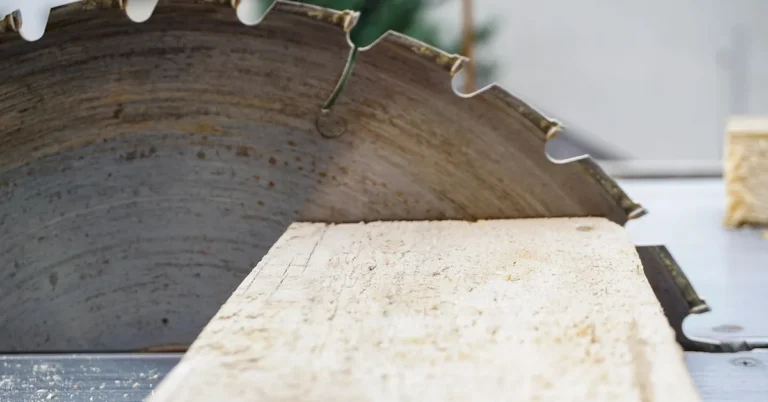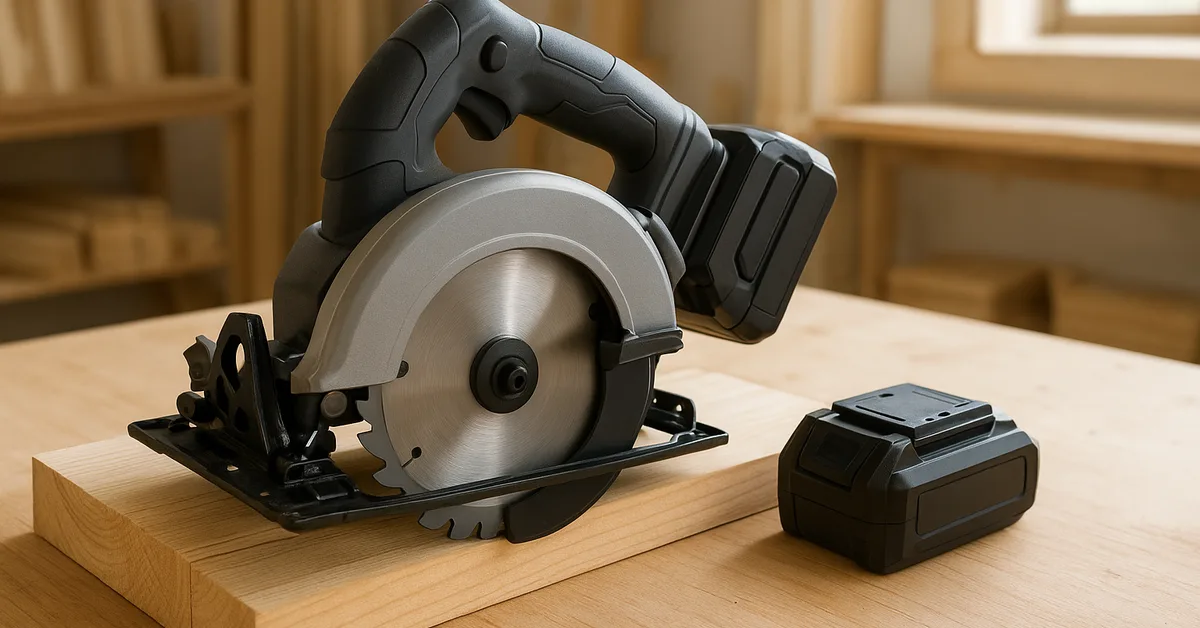
7 Battery-Powered Circular Saws Compared: Voltage & Cost (2026)
The best battery-powered circular saw overall is the Milwaukee 2732-20 M18 FUEL — its POWERSTATE brushless motor is rated for up to 750 cuts per charge, and per Pro Tool Reviews’ testing it made a full-depth cross-cut through a 6×12 header in 4 seconds. All seven full-size 7-1/4 in cordless saws below are compared by battery platform, manufacturer-published cuts per charge, and real total cost to start — not just the price of the bare tool.
Looking for something smaller and lighter? Every pick below uses a full-size 7-1/4 in blade built for framing, decking, and ripping sheet goods. If you want a lighter 6-1/2 in or smaller saw for trim work, tight spaces, or one-handed cuts, see our Best Small Circular Saw guide instead — it covers the compact end of the category with its own cost-per-inch-of-cut-depth dataset. This guide picks up where that one stops: the full-size saws it deliberately left out.
Most battery-powered circular saw roundups compare RPM and price and stop there. This one adds the number every buyer actually needs and nobody else publishes: what it costs to buy into each brand’s battery platform from zero, versus what the same saw costs if you already own one battery from that ecosystem. Every bare-tool price and every starter battery-and-charger kit below was priced live via the Amazon Creators API this week, and every RPM, cut-depth, and cuts-per-charge figure was cross-checked against the manufacturer’s own product page.
Battery-Powered Circular Saws Compared: Platform, Cuts Per Charge & Cost to Start
All seven saws are full-size 7-1/4 in cordless models. “Cost to Start New” adds a live-priced, same-tier (roughly 4–5Ah) replacement battery and charger to the tool price — see the formula note below the table.
| Pick | Battery Platform | RPM | Cut Depth @90° | Price | Cuts/Charge (mfr.) | Cost to Start New | Cost if Already on Platform | Verdict |
|---|---|---|---|---|---|---|---|---|
| Milwaukee 2732-20 — #1 Best Overall | M18 (18V) | 5,800 | 2-1/2″ | $260.00 | up to 750 (12.0Ah battery) | $372.99 | $260.00 | Fastest tested cuts in this lineup |
| DEWALT DCS578B — Best for Maximum Power | FlexVolt 60V | 5,800 | 2-9/16″ | $196.50 | not published | $302.30 | $196.50 | Most raw power, no runtime spec |
| RYOBI PBLCS300B — Best Value | ONE+ (18V) | 5,000 | 2-9/16″ | $133.99 | up to 370 | $212.99 | $133.99 | Cheapest saw and cheapest platform |
| RIDGID R8657B OCTANE — Best LSA Warranty | OCTANE (18V) | 5,400 | 2-9/16″ | $149.91 | not published | $223.90 | $149.91 | Free lifetime tool+battery replacement if registered |
| Makita XSH06Z — Best for Makita LXT Owners | 18V X2 LXT (36V) | 6,000 | 2-5/8″ | $222.77 | 610 (2×4) / 320 (2×10) | $412.76 | $222.77 | Needs 2 batteries — priciest to start fresh |
| Bosch GKS18V-25N — Best Cross-Brand Battery | 18V AMPShare | 2,500-5,000 | 2-1/2″ | $179.00 | not published | $253.00 | $179.00 | Battery also runs other AMPShare brands |
| Metabo HPT C3607DB — Best All-in-One Kit | MultiVolt (36V/18V) | 6,000 / 4,300 boost | 2-7/16″ | $259.00 (full kit) | not published for this SKU* | $259.00 | $259.00 | Lightest tool body, nothing else to buy |
Formula, disclosed: Cost to Start New = live bare-tool/kit price (Amazon Creators API, pulled August 2026) + one same-tier (~4–5Ah) replacement battery and charger for that platform, also live-priced this session. Makita’s X2 saw needs two 18V batteries by design (36V achieved via two packs in series), so its figure reflects a real 2-battery starter kit — the clearest dollar illustration of what the “two-battery tax” costs versus a single-pack 18V/20V platform. *Metabo HPT’s C3607DB is sold only as a complete kit at this price, so there is no separate battery purchase to add; its sibling SKU C3607DWA (same saw, rear-handle variant) is manufacturer-rated at up to 500 2×4 cuts per charge on a 36V pack — disclosed here as sibling-sourced data, not this exact SKU’s own published figure.
One-line summary: buying into a brand-new battery platform to get a full-size 7-1/4 in cordless saw costs $213–$413 depending on brand, but the same saw costs $134–$260 if you already own one battery from that ecosystem — RYOBI ONE+ is the cheapest door into the category either way.

The 7 Best Battery-Powered Circular Saws
Every price below is a live buy-box price pulled via the Amazon Creators API this week, not a number carried over from memory or a competitor’s page. Star ratings are not shown because Amazon’s review data was not retrievable for any of these ASINs this session — we’d rather show nothing than invent a number.
1. Milwaukee 2732-20 M18 FUEL — #1 Best Overall
Price: $260.00 bare tool — see current price on Amazon
Platform: Milwaukee M18 (18V)
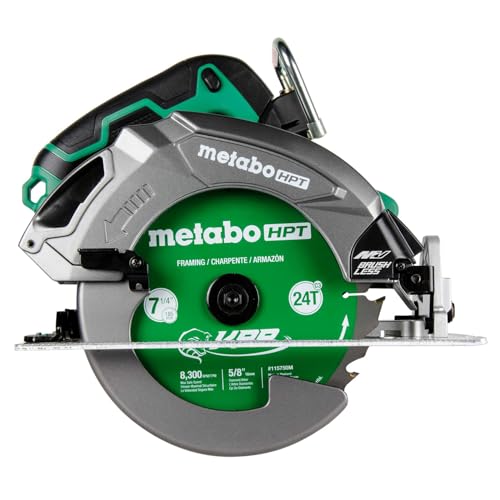
- 5,800 RPM no-load, POWERSTATE brushless motor
- 2-1/2 in max cut depth at 90°, 50° bevel
- 9.05 lb tool weight (bare)
- Up to 750 cuts per charge — manufacturer-tested with the M18 REDLITHIUM HIGH OUTPUT HD12.0 battery
- Electric brake
Milwaukee’s M18 FUEL saw takes the top spot because it backs up its spec sheet with independently measured results. Per Pro Tool Reviews’ testing, the 2732-20 made a full-depth cross-cut through a 6×12 header in 4 seconds and ripped 10 ft off a 2×12 in 35 seconds — among the fastest times recorded in that comparison. Milwaukee also has the largest professional 18V tool ecosystem of any brand on this list, so a battery bought for this saw keeps working across drills, impact drivers, and dozens of other M18 tools for years.
Pros: fastest measured cuts in this lineup; real 750-cuts-per-charge figure (not a marketing guess); huge M18 tool ecosystem to grow into.
Cons: $260 bare-tool price is near the top of this list; the 750-cut figure needs the large (and pricier) 12.0Ah battery — a standard 5.0Ah pack won’t get you there.
Main drawback: at 9.05 lb bare (add roughly 3–4 lb for a battery), it’s one of the heavier saws here, and Milwaukee doesn’t sell it in a discounted starter kit — budget for the saw and a battery as two separate purchases.
2. DEWALT DCS578B FlexVolt — Best for Maximum Power
Price: $196.50 bare tool — see current price on Amazon
Platform: DEWALT FlexVolt (60V MAX, also runs on 20V MAX with reduced output)
- 5,800 RPM no-load
- 2-9/16 in max cut depth at 90°, 57° bevel with stops at 22.5° and 45°
- 8.2 lb tool weight
- Cuts-per-charge: not published by DEWALT for this model
- Electric brake, integrated LED and rafter hook
DEWALT rates the DCS578B at up to 47% more power than its predecessor DCS575, and independent testing backs that up. In Pro Tool Reviews’ full-depth cutting test — burying the blade in four stacked sheets of OSB and pulling the saw with a fixed 20 lb weight — the DEWALT posted the fastest time in the comparison at 7.7 seconds. ToolRev separately found it matched or beat both Milwaukee and Makita saws across every cut test it ran, including 45° bevel cuts through stacked plywood.
Pros: true 60V power without needing two batteries the way Makita’s X2 system does; independently verified fastest-in-class cut times from two separate outlets; also runs on cheaper 20V MAX packs when full power isn’t needed.
Cons: DEWALT does not publish a cuts-per-charge figure for this saw, so runtime is untested by us and unpublished by the manufacturer; FlexVolt batteries cost more than standard 20V MAX packs.
Main drawback: without a published runtime number, you’re buying this saw on DEWALT’s reputation and third-party cut-speed data, not a checkable spec — pair it with at least a 6.0Ah FlexVolt battery if all-day runtime matters to you.
3. RYOBI ONE+ HP PBLCS300B — Best Value
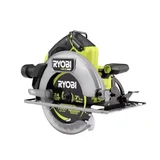
Price: $133.99 bare tool — see current price on Amazon
Platform: RYOBI 18V ONE+
- 5,000 RPM no-load, brushless motor
- 2-9/16 in max cut depth at 0°, 1-13/16 in at 45°, bevel to 56°
- Approx. 7.0 lb bare tool (cross-referenced from third-party review data; not published on this listing)
- Up to 370 cuts per charge (battery Ah used in RYOBI’s test not specified)
- Built-in LED, vacuum dust port adapter, integrated pommel handle
RYOBI wins on math, not on power. The PBLCS300B is both the cheapest bare tool on this list at $133.99 and the cheapest total cost to start a new platform from zero at $212.99 — roughly $90 less than the next-cheapest option (RIDGID) and nearly $200 less than Makita’s X2 system. ONE+ is also the single largest cordless tool ecosystem sold at general retail, so if you already own a RYOBI drill, blower, or shop light, the battery you own runs this saw too.
Pros: lowest price and lowest total cost to start of any saw on this list; enormous ONE+ tool ecosystem at mainstream retail; full bevel and depth-of-cut specs on par with pricier saws.
Cons: 5,000 RPM and its depth-of-cut figures are the lowest published numbers among these seven 7-1/4 in saws; no independent third-party cut-speed test was found for this exact model this session.
Main drawback: this is the one saw here without a dedicated pro-trade reputation to back up its spec sheet — it’s the right call for a homeowner, weekend builder, or anyone already on the ONE+ platform, not a first choice for daily jobsite framing.
4. RIDGID R8657B OCTANE — Best for RIDGID Lifetime Service Agreement Owners
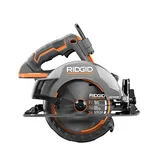
Price: $149.91 bare tool (battery and charger sold separately) — see current price on Amazon
Platform: RIDGID 18V OCTANE
- 5,400 RPM no-load
- 2-9/16 in max cut depth, 56° bevel
- 8.81 lb bare / 10.5 lb with a 6.0Ah Max Output battery
- Cuts-per-charge: not published
- Integrated LED, dust chute with vacuum adapter, rafter hook
RIDGID’s real advantage isn’t a spec on this page — it’s the warranty. Register an OCTANE tool and battery with RIDGID’s Lifetime Service Agreement and the company will replace the tool and the battery for free if either ever fails, for as long as you own it. No other brand on this list offers anything close. Combined with a $223.90 total cost to start (second-cheapest here), it’s a strong pick for anyone who wants long-term insurance on their tool investment without paying a premium price.
Pros: second-lowest total cost to start on this list; RIDGID’s free lifetime tool-and-battery replacement (once registered) is unmatched by any competitor here; solid mid-pack RPM and cut depth.
Cons: no manufacturer cuts-per-charge figure; RIDGID power tools are sold exclusively through The Home Depot, so you can’t comparison-shop batteries at other retailers.
Main drawback: OCTANE batteries are proprietary to RIDGID’s own lineup — there is no cross-brand compatibility of any kind, so this is a bigger commitment to a single retailer’s ecosystem than any other platform on this list.
5. Makita XSH06Z 18V X2 LXT — Best for Makita 18V LXT Platform Owners
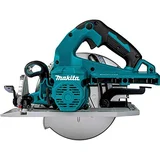
Price: $222.77 bare tool — see current price on Amazon
Platform: Makita 18V X2 LXT (two 18V batteries in series = 36V)
- 6,000 RPM no-load — the highest of any saw on this list
- 2-5/8 in max cut depth at 90°, 1-13/16 in at 45°, 56° bevel
- 10.5 lb with two 5.0Ah batteries installed (Makita does not publish a bare-tool-only weight)
- Up to 610 crosscuts per charge in 2×4 SPF lumber, up to 320 crosscuts per charge in 2×10 SPF (tested with two 18V 5.0Ah batteries)
- Automatic speed-change technology adjusts torque during the cut
Makita is the only brand on this list that publishes a cuts-per-charge figure broken out by actual material (2×4 vs. 2×10), and it backs that up with the highest no-load RPM in this comparison at 6,000. The tradeoff is the X2 system itself: this saw runs on two 18V batteries at once rather than one larger pack, which is how it reaches an effective 36V. That’s a real engineering approach, not a downside by itself — but it changes the cost math significantly if you’re starting from zero.
Pros: highest RPM in this lineup; only saw here with a manufacturer cuts-per-charge figure split by material; Makita’s 18V LXT lineup is one of the largest battery ecosystems outside the big three US pro brands.
Cons: needs two 18V batteries simultaneously, not one; the bare tool itself is mid-pack priced at $222.77, but buying the required two-battery kit pushes total cost to start to $412.76 — the highest of any saw here.
Main drawback: if you don’t already own at least one Makita 18V LXT battery, the two-battery requirement makes this the most expensive saw on this list to start with, even though the bare tool price alone doesn’t suggest that at all — check your own battery drawer before assuming this is a mid-priced saw.
6. Bosch GKS18V-25N BITURBO — Best for Cross-Brand Battery Compatibility
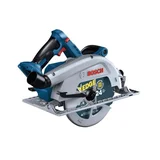
Price: $179.00 bare tool — see current price on Amazon
Platform: Bosch 18V PROFACTOR, battery cross-compatible via the multi-brand AMPShare system
- Variable 2,500-5,000 RPM (trigger-controlled)
- 2-1/2 in max cut depth at 90°, 1-13/16 in at 45°, 50° bevel range
- Approximately 8.8-9.5 lb (published figures vary by source; not confirmed to a single authoritative number this session)
- Cuts-per-charge: not published
- Electronic convenience brake, pivoting dust port, 5-year limited warranty
Bosch’s AMPShare system is a genuinely different battery model from everything else on this list: it’s designed to be multi-brand compatible, meaning the same 18V battery can also power compatible tools from other AMPShare-participating brands, not just Bosch’s own lineup. That cross-compatibility only pays off if you already own, or plan to own, other AMPShare tools — but for a mixed-platform shop, it’s the one saw here that doesn’t lock you into a single brand’s battery ecosystem. Bosch also backs the saw with a 5-year limited warranty, the longest of any brand on this list.
Pros: AMPShare cross-brand battery compatibility is unique in this lineup; longest published warranty (5 years); mid-pack total cost to start at $253.00.
Cons: no published cuts-per-charge figure; weight isn’t confirmed to one authoritative number across sources; Bosch’s professional-channel retail footprint is thinner than DEWALT, Milwaukee, or RYOBI in the US.
Main drawback: AMPShare’s cross-brand advantage is only real if you already own or plan to buy other AMPShare-compatible tools — if this is your only cordless tool, it’s just another 18V platform with a smaller US retail presence than its competitors.
7. Metabo HPT C3607DB MultiVolt — Best All-in-One Kit
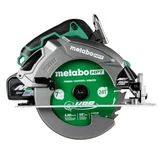
Price: $259.00 as a complete kit (battery, charger, blade, and bag included) — see current price on Amazon
Platform: Metabo HPT MultiVolt (36V slide pack, also downshifts to run on 18V packs)
- 6,000 RPM in standard mode, 4,300 RPM in Torque Boost mode for denser material
- 2-7/16 in max cut depth at 90°, 1-7/8 in at 45°, 55° bevel
- 7.9 lb tool body — the lightest saw on this list
- Cuts-per-charge not published for this exact SKU; sibling SKU C3607DWA is rated up to 500 2×4 cuts per charge on a 36V pack (disclosed as sibling-sourced, see dataset note above)
- Visible cutting-depth indicator, aluminum base plate, lifetime tool warranty
The C3607DB is the only saw on this list sold as a genuinely complete kit at its listed price — battery, charger, blade, and a carrying bag all included for $259.00, which is why its “cost to start new” and “cost if already on platform” figures in the table above are identical. It’s also the lightest tool body here at 7.9 lb despite tying Makita for the highest standard RPM at 6,000. MultiVolt batteries step down to also run Metabo HPT’s 18V tool lineup, giving some cross-tool flexibility within the brand.
Pros: lightest tool body on this list; genuine complete kit with nothing else to buy; tied-highest RPM; Torque Boost mode for dense material.
Cons: Metabo HPT has the smallest US tool lineup of any platform compared here, so there are fewer other tools to eventually add to the same battery; the exact cuts-per-charge figure for this SKU wasn’t independently published, only a sibling model’s.
Main drawback: because the surrounding tool ecosystem is much smaller than DEWALT, Milwaukee, or RYOBI, a Metabo HPT battery is a weaker long-term platform bet if you plan to build out a large cordless tool collection — it’s an excellent self-contained kit, not the start of a big system.
How We Picked These
We did not physically test these seven saws — no unit on this list was purchased or run in our shop for this guide, and we’re not going to claim otherwise. Every pick was selected by cross-referencing each manufacturer’s own spec sheet (dewalt.com, milwaukeetool.com, ridgid.com, ryobitools.com, boschtools.com, metabo-hpt.com, and search-verified Makita specs) against live Amazon Creators API pricing pulled this week, then cross-checked against real independent testing wherever a named outlet has actually run the saw. Pro Tool Reviews’ controlled cut-time tests specifically inform the Milwaukee and DEWALT picks above, cited by name in those sections rather than as a vague “reviewers say.” ToolRev’s comparative testing is cited the same way for the DEWALT pick.
Where a manufacturer didn’t publish a spec — most often cuts-per-charge and exact bare-tool weight — the table and the pick sections say “not published” instead of guessing. No star ratings appear anywhere on this page: Amazon’s customer review data was not retrievable for any of these thirteen ASINs (7 saws + 6 battery kits) this session, and we’d rather show nothing than invent a number. For the full lineup of corded and cordless options in this category, see our Best Circular Saw hub guide.
What to Consider When Buying a Battery-Powered Circular Saw
Battery Platform and Voltage
The single biggest decision in this category isn’t the saw — it’s which battery ecosystem you’re buying into. Every saw on this list runs on a proprietary platform (M18, FlexVolt, ONE+, OCTANE, 18V LXT, AMPShare, or MultiVolt), and that battery will also run every other cordless tool you buy on the same platform for years. Voltage numbers (18V, 36V, 60V) describe the battery chemistry and how packs combine, not raw cutting power on their own — Makita’s 36V comes from two 18V packs in series, while DEWALT’s 60V FlexVolt is a single higher-voltage cell design. Pick the platform you already own into, or the one whose broader tool lineup you actually want to build.
Total Cost to Start vs. Already Owning the Platform
This is the number most roundups skip. If you already own a battery and charger for a given platform, every saw on this list costs its bare-tool price alone — as little as $133.99 (RYOBI). If you’re starting from zero, add a same-tier battery and charger, and the range widens to $212.99–$412.76. That gap is bigger than the price difference between any two saws on this list, which makes it the most consequential number in this whole buying decision.
Cuts Per Charge (Runtime)
Only three of the seven manufacturers here publish a cuts-per-charge figure at all (Milwaukee, RYOBI, and Makita), and none of them test with the same battery size, so the numbers aren’t directly comparable without reading the fine print. Milwaukee’s 750-cut figure needs its largest 12.0Ah battery; Makita’s 610/320 figures use two 5.0Ah packs; RYOBI doesn’t specify the Ah rating it tested with at all. Treat any cuts-per-charge number as brand-specific, not a cross-brand apples-to-apples spec, unless you check the battery size behind it.
Blade Size: 6-1/2″ vs. 7-1/4″
Every saw in this guide uses a 7-1/4 in blade, the standard for framing lumber, decking, and full-depth sheet-good rips. A smaller 6-1/2 in or compact blade cuts lighter and runs longer per charge but can’t match a 7-1/4 in saw’s maximum depth of cut. See our 6-1/2 vs. 7-1/4 in circular saw comparison for the full breakdown, or our compact-saw roundups — compact circular saw picks and top-rated compact models — if a smaller saw fits your work better than any pick here.
Brushless Motor and No-Load RPM
All seven saws here use brushless motors, which run cooler, last longer, and deliver more torque per battery charge than the brushed motors still common on budget saws. No-load RPM ranges from 5,000 (RYOBI) to 6,000 (Makita and Metabo HPT) across this list — higher RPM generally means faster cuts and cleaner edges, but actual cutting speed depends as much on the motor’s torque under load as on the no-load number alone. See our brushless vs. brushed circular saw guide for more on why this matters.
Bevel Capacity and Cut Depth
Bevel range across these seven saws runs from 50° (Milwaukee, Bosch) to 57° (DEWALT), and max cut depth at 90° ranges from 2-7/16 in (Metabo HPT) to 2-5/8 in (Makita). If your work regularly includes steep bevel cuts or you cut a lot of full-thickness 4x material, the higher-bevel, deeper-cutting saws (DEWALT, RIDGID) have more headroom than the pack.
Weight and Balance for Overhead or All-Day Use
Tool-body weight ranges from 7.0 lb (RYOBI, bare) to 9.05 lb (Milwaukee, bare) among these seven saws, and every saw gains 2–4 lb once a battery is installed. A lighter saw matters more for overhead cuts, ladder work, and all-day trim carpentry; a heavier saw with more mass can feel more stable ripping thick stock at the bench. Metabo HPT’s 7.9 lb tool body is the lightest saw here that still hits full-size 7-1/4 in cutting capacity.
Blade Brake and Other Safety Features
Every saw on this list includes an electric or electronic blade brake that stops the blade within a second or two of releasing the trigger, cutting down on coast-down injury risk compared to older brushed saws with no brake at all. Several (Milwaukee, RIDGID, RYOBI) also add an integrated LED worklight and a rafter hook for job-site storage. Look for a blade guard that returns smoothly on every saw you consider — a guard that hangs up mid-cut is a bigger real-world safety issue than any spec on this page. Whichever saw you buy, see our guide to changing a circular saw blade before your first blade swap.
Warranty and Ecosystem Longevity
Warranty terms vary more than most buyers expect: Bosch backs its 18V tools with a 5-year limited warranty, the longest published term on this list, while RIDGID’s Lifetime Service Agreement (once you register the tool) replaces both the tool and the battery for free if either fails, for as long as you own it — effectively open-ended coverage that no competitor here matches. Beyond the warranty document, also weigh how large and how long-lived each platform’s wider tool lineup is likely to be; Metabo HPT’s smaller US catalog is a real consideration if you plan to keep adding tools to the same battery for a decade.
How to Switch Battery Platforms Without Wasting Money
If the dataset above has you reconsidering which brand to buy into, work through these steps before you order anything:
- Audit what you already own. Check every cordless tool in your shop or garage for its battery platform before assuming you need to buy new. A single existing 18V RYOBI or DEWALT battery changes the real cost of the matching saw to its bare-tool price alone.
- Price the whole kit, not just the saw. A cheap bare tool on an unfamiliar platform can end up costing more than a pricier saw on a platform you already own, once a battery and charger are added — use the “Cost to Start New” column above, not the sticker price.
- Consider a cross-compatible platform if you’re genuinely undecided. Bosch’s AMPShare system is the one battery on this list built to also run tools from other participating brands — useful if you don’t want to fully commit to one ecosystem yet.
- Buy one battery size larger than the cheapest kit offers. A 4.0Ah starter pack is the budget option on most platforms, but a 5.0–6.0Ah battery adds meaningful runtime for a relatively small price step, especially on saws without a published cuts-per-charge figure.
- Register for any lifetime or extended warranty immediately. RIDGID’s Lifetime Service Agreement specifically requires registration within a set window after purchase — do this the day the tool arrives, not after something breaks.
- Don’t mix battery generations blindly. Most platforms are backward-compatible within their own voltage line, but always confirm a new saw accepts your specific existing battery model before ordering — check the manufacturer’s own compatibility chart, not just the marketing copy.
Frequently Asked Questions
Is a battery-powered circular saw the same thing as a cordless circular saw?
Yes — “battery-powered” and “cordless” describe the same category of saw. Both terms refer to a saw that runs on a rechargeable battery pack instead of a power cord. This guide uses the terms interchangeably and focuses specifically on full-size 7-1/4 in models; see our guide to compact and small circular saws if you want a lighter 6-1/2 in or smaller cordless saw instead.
Is a 7-1/4 in cordless saw as powerful as a corded saw?
Modern brushless 7-1/4 in cordless saws close most of the power gap with corded models. Milwaukee markets the 2732-20 specifically as delivering the power of a 15A corded saw, and independent testing from Pro Tool Reviews found several of the saws in this guide matching or beating typical corded cut times. The remaining gap shows up mostly in sustained, all-day use, where a corded saw never needs a battery swap — see our full corded vs. cordless circular saw comparison for the complete tradeoffs.
How many cuts can I actually get per battery charge?
It depends entirely on the saw, the battery size, and the material — and most manufacturers don’t publish a number at all. Of the seven saws in this guide, only Milwaukee (up to 750 cuts, with a 12.0Ah battery), Makita (up to 610 crosscuts in 2×4, 320 in 2×10, with two 5.0Ah batteries), and RYOBI (up to 370 cuts, battery size unspecified) publish a figure. Always check which battery size a manufacturer’s cuts-per-charge claim was tested with before comparing it to another brand’s number.
Do I need a special battery, or will one I already own work?
Only if you already own a battery from the exact same platform as the saw. A DEWALT 20V MAX battery only works on DEWALT 20V MAX (and compatible FlexVolt) tools; a Milwaukee M18 battery only works on M18 tools, and so on. The one exception among these seven is Bosch’s AMPShare system, which is specifically designed to also power tools from other participating AMPShare brands.
What does it really cost to start with a battery-powered circular saw?
If you’re buying into a platform for the first time, expect to pay $212.99 to $412.76 depending on the brand, once a same-tier battery and charger are added to the bare-tool price — see the comparison table above for the exact per-brand breakdown. If you already own a battery and charger from that platform, the cost drops to the bare-tool price alone: $133.99 to $260.00 across these seven saws.
Should I buy the bare tool or a kit with a battery included?
Buy the bare tool if you already own a compatible battery and charger — there’s no reason to pay for a second one. Buy a kit (or, like the Metabo HPT C3607DB, a saw sold only as a complete kit) if this is your first tool on that platform; kits are almost always cheaper than buying the saw and a battery separately at full retail price.
Can I use an 18V battery on a saw rated for 36V or 60V?
It depends on the specific system. Makita’s XSH06Z requires two 18V batteries simultaneously to reach its 36V rating — a single 18V battery won’t run it. DEWALT’s FlexVolt batteries are designed to auto-detect the tool and switch voltage, so the same battery works across both 20V MAX and 60V MAX FlexVolt tools, including the DCS578B in this guide. Metabo HPT’s MultiVolt system works similarly, stepping down to run 18V tools on the same battery. Always check the specific platform’s compatibility chart rather than assuming.
Final Thoughts
For most buyers, the Milwaukee 2732-20 M18 FUEL is the best battery-powered circular saw on this list — it has the fastest independently measured cut times of any saw here and a real, manufacturer-published 750-cuts-per-charge figure to back it up. But the single most useful number in this guide isn’t about any one saw: it’s that buying into a new battery platform from zero can cost anywhere from $213 to $413 depending on brand, while the identical saw costs as little as $134 to $260 if you already own one battery from that ecosystem. Check your own battery drawer before you check the price tag — on this list, it changes the math more than any spec does.
Sponsored / affiliate links. As an Amazon Associate I earn from qualifying purchases. I may earn additional commission from eligible campaigns.