COREtec vs. NuCore: Real Differences in Core, Wear Layer & Price
COREtec and NuCore are two of the most common names you’ll run into when shopping for rigid-core luxury vinyl plank (LVP) flooring, and the confusion is understandable – both are waterproof, both click together without glue, and both are sold as a step up from traditional sheet vinyl. But they’re not interchangeable. COREtec (made by USFloors, now part of Shaw Industries) popularized the wood-plastic composite (WPC) core and also sells a denser SPC line today. NuCore is Floor & Decor’s own house brand, built on a stone-plastic composite (SPC) core from the start.
That core difference, plus real gaps in wear-layer thickness and price per square foot, is what actually separates these two brands – not just which name you’ve heard of at the store. Here’s what changes between them, and what to check before either one goes on your subfloor.
COREtec vs. NuCore: The Short Answer
COREtec generally costs more per square foot and offers a wider range of wear-layer thicknesses, including a 30-mil option in its Premium line – a real advantage in high-traffic homes with dogs or kids. NuCore’s SPC-only core is denser and more dimensionally stable across temperature swings, and it undercuts COREtec on price while still carrying a wear layer in the 20 to 22-mil range, which is plenty for most residential rooms. If budget is the deciding factor and you’re not flooring a mudroom or a rental with heavy turnover, NuCore is the more defensible pick. If you want the option to go thicker on the wear layer or you’re covering a large, varied space, COREtec’s product range gives you more room to match the floor to the room.
Whichever brand ends up on your floor, both are still vinyl – which means the wrong cleaner can dull the finish or leave a haze over time. This is the one we’d reach for on either brand:
Best Cleaner for Rigid-Core LVP
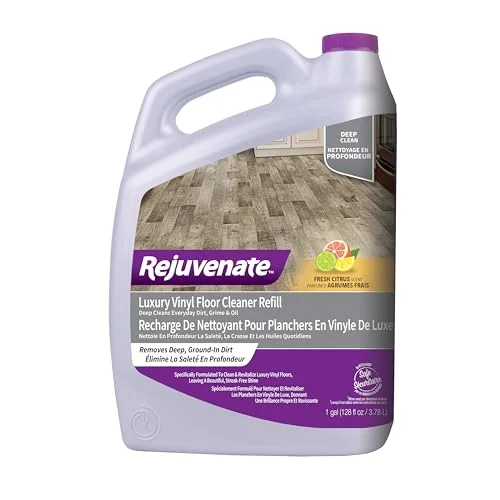 |
Rejuvenate Luxury Vinyl Floor Cleaner, 1 Gal – $16.62 A pH-balanced, no-streak formula made specifically for LVP – safe on both COREtec’s and NuCore’s finish, unlike generic all-purpose cleaners.
|
Core Construction: WPC vs. SPC
This is the biggest structural difference between the two brands. COREtec sells two core types under one name: COREtec Originals uses a wood-plastic composite (WPC) core – a mix of recycled wood fiber, foaming agents, and PVC that’s softer underfoot and quieter to walk on. COREtec Pro moves to a denser stone-plastic composite (SPC) core for spaces that need more rigidity, like commercial areas or rooms with uneven subfloors.
NuCore skips the WPC option entirely and builds every plank on an SPC core – a blend of limestone powder and PVC. SPC is denser and more rigid than WPC, which makes it more dimensionally stable when temperatures swing (a real plus over a sunroom or near a patio door), but it’s also harder underfoot and can feel and sound different when walked on compared to a WPC floor.
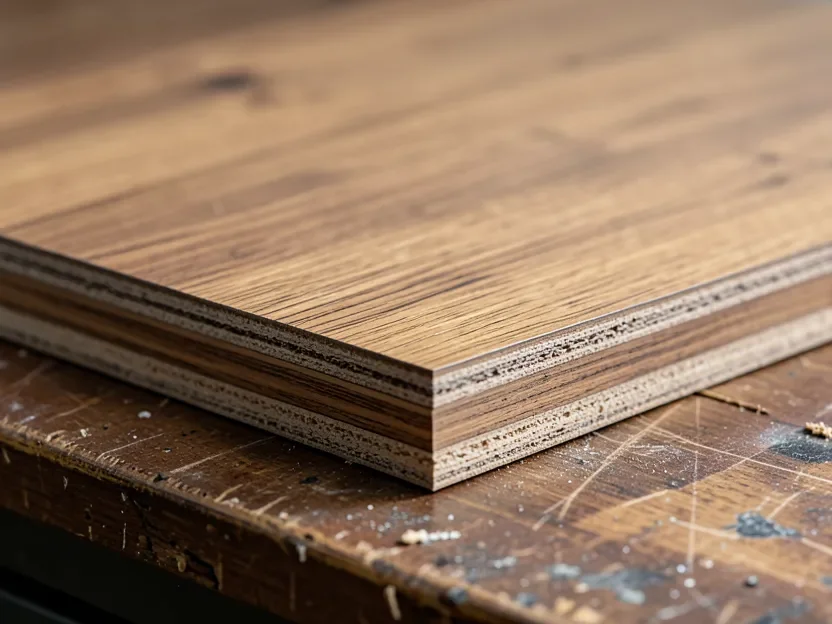
Practically, that means COREtec gives you a choice between “softer and quieter” (Originals/WPC) and “denser and more rigid” (Pro/SPC), while NuCore only offers the denser SPC feel across its whole line.
Wear Layer and Durability
The wear layer is the clear top coating that actually takes the scratches, so it’s the spec worth checking closest. NuCore’s planks typically carry a wear layer in the 20 to 22-mil range – Floor & Decor lists it as “20 mil or greater” depending on the specific product line. COREtec’s range is wider: its Originals Enhanced line starts around 22 mil, and the Originals Premium line goes up to 30 mil.
A thicker wear layer resists visible scratching and scuffing longer, which matters more in a home with large dogs, a lot of furniture movement, or kids dragging toys across the floor. For an average bedroom or living room with normal foot traffic, the 20-22 mil range on either brand is genuinely enough – you’re paying for the extra durability margin, not filling a real gap in a low-traffic room. If you want the full math on how mil thickness translates to real-world wear, our 6 mil vs. 12 mil vinyl plank flooring comparison breaks down what changes at each thickness tier.
Price Per Square Foot
NuCore sits in the value tier of the rigid-core LVP market, generally running about $3 to $7 per square foot for material. COREtec runs higher across most of its range, typically $3 to $8 per square foot, with the thicker-wear-layer Premium products pushing toward the top of that band. In practice, COREtec tends to cost somewhere between a few dollars and up to $8-9 more per square foot than a comparable NuCore product, depending on which specific lines you’re comparing – so the gap can be small on entry-level COREtec, or wide once you move up to a 30-mil Premium plank.
Installation cost is a separate line item either way – both are DIY-friendly click-lock systems, but professional installation typically adds $2 to $5 per square foot on top of material cost regardless of which brand you choose.
Installation and Warranty
Both brands use a glueless click-lock system designed for DIY installation – no adhesive, no nails, just a subfloor that’s clean, dry, and reasonably level. You’ll want a jigsaw or a fine-tooth blade for cuts, a tapping block, and a rubber mallet for either brand; neither one requires specialty tools beyond that.
Warranty coverage is where COREtec pulls ahead on paper: many COREtec residential lines carry a lifetime residential warranty. NuCore’s warranty terms are typically shorter and vary more by product line, generally landing somewhere in the 15 to 30-year range for residential use. If resale value or a very long hold on the property matters to you, read the specific warranty document for the exact product line you’re buying rather than assuming brand-wide coverage – warranty length is set per collection, not per brand.
If You Actually Want Real Wood, Here’s What Changes
It’s worth saying plainly: neither COREtec nor NuCore is wood. Both are PVC-based composite products with a printed photographic layer that mimics a wood grain. That’s not a knock on either one – for a bathroom, basement, or rental unit where moisture and durability matter more than material authenticity, that’s exactly the tradeoff you want. But if the reason you’re comparing these two is that you’re not sure vinyl is right for you at all, a few things change with real wood: solid and engineered hardwood can be sanded and refinished multiple times over decades instead of being replaced when the wear layer finally gives out, they typically add more to resale value in a hardwood-expectation market, and they feel and sound different underfoot in a way most buyers notice immediately in person.
The tradeoff is moisture tolerance – solid hardwood in particular is a poor choice for bathrooms or basements. If that’s your actual concern rather than budget, it’s worth comparing against a waterproof engineered option before committing to vinyl; see our guide to the best waterproof engineered wood flooring for real-wood alternatives built to handle the same wet areas COREtec and NuCore are marketed for.
Frequently Asked Questions
What flooring is comparable to COREtec?
SmartCore (Lowe’s house brand) is the closest comparison to COREtec – both use a WPC or SPC rigid core and a similar click-lock system, and SmartCore is generally priced a bit below COREtec. NuCore is the other common comparison, built on an SPC-only core rather than COREtec’s mixed WPC/SPC lineup.
Is NuCore actually made by Floor & Decor?
Yes. NuCore is Floor & Decor’s own house brand of rigid-core luxury vinyl plank flooring, sold exclusively through their stores and website rather than through third-party flooring retailers.
Is COREtec flooring good quality?
Yes – COREtec is a well-established rigid-core LVP brand with wear-layer options up to 30 mil on its Premium line and a lifetime residential warranty on many collections. It’s a legitimate step up from budget vinyl plank, though it does cost more per square foot than value-tier brands like NuCore.
Which has the thicker wear layer, COREtec or NuCore?
COREtec offers the thicker top-end option – its Originals Premium line goes up to 30 mil, compared to NuCore’s typical 20 to 22-mil range. For normal residential foot traffic, NuCore’s wear layer is still sufficient; COREtec’s extra thickness matters most in high-wear areas like entryways or homes with large dogs.
Bottom Line
COREtec and NuCore solve the same problem – waterproof, click-together flooring that looks like wood – with different tradeoffs. NuCore’s SPC-only core and lower price make it the practical choice for a budget-conscious room with normal traffic. COREtec’s mix of WPC and SPC cores, wider wear-layer range, and longer warranty terms justify the higher price if you’re covering a high-traffic space or want the option to buy up to a thicker wear layer. Either way, check the specific product line’s wear layer and warranty before you buy – those numbers vary more within each brand’s own lineup than the brand name alone tells you.
Sponsored / affiliate links. As an Amazon Associate I earn from qualifying purchases. I may earn additional commission from eligible campaigns.