DeWalt Handheld Circular Saw: Which Model Fits Your Cuts (2026 Lineup)
DeWalt doesn’t sell one “handheld circular saw” – it currently sells nine, split across corded, 20V MAX, and 60V MAX FLEXVOLT lines, and picking the wrong one usually means paying for power you won’t use or running out of runtime halfway through a sheet of plywood. This guide walks through every current model by name, what actually separates a 6-1/2 inch saw from a 7-1/4 inch one, and which single saw we’d point a typical DIYer or trim carpenter toward first.
DeWalt’s Current Handheld Circular Saw Lineup
Most Powerful 20V MAX Pick
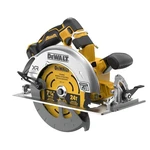 |
DEWALT DCS590B 20V MAX XR Brushless 7-1/4″ Circular Saw (Tool Only) – $180 DeWalt’s own most-powerful 20V MAX sidewinder, built for anyone who wants full-size 7-1/4 inch cutting power without stepping up to 60V FLEXVOLT.
|
That DCS590B sits in the middle of a much bigger lineup. Here’s every handheld model DeWalt currently sells, grouped by power source:
- Corded, 7-1/4″: DWE575 / DWE575SB – 15-amp motor, 8.8 lbs, 57° bevel, electric brake. No battery to manage, and still the cheapest way into a full-depth saw.
- 20V MAX, 6-1/2″: DCS391B (brushed) and DCS565B (brushless) – smaller blade, lighter saw, aimed at trim, sheet goods, and jobs where you’re carrying the saw all day.
- 20V MAX, 7-1/4″: DCS570B (brushless), DCS573B (brushless with FLEXVOLT Advantage™, pulls extra power from a FLEXVOLT battery when you drop it in), DCS574 (Power Detect, auto-adjusts speed/power to the material), and DCS590B (the XR flagship above).
- 60V MAX FLEXVOLT, 7-1/4″: DCS577B (worm-drive-style body, rear handle, built for framing crews) and DCS578B (sidewinder body) – both brushless, both meant to match or beat corded-saw power on a battery.
None of these are interchangeable choices dressed up as different SKUs – the blade size and power platform actually change what the saw is good at, which is the part most “DeWalt circular saw” roundups skip.
Corded vs. 20V MAX vs. 60V FLEXVOLT: Which Power Source Fits Your Work
A corded saw like the DWE575SB never runs out of charge and costs less than half of a comparable cordless kit, which makes it the obvious pick for a home shop with outlets everywhere – a table saw outfeed setup, a garage bench, anywhere you’re not dragging the saw far from a wall. The tradeoff is the cord itself: it snags on sawhorses, catches on stacked lumber, and is one more thing to manage on a ladder or roof.
20V MAX cordless saws (the DCS391B through DCS590B) are DeWalt’s mainstream cordless line and share batteries with the rest of a 20V MAX tool collection – drills, impact drivers, the works. That shared-battery ecosystem is the real selling point: if you already own 20V MAX tools, a tool-only saw like the DCS590B is the cheapest way to add a circular saw, since you’re not buying a battery and charger again.
60V MAX FLEXVOLT saws (DCS577B, DCS578B) step up to a battery platform built to match corded torque under sustained load – sheet after sheet of 3/4 inch plywood, or a full day of deck framing – without the RPM sagging the way a 20V MAX saw can under a long, hard rip. They cost more and the batteries are heavier, so they make the most sense for someone running the saw professionally rather than for occasional weekend cuts. For a broader look at going cordless in general (not just DeWalt), see our cordless handheld circular saws guide.
6-1/2 vs. 7-1/4 Inch: How Blade Size Changes What You Can Cut
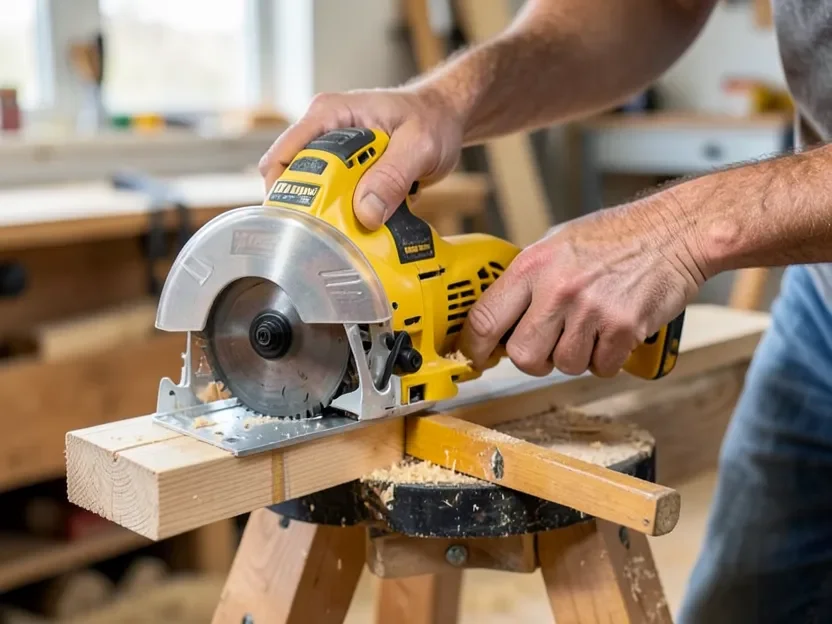
The blade diameter is the single biggest spec on this list because it sets your maximum depth of cut. A 7-1/4 inch saw like the DCS590B or DWE575SB cuts roughly 2-9/16 inches deep at 90° – enough for a single pass through a 2x material square to the blade. A 6-1/2 inch saw like the DCS391B or DCS565B tops out closer to 2-1/8 inches, which is still plenty for plywood, OSB, and most trim work, but forces a second pass (flip the board, cut from the other side) on thicker dimensional lumber.
The smaller saws aren’t just “worse” – they’re lighter (often close to a pound less) and easier to control one-handed on overhead or awkward cuts, which is why remodelers often carry a 6-1/2 inch saw specifically for trim and a 7-1/4 inch saw for framing. We’ve compared the two sizes head-to-head, including runtime and kickback behavior, in our DeWalt 6-1/2″ vs. 7-1/4″ circular saw comparison if that’s the specific decision you’re weighing.
Brushless Motors and Power Detect: What Actually Matters
Every current DeWalt 20V MAX and 60V FLEXVOLT saw except the DCS391B uses a brushless motor. In practice that means less heat, less wasted energy, and a motor with no brushes to wear out – which is why brushless saws consistently outlast brushed ones under daily job-site use rather than weekend-only shop use. The DCS391B is still sold because it’s the least expensive way into a 20V MAX saw, and for light, occasional cutting the brush wear simply isn’t a practical concern.
DeWalt’s Power Detect models, like the DCS574, add a sensor that reads how hard the blade is working and adjusts motor speed and power on the fly – ramping up through a knot or wet lumber, then backing off on easier material to save battery. The DCS573B does something similar but narrower: its FLEXVOLT Advantage™ feature pulls extra current specifically when you pair it with a FLEXVOLT battery, boosting power without changing how the saw behaves on a standard 20V MAX pack. Neither feature changes the saw’s maximum depth of cut or blade size – they change how efficiently the saw uses the battery you already have in it.
Setting Up Your DeWalt Circular Saw for Straight, Safe Cuts
A circular saw’s factory edge guide is fine for rough cuts but drifts on anything longer than a couple feet – the fix most trim and cabinet work uses is a straightedge or track clamped to the workpiece so the saw’s base rides against it instead of following a pencil line freehand. If you’re cutting full sheets regularly, DeWalt’s own track-saw-style guide rail attachment is worth reading up on in our DeWalt circular saw track guide before you buy one separately from the saw itself.
Before any cut: set blade depth so only about a quarter-inch of tooth clears the underside of the material (less exposed blade means less kickback energy if the saw binds), confirm the riving knife or anti-kickback pawls move freely, and never remove the retractable lower guard to “see the line better” – that guard is what keeps the spinning blade covered the instant the saw clears the cut. If you’re breaking down full sheets on sawhorses, supporting both halves of the cut – not just one side – keeps the kerf from pinching the blade as the sheet starts to sag under its own weight; a dedicated outfeed table does the same job if you’re cutting near a table saw setup already.
Maintenance Tips That Extend Blade and Motor Life
Most “my DeWalt saw feels weak” complaints trace back to a dull or pitch-loaded blade, not the motor. Resin buildup on carbide teeth increases cutting resistance enough that the saw bogs down and the motor works harder to compensate – a quick soak in a citrus-based blade cleaner or mineral spirits restores most of that lost performance for a fraction of the cost of a new blade. Swap the blade itself well before it looks obviously dull; a saw that’s fighting a worn blade draws more current, runs hotter, and burns through battery runtime faster than the spec sheet suggests.
Blow out the motor housing’s vents with compressed air every few weeks if you’re cutting a lot of MDF or treated lumber – both throw fine dust that packs into the motor and traps heat. And on brushless models, don’t skip storing the battery partially charged (roughly 40–80%) if the saw is sitting for more than a few weeks; lithium-ion packs left fully charged or fully dead in storage lose capacity faster than ones stored in that middle range.
Frequently Asked Questions
What is the difference between the DeWalt DCS570 and DCS573?
Both are 20V MAX 7-1/4 inch brushless saws with nearly identical depth of cut. The DCS573B adds FLEXVOLT Advantage™, which pulls extra power automatically when you use it with a FLEXVOLT battery pack – on a standard 20V MAX battery, the two saws perform about the same.
Is a 6-1/2 inch or 7-1/4 inch DeWalt circular saw better for a beginner?
A 6-1/2 inch saw (DCS391B or DCS565B) is easier to control and lighter for someone new to power tools, and it handles plywood, OSB, and most trim without issue. Step up to 7-1/4 inch only if you’re regularly cutting through 2x dimensional lumber in one pass.
Can I use a corded DeWalt circular saw blade on a cordless model?
Yes, as long as the blade diameter and arbor size match – a 7-1/4 inch blade fits any DeWalt 7-1/4 inch saw, corded or cordless, and a 6-1/2 inch blade fits any DeWalt 6-1/2 inch saw. Blade compatibility is about size, not the power source.
Sponsored / affiliate links. As an Amazon Associate I earn from qualifying purchases. I may earn additional commission from eligible campaigns.