Dickinson Marine Wood Heater: Real Specs, Safety Clearances & Installation Guide
The Dickinson Marine wood heater is one of the few solid-fuel stoves small enough for a boat cabin, RV, or tiny home, yet built tough enough for salt air and rough water. Most articles about it repeat the same vague praise without ever citing the actual heat output, clearance distances, or venting rules from Dickinson’s own installation manual. This guide pulls those real numbers together in one place, along with the carbon monoxide and fresh-air requirements that matter most when you’re burning solid fuel inside an enclosed space.
What Is the Dickinson Marine Wood Heater?
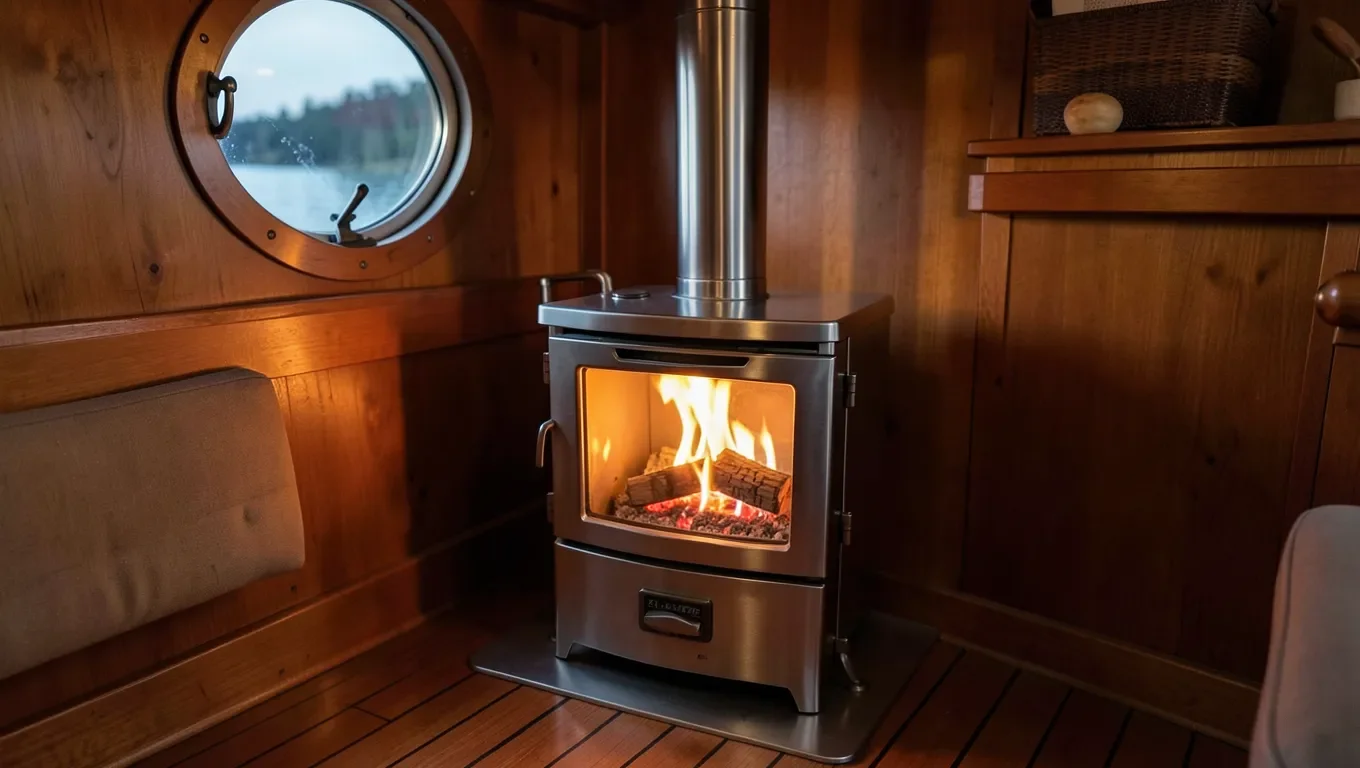
Dickinson Marine has built cookstoves, barbecues, and heaters for boats since 1932, and the company is still based in Surrey, British Columbia, Canada. The Newport Solid Fuel Heater is its best-known wood-burning model: a compact stainless steel stove designed to fit in tight cabin spaces while resisting rust in salty marine air. It burns wood, presto logs, or charcoal briquettes, and is commonly installed on boats in the 20 to 25 foot range, though it also shows up in RVs, van conversions, and tiny homes where an electric or propane hookup isn’t always available.
Our Pick: Dickinson Newport Solid Fuel Heater
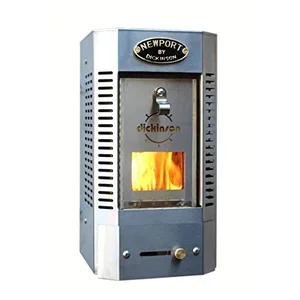 |
Dickinson Marine Newport Solid Fuel Heater – $600.87 This is the exact solid-fuel model whose specs, clearances, and safety requirements are covered in this guide.
|
Real Specs: BTU Output, Size & Fuel
Here are the manufacturer specs for the Newport Solid Fuel Heater, pulled directly from Dickinson’s own documentation and current retailer listings rather than estimated:
| Spec | Value |
|---|---|
| Heat Output | 3,000 – 8,000 BTU |
| Dimensions | 7.88" W x 10" D x 14.7" H |
| Weight | 15 lbs |
| Fuel | Wood (1"-thick pieces), presto logs, or charcoal briquettes |
| Flue Diameter | 3" |
| Chimney Length | 4 ft minimum, 8 ft maximum (6 ft straight run recommended) |
| Construction | Stainless steel, rust-resistant |
The small firebox is intentional: it’s built to burn short pieces of wood or a couple of presto logs at a time rather than full-size splits, which keeps fuel storage manageable on a boat or in an RV bay.
Clearance & Chimney Installation Requirements
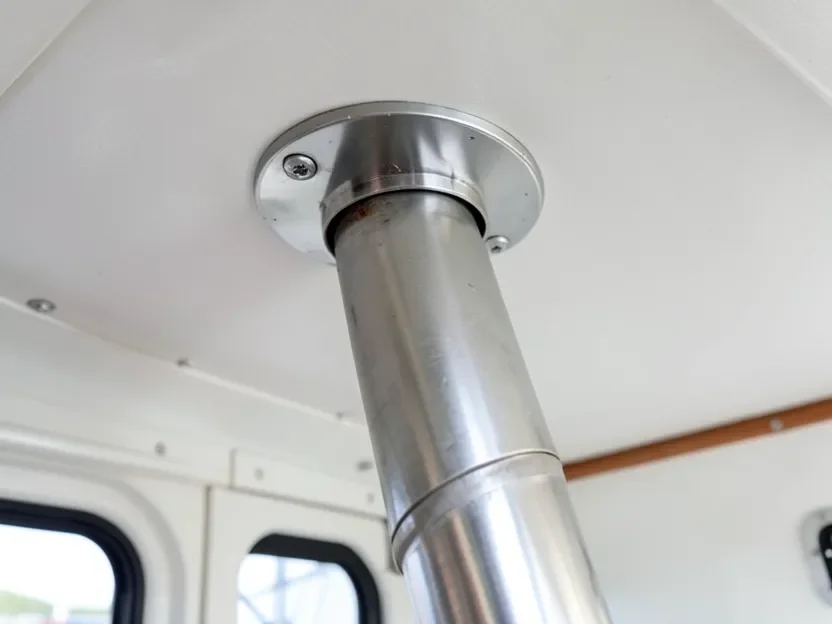
Dickinson’s installation manual sets specific clearances that are easy to get wrong in a small cabin. The heater needs roughly 6 to 8 inches of clearance from unprotected combustible surfaces – that can drop to as little as 2 inches if the surrounding surface is lined with high-density heat-retardant insulation and finished in light-gauge metal, ideally stainless steel. The chimney needs a minimum 4-foot rise, using 3-inch diameter flue pipe, with a total run between 4 and 8 feet; Dickinson recommends a straight 6-foot run with no elbows for the best draft, and a barometric damper on runs of 6 feet or longer. Always check the specific manual for your model and boat layout before cutting any holes.
Carbon Monoxide Safety & Fresh-Air Intake
This is the part most buying guides skip. Dickinson specifies a separate, permanently open fresh-air inlet of at least 3 inches in diameter installed near the heater. That inlet keeps the cabin at slightly positive pressure so combustion gases get pushed out through the chimney instead of drawn back into the living space when a hatch or door opens. Skipping it, or sealing it off in cold weather to save heat, is one of the more common installation mistakes. Pair the heater with a marine-rated carbon monoxide detector, inspect the flue and gaskets for leaks before every trip, and never block the fresh-air inlet, even temporarily. A solid-fuel appliance burning inside an enclosed boat or RV cabin carries a real CO risk, and the detector plus fresh-air intake aren’t optional extras – they’re part of the safety system the manufacturer designed around.
Maintenance & Care
Routine care is straightforward. Empty the ash drawer after every few uses so airflow to the fire stays consistent. Burn dry, seasoned wood or presto logs – damp fuel produces more smoke and more creosote buildup in the flue. Check the chimney for creosote and blockages before each trip, and wipe down the glass viewing window with a damp cloth rather than an abrasive cleaner that can scratch it. Dickinson recommends a full annual inspection of the flue, gaskets, and mounting hardware, which matters even more on a boat where vibration and salt air accelerate wear.
Dickinson Wood Heat vs Propane & Electric Alternatives
A solid-fuel heater isn’t the only option for a boat or RV cabin, and it isn’t always the right one. Here’s how the Dickinson wood heater compares to the two most common alternatives:
| Heat Source | Pros | Cons |
|---|---|---|
| Dickinson Wood/Solid Fuel | Works fully off-grid, no electrical or propane hookup needed, low fuel cost | Needs dry fuel storage, a proper chimney installation, and regular ash removal |
| Propane Heater | Fast heat-up, widely available in marine-rated sizes | Needs refillable tanks, carries its own leak/CO risks, ongoing fuel cost |
| Electric Heater | Simple thermostat control, no combustion byproducts | Only works at dock power or with a generator/inverter running |
Where to Buy & What It Costs
The Newport Solid Fuel Heater typically runs around $600, and the chimney kit is sold separately, so budget for both before installation. It’s carried by marine retailers including Defender Marine and Fisheries Supply, directly through Dickinson Marine’s own site, and on Amazon. Prices and stock can shift between retailers, so it’s worth checking current availability before you commit to a specific installation date.
FAQs
How much clearance does a Dickinson wood heater need from combustible surfaces?
Dickinson’s installation manual calls for roughly 6 to 8 inches of clearance from unprotected combustible surfaces, or as little as 2 inches if the surface is lined with heat-retardant insulation and light-gauge metal. Always check the manual for your specific model before installing.
Does a Dickinson wood heater need a fresh-air intake?
Yes. Dickinson specifies a separate, permanently open fresh-air inlet of at least 3 inches in diameter near the heater, which keeps the cabin at slightly positive pressure so combustion gases exit through the chimney instead of being drawn back inside.
Is it safe to use a wood stove on a boat?
It can be, when it’s installed to the clearance and venting specifications above and paired with a marine-rated carbon monoxide detector. Any solid-fuel appliance burning in an enclosed cabin carries a CO risk, so the detector and fresh-air intake aren’t optional.
How much does a Dickinson Marine wood heater cost?
The Newport Solid Fuel Heater typically costs around $600, plus a separately sold chimney kit. It’s available through Defender Marine, Fisheries Supply, Dickinson Marine’s own site, and Amazon.
How do I maintain a Dickinson wood heater?
Empty the ash drawer regularly, burn dry seasoned wood or presto logs to limit creosote buildup, check the flue for blockages before each trip, and have the chimney professionally inspected once a year.
Sponsored / affiliate links. As an Amazon Associate I earn from qualifying purchases. I may earn additional commission from eligible campaigns.