Hickory vs Ash Firewood
Ash is usually the better all-around heating firewood because it splits easier, seasons faster, and burns a little less long than hickory, while hickory is the better pick when you want maximum heat and stronger smoke flavor for cooking. Choosing the wrong wood can mean harder splitting, slower drying, weaker heat, or bitter food smoke. This guide compares hickory vs ash by heat, splitability, seasoning time, and smell, then gives a simple rule for heating versus cooking.
This guide is part of our Firewood and Wood Stoves: Drying, Storing and Burning Guide series.
| Decision factor | Hickory | Ash Firewood | Winner |
|---|---|---|---|
| Heat output | Very high; shagbark hickory reaches 30.6 million BTUs, and bitternut hickory reaches 29.2 million BTUs | White ash offers 24.2 million BTUs; green ash is lower | Hickory |
| Splitting and handling | Dense and hard to split | Usually easier to split; green ash is easier still | Ash Firewood |
| Seasoning speed | Usually takes longer than ash | Usually seasons faster than hickory | Ash Firewood |
| Smoke and aroma | Stronger smoky aroma for cooking | Lower smoke when seasoned; clean burn | Tie, by use case |
| Coal bed | Good coals when dry | Good coals when dry | Tie |
Heat output and coal bed
Hickory usually wins on heat, while ash is still a strong heater. That difference matters most in a stove that needs long, steady output or in a cold garage workshop where fewer reloads help. For overnight heat, both can work well when properly seasoned, but hickory has the edge in raw BTU content.
Why hickory usually burns hotter
Hickory is one of the densest woods and is known for high heat output. Shagbark hickory reaches 30.6 million BTUs, and bitternut hickory has a BTU rating of 29.2 million. Those numbers put hickory above many common hardwoods and above ash in direct heat potential.
That does not mean every hickory log beats every ash log in a stove. Species matters, log size matters, and moisture matters. A dry ash split will outperform a damp hickory round in real use.
What ash brings to the stove
White ash offers 24.2 million BTUs and is still solid firewood. Ash is good firewood because it burns clean and produces good coals. Green ash gives less heat than white ash, but it is easier to split, which can matter more than a small BTU gap for homeowners processing their own wood.
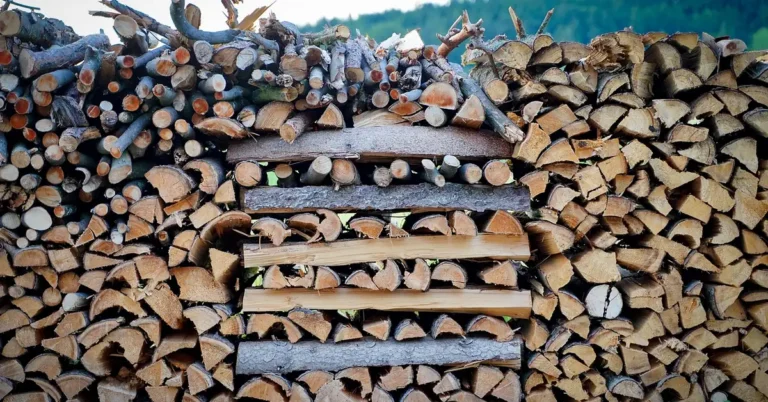
Picture a cord stack built from mixed hardwoods. If the ash is fully seasoned and the hickory still feels heavy and cool to the touch, the ash may light faster and hold a cleaner flame, even though hickory has the higher ceiling on heat.
Which is easier to split?
Ash is usually easier to split than hickory. Hickory tends to be denser, stringier, and tougher on a maul, especially when the grain is twisted or the log has knots. If you process wood by hand, that difference shows up fast.
Why ash usually splits easier
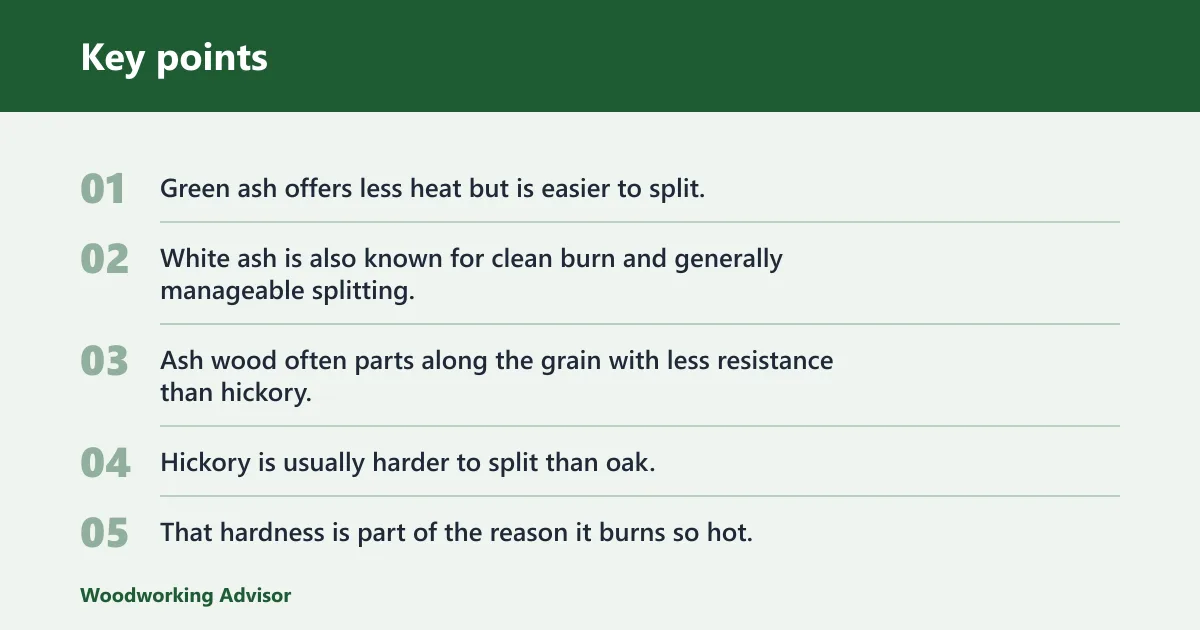
Green ash offers less heat but is easier to split, which is one reason many homeowners like it for quick processing. White ash is also known for clean burn and generally manageable splitting. Ash wood often parts along the grain with less resistance than hickory, so the work goes faster and the pile of useful splits builds sooner.
Why hickory resists the maul
Hickory is usually harder to split than oak, and it is often harder to split than ash as well. That hardness is part of the reason it burns so hot. Dense wood resists the blade and can pinch a maul if the grain runs wild.
A common first-timer mistake is buying a truckload of hickory rounds for a weekend fireplace project, then finding out half the pile needs wedges and patience before it can even dry properly. If you want easy handling, ash is the safer bet.
Which species split more cleanly?
Among ash species, green ash is often reported to split more easily than white ash. Among hickories, bitternut hickory and shagbark hickory are both dense enough to be stubborn, but shagbark often stands out as the hotter of the two at 30.6 million BTUs.
Knotty wood changes the answer. A straight-grained ash log can split cleanly, while a twisted hickory crotch can fight every swing. Let grain quality guide the final call, not the species name alone.
How long does each take to season?
Properly seasoned wood should be below 20% moisture. That target matters because wet wood lights poorly, smolders, makes more smoke, and raises creosote buildup risk in stoves and chimneys. Ash generally reaches usable dryness faster than hickory, which is why it often fits a shorter storage window better.
Seasoning time for ash
Ash is often ready faster than hickory because it dries more readily after splitting and stacking. In practical terms, that usually means one warm season is enough for many ash stacks if you split the wood, keep it off the ground, and give it good airflow.
White ash and green ash both benefit from the same rule: split early, stack loose, and keep the top covered while the sides stay open. A moisture meter should read under 20% before the wood goes into the stove or fireplace.
Seasoning time for hickory
Hickory usually takes longer to season than ash, and oak also takes much longer to season than hickory. That makes hickory a slower choice for anyone who wants fast turnaround from log pile to firebox. Dense wood holds water longer, especially in large rounds or tight stacks.
If hickory still feels heavy, sounds dull when struck, or shows damp ends and dark seams, it is not ready. That wood may still burn, but it will burn badly.
Signs wood is still too wet
- Ends feel cool and damp instead of dry and light.
- Split faces look dark, not pale and opened.
- The fire hisses, steams, or smolders after lighting.
- Flames die back and the load leaves shiny soot on the glass or stove walls.
Which gives less smoke and better coals?
Seasoned wood burns cleaner and makes less smoke and creosote. On that score, ash has the cleaner reputation, while hickory adds stronger aroma and still makes useful coals when dry. Wet wood is the real problem, not the species name alone.
Smoke and creosote when wood is wet
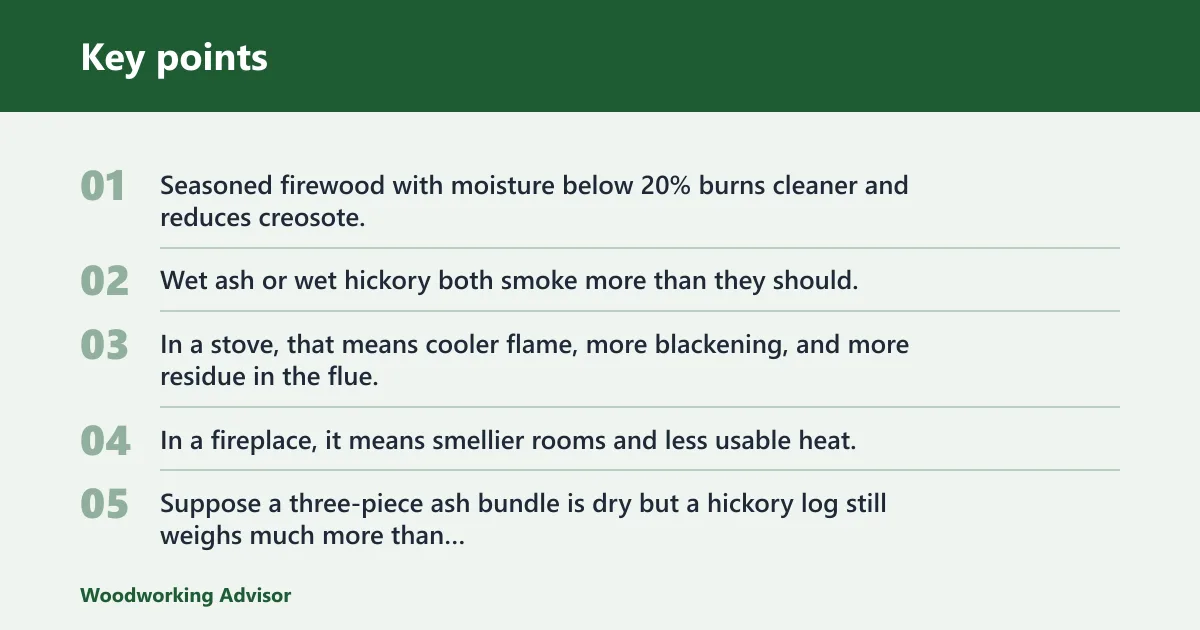
Seasoned firewood with moisture below 20% burns cleaner and reduces creosote. Wet ash or wet hickory both smoke more than they should. In a stove, that means cooler flame, more blackening, and more residue in the flue. In a fireplace, it means smellier rooms and less usable heat.
Suppose a three-piece ash bundle is dry but a hickory log still weighs much more than the others. The hickory may look fine from the outside, yet it can still hiss and send up a dirty plume because the core is not ready.
Coal bed and overnight heat
Both ash and hickory make good coals when properly seasoned. That coal bed is useful for overnight heat because it keeps a stove alive after the main flames settle down. Hickory usually gives a longer, hotter bed, while ash gives a clean, dependable coal base that is easy to relight from.
For fireplaces, coal quality matters less than in a stove, but it still helps extend burn time. For campfires, low sparks and steady coals are often more useful than a brief burst of flame.
Smoke behavior in fireplaces and stoves
Seasoned hickory still smells stronger than ash, which is why it is popular around smokers and grill pits. Ash gives less smoke when seasoned and is usually the better choice if you want a cleaner indoor burn. For a living room fireplace, that lower smoke can matter more than a few extra BTUs.
How do you tell hickory from ash trees?
Correct identification matters because the wrong tree can lead to poor fuel choices, bad seasoning plans, or cutting the wrong species entirely. Hickory and ash are both hardwoods, but they are easy to separate if you look at branching and leaves instead of guessing by bark alone.
Opposite versus alternate branching
Ash trees have opposite branching, which means leaves and buds grow in pairs directly across from each other on the twig. Hickories have alternate branching, where leaves and buds stagger one at a time along the stem. That one feature is often the quickest field check.
Compound leaf structure and leaflet count
Both ash and hickory have compound leaves, but the leaflet pattern can differ by species. Ash usually has fewer leaflets per leaf, while hickory often has five to nine leaflets depending on the species. Bitternut hickory often has more slender leaflets than shagbark hickory, which helps with identification.
Leaflet texture and shape
Ash leaflets are usually smoother and more uniform in outline. Hickory leaflets are often longer, narrower, and rougher in texture, and some species feel a bit coarse when handled. If the leaf structure is unclear, check the branching pattern first and use the leaves as a second check, not the other way around.
Ash and hickory decision matrix
Here is the simplest way to choose between them. For heat, hickory leads. For easier processing and faster seasoning, ash leads. For smoke flavor in cooking, hickory is the clear favorite. For a homeowner buying firewood with storage space and labor in mind, ash is the more forgiving buy.
| Scenario | Hickory | Ash Firewood | Final pick |
|---|---|---|---|
| Overnight stove heat | Higher heat, strong coal bed, slower to season | Good coals, easier to split, slightly less heat | Hickory |
| Fast-to-season budget firewood | Denser, slower drying, more work to split | Usually seasons faster and is easier to process | Ash Firewood |
| Cooking and smoke flavor | Stronger smoky aroma for food | Cleaner, lighter smoke | Hickory |
Overnight stove heat
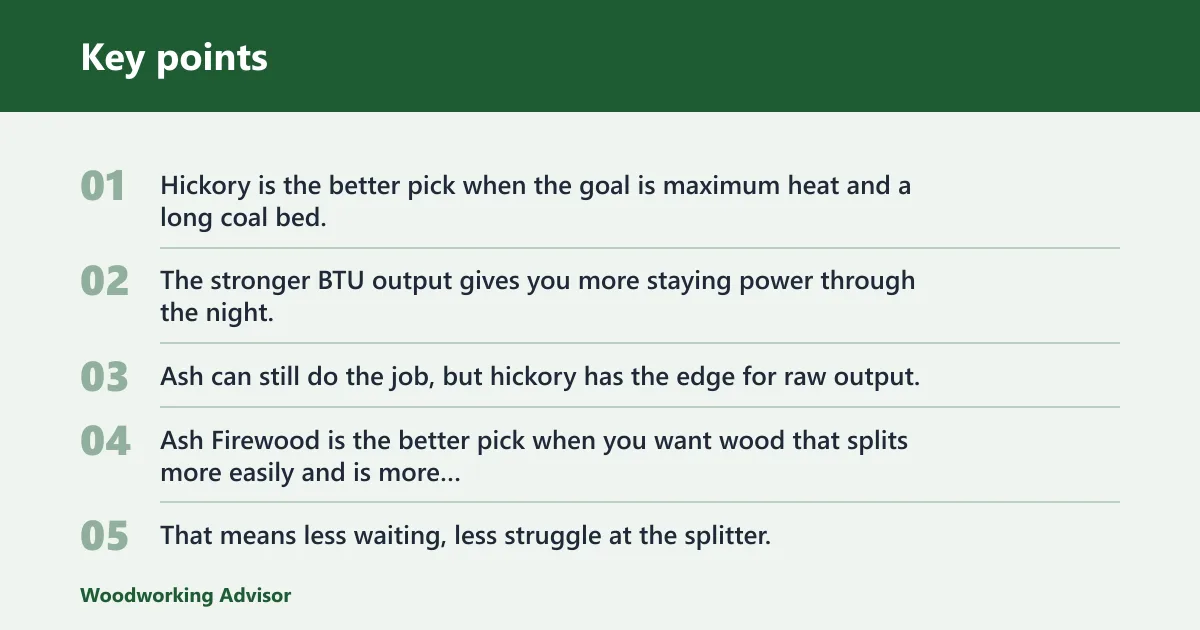
Hickory is the better pick when the goal is maximum heat and a long coal bed. The stronger BTU output gives you more staying power through the night, especially in a stove that likes dense hardwood. Ash can still do the job, but hickory has the edge for raw output.
Fast-to-season budget firewood
Ash Firewood is the better pick when you want wood that splits more easily and is more likely to reach the under-20% moisture target sooner. That means less waiting, less struggle at the splitter, and fewer smoky fires caused by impatient burning. Green ash is especially useful here because it is easier to split than many other hardwoods.
Cooking and smoke flavor
Hickory is the clear pick for smoking meat or adding a stronger aroma to a grill fire. Its smoke flavor is heavier than ash, which is exactly what many cooks want. Ash burns cleaner, but that lighter smoke is not the same thing as flavor.
Choose Hickory if… / Choose Ash Firewood if…
Choose hickory if you want the hotter wood, a stronger coal bed, or more smoke aroma for cooking. Choose ash if you want easier splitting, faster seasoning, and a cleaner burn with less smoke. If either wood is still above 20% moisture, wait before burning it.
Choose Hickory if you heat with a stove and want longer output through the night. Choose Hickory if you are cooking over coals and want a stronger smoke character. Choose Ash Firewood if you need firewood that is easier to split and more likely to dry on a normal schedule.
Choose Ash Firewood if your storage space is limited and you need a faster turnaround from stack to stove. Choose Ash Firewood if you want clean-burning heat for a fireplace with less smoke. If the wood is wet, neither choice is a good one.
Frequently asked questions
Is ash the best firewood?
Ash is one of the best all-around firewood choices, but not the single best for every job. It is easier to split than hickory, seasons faster, and burns clean when dry. Hickory beats it for heat and cooking aroma, so the better wood depends on whether you value convenience or maximum output.
Is hickory good firewood?
Yes. Hickory is excellent firewood when you want high heat, a solid coal bed, and a stronger smoky aroma for cooking. Shagbark hickory reaches 30.6 million BTUs, and bitternut hickory reaches 29.2 million BTUs. Its main drawback is that it is usually harder to split and slower to season.
Which burns hotter, hickory or ash?
Hickory usually burns hotter than ash. White ash offers 24.2 million BTUs, while shagbark hickory reaches 30.6 million BTUs and bitternut hickory reaches 29.2 million BTUs. Species matters, but the overall pattern is clear: hickory has the higher heat ceiling.
Which is easier to split, hickory or ash?
Ash is usually easier to split than hickory. Green ash is especially easy to split, while hickory is dense and often stubborn under a maul. Grain, knots, and log shape can shift the result, but ash is the better bet if splitting effort matters.
How long does ash firewood take to season?
Ash usually seasons faster than hickory and often dries well within one warm season if split and stacked correctly. The exact time depends on log size, airflow, and weather, but the practical target is simple: do not burn it until moisture content is below 20%.
How long does hickory firewood take to season?
Hickory usually takes longer to season than ash because it is denser and holds moisture longer. Large rounds can take a full extra season or more, depending on how they are split and stacked. A moisture meter reading below 20% is the right standard before burning.
Sponsored / affiliate links. As an Amazon Associate I earn from qualifying purchases. I may earn additional commission from eligible campaigns.