Difference between Subterranean And Drywood Termites: Unveiled
Imagine discovering that your home is under attack—not by a visible threat, but by tiny, relentless invaders gnawing away at its very foundation. Termites are notorious for silently wreaking havoc on homes across the globe, and understanding the difference between subterranean and drywood termites could be the key to protecting your most valuable asset.
As a homeowner, you might feel overwhelmed when faced with these pests, but knowledge is your best defense. By the end of this article, you’ll not only be able to identify which type of termite you might be dealing with, but also arm yourself with the right strategies to safeguard your home.
Keep reading to learn what sets these two termite types apart and how you can stay one step ahead of their destructive path.
Termite Basics
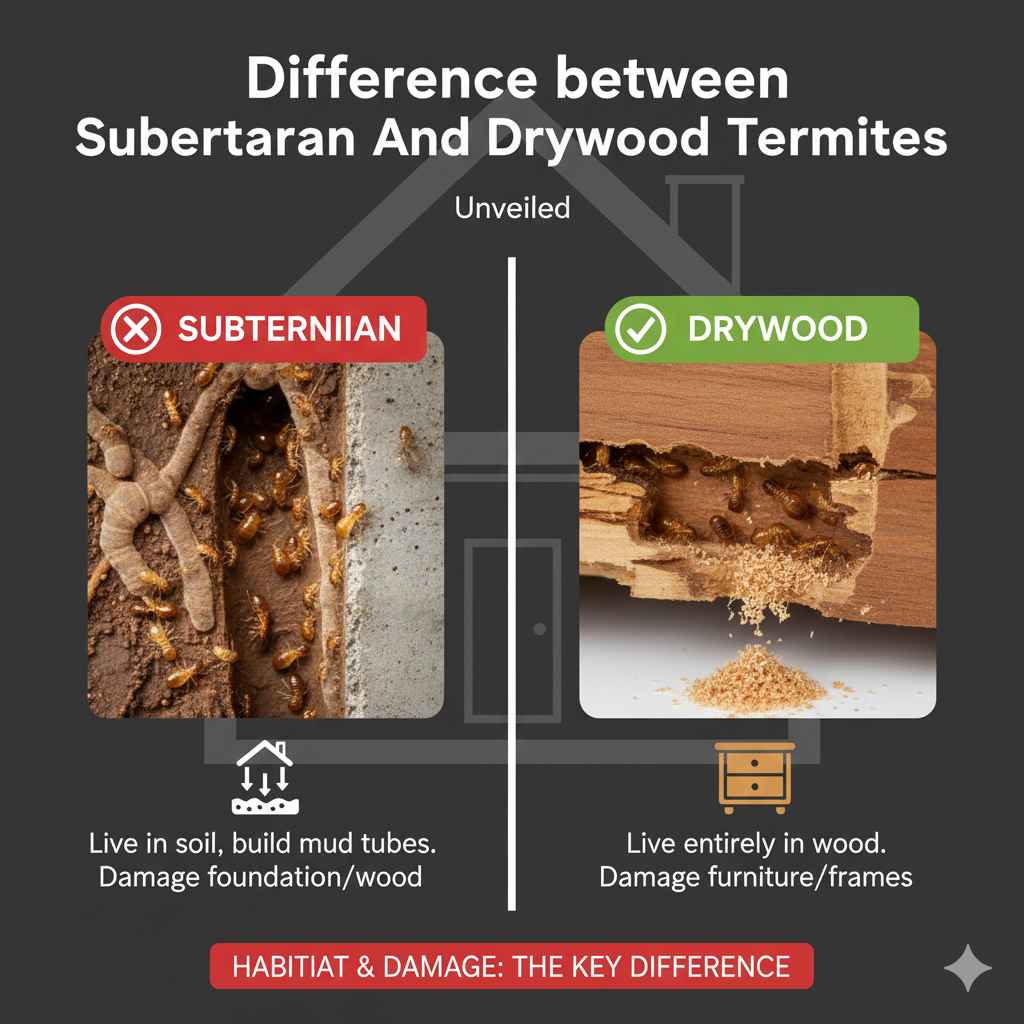
Termites are tiny insects. They live in colonies. There are two main types: subterranean and drywood termites. Subterranean termites build nests in the soil. Drywood termites live inside wood. Both types eat wood. They cause damage to homes. Subterranean termites need moisture. Drywood termites do not.
Subterranean termites prefer damp places. They live underground. They build tunnels to find food. Drywood termites live in dry wood. They do not need soil. They can be found in furniture and walls. Both types can be dangerous. Protect your home from them.

Credit: myorganicturf.com
Subterranean Termites
Subterranean termites have soft bodies and straight antennae. Their color varies from creamy white to dark brown. They have two pairs of wings, same size. They shed wings after mating. Their size ranges from 1/8 to 1/2 inch long. They have six legs and are often seen in swarms.
These termites build nests underground. They use mud tubes to travel. Mud tubes protect them from air. They need moist soil to survive. They connect their nests to wood. Nests can be huge and complex. They keep nests hidden from predators.
Subterranean termites love wood. They eat cellulose found in wood. They feed from inside out. This makes detection hard. They often target homes. They can eat other materials if needed. Their feeding can cause structural damage. Regular checks can help prevent damage.
Drywood Termites
Drywood termites are small and light-colored. Their bodies are often pale or brown. They have short wings. These wings are equal in size. They have straight antennae. Their wings are smooth and clear. Drywood termites are distinctive in appearance. They are different from other termites.
Drywood termites live in wood. They do not need soil. Their colonies are small. Often just a few hundred termites. They have soldiers and workers. Soldiers protect the colony. Workers gather food and care for young. Colonies grow slowly. New colonies start from pairs of termites.
Drywood termites eat dry wood. They do not need moisture. They like hardwood and softwood. They create small holes in wood. These holes are for waste removal. They live in furniture and structures. Wood is their main food. They do not need water to survive.
Behavioral Differences
Subterranean termites build colonies in the ground. These colonies are large and can have many members. They use mud tubes to reach wood. Drywood termites live inside the wood. Their colonies are smaller. They don’t need soil contact. This makes them different from subterranean termites.
Subterranean termites have winged males and females called swarmers. They leave the colony to start new ones. This happens often in spring. Drywood termites also have swarmers. But their mating habits differ. They can start a colony with just a few members. This difference affects how they spread. Understanding these strategies can help in termite control.
Signs Of Infestation
Subterranean termites create mud tubeson walls and floors. These tubes help them stay moist. They often cause damage in cellarsor basements. You may notice sagging floorsand hollow wood. Drywood termites, on the other hand, live inside the wood. They do not need soil to survive. They leave behind tiny pelletsthat look like sawdust. The wood they infest looks fine on the outside. But inside, it is often chewed away.
Finding termites early can save your home. For subterranean termites, look for mud tubes. Check the foundation and basement. Use a flashlight to spot them. Drywood termites are trickier. Tap wood to listen for a hollow sound. Look for those tiny pellets near wooden items. Both types might need a professional to check deeply. A termite inspection can reveal hidden damage.
Control And Prevention
Subterranean termites build colonies underground. Use bait systems to control them. Bait attracts termites. They carry poison back to the colony. This method is effective and safe. Drywood termites live inside wooden structures. Fumigation is a common treatment. It fills the structure with gas. Gas kills all termites inside.
Keep wood away from soil. This helps prevent subterranean termites. Fix leaks around your home. Drywood termites need moisture. Seal cracks in walls and foundations. Termites enter through tiny gaps. Store firewood away from your house. Termites love wood piles. Regularly inspect your home for signs of termites. Early detection is key.
Impact On Structures
Subterranean termites build colonies underground, causing hidden damage to structures. In contrast, drywood termites infest above ground, directly attacking wooden structures. Both types pose threats, but their nesting habits dictate the nature of the damage.
Economic Consequences
Subterranean termitescause more damage than drywood termites. They live in the soil and attack buildings from below. This means more repairs and higher costs. Drywood termiteslive inside the wood. They do not need soil. Their damage is less, but still costly.
Both termites weaken structures. Wood becomes soft and breaks easily. This affects the structural integrityof homes and buildings. Repairs can be expensive. Homeowners spend a lot to fix termite damage.
Insurance may not cover termite damage. This makes it even more costly. Protecting homes from termites is important. Regular checks and treatments can help. Termite damage impacts both wallets and safety. People must act quickly to prevent these pests.
Credit: urbanipmsocal.com

Credit: biothermgreen.com
Frequently Asked Questions
Are Subterranean And Drywood Termites Worse?
Subterranean termites are generally worse due to their larger colonies and potential for more extensive damage. They build tunnels and cause structural harm faster. Drywood termites, while damaging, usually affect smaller areas and are easier to detect and control. Proper inspection and treatment help manage both types effectively.
What Is The Difference Between Dry Rot And Subterranean Termites?
Dry rot is a fungal decay affecting wood, while subterranean termites are insects damaging wood. Dry rot causes wood to crumble; termites eat wood internally. Both threaten structures, but require different treatments. Dry rot thrives in damp conditions, whereas termites need soil contact.
Proper identification ensures effective control methods.
Does Tenting Get Rid Of Subterranean Termites?
Tenting effectively eradicates drywood termites but is less effective for subterranean termites. For subterranean termites, use soil treatments or baiting systems. These methods target their colonies directly for better results. Consult a pest control professional for the best approach.
Can You Have Both Subterranean And Drywood Termites?
Yes, you can have both subterranean and drywood termites simultaneously. They infest different areas and require distinct treatments. Identifying both types early helps in effective pest control. Regular inspections can prevent severe damage. Always consult professionals for accurate identification and treatment solutions.
Conclusion
Understanding termites is crucial for protecting your home. Subterranean termites build colonies underground and love moisture. Drywood termites, on the other hand, live within wooden structures and need less moisture. Identifying these differences helps in choosing the right treatment. Regular inspections can prevent costly damages.
Each type requires specific control methods. Knowing what you’re dealing with is key. Protect your investment by staying informed. Contact a professional for termite control advice. Always act early to minimize risks. Keep your home safe and pest-free with the right knowledge.