What Is a Table Apron? Function, Height and Joinery
A table apron is the horizontal rail that runs under the tabletop between the legs. It keeps the legs from racking, gives you something solid to fasten the top to, and hides the leg joints. This guide covers the structural job the apron does, typical heights, how aprons are joined to the legs, and how to attach the top so it does not crack as the wood moves.
How a Table Apron Works
Best Tabletop Fastener Pick
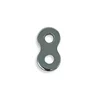 |
Balsam Point Workshop 20-Pack Figure 8 Table Top Fasteners, 12 Gauge Steel, $14.47 The apron is what the top gets fastened to, and these fasteners pivot so a solid-wood top can swell and shrink without splitting.
|
Look under almost any well-built table and you will find four aprons forming a rectangular frame that ties into the top of each leg. That frame does three separate jobs, and the most important one is not the one most articles list first.
- Resisting racking. A leg is a lever. Push a table sideways and the leg tries to pivot at its top joint. The apron joint is what holds it square, and a deeper apron gives that joint a larger glued area and more leverage against the twist.
- Providing a fastening surface. A tabletop is a wide board that cannot be joined directly to a leg. The apron gives you a long, straight rail to screw or clip the top to, spreading the load across the whole frame.
- Framing the space. The apron hides the joinery at the top of the legs, sets the visual weight of the table, and defines the knee opening underneath.
Here is the misconception worth correcting: an apron does not stop a tabletop from sagging. Sag is controlled by how thick the top is and how far it spans between supports. An apron supports the top only around its perimeter, so a thin top over a wide opening can still bow in the middle with a perfect apron below it. What the apron really prevents is the frame itself going out of square.
Typical Table Apron Height and Thickness
Apron size comes down to two limits. It has to be deep enough to make the leg joints stiff, and shallow enough to leave room for legs and thighs. These are typical ranges from general shop practice rather than a formal standard, so treat them as starting points.
| Table type | Typical table height | Typical apron height | Notes |
|---|---|---|---|
| Dining table | 28 to 30 in. | 3 to 4-1/2 in. | Aprons deeper than about 5 in. start to touch seated thighs |
| Desk or writing table | 29 to 30 in. | 3 to 4 in. | Drawer aprons run 4 to 6 in. |
| Coffee table | 16 to 18 in. | 2 to 3-1/2 in. | Shallow is fine because there is no seated clearance to protect |
| Side or console table | 24 to 30 in. | 2-1/2 to 4 in. | Match the apron depth to the leg thickness for a balanced look |
Apron stock is usually 3/4 in. to 1 in. thick. Here is a quick clearance check for a dining table: a 30 in. table with a 3/4 in. top and a 4 in. apron puts the bottom edge of the apron at about 25-1/4 in. above the floor, which leaves room for thighs above a standard 18 in. seat. Add an inch or two of apron and you are eating into that margin.
How Aprons Join the Legs
The joint at each end of the apron is where the racking strength lives, so it deserves the most attention. The traditional and strongest answer is the mortise and tenon, which is covered in depth in our mortise and tenon joinery guide. These proportions are widely used for apron joints:
- Tenon thickness: about one-third of the apron stock, so 1/4 in. on 3/4 in. stock.
- Tenon length: roughly 1 in. to 1-1/2 in., depending on how thick the leg is.
- Setback (reveal): set the apron back 1/8 in. to 3/16 in. from the leg face so small alignment errors read as a deliberate shadow line.
- Corner collisions: the mortises from two adjacent aprons meet inside the leg. Miter the ends of the tenons, or keep them short, so they do not hit each other.
You do not have to cut a mortise and tenon. The table below compares the common alternatives. The ratings are general shop experience about racking resistance, not test results from this site.
| Joint | Racking resistance | Skill level | Best used for |
|---|---|---|---|
| Mortise and tenon | Highest | Moderate to high | Dining tables and anything that will be moved or leaned on |
| Loose tenon (such as a Festool Domino) | Very high | Moderate, needs a tool | Fast, accurate tenons without cutting them on the tablesaw |
| Doweled joint | Moderate | Low to moderate | Light tables where you can drill accurately |
| Pocket screws | Lower on their own | Low | Hidden joints on utility tables; add glue and corner blocks |
| Corner braces with hanger bolts | Adds strength on top of another joint | Low | Reinforcing tables that need to knock down for moving |
Glue matters too. A tenon cheek is long-grain wood glued to long-grain wood, which is the strongest surface for a glue joint. Our article on whether wood glue is stronger than screws explains why a well-fitted glued joint outperforms a pile of screws in that situation.
Attaching the Tabletop Without Cracking It
This is where most apron advice goes wrong. Solid wood swells and shrinks across its width with the seasons, but hardly at all along its length. A tabletop screwed down tight along the long aprons is being held still while it tries to move, and something will give, usually a split in the top or a cracked joint in the frame.
To show the scale, here is the worst-case change across the width of a flatsawn top, calculated from Wood Handbook tangential dimensional-change coefficients for a 3 percentage-point swing in moisture content, which is a modest range for a heated home.
| Species | Coefficient (per 1% MC change) | Change across a 36 in. wide top |
|---|---|---|
| Red oak | 0.00369 | about 0.40 in. |
| White oak | 0.00365 | about 0.39 in. |
| Hard maple | 0.00353 | about 0.38 in. |
| Black walnut | 0.00274 | about 0.30 in. |
| Black cherry | 0.00248 | about 0.27 in. |
That is close to 3/8 in. of movement across a dining top, which is far more than a screw in a snug round hole can tolerate. Quartersawn boards move roughly half as much or less. The fix is to fasten the top in a way that lets it slide across the width:
- Figure-8 fasteners sit in a shallow recess in the top of the apron and pivot, so the top can shift as it moves. They are the fastest option and the one in the product box above.
- Z-clips hook into a saw kerf in the apron and screw to the underside of the top, and they slide within the kerf.
- Wood buttons fit a groove cut along the inside face of the apron and are screwed to the top, a traditional method that costs nothing.
- Slotted screw holes through the apron or through corner blocks, with washers under the screw heads, let the screws slide as the top moves.
Fix the top firmly at the center of each end apron, where it barely needs to move, and use the sliding fasteners along the long aprons. Spacing them about 12 to 16 in. apart is common practice. For a wooden top build, see our DIY wood desk top guide.
Tables Without an Apron
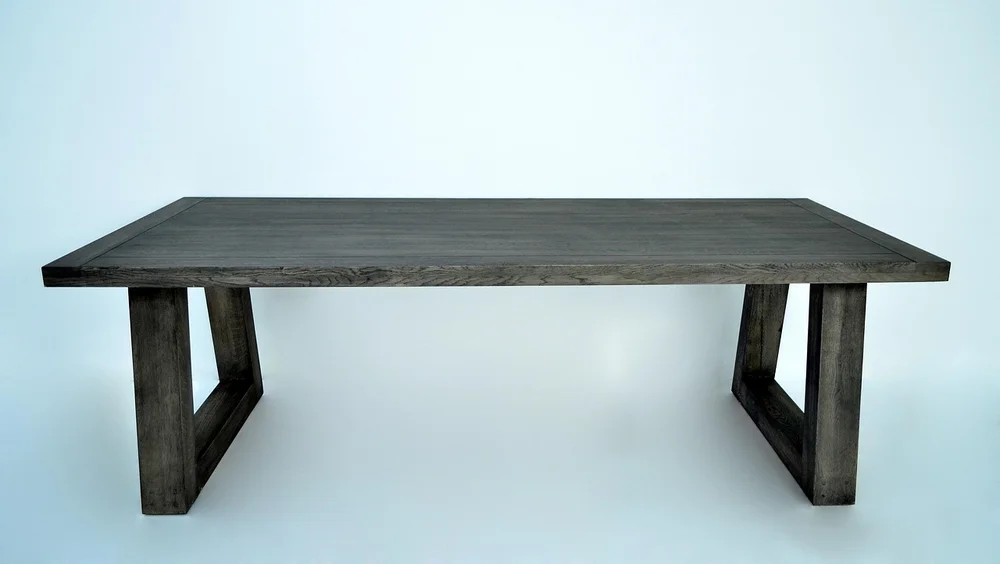
Some designs leave the apron out on purpose. Trestle tables, tables on U-shaped frames like the one pictured above, and mid-century pieces with a low stretcher all use a different structure to stop racking. If you are stuck with plain legs and no apron, you have to add something else that does the same work. We break down four ways to do this in how to attach legs to a table without an apron.
Choosing an Apron Style
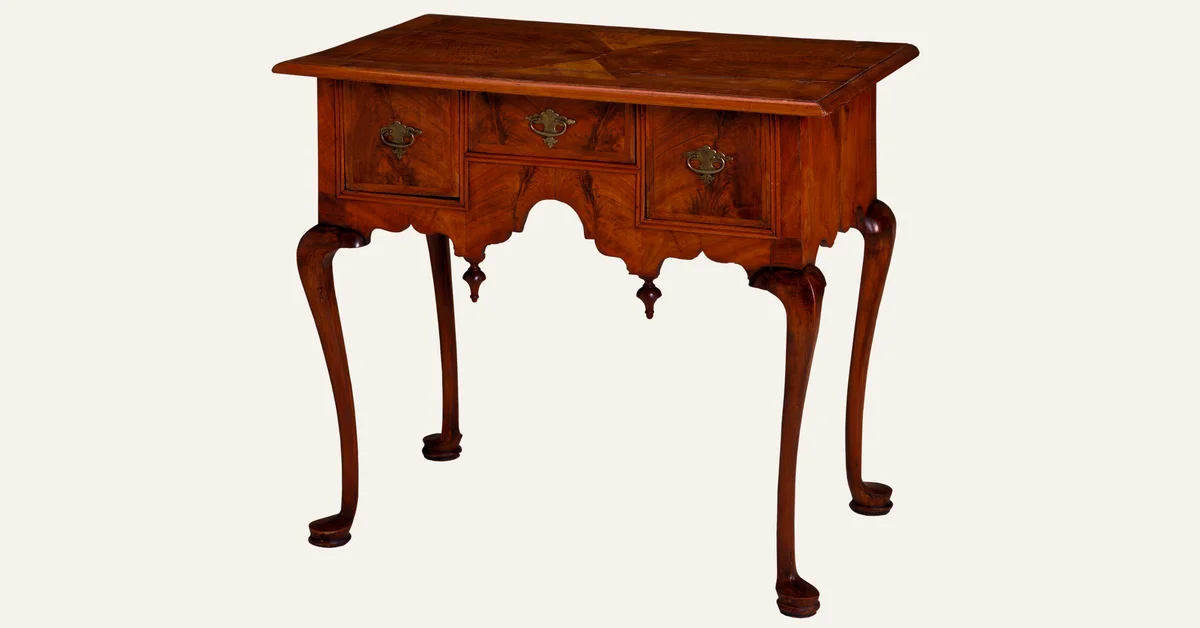
Once the structure is settled, the look is a design choice. A plain rectangular apron reads as clean and modern. A shaped or scalloped apron, as on an antique walnut lowboy, adds detail along the bottom edge but takes a little depth to cut away, so start with a taller blank than you need. A deep apron can also house a drawer, in which case the drawer opening sets the height.
Most aprons are solid wood, matched to the legs and the top. A wide, thin apron can twist as it dries, so choose straight, well-dried stock and let the rails acclimate before you cut the joints.
Frequently Asked Questions
What is the purpose of a table apron?
A table apron is the horizontal rail frame under the tabletop that joins the legs together. It resists racking, which is the side-to-side wobble of the legs, and it gives you a solid surface to fasten the top to. It also hides the leg joints and frames the knee space.
How tall should a table apron be?
Most dining and desk aprons run 3 to 4-1/2 inches tall, coffee tables 2 to 3-1/2 inches, and drawer aprons 4 to 6 inches. Deeper is stiffer, but the bottom edge should stay high enough to clear seated thighs, so many builders aim for at least 24 to 25 inches from the floor to the bottom of a dining or desk apron.
Can a table be built without an apron?
Yes. Trestle bases, U-shaped leg frames, and tables with low stretchers all resist racking without an apron. A table with plain legs screwed straight into the top has nothing to resist racking, so it needs corner braces or a stretcher frame instead.
How do you attach a tabletop to the apron?
Use fasteners that let the top move across its width: figure-8 fasteners, Z-clips, wood buttons, or screws through slotted holes. Never glue a solid-wood top to the apron, and do not drive fixed screws along the long aprons, because seasonal movement will split the top or pop the joints.
Sponsored / affiliate links. As an Amazon Associate I earn from qualifying purchases. I may earn additional commission from eligible campaigns.