How to Remove Mold from Wood Furniture (Safe Steps by Finish)
To remove mold from wood furniture, put on an N95 and gloves, brush the mold off outdoors, wipe the piece with detergent and water, then dry it completely. Vinegar or 3% hydrogen peroxide are optional for stubborn spots. The catch: sealed solid wood usually cleans up well, while moldy MDF, particleboard and upholstery often cannot be saved. This guide covers safe steps by finish type, the cleaners compared, and when to throw the piece out.
What You Need Before You Touch the Mold
Best Mold Cleanup Respirator Pick | |
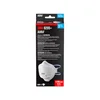 |
3M Aura 9205+ N95 Respirator, 3-Pack – $9.97 The EPA names an N-95 respirator, gloves and unvented goggles as the gear for cleaning mold. This is the NIOSH-approved N95 to wear while you brush and wipe the furniture.
|
As an Amazon Associate we earn from qualifying purchases.
Mold spores go airborne the moment you brush or wipe a colony, which is why protection comes first. For cleaning mold, the EPA, A Brief Guide to Mold, Moisture and Your Home lists an N-95 respirator, gloves and goggles without ventilation holes. A paper dust mask or a bandana does not count.
- Protection: N95 respirator, rubber or nitrile gloves, unvented goggles, and clothes you can wash right after.
- Cleaning kit: a soft brush, a bucket, dish detergent, clean rags you can throw away, and a spray bottle.
- Optional spot treatments: plain white vinegar or 3% hydrogen peroxide.
- Drying gear: a fan, and ideally a dehumidifier running in the room afterward.
- Plastic bags: for the rags and the brush head, sealed before they go in the trash.
Work outside or in a garage with the door open if you can, and keep the fan blowing out, not toward the rest of the house. If you have asthma, a mold allergy or a weakened immune system, ask someone else to do the cleanup or hire a pro.
Is It Mold, and Can This Piece Be Saved?
Mold on furniture shows up as fuzzy, powdery or speckled patches in white, gray, green or black, usually with a musty smell and usually in a damp room. If you are not sure what you are looking at, our guide to telling black mold from mildew on wood shows the differences by color, texture and smell.
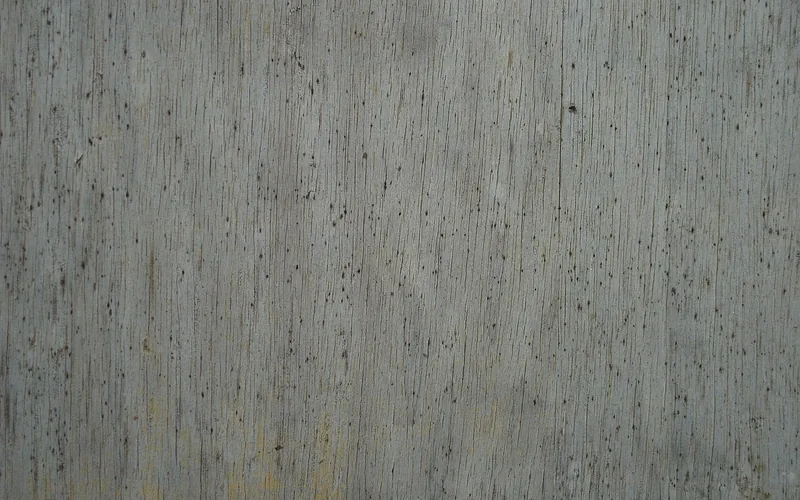
The bigger question is whether the piece is worth saving, and that depends on what it is made of. Mold sits on top of a sealed finish, but it follows moisture into anything absorbent.
| Furniture material | What mold does | Verdict |
|---|---|---|
| Solid wood with varnish, lacquer or polyurethane | Mostly grows on the finish and in cracks and joints | Clean and save it |
| Bare, oiled or waxed solid wood | Can work into the grain and leave dark stains | Clean it, expect to sand and re-oil |
| Veneered pieces | Moisture can lift the veneer, so look for bubbles and loose edges | Save it if the veneer is flat; see our veneer repair guide if it is lifting |
| MDF or particleboard | Swells when wet and can grow mold inside the core | Usually discard if it is swollen, soft or still smells musty after cleaning |
| Cushions, fabric and woven seats | Porous, so mold goes deep | Replace or have professionally cleaned; the EPA says porous materials may have to be thrown away |
📊 Mold can start on wood once its moisture content passes about 20%, and it can take hold in 24 to 48 hours if the wood stays wet. Source: USDA Forest Service, Biological Properties of wood. A pin-type moisture meter reads this in seconds and tells you if a “dry” piece is still damp inside.
One more filter from the EPA: if the moldy area is less than about 10 square feet, roughly a 3 ft by 3 ft patch, you can usually handle it yourself. A single dresser or chair almost always falls under that. Mold on the furniture and the wall or floor behind it, or furniture that sat in floodwater or sewage, is a different job for a professional.
How to Clean Mold Off Wood Furniture, Step by Step
- Move it outside. Put the piece on a tarp in open air, ideally in shade. Take drawers out and set them next to it.
- Suit up. N95, gloves and goggles go on before you touch anything.
- Dry-brush the loose growth. Use a soft brush in short strokes, away from your face. A vacuum with a HEPA filter works for crevices; empty it outside.
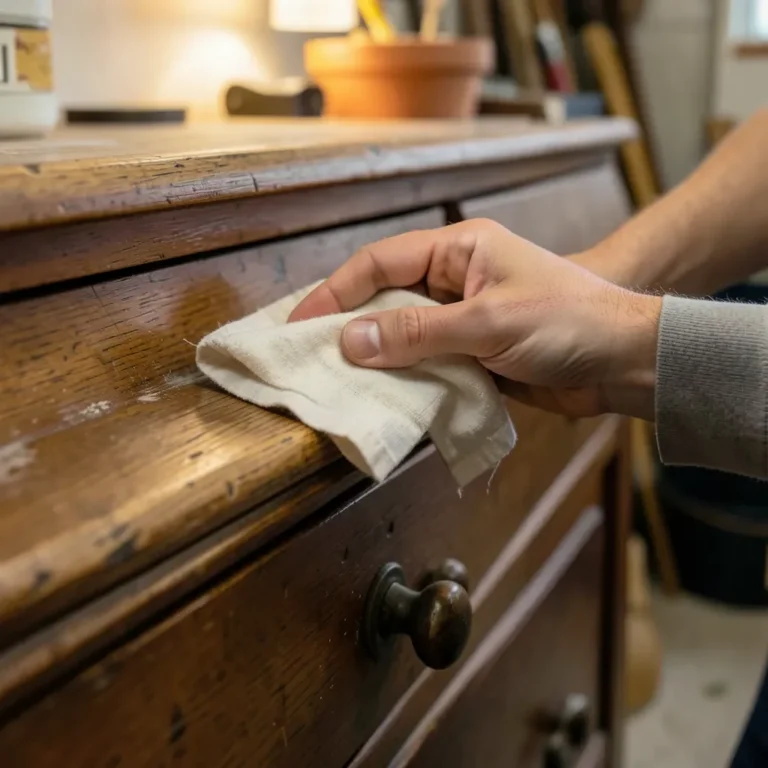
- Wipe with detergent and water. Mix a few drops of dish soap in warm water, wring the rag nearly dry, and wipe one small section at a time. The EPA calls for scrubbing hard surfaces with detergent and water, then drying completely.
- Change rags often. A rag that has picked up mold just moves it to the next spot, so switch to a clean one every few wipes.
- Spot-treat only what is left. If a stain or fuzz remains, test your cleaner in a hidden spot first, then use the options in the next section.
- Dry it completely. Wipe with a dry towel, then leave it in moving air. Do not put it back in the damp room until it is bone dry.
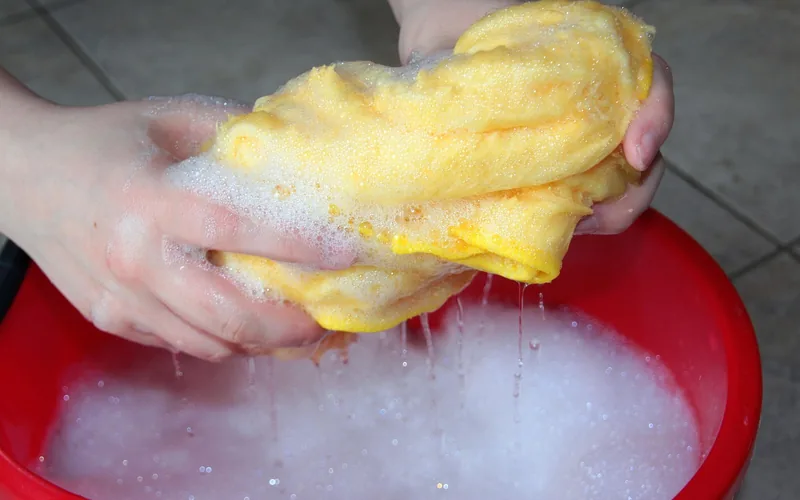
The EPA says to dry water-damaged areas and items within 24 to 48 hours to prevent mold growth, so use a fan and do not skip the drying time. Bag the rags and brush head before you take your gloves off, wash your clothes, and then wash your hands and face.
Vinegar, Hydrogen Peroxide, Bleach or Soap: What to Use on Wood
Plain detergent and water is the baseline. Public health agencies are surprisingly cautious about adding more: the CDC, 8 Tips to Cleanup Mold notes that using a biocide such as chlorine bleach is not recommended as a routine part of mold cleanup. No agency ranks vinegar above bleach on wood, so treat the comparison below as practical guidance for furniture, not an official ranking.
| Cleaner | How to use it | Upside | Watch out for |
|---|---|---|---|
| Dish soap and water | Wipe, then dry right away | Lifts mold off the surface and is safe on every finish | Will not remove a deep stain |
| White vinegar | Spray, wait about an hour, wipe with a damp cloth | Cheap and easy to find, with no bleach fumes | Acidic, so test first; strong smell until dry |
| 3% hydrogen peroxide | Spray, wait 10 minutes, wipe | Helps with stains and leaves no residue | Can lighten dark stain or finish |
| Household bleach | No more than 1 cup per 1 gallon of water, only if you choose to use it | Lightens dark mold stains | Water-based, so it soaks into bare wood; never mix with ammonia |
If you use bleach anywhere in this process, never mix it with ammonia or any cleaner that contains ammonia. The EPA warns that the combination can produce toxic fumes. Use it diluted, outdoors, with gloves and goggles, and keep it off bare or antique wood.
Here is the myth worth dropping: no cleaner makes a mold fix permanent. Mold comes back when the wood gets damp again, whatever you spray on it. The cleaner is the minor step, and drying the piece and fixing the moisture source is the major one.
Fixing the Stain After the Mold Is Gone
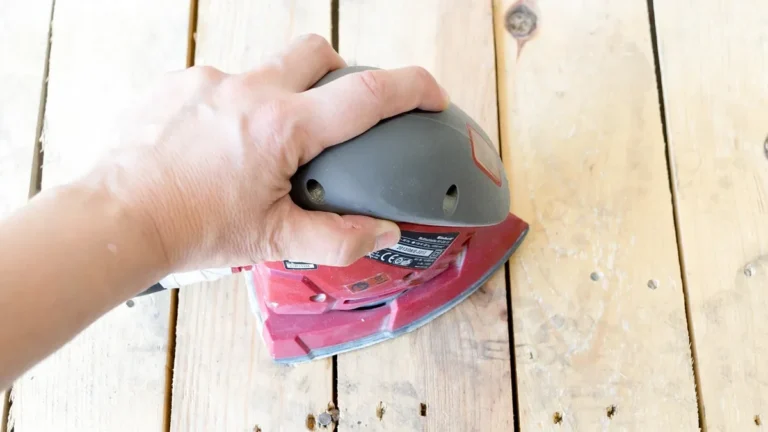
Dead mold can leave a dark ghost on the wood. Once the piece is clean and fully dry, you can deal with the stain. Sand lightly with 180 to 220 grit paper along the grain, only on the stained patch, then wipe off the dust with a barely damp cloth. Never sand while mold is still on the surface, because sanding throws spores into the air.
Then restore the finish to match the rest of the piece: wax or oil on an oiled surface, or a thin coat of the original finish type on a sealed one. Our guide to buffing wood covers the polishing step. If the stain is more of a water ring than mold, see removing water stains from wood instead.
When to Throw It Out or Call a Professional
- The mold covers more than about 10 square feet in total, including walls, floors or other pieces nearby.
- The piece is MDF or particleboard, and it is swollen, soft or still smells musty after cleaning and drying.
- Mold keeps coming back within a few weeks even after the room is dry, which points to hidden moisture.
- The furniture was in floodwater or sewage, or the mold sits next to a leak you cannot find.
- It is a valuable antique. Do not guess with it; see our antique furniture mildew guide or ask a conservator.
How to Keep Mold From Coming Back
The CDC advises keeping indoor humidity no higher than 50% all day long, and says an air conditioner or dehumidifier helps. A $10 hygrometer shows you the real number in the room.
- Keep it dry: aim for humidity under 50%, and use a dehumidifier in basements and closed rooms.
- Give it air: leave a small gap between furniture and exterior walls so air can move behind it.
- Check moisture: a wood moisture reading under 20% keeps you below the point where mold starts, per the USDA source above.
- Fix leaks first: a roof, window or pipe leak will beat any cleaner.
- Do not seal damp furniture: plastic covers and closed storage trap moisture, so make sure it is dry before covering it.
- Wipe up spills fast: and avoid wet cloths on bare wood.
For routine care between cleanups, see our guides on caring for antique wood furniture, cleaning oak furniture, and mold on hardwood floors. For outdoor pieces and decks, read how to get rid of black mold on a wood deck.
Frequently Asked Questions
Can moldy wood furniture be saved?
Yes, in most cases. Solid wood with a sealed finish usually cleans up well with detergent, water and thorough drying. Bare wood may need light sanding and refinishing. MDF, particleboard and upholstered pieces are the ones most likely to need replacing, especially if they are swollen or still smell musty after cleaning.
What kills mold on wood furniture?
Detergent and water removes mold from hard surfaces, and the EPA says to dry the piece completely afterward. White vinegar and 3% hydrogen peroxide are common spot treatments for leftover mold. Neither is a permanent fix, because mold returns if the wood gets damp again.
Is bleach or vinegar better to kill mold on wood?
Neither is officially ranked above the other. The CDC does not recommend bleach as a routine part of mold cleanup, and bleach can lighten wood and finishes. Vinegar is gentler on furniture but should be tested in a hidden spot first. If you use bleach, mix no more than 1 cup per gallon of water and never combine it with ammonia.
Can you wipe mold off a wooden bookcase?
Yes, if the finish is sealed. Brush off loose mold outdoors, wipe with a barely damp cloth and dish soap, then dry the bookcase completely. Empty it first, and discard any books or fabric items that grew mold, because paper and cloth are porous and hard to clean.
How do you remove mold from furniture permanently?
No cleaner removes mold permanently. Clean it, dry it completely, and then fix the moisture that caused it. Keep indoor humidity at or below 50%, repair leaks, and leave air space around furniture so the wood stays dry.
The short version: protect yourself, brush and wipe with detergent and water, dry the piece fully, and fix the damp room. Anything you cannot dry, or that has mold deep inside, is not worth the risk.
Sponsored / affiliate links. As an Amazon Associate I earn from qualifying purchases. I may earn additional commission from eligible campaigns.