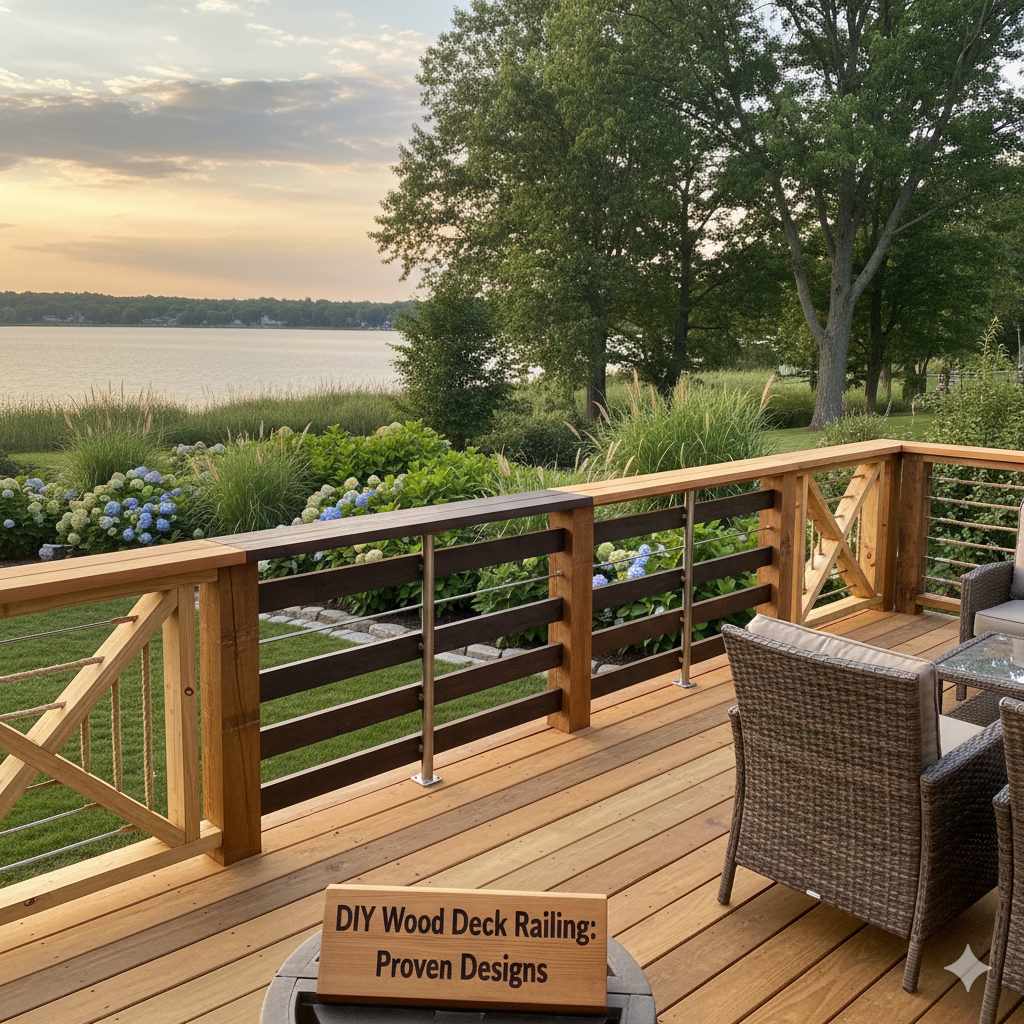
DIY Wood Deck Railing: Proven Gorgeous Designs
Want a beautiful, safe deck railing without hiring a pro? This guide shows you simple DIY wood deck railing designs. We’ll cover easy-to-build styles, essential tools, and tips for a gorgeous, durable finish that boosts your home’s look. Get ready to transform your deck!
Tired of a deck that feels unfinished or unsafe? A sturdy, attractive railing is key, but it can seem like a big project. Many homeowners worry about the cost or complexity of building one. What if you could create a stunning wood deck railing yourself, even if you’re new to DIY? It’s totally possible! With the right guidance and simple designs, you can build a railing that looks fantastic and adds real value to your home. We’ll walk you through everything, from choosing a design to putting the finishing touches on your project. Let’s get started and make your deck the envy of the neighborhood!
Building a deck is a fantastic way to extend your living space outdoors, but one element often makes or breaks its look and safety: the railing. A well-designed deck railing not only prevents accidents but also significantly enhances your home’s curb appeal. For beginners, the idea of tackling a DIY wood deck railing project can feel daunting. You might be wondering which designs are achievable, what tools you’ll need, and how to ensure it’s safe and beautiful. Don’t worry! As your woodworking mentor, I’m here to demystify the process. We’ll explore some of the most beautiful and beginner-friendly wood deck railing designs that you can build with confidence. Get ready to discover designs that are both practical and stunning, proving that a gorgeous deck railing is well within your reach.
Why a Beautiful Railing Matters
Your deck railing is more than just a safety feature; it’s a major design element. It frames your outdoor view, complements your home’s architecture, and can even become a focal point. A poorly built or outdated railing can detract from your property’s value and feel less inviting. On the flip side, a well-crafted wood deck railing adds charm, character, and a premium feel. It invites you to relax, entertain, and enjoy your outdoor space to its fullest. For DIYers, building your own railing is incredibly rewarding—you get a custom look at a fraction of the cost of professional installation, and the satisfaction of a job well done.
Essential Tools for Your Project
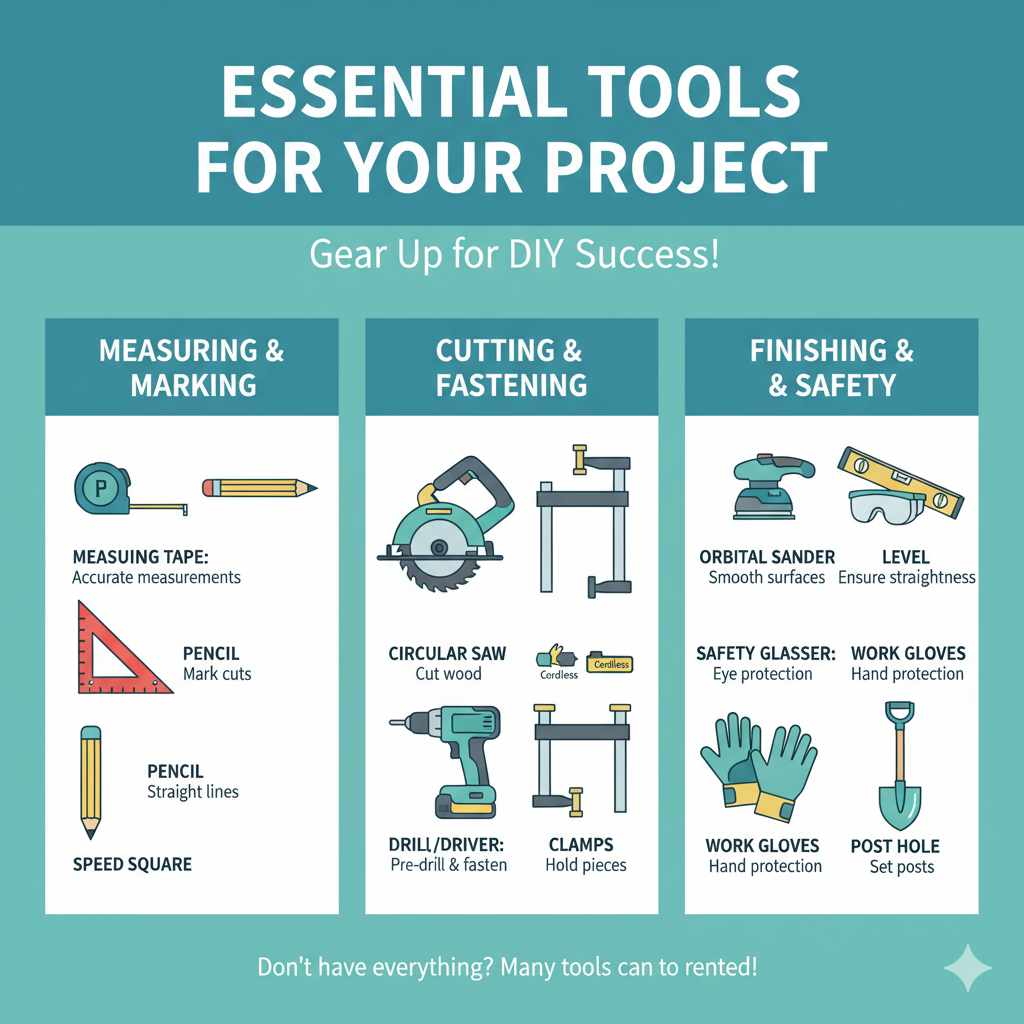
Before we dive into specific designs, let’s gather the essentials. Having the right tools makes any DIY job smoother and safer. Don’t worry if you don’t have everything; many can be rented, and investing in a few key pieces will serve you well for future projects.
- Measuring Tape: For accurate measurements every time.
- Pencil: To mark your cuts and placements.
- Speed Square/Combination Square: Essential for marking straight and accurate cut lines, especially at 90-degree angles.
- Circular Saw or Miter Saw: A miter saw is ideal for precise angled cuts on balusters and rails, but a circular saw can work with a guide.
- Drill/Driver: For pre-drilling holes and driving screws. Cordless is highly recommended for convenience.
- Orbital Sander: To smooth out wood surfaces and edges for a splinter-free finish.
- Level: Crucial for ensuring your posts and top rails are perfectly straight.
- Post Hole Digger or Shovel: If you need to set new posts in the ground.
- Safety Glasses: Always wear these to protect your eyes from sawdust and debris.
- Work Gloves: To protect your hands.
- Clamps: Handy for holding pieces in place while you work.
Understanding Railing Components
A basic wood deck railing system has a few key parts:
- Posts: The vertical supports that anchor the railing system to the deck. They’re usually 4×4 lumber.
- Rails: The horizontal pieces that run between posts. Typically, there’s a top rail and a bottom rail.
- Balusters (Spindles): The vertical or horizontal elements that fill the space between the rails. They provide safety and visual appeal.
- Hardware: Screws, bolts, brackets, and connectors used to assemble the railing securely.
Beginner-Friendly DIY Wood Deck Railing Designs
Let’s explore some proven designs that are perfect for those new to woodworking. These focus on simplicity, effectiveness, and great looks.
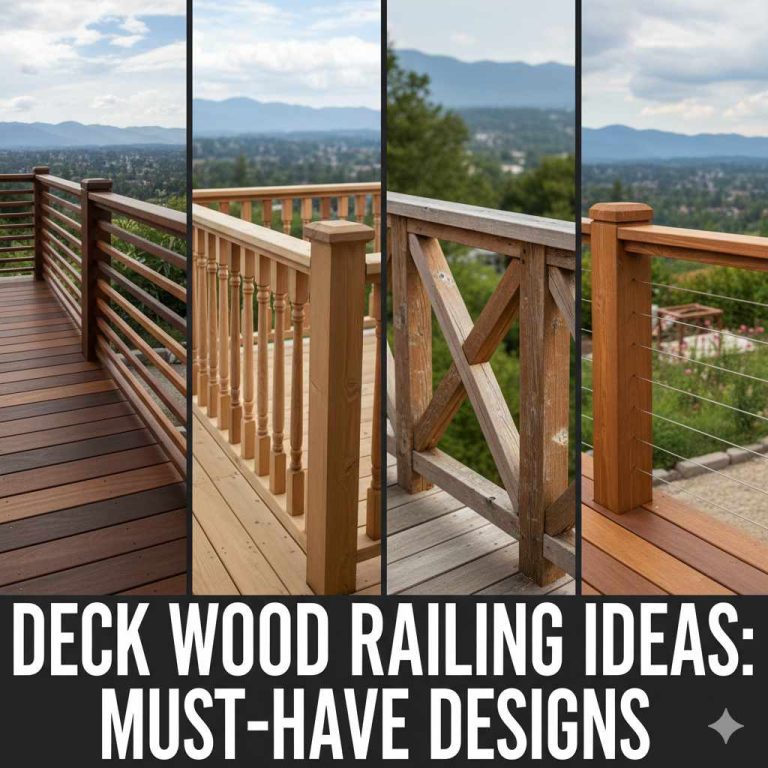
Design 1: Classic Horizontal Balusters
This is perhaps the most straightforward and modern-looking design. It’s minimalist, clean, and very achievable for beginners. Instead of many vertical spindles, you use fewer, thicker members running horizontally between your posts.
- Posts: Install 4×4 posts securely. These can be attached to the deck framing using specialized metal connectors or bolted directly through the rim joist and blocking. For robust support, consider adding blocking between joists where posts will be mounted. A great resource for safe post installation is the Building Science Corporation, which discusses structural connections in wood framing, giving you a solid understanding of load-bearing principles.
- Rails: Attach a top rail (often a 2×4 or 2×6) and a bottom rail (typically a 2×4) to the inner sides of the posts. Ensure they are level.
- Balusters: Use 2x4s or even 1x4s for your horizontal balusters. Attach them directly to the front of the top and bottom rails using screws. You’ll want to space them evenly. For a clean look, you can inset them slightly from the outer edge of the rails. Ensure the gap between any two balusters doesn’t exceed 4 inches for safety.
Pros:
- Very easy to measure and cut.
- Modern, clean aesthetic.
- Less material than vertical balusters, potentially saving cost.
- Good for showcasing views.
Cons:
- May not meet all building codes for vertical climb resistance, depending on spacing and local regulations. Always check your local International Code Council (ICC) guidelines.
- Can be easier for small children to climb over if not constructed with appropriate spacing.
Design 2: Simple Vertical Balusters
This is the classic look most people associate with deck railings. It’s reliable, safe, and offers plenty of space for customization.
- Posts: Install 4×4 posts as described in Design 1.
- Rails: Install a top rail (2×4 or 2×6) and a bottom rail (2×4) between the posts. Make sure the bottom rail has a slight overhang on the top edge of the deck boards, which helps protect the deck boards from water by directing rain away.
- Balusters: Use standard 2×2 lumber for balusters. Cut them to the desired length to fit between the top and bottom rails. Attach them vertically. For a professional look, pre-drill pilot holes to prevent wood splitting. Use two screws per end for each baluster. Space them no more than 4 inches apart to meet safety standards.
Pros:
- Universally recognized and accepted design.
- Meets most building codes for safety (check local requirements).
- Difficult for small children to climb.
Cons:
- Requires more individual pieces (balusters) to cut and attach, meaning more labor.
- Can be more time-consuming than horizontal designs.
Design 3: Geometric Top Rail with Simple Balusters
This design adds a touch of visual interest by incorporating a decorative cap or accent piece on top of your main top rail.
- Posts: Install 4×4 posts.
- Rails: Attach a standard 2×4 bottom rail. Then, install a 2×4 top rail.
- Decorative Cap Rail: Add a wider board, like a 2×6 or even a 5/4 deck board, on top of the 2×4 top rail. This “cap” rail provides a smooth, comfortable surface to lean on and adds a finished, more substantial look. You can let it overhang slightly on the sides and front for a classic or modern appearance.
- Balusters: Use 2×2 vertical balusters spaced 4 inches apart, attached between the 2×4 top rail and the bottom rail.
Pros:
- Adds a premium, finished look without significant complexity.
- The wider cap rail is more comfortable to lean on.
- Can be customized with different wood species or stains for the cap rail.
Cons:
- Slightly more material and labor than a basic vertical baluster design.
- Requires careful alignment of the cap rail for a neat appearance.
Design 4: Horizontal Boards with a Top Cap
This is a variation on the horizontal baluster design, aiming for an even more streamlined and robust feel.
- Posts: Install 4×4 posts.
- Rails: Attach 2x4s as your top and bottom rails, flush with the outside faces of your posts.
- Adding Horizontal Spacers (Optional): For a more substantial look, you can add a few more 2x4s horizontally between the posts, spaced evenly. Let these rest on top of each other, or offset them slightly.
- Top Cap Rail: Add a 2×6 or 5/4 deck board on top of the entire assembly, covering the top edge of the top rail. This creates a very sturdy and inviting rail.
Pros:
- Very clean, contemporary look.
- Durable and strong.
- Offers a wide surface for resting drinks or placing small decorations.
Cons:
- Requires careful measuring and alignment for a professional finish.
- Baluster spacing needs to comply with codes, which can be tricky with purely horizontal elements; vertical supports or careful planning is needed to prevent climbability issues. Always check local codes.
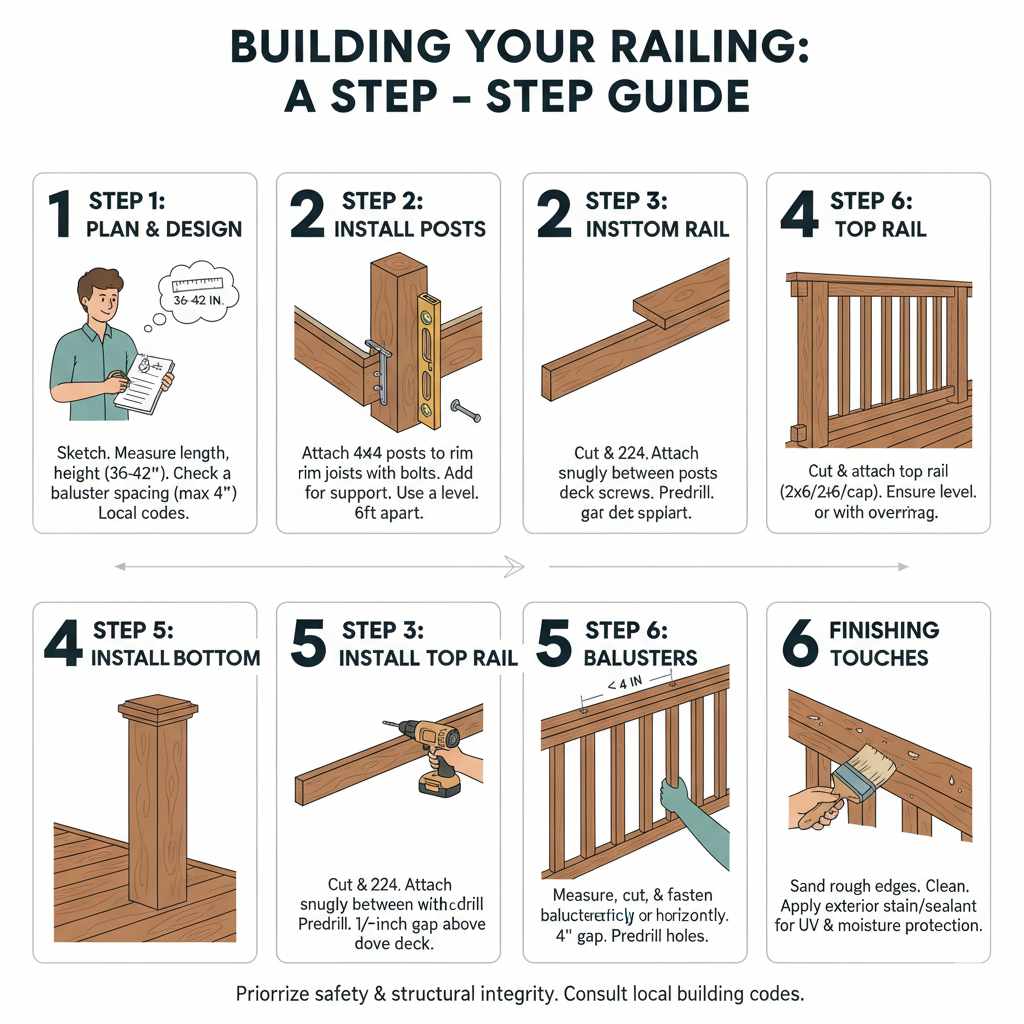
Building Your Railing: A Step-by-Step Guide (General)
While specific designs vary, the underlying process for attaching a railing to an existing deck frame is similar. Always prioritize safety and structural integrity.
Step 1: Plan and Design
Choose your design. Measure the lengths of railing sections needed. Determine the height of your railing (typically 36-42 inches from the deck surface). Note the spacing requirements for balusters according to your local building codes. It’s wise to sketch out your plan and confirm it meets all safety regulations.
Step 2: Install Posts
Posts are the backbone of your railing. If your deck doesn’t have existing posts, you’ll need to add them. The most secure method is to attach 4×4 posts to the inside of the deck’s rim joists. You can do this by notching out the rim joist, adding blocking between joists for extra support, and then bolting the post through the blocking and rim joist using 1/2-inch lag screws or through bolts. Ensure posts are plumb (perfectly vertical) using a level. For code compliance, posts are often spaced no more than 6 feet apart.
Step 3: Install Bottom Rail
Cut your 2×4 bottom rail to fit snugly between the posts. Attach it using galvanized deck screws, pre-drilling pilot holes to prevent splitting. Ensure the bottom rail is level. A common practice is to have the bottom rail sit about 1/2 inch above the deck boards to prevent water from pooling on the wood.
Step 4: Install Top Rail
Measure and cut your top rail (could be a 2×4, 2×6, or part of a cap rail system). Attach it to the posts, ensuring it’s level and flush or with a desired overhang. If adding a decorative cap rail, attach the base top rail first.
Step 5: Install Balusters
If using vertical balusters, measure and cut them to fit snugly between the top and bottom rails. Use specialized baluster connectors or simply screw them into place. Remember, the gap between balusters must not exceed 4 inches. For horizontal balusters, measure and attach them directly to the front of the rails, ensuring consistent spacing and safety compliance. Always pre-drill holes.
Step 6: Finishing Touches
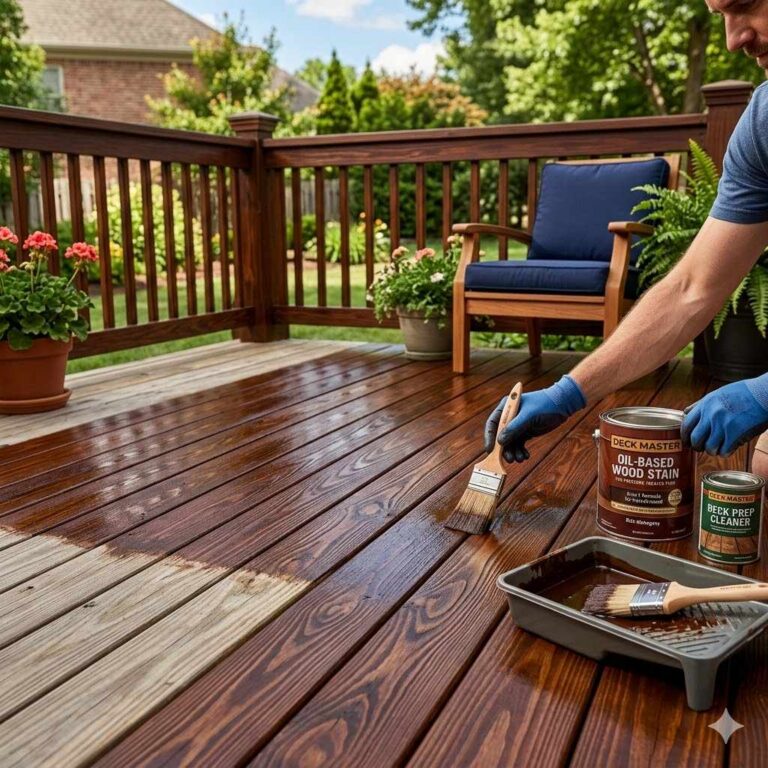
Sand down any rough edges or splinters. Clean the wood thoroughly. Apply a high-quality exterior wood stain or sealant that protects against UV rays and moisture. This is crucial for the longevity and beauty of your DIY wood deck railing. Follow the manufacturer’s instructions for application and drying times.
Frequently Asked Questions
What is the easiest deck railing to build for a beginner?
The simplest DIY wood deck railing designs often involve horizontal balusters (boards) or pre-made balusters attached to sturdy posts and a top rail. These require fewer cuts and less complex joinery, making them ideal for your first railing project.
How much does DIY deck railing cost compared to professional installation?
DIY deck railing can save you significant money. While material costs are similar, you’ll avoid labor charges, which can be substantial. Expect to save anywhere from 30% to 60% by doing it yourself, depending on the complexity of your design and your material choices.
What are the most common wood types for deck railings?
Pressure-treated pine is a popular, affordable, and durable choice. Cedar and redwood are naturally resistant to rot and insects, offering a beautiful look but at a higher price. Composite materials are also an option for low maintenance, though this guide focuses on wood.
What safety considerations are most important for deck railings?
Uniform height (usually 36-42 inches, check local codes), baluster spacing (no more than a 4-inch gap to prevent children from falling through), and secure attachment to the deck frame are crucial. Always follow building codes for safety.
How do I prepare wood for a deck railing?
Ensure the wood is dry and free of knots. Sand all pieces smoothly to prevent splinters. For pressure-treated lumber, allow it to dry for several weeks to months before staining or sealing. Apply a good quality exterior stain or sealant to protect the wood from weather and UV damage.
Can I build a deck railing on an existing deck?
Yes! You can add railing posts to an existing deck structure. Typically, posts are attached to the deck joists or blocking using sturdy mounting hardware. It’s important to ensure these posts are securely anchored to support the railing safely.