20 Ft Deck Boards: Wood vs Composite Costs & Where to Buy
Composite decking is milled to a standard maximum length of 20 feet — pressure-treated lumber can special-order up to 24 feet, but most home centers only stock it to 16 feet. Using the wrong length means extra seams, wasted cutoffs, or a two-to-four-week special-order wait. This guide compares wood, composite, and PVC board costs, covers the expansion gap and joist details a 20 ft board actually needs, and shows where to buy them.
How Long Do Deck Boards Actually Come? (Wood vs. Composite vs. PVC)
“20 ft deck boards” means different things depending on material. Composite and PVC lines are milled to a hard 20 ft ceiling industry-wide — Trex, TimberTech, Fiberon, and Deckorators all stop there because longer extrusion runs distort during cooling. Wood is the opposite: 16 ft is the common stocked length, but pressure-treated pine can be special-ordered to 24 ft through a lumberyard’s mill order desk.
| Material | Standard Stocked Max | Special-Order Max | Notes |
|---|---|---|---|
| Pressure-treated wood | 16 ft | 24 ft | Longer lengths usually need a 2–4 week mill order |
| Composite | 20 ft | 20 ft (hard ceiling) | No manufacturer currently mills composite longer than 20 ft |
| PVC | 20 ft | 20 ft (hard ceiling) | Same 20 ft ceiling as composite for the same manufacturing reason |
If a design calls for a true seamless run past 20 feet — a long lakeside or pool deck, for example — wood is the only material that can special-order past that ceiling. Everyone else needs a picture-frame border or a deliberate seam joint at 20 ft.
Expansion Gaps and Joist Details for 20 Ft Spans
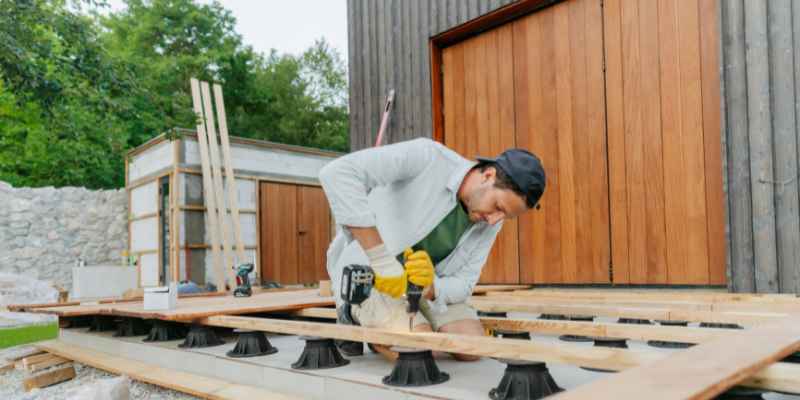
Composite and PVC boards move more at 20 ft than at 12 or 16 ft — thermal expansion is proportional to board length. Most manufacturer spec sheets call for a 1/4 inch gap at each board end, but on a full 20 ft run across a 100°F seasonal swing, that gap can close by 3/8 inch or more in real installations, especially on darker-colored boards that run hotter in direct sun. Leaving the manufacturer’s minimum gap on a 20 ft board is the single most common cause of buckling reported in composite deck forums.
Joist spacing itself doesn’t change for longer boards — standard 16 inch on-center framing (per IRC deck framing guidance) still applies, since a 20 ft board simply spans more joists, not fewer. What does change: with more fasteners along a single board’s length, use a chalk line down the joist centers before the first row goes in — a 20 ft board that drifts 1/2 inch off-line at one end is visibly crooked by the other end.
Best Deck Fastener Pick for Long Boards
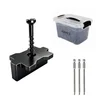 |
430-Piece Hidden Deck Fastener Kit (Covers ~200 sq ft) Plastic clips plus coated screws hold long composite or PVC boards with consistent spacing and no visible fastener heads on the surface.
|
As an Amazon Associate we earn from qualifying purchases.
Handling and Installing 20 Ft Boards Without Bowing or Cracking
A 20 ft board flexes and twists far more than an 8 ft cutoff, and it’s heavy enough that mishandling it is the main way boards get damaged before installation even starts.
- Carry with two people, minimum: one person on each end prevents the mid-span sag that cracks wood boards and stress-whitens composite ones.
- Support every 4 to 6 feet in storage: a 20 ft board resting only on two end supports will develop a permanent bow within days, especially in summer heat.
- Keep it covered but ventilated: a tarp stops rain and UV but trapped moisture underneath causes mold on wood and surface haze on composite — leave the ends open for airflow.
- Snap a chalk line before the first fastener: start square at one end; a 20 ft board installed slightly off-angle compounds the error across its full length.
Cost Comparison: Wood vs. Composite vs. PVC per Linear Foot
| Material | Price per Linear Foot | Cost for One 20 Ft Board |
|---|---|---|
| Pressure-treated wood | $2–$5 | $40–$100 |
| Composite | $3–$7 | $60–$140 |
| PVC | $4–$9 | $80–$180 |
Wood costs the least per board, but going with fewer, longer boards still reduces total cost on a real project: a 200 sq ft deck built from 20 ft boards needs roughly a third fewer boards — and a third fewer cut ends, joist connections, and fastener rows — than the same deck built from 8 ft boards. See the full deck installation cost breakdown for labor and hardware on top of material.
Should You Use 20 Ft Boards or Stagger Shorter Ones?
A full 20 ft run isn’t automatically the right call just because the material comes in that length. Two layout strategies compete for the same deck: a single unbroken board per row, or shorter boards staggered so the seams fall in a deliberate, spaced-out pattern (picture-framing the field, essentially).
- Choose full 20 ft boards when: the deck’s long dimension is close to 20 ft, the layout is a simple rectangle, and a clean unbroken line matters more than material flexibility — pool decks and formal patios are the usual case.
- Choose staggered shorter boards when: the deck is longer than 20 ft (seams are unavoidable anyway, so stagger them intentionally rather than lining every row up at the same point), the layout has jogs or curves that would waste most of a 20 ft board in offcuts, or the budget favors 12–16 ft stock, which most yards keep in stock at a lower per-foot price than special-order 20 ft lengths.
Staggering also reduces waste on anything but a perfectly rectangular deck — a 20 ft board cut down to fit an 11 ft run throws away 9 ft of material that a shorter stock length wouldn’t have wasted in the first place.
Where to Buy 20 Ft Deck Boards
Home Depot and Lowe’s both stock 20 ft composite boards from Trex and TimberTech in most regions, though availability varies by store and usually requires special order or delivery rather than an in-stock pickup. Both retailers also commonly charge an oversize-length delivery surcharge on boards over 16 ft, since they no longer fit standard flatbed racking — ask about that fee before comparing delivered price between stores. For Home Depot-specific pricing and current brand picks, see our 20 ft composite deck boards at Home Depot guide. For wood in this length, a local lumberyard’s mill order desk is almost always faster and cheaper than a big-box special order — see our guide on where to buy 20 ft deck boards for a store-by-store breakdown, or check 16 ft options at Lowe’s if a slightly shorter, in-stock length works for the layout.
Composite boards are also a practical eco-friendly choice — most lines use recycled wood fiber and plastic, and manufacturers publish recycled-content percentages on their spec sheets if that’s a deciding factor.
Planning the full structure first matters as much as the boards themselves — see our guides on deck base and foundation ideas and deck framing plans before ordering board length, since the joist layout determines how many 20 ft runs a design actually needs.
“On every 20 ft composite deck we’ve framed, we leave a full 3/8 inch gap at both ends even when the spec sheet says 1/4 inch — long boards move more than the paperwork claims, especially the first summer after install.”
— Our team, on-site framing notes
Frequently Asked Questions
How long can deck boards actually be?
Composite and PVC boards top out at 20 feet industry-wide — no manufacturer currently mills them longer. Pressure-treated wood is typically stocked to 16 feet but can be special-ordered up to 24 feet through a lumberyard’s mill desk.
Do 20 ft composite boards need a bigger expansion gap?
Yes. Thermal expansion scales with board length, so a 20 ft board moves more than a 12 ft one across the same temperature swing. Many installers leave a 3/8 inch end gap on 20 ft runs even when the manufacturer’s minimum spec is 1/4 inch, especially with darker-colored boards.
How much do 20 ft deck boards cost?
A single 20 ft pressure-treated wood board runs roughly $40 to $100, composite runs $60 to $140, and PVC runs $80 to $180, depending on brand and finish. Fewer, longer boards can lower total project cost by cutting the number of boards, cuts, and fasteners needed.
Can one person install 20 ft deck boards alone?
It’s possible but not recommended. A 20 ft board is heavy and flexes enough in the middle that one person working alone risks cracking a wood board or stress-marking a composite one during handling. Two people carrying and positioning the board, even if one person finishes the fastening alone, avoids most handling damage.
Is it cheaper to use fewer 20 ft boards or more short boards?
It depends on the deck’s shape. On a simple rectangle sized close to 20 ft, fewer long boards win — less waste, fewer seams, faster labor. On an irregular layout, shorter stocked lengths (12 or 16 ft) usually cost less overall, because cutting a 20 ft board down to fit a short run wastes material that a shorter stock length wouldn’t have wasted at all.
Choosing the right board length comes down to the material ceiling more than preference: composite and PVC cap out at 20 feet no matter which brand is chosen, while wood can go longer through a special order. Match the length to the actual joist layout, budget the wider expansion gap a long board needs, and a 20 ft run delivers the clean, low-seam deck surface it’s chosen for.
Sponsored / affiliate links. As an Amazon Associate I earn from qualifying purchases. I may earn additional commission from eligible campaigns.