Do All Oak Trees Have Acorns? The Shocking Essential Truth
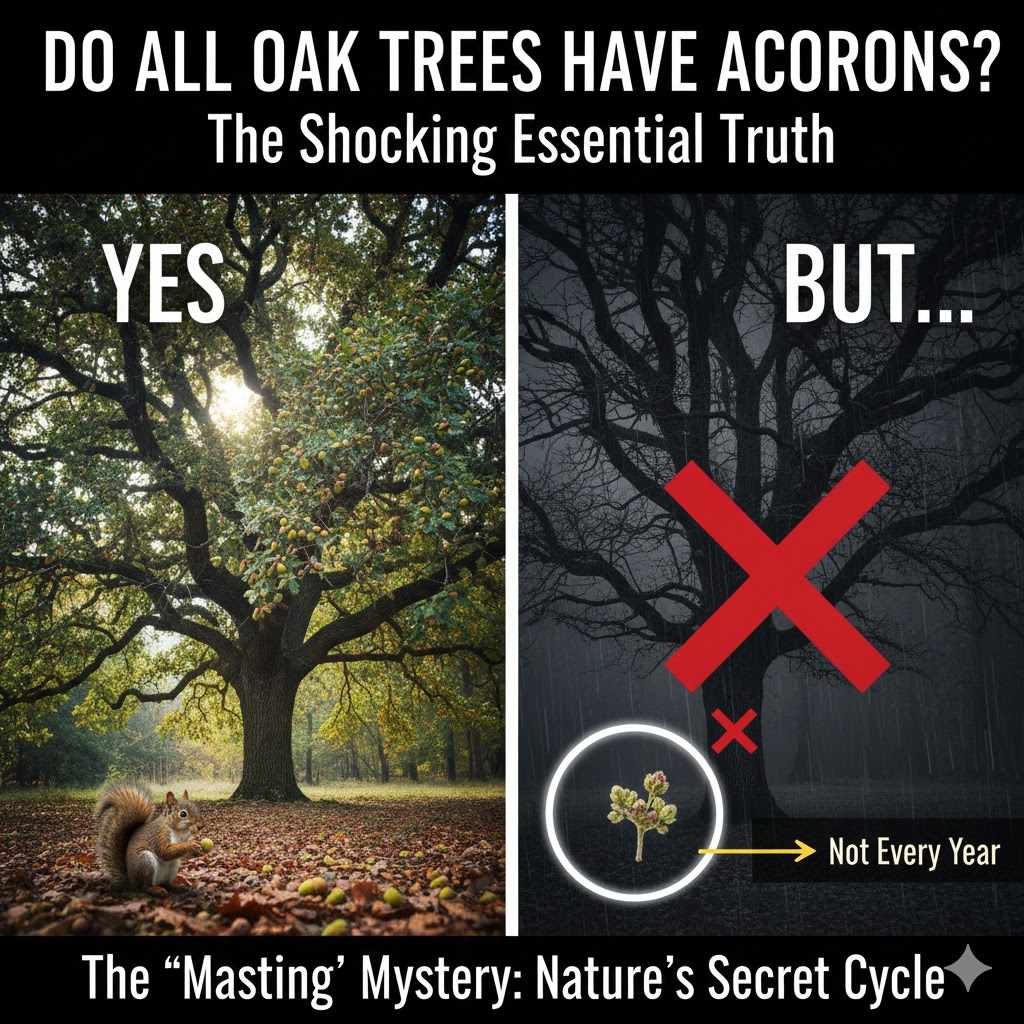
Yes, all species of oak trees can produce acorns, but not every individual oak tree will have them. A tree must be mature enough (often 20+ years old), healthy, and experience the right weather conditions. Factors like age, pollination, and natural boom-or-bust cycles mean you may not see acorns every single year.
Hello, friends! Md Meraj here, your guide in the workshop and the yard. It’s a common question I hear. You have a big, beautiful oak tree on your property, a real statement piece. You wait for those classic little acorns to drop in the fall… but they never come. It can make you wonder, “Is my tree okay? Is it even an oak?” You’re not alone in asking this.
It can be confusing when your tree doesn’t act like you expect it to. But don’t worry, there’s usually a simple, logical reason. The truth about oak trees and their acorns is more fascinating than you might think. We’re going to break it all down, step-by-step, so you can understand exactly what’s happening with your tree. Let’s solve this mystery together!
The Simple Truth About Oaks and Acorns
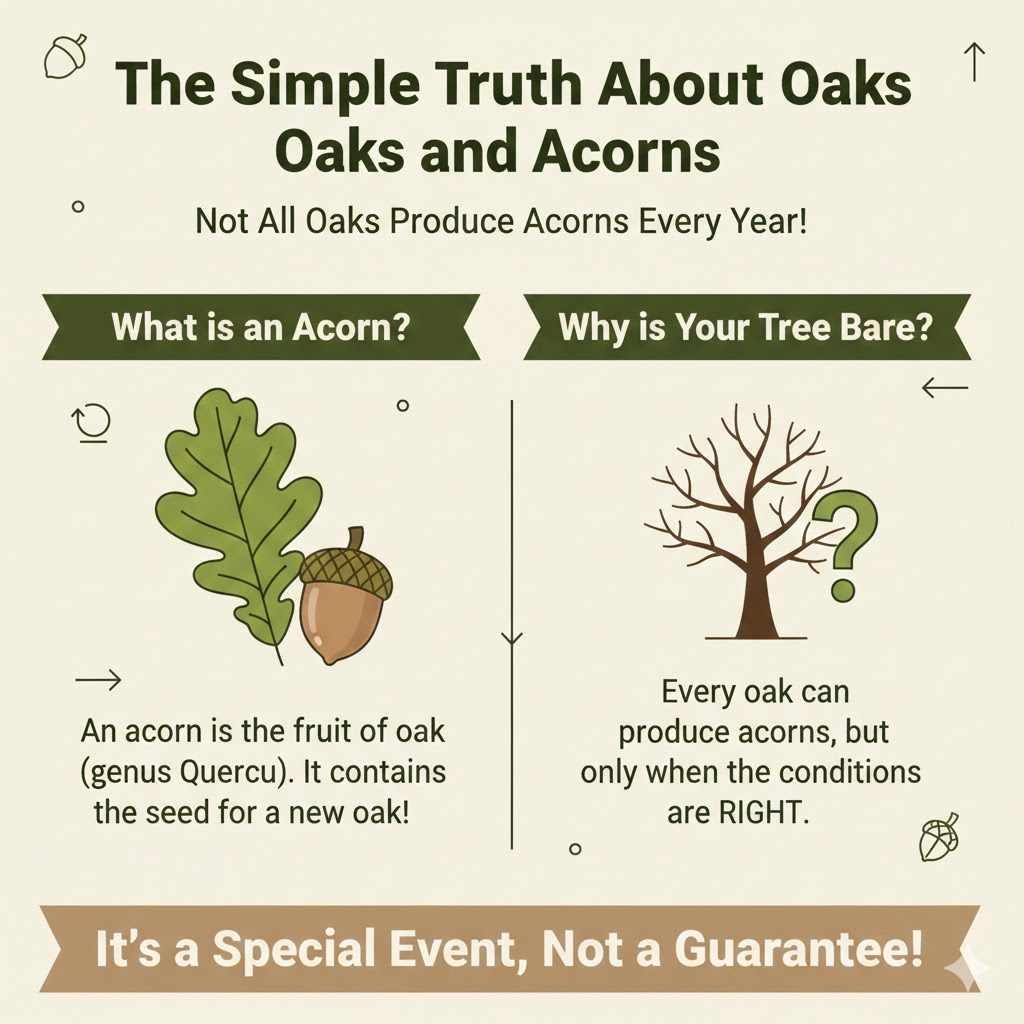
Let’s get straight to it. An acorn is the fruit of an oak tree. Its entire purpose is to carry the seed that can grow into a new oak tree. If a tree is a true oak (from the genus Quercus), it has the genetic ability to produce acorns. There is no such thing as an “acorn-less” species of oak tree.
So, if every oak species can produce acorns, why is your tree bare? This is where the story gets interesting. Just because a tree can make acorns doesn’t mean it will every year, or even every decade. Several key factors must align perfectly for a crop of acorns to appear. Think of it less like a guarantee and more like a special event that happens only when the conditions are just right.
The Top 5 Reasons Your Oak Tree Doesn’t Have Acorns
If you’re staring up at empty branches, one of these five reasons is likely the culprit. Let’s walk through them, and I bet you’ll find the answer for your specific tree.
1. Your Oak Tree is Still a Teenager
This is by far the most common reason. Oak trees live a very long time, and they take their time reaching adulthood. Just like people, they have to mature before they can reproduce. A young oak tree will spend its first couple of decades focusing all its energy on growing taller and stronger—reaching for sunlight and establishing a deep root system. Producing acorns takes a massive amount of energy, and a young tree just doesn’t have the resources to spare.
So, how old is “old enough”? It varies a lot depending on the species of oak.
- Fast-Growing Oaks: Species like the Pin Oak or Northern Red Oak might start producing a small number of acorns as early as 20 years old.
- Slow-Growing Oaks: Majestic species like the White Oak or Bur Oak often won’t produce their first real acorn crop until they are 50 years old or more!
If your tree was planted in the last 10-15 years, patience is your best friend. Your tree is healthy and growing, just not ready for the next step yet.
| Common Oak Species | Typical Age of First Acorn Production | Notes |
|---|---|---|
| White Oak (Quercus alba) | 50+ years | Known for being slow and steady growers. |
| Northern Red Oak (Quercus rubra) | 20 – 25 years | A relatively faster maturing oak. |
| Bur Oak (Quercus macrocarpa) | 35+ years | Produces some of the largest acorns. |
| Pin Oak (Quercus palustris) | 15 – 20 years | Often one of the earliest to produce acorns. |
| Live Oak (Quercus virginiana) | 20+ years | Common in southern climates. |
2. The Invisible Flowers and Poor Pollination
Did you know oak trees have flowers? They do! But they aren’t the big, showy flowers you see on a magnolia or a cherry tree. Oak flowers are very small, subtle, and easy to miss.
Oak trees are “monoecious,” which is a fancy word meaning each tree has both male and female flowers.
- Male flowers are long, droopy clusters called catkins. They look like yellowish-green worms hanging from the branches in spring. Their job is to produce a huge amount of pollen.
- Female flowers are incredibly small reddish spikes, often located where a new leaf meets the twig. They are tiny and you would have to look very closely to even see them.
Oak trees rely on the wind, not insects, for pollination. The wind needs to pick up pollen from the male catkins and carry it to a female flower on another oak tree. If the timing is off, it won’t work. A long, rainy spring can be a disaster for acorn production. The rain washes all the pollen out of the air before it has a chance to reach the female flowers. No pollination means no acorns can develop.
3. The Wrong Weather at the Wrong Time
Weather can make or break an acorn crop. The tree might have everything else going for it—great age, great health—but Mother Nature has the final say. Two weather events are particularly damaging:
- Late Spring Frost: This is a major acorn killer. The delicate oak flowers emerge in early to mid-spring. If a sudden, hard frost hits after the flowers have bloomed, it will kill them instantly. The tree won’t get a second chance to produce flowers that year, so the entire acorn crop is lost before it even begins.
- Summer Drought or Stress: Let’s say pollination was successful and tiny acorns have started to form. If a severe drought hits in the summer, the oak tree might go into survival mode. Creating mature acorns uses a lot of water and energy. To conserve its resources for survival, the tree will “abort” the young acorns, causing them to shrivel and drop from the tree long before they are ready.
4. Natural Cycles: The “Mast Year” Phenomenon
Here’s a concept that surprises many people. Oak trees don’t produce a big crop of acorns every year. Instead, they operate on a cycle. Some years they produce very few acorns, or none at all. Then, every 2 to 5 years, they will suddenly produce a massive, overwhelming crop. This boom-and-bust cycle is called a “mast year.”
Scientists believe this is a survival strategy. In lean years, animal populations that eat acorns (like squirrels, deer, and turkeys) can’t grow too large. Then, in a mast year, the tree produces so many acorns that the animals can’t possibly eat them all. This ensures that some acorns are left over to sprout and grow into new trees. According to the U.S. Forest Service, this synchronous production is a critical part of forest health.
To understand this cycle, it’s helpful to know about the two major groups of oak trees:
- The White Oak Group: This group includes White Oaks, Bur Oaks, and Chestnut Oaks. Their acorns mature in a single growing season. You’ll see flowers in the spring and fully formed acorns on the ground that same fall.
- The Red Oak Group: This group includes Northern Red Oaks, Pin Oaks, and Black Oaks. Their acorns take two full years to mature. The flowers that are pollinated this spring will form tiny, pea-sized acorns that stay on the tree through the winter. They won’t mature and drop until the fall of next year. This two-year cycle makes them even more vulnerable to weather events like a late frost.
| Feature | White Oak Group | Red Oak Group |
|---|---|---|
| Leaf Shape | Lobes are smooth and rounded. | Lobes are pointed with bristle-like tips. |
| Acorn Maturation Time | 1 year (matures in the same season it was pollinated) | 2 years (matures in the season after pollination) |
| Acorn Taste | Less bitter, lower in tannins. More palatable to wildlife. | Very bitter, high in tannins. |
| Examples | White Oak, Bur Oak, Swamp White Oak | Northern Red Oak, Pin Oak, Black Oak, Scarlet Oak |
5. The Tree is Sick or Stressed
Finally, a tree’s overall health plays a huge role. Just like a person who is sick doesn’t have the energy for extra activities, a stressed tree won’t have the energy to produce fruit. Acorn production is a luxury, not a necessity for the tree’s immediate survival.
Common stressors include:
- Pest Infestations: Insects like acorn weevils can destroy the developing acorns from the inside out. Other pests might damage the leaves so much that the tree can’t photosynthesize properly to create enough energy.
- Diseases: Fungal diseases like Oak Wilt can be devastating. They clog the tree’s vascular system, preventing water from reaching the leaves and branches, which can halt acorn production and eventually kill the tree.
- Environmental Stress: A tree in a tough spot will struggle. This includes things like heavily compacted soil from foot traffic or construction, poor nutrients, not enough sunlight (if it’s being crowded out by other trees), or physical damage from lawnmowers or storms.
How You Can Help Your Oak Tree
While you can’t control the weather or a tree’s age, you can help ensure it’s healthy and has the best possible chance to produce acorns when the time is right.
- Give It Water: During a long, dry summer, give your oak a deep, slow watering. Place a soaker hose in a circle around the tree’s drip line (the area on the ground directly under the outermost leaves) and let it run for several hours. Do this every few weeks if you haven’t had rain.
- Protect the Roots: Avoid parking cars, piling heavy materials, or building under your oak tree. This compacts the soil and smothers the sensitive root system. Apply a 2-3 inch layer of mulch around the base of the tree (but don’t let it touch the trunk!) to help retain moisture and reduce soil compaction.
- Don’t Over-Prune: A mature oak rarely needs heavy pruning. Only remove dead, damaged, or dangerously positioned branches. Heavy pruning can put the tree under a lot of stress.
- Inspect for Problems: Regularly look at your tree’s leaves, bark, and branches. If you see signs of widespread insect damage or potential disease (like wilting leaves in summer), consider consulting a certified arborist for advice. Early detection is key. For more information on tree care, your local university extension service, like the Penn State Extension, is an excellent resource.
Is It Really an Oak? Common Lookalikes
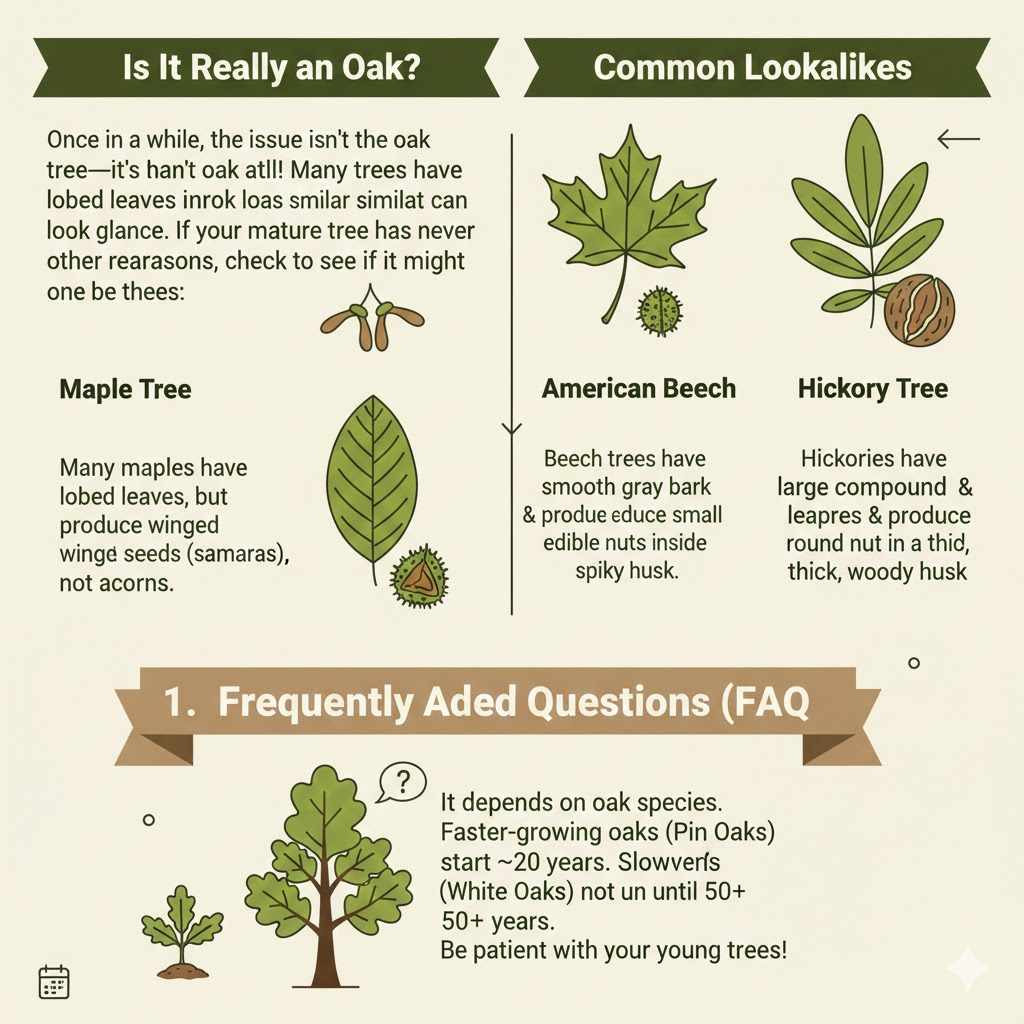
Once in a while, the issue isn’t the oak tree—it’s that the tree isn’t an oak at all! Many trees have lobed leaves that can look similar to an oak at first glance. If your mature tree has never produced acorns and doesn’t fit the other reasons, check to see if it might be one of these:
- Maple Tree: Many maples have lobed leaves similar to oaks, but they produce the classic winged seeds known as “helicopters” (samaras), not acorns.
- American Beech: Beech trees have smooth, gray bark and produce small, edible nuts inside a spiky, bristly husk.
- Hickory Tree: Hickories have large compound leaves and produce a round nut encased in a thick, woody husk that splits open when mature.
Frequently Asked Questions (FAQ)
1. How old does an oak tree have to be to make acorns?
It depends on the species. Faster-growing oaks like Pin Oaks can start producing acorns around age 20, while slower-growing White Oaks may not start until they are 50 or older. Be patient with your young trees!
2. My oak tree had tons of acorns last year but none this year. Why?
This is most likely due to a natural cycle called a “mast year.” Oak trees produce a huge crop of acorns every 2-5 years and very few in the off-years. It’s a normal and healthy survival strategy for the tree.
3. Is there such a thing as a male or female oak tree?
No, oak trees are not male or female. They are “monoecious,” meaning each tree has both male flowers (pollen-producing catkins) and female flowers (the tiny spikes that receive pollen and become acorns).
4. Do acorns mean my oak tree is healthy?
Generally, yes. A tree that has enough energy to produce a good crop of acorns is usually in good health. However, a tree under severe stress might produce a massive “stress crop” as a last-ditch effort to reproduce, so it’s always good to look at the overall condition of the leaves and bark, too.
5. Can I plant an acorn to grow a new oak tree?
Absolutely! It’s a fun and rewarding project. For best results, collect fresh acorns from the ground in the fall. Perform a “float test”—put them in a bucket of water, and discard any that float, as they are likely bad. Plant the good acorns about one inch deep in a pot or directly in the ground. Be patient, as it can take a while to sprout.
6. What time of year do acorns fall?
Most acorns fall from the tree in the early to mid-autumn, typically between September and November, depending on your climate and the specific oak species.
7. Are acorns safe to eat?
While many types of acorns are technically edible for humans, they must be processed correctly first. Raw acorns contain high levels of tannins, which are very bitter and can cause an upset stomach. They must be shelled and then leached in water to remove the tannins before they can be eaten or ground into flour.
Conclusion: The Patient Gardener’s Reward
So, do all oak trees have acorns? Yes, in theory. But in the real world, it’s a bit more complicated. An oak tree is a long-term investment in your landscape, a living being that operates on a timescale much grander than our own. A lack of acorns is rarely a sign of a problem. More often, it’s a sign that your tree is young, that the spring weather wasn’t cooperative, or that the tree is simply taking a well-deserved rest between mast years.
By understanding these natural cycles and providing your tree with basic care, you can ensure it remains a healthy, beautiful part of your yard for decades to come. And when those perfect conditions finally align, you’ll be rewarded with a shower of acorns, a sign that your patient stewardship has paid off. Happy woodworking, and happy gardening!