Do Butcher Block Countertops Scratch Easily?
If you’re thinking about getting butcher block countertops for your kitchen, you might wonder, “Do butcher block countertops scratch easily?” It’s a really common question for people who are new to this type of surface. It can seem a little tricky to know what to expect. But don’t worry! We’re here to make it super simple. We’ll walk you through exactly what you need to know, step by step. Get ready to learn how to keep your beautiful butcher block looking great.
Are Butcher Block Countertops Prone to Scratches
Many homeowners are drawn to butcher block countertops for their warm, natural beauty and the classic kitchen feel they provide. However, a frequent concern that arises is related to their durability, specifically: do butcher block countertops scratch easily? This question often stems from the material’s organic nature. Unlike solid stone or laminate, wood is a softer material that naturally shows wear over time.
Understanding this characteristic is key to appreciating and properly caring for your butcher block. This section will explore the fundamental reasons why scratches can occur and what factors influence their appearance.
The Nature of Wood
Wood is a living material that responds to its environment. Its hardness varies greatly depending on the type of tree it comes from. Softer woods will dent and scratch more readily than hardwoods.
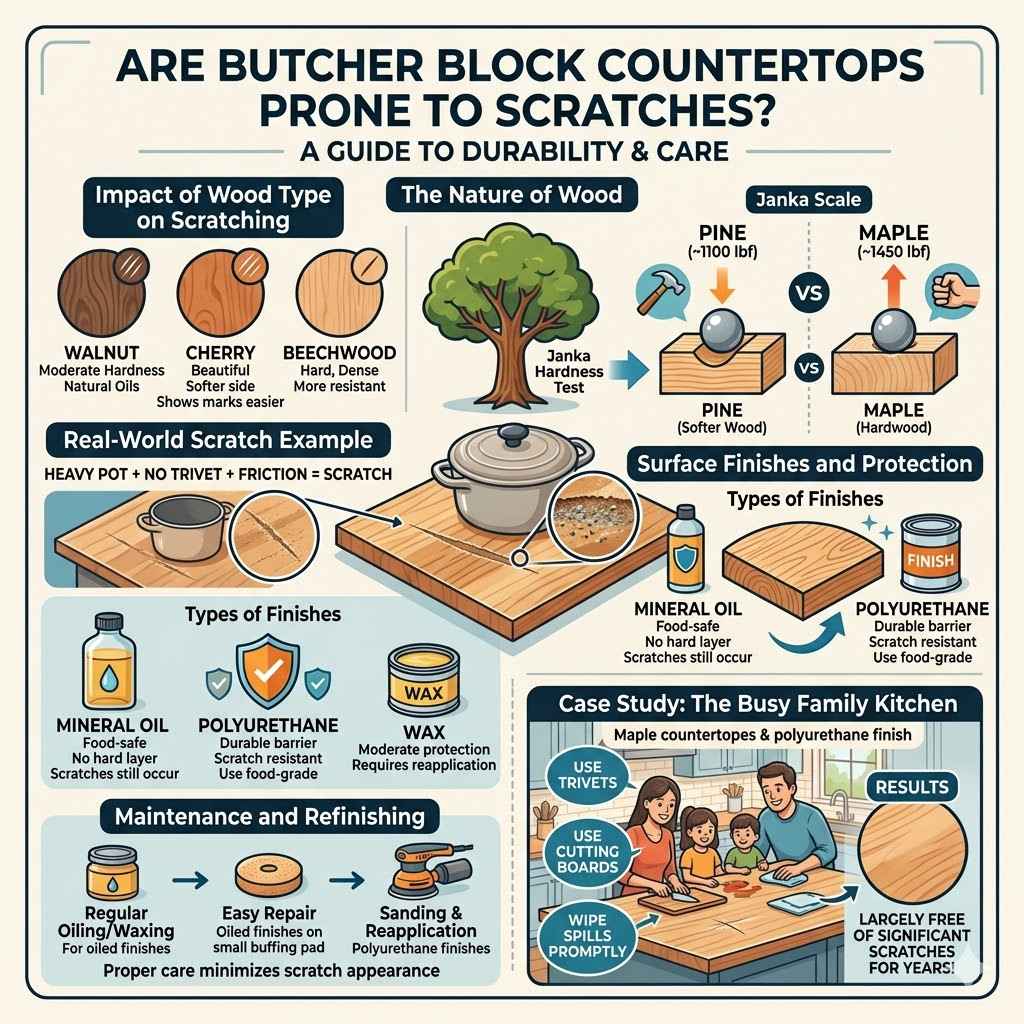
A common way to think about wood hardness is through the Janka hardness test. This test measures the force required to embed a steel ball halfway into a sample of wood. For example, pine, a softer wood, has a Janka rating around 800-1500 pounds-force. Maple, a hardwood, can have a Janka rating of 1450 or higher. This difference means that a pine countertop is much more likely to show marks from everyday use than a maple one.
Impact of Wood Type on Scratching
Different wood species offer varying levels of resistance to dents and scratches.
Walnut has a moderate hardness, offering a good balance between beauty and durability. Its natural oils also provide some inherent protection.
Cherry wood is beautiful but can be on the softer side, meaning it might show scratches more readily than harder options like maple or oak.
Beechwood is a popular choice because it’s hard and dense, making it quite resistant to everyday wear and tear.
Real-World Scratch Example
Imagine placing a heavy ceramic pot directly onto a butcher block countertop without a trivet. If the pot has any rough edges or accumulated grit on its base, it can easily create a visible scratch or dent in the wood. This is a common scenario that highlights how easily scratches can happen if precautions are not taken. The impact force, combined with friction, is enough to mar the surface.
Surface Finishes and Protection
The finish applied to a butcher block countertop plays a crucial role in how it resists scratches and other damage. Different finishes offer different levels of protection and require varied maintenance.
Types of Finishes
There are several common finishes for butcher block, each with its own pros and cons regarding scratch resistance.
Mineral oil is a food-safe finish that penetrates the wood. It offers some water resistance but does not create a hard protective layer. Scratches can still occur easily and may be more visible on an oiled surface.
Polyurethane finishes create a durable, protective barrier on top of the wood. These are more resistant to scratches and water, making them a good choice for busy kitchens. However, they are not food-safe unless a specific food-grade version is used.
Wax finishes, often used over oil or another base coat, add a layer of protection and a nice sheen. They offer moderate scratch resistance but require reapplication.
Maintenance and Refinishing
Proper maintenance is essential to keep butcher block looking its best and to minimize the appearance of scratches. Regular oiling or waxing, depending on the finish, helps to keep the wood conditioned and protected.
If scratches do occur, many finishes allow for easy repair. For oiled finishes, minor scratches can often be buffed out or simply blend in over time. For polyurethane finishes, light sanding and reapplication of the finish can restore the surface. This ability to repair is a significant advantage of butcher block.
Case Study: The Busy Family Kitchen
A family with young children chose maple butcher block countertops with a food-grade polyurethane finish. They were concerned about scratches from daily activities like homework, cooking, and play. By consistently using trivets and cutting boards and wiping up spills promptly, they found that their countertops remained largely free of significant scratches for several years. When minor marks did appear, they were easily buffed out. This shows that even with a surface that is generally considered durable, good habits make a big difference.
How to Prevent Scratches on Butcher Block Countertops
Preventing scratches on your butcher block countertops is much easier than dealing with them after they’ve happened. It involves adopting a few simple habits and using the right tools. Thinking proactively will help maintain the beauty and integrity of your wood surface for years to come.
Using Cutting Boards and Trivets
This is the most critical step in preventing scratches. Cutting boards are designed for cutting, and trivets are designed to protect surfaces from heat and heavy objects.
Dedicated Cutting Surfaces
Always use a cutting board for chopping, slicing, or dicing. Knives will undoubtedly scratch the wood surface, and using a cutting board protects your countertop from these direct cuts.
Wood cutting boards are a natural choice as they are gentle on knives and complement the look of butcher block.
Plastic cutting boards are also a good option, though some argue they can dull knives faster.
It is important to ensure the cutting board is stable and does not slide around on the countertop.
Heat and Weight Protection
Always place hot pots, pans, or dishes on trivets or hot pads. Wood can scorch or develop dark marks from extreme heat, and heavy items can cause dents that resemble scratches.
Trivets come in various materials like cork, silicone, metal, or wood. Choose ones that provide adequate coverage for the items you typically place on your counter.
Avoid sliding heavy appliances or cookware across the countertop. Instead, lift them to move them.
Sample Scenario: Meal Preparation
Imagine you are preparing dinner. You need to chop vegetables and then place a hot pot on the counter. Instead of cutting directly on the butcher block, you pull out a wooden cutting board. After cooking, you use a cork trivet to set the hot pot on. By taking these two simple steps, you’ve avoided potential cuts and heat damage, keeping your countertop pristine.
Wiping Up Spills Promptly
Liquids, especially acidic ones like wine or citrus juice, can stain and even etch wood surfaces if left to sit. Moisture can also cause the wood to warp or swell, making it more susceptible to damage.
Have a clean cloth or sponge handy to wipe up any spills as soon as they happen.
For tougher messes, a mild soap and water solution can be used, followed by drying the area thoroughly.
Avoid using abrasive cleaners or scrubbing pads, as these can also scratch the finish.
Gentle Cleaning Practices
The way you clean your countertops matters. Harsh chemicals or rough cleaning tools can damage the protective finish and the wood itself.
A soft cloth or sponge is ideal for daily cleaning.
Mild dish soap mixed with warm water is usually sufficient for most cleaning needs.
Always dry the countertops completely after cleaning to prevent water damage.
Understanding Wood’s Reaction to Moisture
Wood expands when it absorbs moisture and contracts as it dries. If a butcher block countertop is repeatedly exposed to moisture and allowed to dry unevenly, it can lead to cupping or warping. This distortion can create new vulnerabilities to scratches and impact damage.
Statistical Insight: Moisture Damage Impact
Studies on wood furniture and cabinetry suggest that prolonged exposure to moisture can reduce the structural integrity of wood by up to 30%. While countertops are typically sealed, consistent dampness can still degrade the finish and the wood, making it softer and more prone to damage. This highlights the importance of prompt spill cleanup and proper drying.
Repairing Scratches on Butcher Block Countertops
Even with the best preventative measures, minor scratches can still happen. The good news is that butcher block is often very repairable, especially compared to other countertop materials. The method of repair will depend on the type of finish and the depth of the scratch.
Minor Scratches and Surface Marks
For very light scratches or scuff marks, often on an oiled or waxed finish, simple buffing can be enough.
Apply a small amount of the same oil or wax used for regular maintenance to a soft cloth.
Gently rub the cloth over the scratch in the direction of the wood grain.
This can help to blend the scratch into the surrounding area or slightly raise the wood fibers to mask the mark.
The “Rubbing Out” Technique
This technique is effective for minor scratches on finished surfaces. It involves using a fine-grit abrasive, like steel wool (0000 grade), to lightly abrade the scratch and the surrounding area.
After gently rubbing the scratch with the steel wool, clean the area and reapply your chosen finish (oil, wax, or polyurethane).
The goal is to smooth the surface so the scratch is no longer a distinct indentation.
Deeper Scratches and Dents
For deeper scratches or dents that go into the wood, a bit more work is required.
Sanding and Refinishing
This is the most common method for repairing more significant damage. It involves sanding down the affected area, or even the entire countertop, to remove the scratch.
Start with a coarser grit sandpaper (e.g., 100-120 grit) to remove the bulk of the scratch.
Gradually move to finer grits (e.g., 150, 180, 220) to smooth the wood surface.
Once smooth, the area needs to be refinished with your chosen protective coating. This might involve applying mineral oil, a polyurethane finish, or a wax.
Sample Scenario: Accidental Knife Slip
During a busy cooking session, a knife accidentally slips and creates a noticeable scratch about a quarter-inch long on your maple butcher block countertop. If the finish is intact but the wood is gouged, you would likely need to sand the area. You’d start with 120-grit sandpaper, carefully smoothing the scratch until it’s flush with the surrounding wood. Then, you’d progressively sand with 180 and 220 grits for a smooth finish. Finally, you would reapply a food-grade mineral oil to protect the newly sanded area and blend it with the rest of the countertop.
Professional Refinishing
If you have a heavily damaged countertop or are not comfortable with DIY repairs, professional refinishing is an option. A professional can restore your butcher block to look like new.
This is a more costly option but can be worthwhile for extensive damage or to refresh an older countertop.
Professionals have the tools and expertise to handle complex repairs and apply finishes evenly.
When to Consider Professional Help
If the scratches are very deep, widespread, or if the wood is stained or warped, it might be time to call in a professional. They can assess the damage and recommend the best course of action.
Factors Affecting How Easily Butcher Block Scratches
Several key elements determine how prone your butcher block countertops are to scratching. Understanding these factors helps in choosing the right type of butcher block for your needs and in caring for it effectively. It’s not just about if they scratch, but how easily and how visibly.
Wood Species and Grain Pattern
As mentioned before, the hardness of the wood is a major factor. Denser hardwoods are naturally more resistant to dents and scratches. The grain pattern can also play a role in how scratches are perceived.
Closed-grain woods, like maple, have smaller pores and a smoother surface, which tends to show scratches less than open-grain woods.
Open-grain woods, like oak or ash, have larger pores and a more pronounced grain pattern. Scratches might appear more prominent against this texture, but sometimes they can also blend in better if they follow the grain.
Comparison Table: Wood Hardness and Scratch Resistance
| Wood Type | Janka Hardness (lbf) | Scratch Resistance | Typical Use |
|---|---|---|---|
| Pine | 870 | Low | Accent pieces, low-traffic areas |
| Cherry | 950 | Moderate | Dining tables, cabinets |
| Maple | 1450 | High | Butcher block, flooring, furniture |
| Walnut | 1010 | Moderate–high | Furniture, cabinetry |
| Oak | 1290 | High | Flooring, furniture, cabinetry |
Note: Janka ratings can vary based on the specific subspecies and growing conditions.
Type of Finish Applied
The finish is the first line of defense. A well-applied, robust finish will significantly reduce the likelihood of scratches penetrating the wood.
A thick, durable polyurethane finish will offer much better scratch resistance than a simple oil or wax finish.
However, it’s important to balance scratch resistance with other factors, such as food safety and the desired aesthetic. A highly durable, non-food-safe finish might not be suitable for a primary food preparation area.
Food-Safe vs. Non-Food-Safe Finishes
For areas where food is prepared directly on the surface (which is common with butcher block), food-safe finishes are essential. These often include mineral oil, beeswax, or specialized food-grade sealants.
While food-safe finishes are crucial for hygiene, they generally offer less scratch resistance than non-food-safe varnishes or polyurethanes.
This means if you plan to cut directly on your butcher block, you might see scratches more readily, but you benefit from a safe surface for food prep.
Daily Usage and Habits
The most significant factor is how the countertop is used daily. Even the hardest wood can be scratched if treated roughly.
Consistently using cutting boards, trivets, and coasters will dramatically reduce the chances of scratches.
Avoiding dragging heavy items or dropping sharp objects on the surface are simple but effective habits.
Impact of Kitchen Traffic
A kitchen that is used heavily, with multiple cooks or frequent entertaining, will naturally experience more wear and tear than a lightly used kitchen.
In a high-traffic kitchen, the ease with which scratches appear might be more noticeable.
However, the repairability of butcher block means that even in busy kitchens, the countertops can be maintained.
Statistic: Countertop Damage by Usage
A survey of kitchen remodelers indicated that approximately 40% of countertop damage complaints are attributed to improper use, such as cutting directly on the surface or placing hot items without protection. This highlights that user habits are a primary driver of countertop wear.
Sealing and Maintenance Routine
A well-maintained and regularly sealed butcher block countertop is more resilient. Proper sealing protects the wood from moisture and minor abrasions.
Regularly applying mineral oil or a similar conditioner keeps the wood hydrated and supple, making it less brittle and prone to cracking or scratching.
A consistent maintenance schedule ensures the protective finish is always in good condition.
Frequency of Sealing
The frequency of sealing depends on the type of finish and how much the countertop is used.
An oiled butcher block might need reapplication of oil every 4-8 weeks, depending on use and humidity.
Polyurethane finishes, once cured, may only need touching up every few years, or when wear becomes apparent.
Do Butcher Block Countertops Scratch Easily Considering Aesthetics
When considering if butcher block countertops scratch easily, it’s also important to think about the aesthetic aspect. Part of the charm of butcher block is its natural, evolving character. Minor scratches and signs of wear can contribute to its rustic appeal rather than detracting from it.
The Beauty of Patina
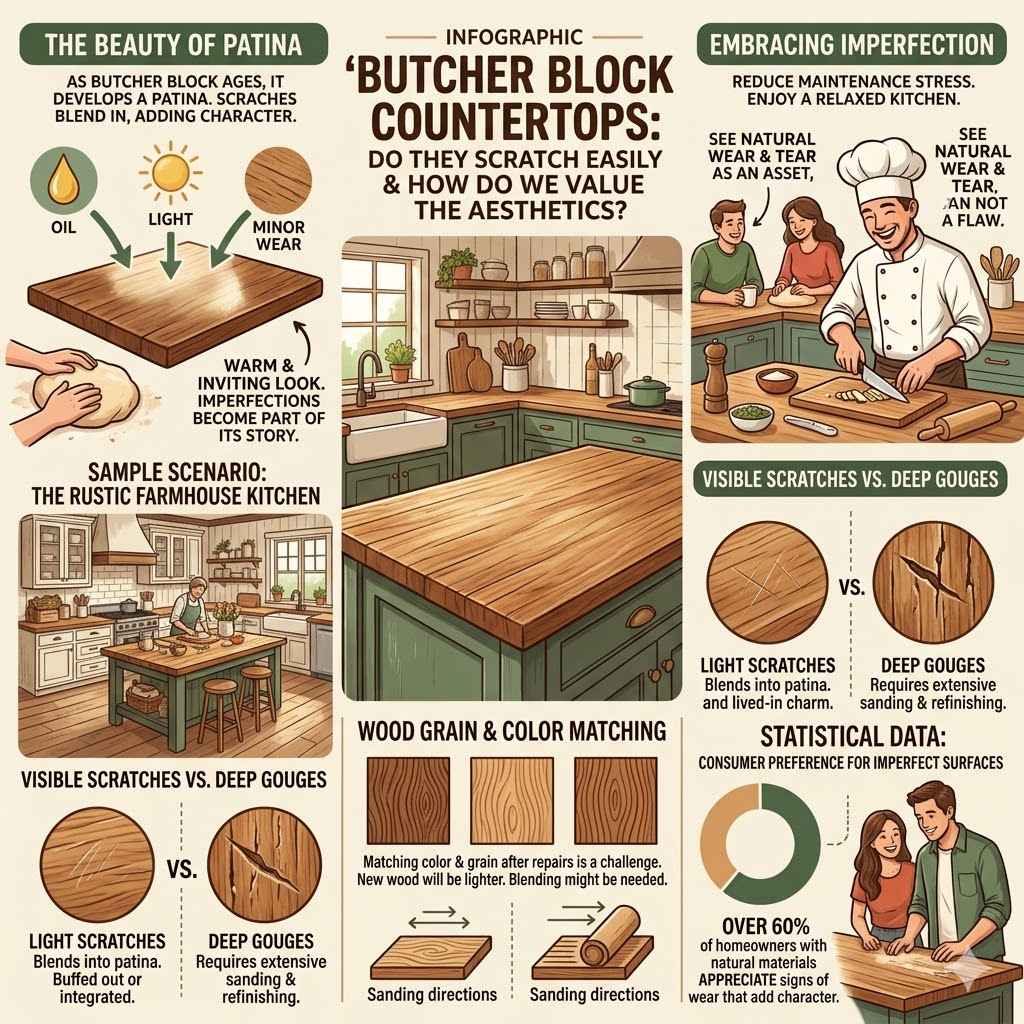
As butcher block ages and is used, it develops a patina. This is a natural sheen and character that comes from oil, light, and minor wear. Scratches, when minor, often become part of this patina.
Many people find the look of a well-used butcher block countertop to be warm and inviting.
The imperfections become part of its story.
Embracing Imperfection
Instead of striving for a pristine, untouched surface, many embrace the natural wear and tear. This can reduce the stress of maintaining a perfect surface and allow for a more relaxed enjoyment of the kitchen.
Sample Scenario: The Rustic Farmhouse Kitchen
In a farmhouse-style kitchen, a few light scratches on the butcher block island might be seen as character. They tell the story of countless meals prepared, dough kneaded, and family gatherings. These marks don’t detract from the overall charm; they enhance it, contributing to the cozy and lived-in feel of the space.
Visible Scratches vs. Deep Gouges
There’s a significant difference between a light surface scratch and a deep gouge. Light scratches can often be buffed out or blend in. Deep gouges are more serious and require sanding.
The type of wood and its finish will influence how visible even minor scratches are.
Hardwoods with a clear, even finish might show light scratches more distinctly initially.
Wood Grain and Color Matching
When repairs are made, especially sanding and refinishing, matching the color and grain can be a challenge.
New wood will be lighter than aged wood, so some blending might be needed.
The direction and pattern of the grain are also important to consider for a seamless repair.
Statistical Data: Consumer Preference for Imperfect Surfaces
A recent survey on home decor trends found that over 60% of homeowners with natural material surfaces like wood or stone appreciate signs of wear that add character. This suggests that the perception of “easily scratched” might be less of a concern when homeowners value the evolving aesthetic of their materials.
Frequently Asked Questions
Question: Can I cut directly on my butcher block countertops
Answer: While butcher block is designed for use and can tolerate some direct cutting, it is highly recommended to always use a cutting board. Cutting directly on the surface will inevitably lead to scratches and can damage the finish over time, making repairs more frequent.
Question: How often should I seal my butcher block countertops
Answer: For oiled finishes, reapply oil every 4-8 weeks or whenever the surface feels dry or looks dull. For polyurethane or other sealed finishes, refer to the manufacturer’s recommendations, but generally, they require less frequent attention, perhaps every 1-3 years.
Question: Will water damage my butcher block countertops
Answer: Prolonged exposure to standing water can damage butcher block. It’s important to wipe up spills promptly and ensure the countertops are dried thoroughly after cleaning to prevent moisture absorption, which can lead to staining, warping, or finish degradation.
Question: Can I use harsh cleaners on butcher block
Answer: No, harsh cleaners should be avoided. Stick to mild soap and water for daily cleaning. Abrasive cleaners or scrubbing pads can damage the finish and scratch the wood surface.
Question: What is the best way to remove a deep scratch
Answer: For deep scratches, you will likely need to sand the affected area down to the bare wood, starting with a coarser grit sandpaper and progressing to finer grits for a smooth finish. After sanding, you must reapply your chosen protective finish (oil, wax, or polyurethane).
Final Thoughts
Butcher block countertops do scratch, but not necessarily “easily” if cared for properly. Their natural beauty means minor marks often blend in, adding character. By using cutting boards, trivets, and wiping spills, you protect the surface. Even if scratches appear, they are usually repairable, allowing your countertops to remain beautiful and functional for years.