Wood Cutting Boards and Bacteria: What the Studies Actually Show
Wood cutting boards are safe for most kitchens, and the best-known lab work found that bacteria were harder to recover from wood than from knife-scarred plastic. But the common claim that wood “kills” germs overstates it: the same researchers found some bacteria alive inside the wood, and a separate 1994 study disagreed on wood versus plastic. This guide covers what the UC Davis studies measured, where the evidence is thin, and the cleaning routine that USDA and university extension guidance support. For the broader question see our page on whether wood cutting boards harbor bacteria.
Are Wood Cutting Boards Safe? The Short Answer
Best Board Cream Pick | |
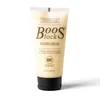 |
John Boos Block Board Cream (5 oz): $13.95 A beeswax and food-grade mineral oil cream for the monthly conditioning step. Deep cracks and grooves are exactly what the guidance below says to retire a board for, so keeping solid wood from drying out matters.
|
As an Amazon Associate we earn from qualifying purchases. | |
Yes, with normal care. Wood cutting boards in a home kitchen are safe when you wash them with hot soapy water after each use, let both faces dry, keep a separate board for raw meat, and retire any board whose cracks or grooves you cannot scrub clean. Hard maple or a similarly hard, close-grained wood is the type the FDA Food Code names as acceptable for cutting boards in food establishments.
- Wood versus plastic: UC Davis tests favored wood, one other 1994 study did not, so neither material is a free pass.
- Bleach: it is a sanitizing step that works only on a board that is already clean, and official guidance on the ratio differs.
- Worn boards: USDA and University of Maine Extension both say to discard boards with deep, hard-to-clean grooves.
If you only want the cleaning steps, jump to our USDA-backed wooden board cleaning method. The rest of this page is about the evidence behind them.
What the UC Davis Cutting Board Studies Actually Found
The work most people cite came from Dean O. Cliver, a food safety researcher at UC Davis, with co-authors Ak and Kaspar. By his own account, the lab started after USDA told them it had no scientific evidence for recommending plastic over wood in home kitchens.
What they found surprised them. Disease bacteria such as E. coli O157:H7 and Salmonella were not recoverable from wooden surfaces a short time after being applied, unless very large numbers were used. New plastic let the bacteria persist but was easy to clean and disinfect. Used plastic was the problem: knife-scarred plastic was impossible to clean and disinfect by hand, especially with food residue such as chicken fat on it. Boards of wood that were used and heavily knife-cut acted almost the same as new wood.
Key finding: Cliver reports that knife-scarred plastic could not be cleaned by hand, while heavily used wood behaved almost like new wood. Source: Dean O. Cliver, UC Davis Food Safety Laboratory cutting board research summary.
Study by Study: Who Found What, and What Each Can and Cannot Tell You
Most articles on this topic cite a single study. Here is the fuller picture, including the work that disagrees. The first three rows and the last are summarized from Cliver’s own published overview; the Abrishami row comes from a database summary of its abstract. We have not read the full papers.
| Study | What was tested | Finding | Limit to keep in mind |
|---|---|---|---|
| Ak, Cliver and Kaspar, 1994, Journal of Food Protection 57:16-22 | Plastic and wood boards contaminated with bacteria in the lab, new and used | Bacteria were not recoverable from wood soon after application; used wood acted like new wood | Lab conditions; bacteria were later found alive inside the wood |
| Ak, Cliver and Kaspar, 1994, Journal of Food Protection 57:23-30 | Decontamination of plastic and wood boards | Hand cleaning with sponge, hot water and detergent worked on new plastic; scarred plastic could not be cleaned by hand | Cliver notes disinfection with bleach is reliable only if cleaning succeeded first |
| Park and Cliver, 1996, Journal of Food Protection 59:1049-1054 | Microwave disinfection of household boards | Small wood boards could be disinfected rapidly in a microwave; plastic could not | Cliver warns overheating must be prevented; we have not read the exact times |
| Abrishami and colleagues, 1994, Journal of Food Safety | E. coli on plastic, new wood and used wood | Cells on plastic washed off more easily than cells on wood; wood retained viable bacteria in its structure | Reported to differ from the UC Davis conclusion, so the matter is not fully settled |
| Kass and colleagues, 1992, Annals of Epidemiology 2:683-696 | Case-control study of sporadic salmonellosis in four northern California counties | Home wooden board use had an odds ratio of 0.42 (95% CI 0.22 to 0.81); plastic or glass 1.99 (95% CI 1.03 to 3.85) | Observational, so it shows association, not cause; the confidence intervals are wide |
Why the Kass study matters: it is the only real-world evidence in the pile. Cliver calls it the best epidemiological evidence available to date and notes it was done before his lab started. In that study, regularly cleaning the board after preparing meat on it did not reach statistical significance (odds ratio 1.20, 95% CI 0.54 to 2.68). That does not mean cleaning is useless, only that this study could not detect an effect.
Does Wood Really Kill Bacteria? The Part Most Articles Get Wrong
Not exactly. “Not recoverable from the surface” and “dead” are different things, and Cliver is careful about the difference. His summary says the bacteria that disappear from wood surfaces are found alive inside the wood for some time, that they evidently do not multiply, and that they gradually die. They can only be detected by splitting or gouging the wood or by forcing water completely through from one face to the other.
A freshly washed board is therefore not a sterile board. Our page on whether wood cutting boards are antimicrobial covers the claim itself. There is also a real disagreement in the literature. Cliver says some established laboratories report results that differ from his, and one example is the Abrishami 1994 study summarized above, which found wood more retaining than plastic. Cliver argues that several later studies used only new boards, which is why his own work deliberately included used ones. We cannot referee that dispute. The safe takeaway: neither material is risk-free, so what you do after cutting matters more than which one you own.
Knife Scars: Why Plastic Is Not Automatically Safer
The finding that surprises people most is that the “easy to sanitize” reputation of plastic depends on the plastic being new. Cliver’s lab used scanning electron micrographs and reported highly significant damage to plastic surfaces from knife cuts. Once those grooves hold food residue, hand cleaning stopped working in their tests, while a dishwasher could still clean knife-scarred plastic.
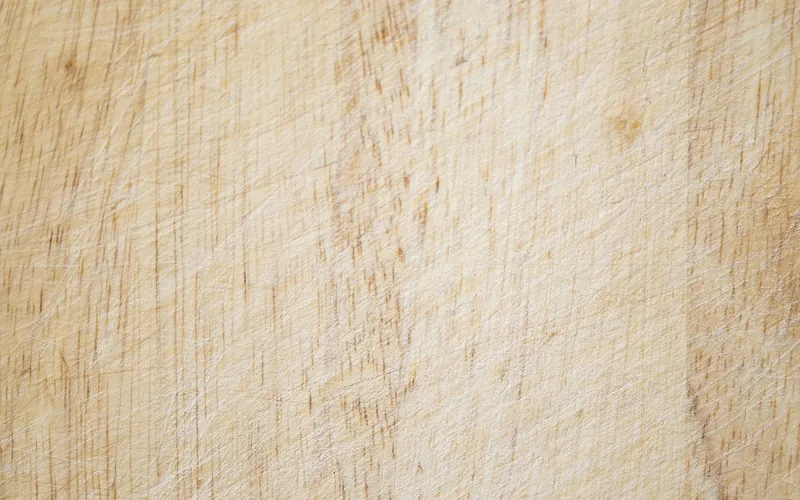
That does not give wood a license to wear out forever. USDA hotline guidance says all cutting boards wear out and should be discarded once they become excessively worn or develop hard-to-clean grooves, and University of Maine Extension gives the same advice about deep grooves and cracks. If a groove still holds residue after scrubbing, replace the board.
What USDA, FDA and Extension Services Actually Tell You to Do
Official advice is not perfectly consistent, which is rarely mentioned in cleaning guides. The table sets out what each source says.
| Source | Wood for raw meat? | Bleach solution | Dishwasher |
|---|---|---|---|
| USDA FSIS hotline guidance (as summarized in a search result; the page itself blocked our fetch) | Wood or a nonporous board may be used; consider separate boards for produce and bread versus raw meat, poultry and seafood | 1 tablespoon unscented liquid bleach per gallon of water, left for several minutes, then rinsed | Solid wood boards can be washed in a dishwasher; laminated boards may crack and split |
| University of Maine Extension Bulletin 3108 | Wood is best for lower-risk foods such as vegetables, fruit and bread; plastic is called excellent for raw meat, seafood and poultry | Half a tablespoon per gallon for wood, no more than 2 minutes of soaking, then rinse and dry | Solid wood may be acceptable but can warp; avoid for glued or inlaid boards |
| FDA Food Code (retail and restaurants) | Hard maple or an equivalently hard, close-grained wood is allowed for cutting boards; other wood is not allowed as a food-contact surface | Not specified for home use | Not specified for home use |
USDA and University of Maine Extension agree on washing first, rinsing, drying completely, using separate boards for raw animal products and ready-to-eat foods, and discarding worn boards. They differ on how strong the bleach solution should be and whether raw meat belongs on wood at all. If you want the most cautious option at home, keep a dedicated board for raw meat and use the weaker University of Maine ratio on wood to limit drying. For poultry and meat specifically, see our guide to cleaning a board after raw meat using the USDA method.
A Cleaning Routine That the Sources Support
This is the sequence that matches Cliver’s lab method for manual cleaning (sponge, hot tap water and liquid dish detergent) plus the USDA and University of Maine steps for sanitizing and drying.
- Scrape: remove food bits from the surface after you finish cutting.
- Wash: scrub with a sponge or brush, hot tap water and liquid dish detergent.
- Rinse: use clear water so no soap film remains.
- Sanitize when needed: after raw meat, poultry or seafood, flood the clean board with a diluted unscented bleach solution at the strength you chose above, then rinse.
- Dry: stand the board on its edge so air reaches both faces, or pat dry with clean paper towels.
- Condition monthly: once the board is dry, apply a food-safe oil or board cream. This keeps solid wood from cracking, but it is not a cleaning step.
Do not put glued or end-grain boards in the dishwasher. Our page on whether wood cutting boards are dishwasher safe explains what the heat and water do to them. For the finishing side, our guide to making wood food safe covers oils and waxes in more depth.
Home Remedies You Will See Online, and What the Sources Do and Do Not Support
Many cleaning pages recommend lemon and salt, a vinegar rinse or sunlight. None of those methods appear in the sources we read as a tested way to disinfect a cutting board. Cliver’s and USDA’s guidance both rest on detergent washing, and bleach only after the board is clean. Lemon and salt may help with odor and light stains, but no study in the sources above shows that it disinfects, so it should not replace washing and, after raw meat, a bleach step.
The microwave was actually studied: Cliver says wooden boards small enough to fit in a microwave can be disinfected rapidly, with care to prevent overheating. We have not read that paper, so we give no timings and do not recommend improvising.
Which Wood Should You Choose?
Cliver reports essentially no differences among the more than 10 hardwood species his lab tested, so paying extra for a species marketed as antibacterial is not supported by that work. Pick on knife feel, hardness and price instead. Our best wood cutting boards guide compares end-grain and edge-grain boards, and walnut versus maple covers the two most common choices.
For other kitchen wood, see whether acacia is safe for cooking utensils, or read the short version in are wooden cutting boards safe to use.
Limits of the Evidence
Three honest caveats. First, most of the laboratory work is from the 1990s and was done under lab conditions with applied bacteria, not real kitchens full of mixed food. Second, the only epidemiology available is one regional case-control study with wide confidence intervals. Third, we are summarizing from Cliver’s own published overview and secondary summaries, not from the full papers.
Frequently Asked Questions
Are wood cutting boards safe to use?
Yes, for most home cooks. Lab work at UC Davis found that Salmonella and E. coli O157:H7 were not recoverable from wood surfaces shortly after application, and the school’s researchers concluded food can be prepared safely on wood. Safety still depends on washing after each use, drying fully, and retiring boards with deep grooves.
Can bacteria grow on wood cutting boards?
Not in the way they do in a scarred plastic groove, according to Cliver’s lab, which found bacteria drawn into the wood stayed alive for some time but did not multiply. Wash with hot soapy water and let both faces dry.
Is wood or plastic better for bacteria?
The UC Davis studies favored wood, mainly because knife-scarred plastic could not be cleaned by hand, while used wood behaved almost like new wood. A separate 1994 study reported that wood retained more bacteria than plastic. Treat the question as unsettled, and use a separate board for raw meat either way.
Can I use bleach on wood cutting boards?
Yes, as a sanitizing step after washing. USDA consumer guidance is 1 tablespoon of unscented liquid bleach per gallon of water, while University of Maine Extension suggests half a tablespoon per gallon for wood with a contact time of no more than 2 minutes. Rinse and dry afterward. Bleach only works reliably on a board that is already clean.
Can wood cutting boards go in the dishwasher?
Usually no. USDA hotline guidance says solid wood can be washed in a dishwasher while laminated boards may crack and split, and University of Maine Extension warns against it for glued boards. Hand washing is the safer habit for glued or end-grain boards.
When should I replace a wood cutting board?
Replace it when it develops deep cracks or grooves you cannot scrub clean. USDA and University of Maine Extension both say to discard boards that are excessively worn or have hard-to-clean grooves.
Bottom Line
Wood is a reasonable, supportable choice for a home cutting board, and the often-repeated “wood kills bacteria” line is better stated as “bacteria are hard to recover from wood, and they appear not to multiply there”. Wash after every use, dry fully, separate raw meat from ready-to-eat food, sanitize clean boards after raw meat, and retire boards with deep grooves.
Sponsored / affiliate links. As an Amazon Associate I earn from qualifying purchases. I may earn additional commission from eligible campaigns.