Is Polycrylic Food Safe? Not FDA-Approved, Safe Once Fully Cured
Minwax doesn’t rate Polycrylic as an FDA food-contact finish — but most finishing experts agree a fully cured film (25–30 days, not the 24-hour “dry to touch” mark on the can) is chemically inert. Use it on a cutting board before that, or cut directly into the film, and flakes or residual solvent can end up in your food. This guide covers what Minwax’s own label says, real cure times, and a genuinely food-safe alternative.
This post contains Amazon affiliate links. As an Amazon Associate, we earn from qualifying purchases at no extra cost to you.
What “Food Safe” Actually Means for a Wood Finish
Best Food-Safe Pick
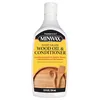
Minwax Food-Grade Wood Oil & Conditioner, 12 fl. oz.
Minwax’s own FDA-compliant food-contact finish — the product Polycrylic is not.
- Best for: Butcher blocks, cutting boards, wooden bowls and utensils
- Why we picked it: Same brand as Polycrylic, but this one is actually FDA compliant for food contact, so there’s no cure-time guesswork
- Main drawback: It’s an oil, not a film finish — needs reapplication every few weeks, unlike a one-time Polycrylic coat
Compare more food-safe finish options
 Option 1 Howard Butcher Block Conditioner
|
 Option 2 General Finishes Wood Bowl Finish
|
 Option 3 CLARK’S Cutting Board Oil & Wax Kit
|
As an Amazon Associate we earn from qualifying purchases.
There’s no single “food-safe” certification a general-purpose wood finish can earn from the FDA. Instead, the FDA regulates materials for indirect food contact under 21 CFR, and finishes that are never explicitly tested against that standard — like Polycrylic — simply don’t carry the claim, whether or not they’d technically pass.
That’s the position Minwax takes with Polycrylic: the company doesn’t label it food safe, doesn’t claim FDA compliance for it, and its own safety data sheet advises against having food or beverages present where the product is in use. None of that means a cured coat is dangerous — it means Minwax simply never submitted Polycrylic for food-contact testing, because it wasn’t designed or marketed as a food-contact product.
“There is no evidence of any common wood finish being unsafe for food or mouth contact once it has fully cured… the question we should ask is which wood finishes are known to be toxic when cured, and the answer is none of them.”
Bob Flexner, longtime contributing editor, Popular Woodworking
That’s the informed consensus among finishing writers, and it’s a reasonable one — but it’s a professional opinion, not a manufacturer guarantee. If you want an actual FDA-compliant claim in writing, you need a product built for that, which is covered further down.
How Long Does Polycrylic Really Take to Cure?
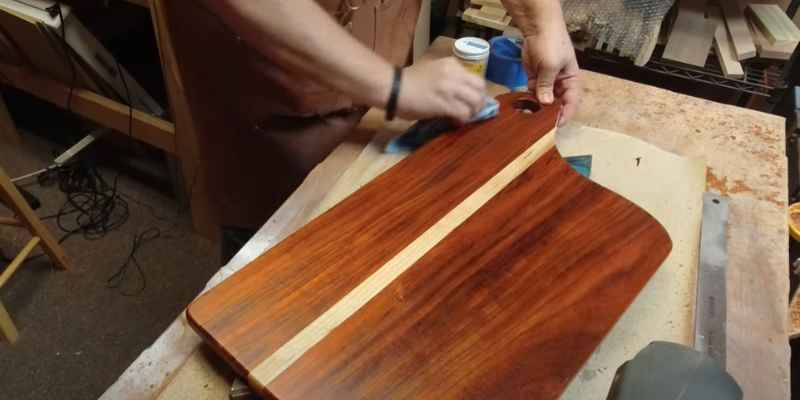
Minwax’s own can directions are about handling, not food contact: allow 3 hours before light handling, and 24 hours before normal use. That’s how long the coat takes to stop being tacky and start resisting scuffs — it is not a food-contact timeline, because Minwax doesn’t publish one for this product.
Cooler rooms, humid weather, or a third coat applied heavier than recommended all push that timeline out further. If you can still smell the finish, it hasn’t finished releasing solvent yet, cured or not.
Cutting Boards Are a Different Problem Than Tables
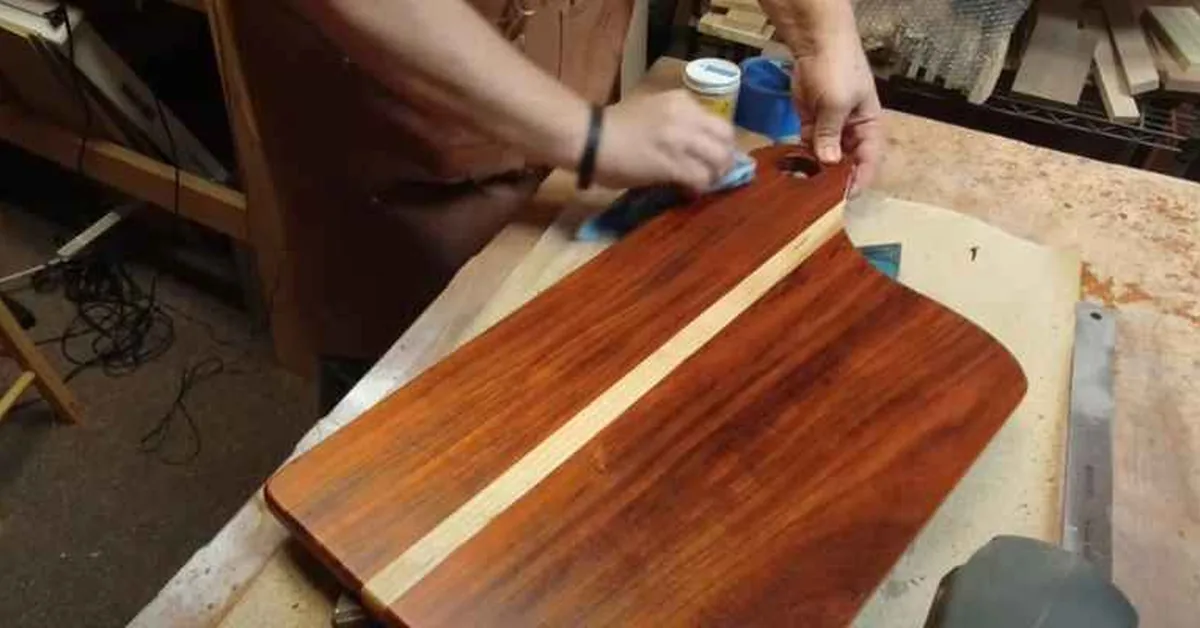
Even a fully cured, chemically inert Polycrylic film has a mechanical problem a table or shelf doesn’t: a knife. Polycrylic is a film finish — it sits on top of the wood as a continuous plastic-like layer rather than soaking in. Cutting boards get worked with a blade, and once you slice through that film, you’re not just cutting wood anymore — you’re shaving small flakes of cured finish into whatever you’re chopping.
That’s a separate issue from curing time and it doesn’t go away with more waiting. A dining table, serving tray, or the underside of a board a blade never touches is a genuinely different use case from an actual cutting surface.
If you still want a topcoat near food, do this
- Reserve Polycrylic for surfaces a blade won’t touch — table tops, serving trays, the back of a board, charcuterie boards used for display rather than chopping.
- Let it cure fully (25–30 days) before regular food contact, in a well-ventilated room at 65–75°F.
- Sand and re-oil any surface that does get cut into — once the film is broken, treat that spot like bare wood, not a sealed one.
- For the actual cutting surface, use a penetrating oil finish built for it instead of a film finish (next section).
Minwax Now Makes an Actual Food-Safe Finish — Polycrylic Isn’t It
In 2024, Minwax released a separate product built specifically for this problem: Food-Grade Wood Oil & Conditioner, its first product the company itself calls FDA-compliant and safe for food contact on bare-wood butcher blocks, cutting boards, bowls, and utensils. That launch is the clearest signal Minwax could give that Polycrylic was never meant to fill that role — if it were, the company wouldn’t have needed to build and launch a different one.
It’s a penetrating oil, not a film finish, so it doesn’t have the cut-through-the-coating problem covered above, and it needs periodic reapplication the way any cutting-board oil does — Polycrylic’s one-and-done coat isn’t really a fair comparison on maintenance.
Polycrylic vs. Food-Safe Alternatives
| Finish | FDA Food-Contact Claim? | Best For |
|---|---|---|
| Polycrylic (Minwax) | No manufacturer claim — informally considered inert once fully cured | Tables, trim, furniture — not cutting surfaces |
| Minwax Food-Grade Wood Oil & Conditioner | Yes — stated FDA compliant | Butcher blocks, cutting boards, bowls, utensils |
| Food-grade mineral oil | Yes — widely sold and labeled food grade | Cutting boards, spoons, everyday conditioning |
| 100% pure tung oil | Generally considered food safe once fully cured | Bowls, utensils, countertops |
| Standard polyurethane | No manufacturer claim — same category as Polycrylic | Furniture, floors — not food surfaces |
If you already own a can of Polycrylic and used it on a kitchen countertop or dining table, that’s a reasonable use case once it’s fully cured — the concern is specifically cutting surfaces and anything scraped or scored regularly.

Common Mistakes to Avoid
- Using it on a cutting surface at all. No amount of cure time fixes the mechanical problem of a blade cutting through a film finish.
- Trusting the 24-hour “normal use” window for food contact. That’s a handling timeline on the can, not a food-safety one — give it the full 25–30 days.
- Assuming “non-toxic when dry” means “FDA food safe.” They’re different claims, and Minwax has only ever made the first one about Polycrylic.
- Skipping ventilation while applying. The ingredients that matter for safety are the ones off-gassing while the finish is wet, not after it’s cured.
Frequently Asked Questions
Is Polycrylic food safe once it’s fully cured?
Most finishing experts, including longtime Popular Woodworking editor Bob Flexner, consider a fully cured Polycrylic film chemically inert and safe for incidental food contact — the solvents that matter have evaporated. Minwax itself still doesn’t market or label Polycrylic as FDA-approved for food contact, so “safe once cured” is an informed opinion, not a manufacturer guarantee.
How long before Polycrylic is actually safe for food contact?
Minwax’s own directions say 24 hours before normal handling, but that’s a handling timeline, not a food-contact one — the company doesn’t publish one, since it doesn’t rate the product for food use. Independent finishers commonly recommend 25 to 30 days at room temperature before letting a coated surface touch food regularly.
Can I use Polycrylic on a cutting board?
Not for the cutting surface itself. Even fully cured, Polycrylic is a film finish, and running a knife across it eventually cuts through the coating, sending small flakes into your food. It’s fine on the sides or underside of a board that a blade never touches, but the top surface needs a penetrating oil finish instead.
Is Minwax Polycrylic the same as Minwax’s food-safe finish?
No. They’re two different products. Polycrylic is Minwax’s general-purpose clear topcoat, and it carries no food-contact claim. Minwax Food-Grade Wood Oil & Conditioner, launched in 2024, is a separate product the company specifically markets as FDA-compliant for food contact — its packaging says so directly, which Polycrylic’s never has.
What happens if food touches wet or uncured Polycrylic?
Minwax’s own safety data sheet for Polycrylic advises against storing or consuming food or beverages where the product is in use, and while wet it lists ingredients — including glycol ethers and 1-methyl-2-pyrrolidinone — with warnings about reproductive and nervous-system effects. That risk applies to the wet, uncured product, not a fully hardened coat.
Conclusion
Polycrylic isn’t FDA-approved for food contact, and Minwax has never claimed otherwise — but a fully cured coat, given the full 25–30 days, is widely considered inert by finishing professionals. The real dividing line isn’t curing time alone; it’s whether a blade will ever touch the finished surface. For tables and trim, cured Polycrylic is a reasonable choice. For an actual cutting surface, use a finish built and labeled for that job, like Minwax’s own Food-Grade Wood Oil & Conditioner or a food-grade mineral oil.
Sponsored / affiliate links. As an Amazon Associate I earn from qualifying purchases. I may earn additional commission from eligible campaigns.