Do Male or Female Carpenter Bees Drill Holes?
Figuring out Do Male or Female Carpenter Bees Drill Holes? can be tricky for many people just starting. It’s easy to get confused by these busy bees and their wooden homes. Don’t worry, though; it’s easier than you think! This guide will break down the answer simply. We’ll explore which bees are responsible and why, so you can become a carpenter bee expert. Let’s start and discover the facts together.
Carpenter Bees and Their Wooden Homes
Carpenter bees are fascinating creatures, and a lot of the confusion comes from not knowing their behaviors. These bees love to build nests inside wood. They don’t eat the wood; instead, they dig tunnels to create safe spaces for their eggs and larvae. These tunnels are often found in soft, unfinished wood, like the wood used for decks, fences, and wooden siding on houses. You’ll frequently see these tunnels in exposed wood, as they prefer the easy access. The way they interact with wood is key to understanding who is responsible for the drilling. We’ll explore the specific types of wood they prefer, and how you can spot the signs of their activity.
The Anatomy of a Carpenter Bee Nest
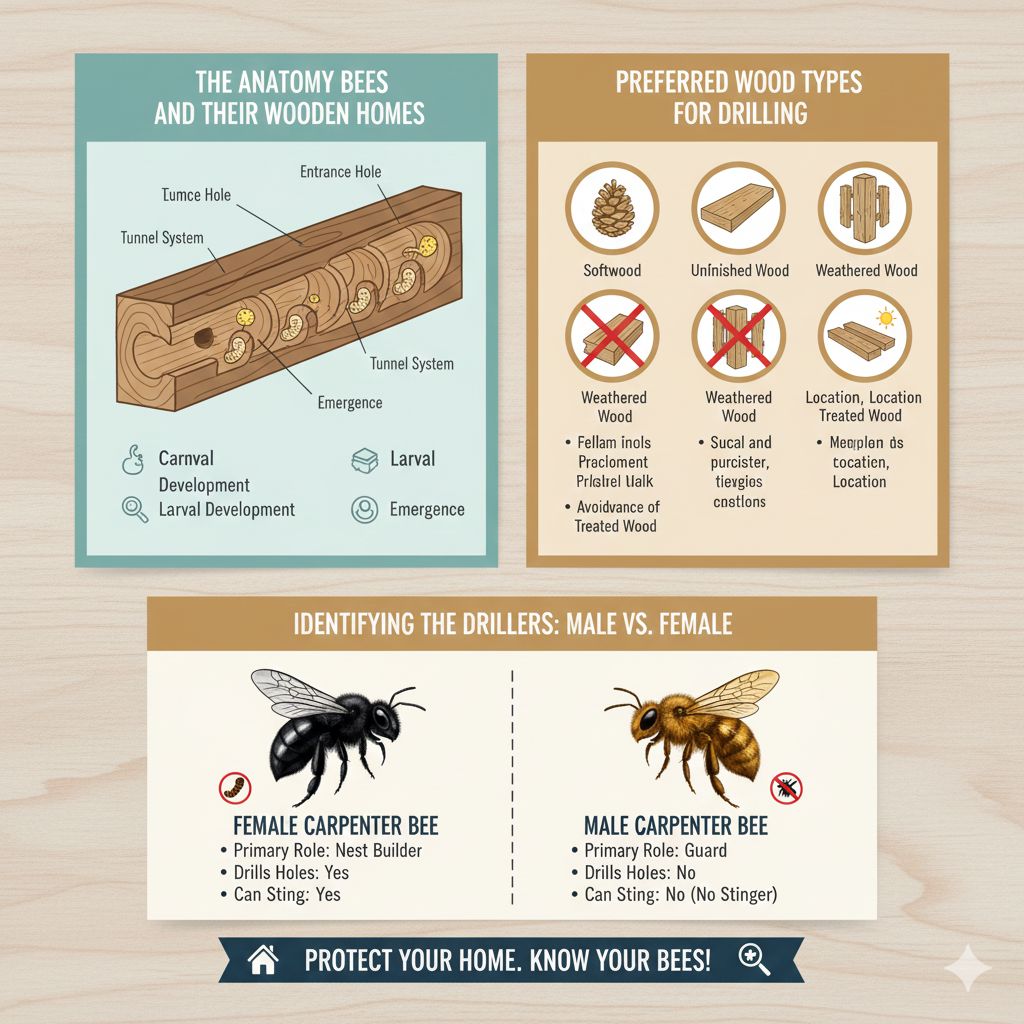
Carpenter bee nests aren’t just one big hole. They are made up of tunnels that the bees create. These tunnels are typically about a half-inch wide and can extend several inches or even feet into the wood. The bees start by drilling an entrance hole, then turn and follow the grain of the wood to make a longer tunnel. Inside these tunnels, they create a series of cells, each intended for a single egg and a food supply of pollen and nectar for the larva. This nesting process is a critical part of the carpenter bees’ life cycle, and knowing how the nest is built helps reveal who does the drilling. Their wood choices are usually soft and easy to work with.
- Entrance Hole: The entry point, usually perfectly round.
- Tunnel System: Tunnels dug along the wood grain, extending inside.
- Cells: Individual compartments where eggs and food are placed.
- Larval Development: Larvae consume food, grow, and pupate inside the cells.
- Emergence: New bees exit the nest through the entrance hole.
The construction of a carpenter bee nest is a pretty impressive display of nature’s architectural skill. The work done inside is even more fascinating than what you see on the outside. Every part of the process, from choosing the wood to creating each individual cell, is carried out with precision. These details give a great insight into which carpenter bees are the ones doing the work. The tunnel and cell dimensions are usually uniform to support the larvae.
Preferred Wood Types for Drilling
Carpenter bees are pretty picky about their homes. They like softwoods best because they are much easier to drill into compared to hardwoods. Unpainted, weathered wood is their favorite because it’s easier to dig into and offers less protection. They generally stay away from treated or painted wood because it’s harder to get into. Knowing their preferences can help you predict where they might build their nests. This knowledge can also help you protect your property. Pine, fir, and redwood are some of the popular choices for these bees. These wood choices allow the bees to drill more efficiently, which is important for their survival and reproduction. The wood type can also affect the overall size and shape of the nests.
- Softwood Preference: They like softwoods like pine and fir.
- Unfinished Wood: Unpainted wood is easier to drill.
- Weathered Wood: Weathered wood offers easier access.
- Avoidance of Treated Wood: Treated wood is often too hard.
- Location, Location, Location: Wood that gets full sun is preferred.
Carpenter bees choose their wood based on several factors, including its softness, exposure, and condition. The wood’s accessibility, like the height and location, also influence their decision. If you see a lot of holes in your wooden structures, chances are you are dealing with carpenter bees. Knowing these preferences helps you decide what measures to take to discourage the bees from nesting there. Keep an eye out for these telltale signs to help deal with any carpenter bee issues.
Who Drills the Holes: The Bees’ Roles
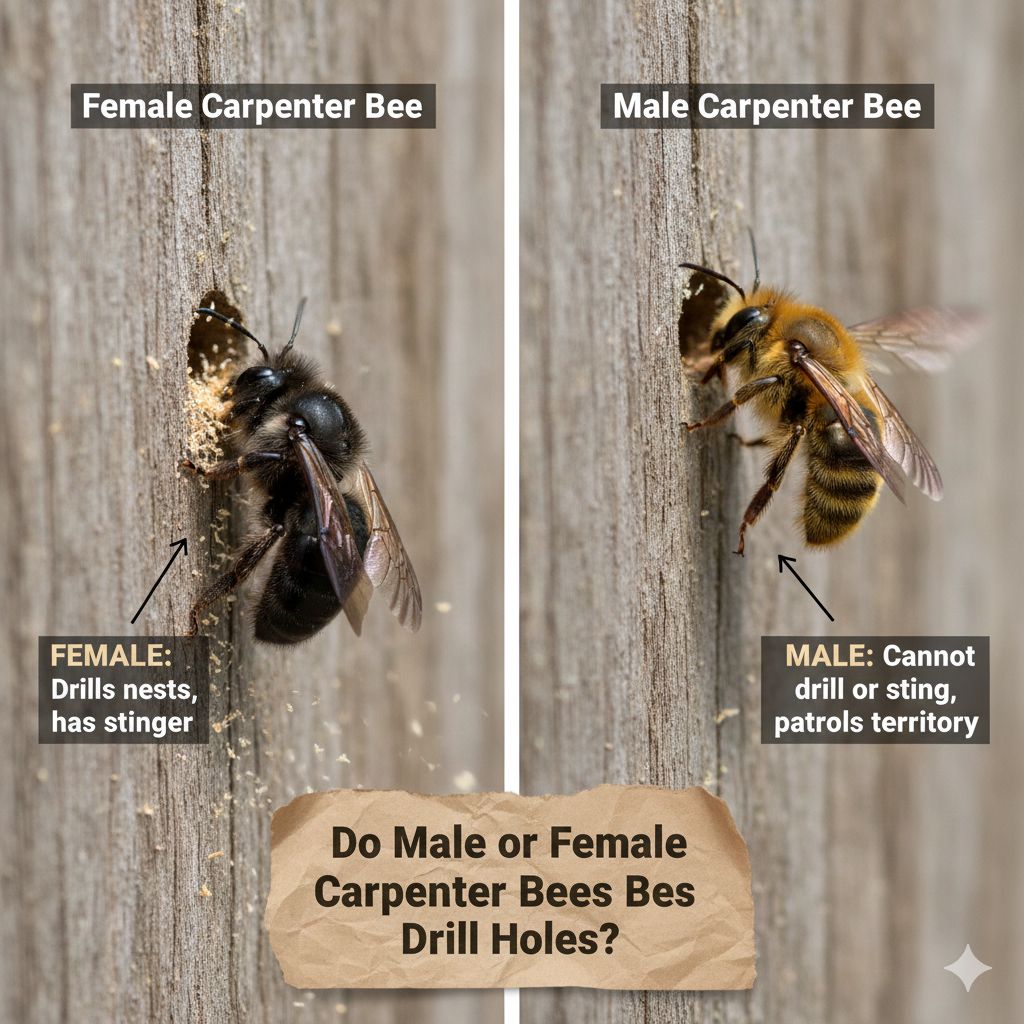
So, Do Male or Female Carpenter Bees Drill Holes? The answer is not that simple because the behavior varies. It’s important to know the difference between male and female carpenter bees to figure out who’s doing the drilling. Males do not have stingers, so they are not capable of attacking. Their main job is to defend the territory around the nest. Females, however, are the ones responsible for digging the holes to make their nests. This behavior is key for them to lay eggs and secure their offspring. Understanding the difference between their jobs is essential to understanding the damage caused by these insects.
The Female Carpenter Bee’s Drilling Process
The female carpenter bee does the drilling. It’s her primary job. Armed with powerful jaws, she uses her mandibles to chew into the wood, creating the tunnels for her nest. The female bees use the wood to make a place to protect their eggs and larvae. They spend hours, even days, working on their nests. The drilling process starts with a perfectly round entrance hole and continues as a tunnel. This work is all about ensuring the survival of her offspring. Her dedication and effort show how important the nest-building process is in the carpenter bee life cycle.
- Mandible Use: Females use strong jaws to chew wood.
- Hole Creation: They start by drilling a perfectly round entrance.
- Tunneling: They follow the wood grain to extend tunnels.
- Cell Construction: They create individual cells for eggs and food.
- Time Investment: Nest construction takes a significant amount of time.
The female carpenter bee’s drilling is a clear sign that they’re the ones building the nests. Their method is pretty systematic, beginning with the entry hole and continuing with the tunnels. Each step has a purpose that helps guarantee the success of her offspring. Once the nest is ready, she will lay an egg and put a food supply inside for the larva to eat once it hatches. The female is devoted to building a safe place for her eggs to hatch.
The Role of Male Carpenter Bees
Male carpenter bees don’t drill holes. Their job is to defend their territory. You might see them buzzing around, but they can’t sting and won’t be involved in the actual nest construction. Males do patrol the area around the nest and may appear to be aggressive. Their appearance can sometimes make people think they are the ones causing problems, but in reality, they’re just protecting their territory. Once you understand their roles, it is easier to identify the cause of the damage in wooden structures. Male bees are essential for reproduction and survival, as they defend the nesting site from potential dangers. The defense behavior may include buzzing and pursuing intruders.
- No Drilling: Males don’t have the tools to drill.
- Territory Defense: Their primary role is to protect the nest.
- No Stinger: They cannot sting.
- Mating: They play a part in reproduction.
- Buzzing Behavior: They patrol the area, often buzzing around.
The males’ primary job is to defend the nest, ensuring that their territory is safe from other bees and predators. They patrol the area, appearing to be aggressive, but they are only doing their job of protection. They are a sign of carpenter bee activity, but it’s the females you have to watch out for. Observing both the male and female bees reveals a lot about their life cycle. These bees play different parts that are essential for the survival of the species.
Identifying Carpenter Bee Activity
Once you are aware of the differences in the bees, the next thing is to determine if you have carpenter bees and if you do, where they are drilling. There are several signals to look for, from the holes in the wood to the presence of the bees themselves. Early detection is helpful in preventing extensive damage to wooden structures. You can take steps to protect your property and prevent further problems. Knowing these clues can help you quickly identify an infestation and find solutions.
Visual Signs of Carpenter Bee Damage
The most obvious sign of carpenter bee damage is the presence of holes in wooden structures. The entrance holes are usually round and about half an inch in diameter. Look for sawdust, also called frass, which is created by the bees as they drill. This sawdust is often found below the holes. If you see these signs, it’s possible you have a carpenter bee problem. Inspecting areas such as decks, eaves, and window frames can help you find these signs. These visual clues are good indicators that carpenter bees have chosen a specific spot to make their nest. Early detection is key to control these bees.
- Round Holes: Look for perfectly round holes.
- Sawdust: Check for piles of sawdust near the holes.
- Wood Damage: Notice any damage to the wood surface.
- Bee Activity: Observe bees flying around the wooden structures.
- Nest Locations: Search for nests in eaves and other wooden areas.
Carpenter bees often select specific areas to nest. Being aware of these areas can help you find the source of the problem quickly. Inspecting these areas regularly can help you catch the activity early, before too much damage occurs. Carpenter bees are a nuisance, but early detection helps lessen the chance of structural damage. Taking quick action will help keep the damage from becoming worse.
Spotting Carpenter Bees and Their Nests
Identifying carpenter bees and their nests is often the first step in dealing with an infestation. Carpenter bees are similar in size to bumblebees, but they have a shiny, black abdomen. The nests are usually located in exposed wood, such as decks, wooden siding, and eaves. The entrance holes are a clear sign of their presence. You might also notice the bees themselves, especially during the spring when they’re most active. Watching for these cues will help you assess the severity of any carpenter bee issue. Inspecting wooden structures regularly will provide insight into the damage. The better you understand the activity, the more effective your solution will be.
- Shiny Abdomen: Carpenter bees have shiny, black abdomens.
- Size Comparison: They are similar in size to bumblebees.
- Nest Locations: Look for nests in exposed wood areas.
- Spring Activity: Observe for activity during spring.
- Entrance Holes: Check for entry points in the wood.
By learning how to identify carpenter bees and their nests, you can better manage your property. The ability to spot carpenter bee activity can help prevent more damage. You can take precautions and prevent future issues if you detect early signs of a problem. Quick detection is key to controlling carpenter bees and protecting your wooden structures. The more familiar you become with these details, the better you will be at addressing the issue.
Managing Carpenter Bee Infestations
Once you’ve identified carpenter bees, you have several methods to manage the infestation. The approach you select may vary depending on the severity of the infestation. You can choose from simple methods that use natural repellents to more involved methods. Taking action early is crucial in protecting your property. With the right strategy, you can get rid of carpenter bees and minimize future damage. These steps will help you take the most effective action to protect your home. It’s often best to combine a few techniques for optimal results.
Non-Chemical Methods for Control
If you prefer to avoid chemicals, there are several methods you can use to manage carpenter bees. One of the simplest methods is to use traps to catch the bees. You can also paint or seal the wood to make it less appealing for nest-building. Another approach is to fill existing holes with wood filler. These methods are typically more effective for smaller infestations. Using non-chemical methods means you’ll be helping to preserve the environment. You can choose to use these methods if you prefer a more natural way of handling carpenter bees. They can be good methods for prevention.
- Bee Traps: Use traps to capture bees.
- Paint or Seal Wood: Make the wood less attractive.
- Fill Holes: Seal any existing holes.
- Wood Type: Use treated wood for new construction.
- Regular Inspections: Check for signs of activity.
Non-chemical methods offer great options for controlling carpenter bees without using harmful chemicals. Using traps is a great way to catch bees as they enter or exit the nest. Applying paint or sealant makes the wood less appealing for nesting. These strategies are all about reducing the attractiveness of your property. If you choose these methods, you will be making an environmentally friendly choice. Regular checks of your wooden structures can help you notice early signs of the bees’ activity.
Chemical Treatments and Prevention Techniques
When non-chemical methods aren’t enough, you might want to consider chemical treatments. These can be helpful in getting rid of carpenter bees. Insecticide sprays and dusts are available and effective. You can apply them directly into the holes and tunnels. Make sure to follow all the safety guidelines when using these products. To help keep carpenter bees away, you can treat wood surfaces and install protective measures. Regular maintenance of wooden structures can also help reduce the chances of an infestation. Consider combining a few methods to maximize your success in handling the carpenter bees. These measures are designed to control existing problems and prevent them from returning.
- Insecticides: Use sprays and dusts.
- Application: Apply directly into the holes and tunnels.
- Protective Measures: Treat wood surfaces and install protection.
- Safety: Always follow safety guidelines.
- Maintenance: Maintain wooden structures regularly.
Chemical treatments offer a direct approach to controlling carpenter bees, particularly for bad infestations. However, it’s essential to follow all instructions. By using treatments and prevention methods, you can make your property less attractive to carpenter bees. Regular maintenance and inspections will help catch any potential problems early on. For the best outcomes, consider combining chemical and non-chemical strategies. With a combination of methods, you can successfully get rid of carpenter bees and shield your property from future issues.
Frequently Asked Questions
Question: What do carpenter bees eat?
Answer: Carpenter bees feed on nectar and pollen.
Question: How do I know if I have carpenter bees?
Answer: Look for round holes in wood and piles of sawdust.
Question: Are carpenter bees dangerous?
Answer: Female carpenter bees can sting, but are not usually aggressive.
Question: How can I prevent carpenter bees?
Answer: Paint or seal wood, use traps, and fill existing holes.
Question: Do carpenter bees reuse old nests?
Answer: Yes, carpenter bees sometimes reuse old nests.
Final Thoughts
So, we’ve explored the world of carpenter bees and learned that it’s the female carpenter bees who drill holes. Male bees have other jobs. We have covered the details of the drilling process, the types of wood they prefer, and how to spot the signs of carpenter bee activity. We’ve also discussed various management methods, from natural techniques to chemical treatments. If you’re dealing with carpenter bees, remember that early action is key. Regularly check your wooden structures for signs of damage and take action as soon as you spot any issues. By understanding their behavior and using these strategies, you can protect your property and keep your wooden structures in good condition. With these steps, you can deal with the issue confidently.