Carpenter Bees Drilling Your Wood? (They Do Not Eat It)
Carpenter bees don’t actually eat wood — they excavate round, 3/8-inch tunnels to nest in, then feed on pollen and nectar like any other bee. That distinction matters because it changes what actually works: sealing and painting bare wood removes the soft target they’re drilling into, while a bee-specific trap or wood treatment stops new tunnels without the broad-spectrum insecticides most termite advice recommends.
They’re most active drilling new galleries in spring, targeting unpainted softwoods like pine, cedar, and redwood on eaves, decks, and fascia boards. This guide covers prevention, natural and chemical deterrents, and how to repair the holes they leave behind.
Carpenter Bees Basics
Best Carpenter Bee Trap Pick
 |
Best Bee Brothers Turbo Trap 2.0 (2-Pack) – $39.92 A catch-and-release trap gives females a more attractive hole than your fascia or deck, which is the physical prevention method this guide’s Preventive Measures section recommends alongside sealing and painting.
|
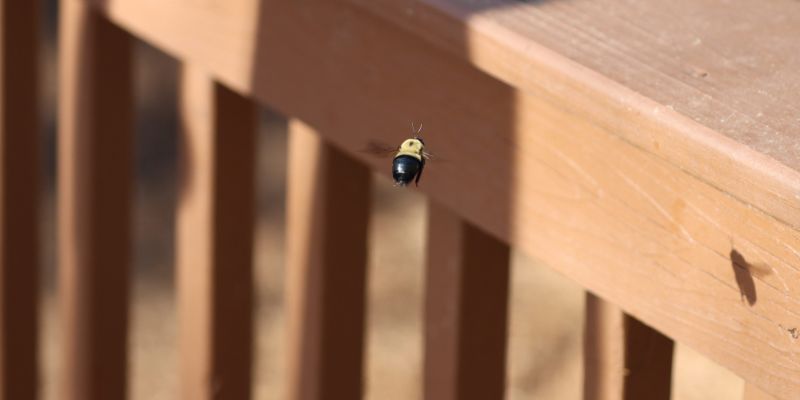
Carpenter bees are large, shiny, and mostly black or metallic blue, and easy to mistake for bumblebees at a glance — the giveaway is a shiny, hairless abdomen (bumblebees are fuzzy all over). Males have a white or yellow patch on the face and can’t sting; females can sting but rarely do unless handled directly.
📊 Carpenter bees don’t consume wood at all — they excavate tunnels purely as nest sites and feed exclusively on pollen and nectar, making them important pollinators despite the structural damage their tunneling causes. — Source: University of Maryland Extension
Signs Of Carpenter Bee Infestation
Look for perfectly round, roughly 3/8-inch holes bored straight into bare or weathered wood, usually on the underside of eaves, deck rails, or fascia boards where they’re sheltered from rain. Coarse sawdust (frass) piled directly beneath a hole is the clearest sign a tunnel is active, and you may hear a low buzzing from inside the wood itself during spring mating season. Yellow staining on the wood surface below a hole is bee feces, not the sawdust — both together confirm an active nest rather than an old, abandoned one.

Preventive Measures
Carpenter bees strongly prefer bare, unfinished, or weathered softwood — painted or stained wood is far less attractive to them, though not fully bee-proof. A solid oil- or latex-based paint is a better barrier than a clear sealant, since it fully hides the wood grain they key in on.
Physical barriers work well on high-value trim: staple or screw fine metal mesh over vulnerable eave and fascia edges before bees start drilling in spring. Check trim, railings, and siding each March for the first fresh holes of the season — catching one hole early is far less repair work than a gallery that’s been reused and extended for two or three seasons.
Natural Deterrents
Citrus, almond, and tea tree essential oils all repel carpenter bees on contact — mix 10–15 drops per cup of water and spray directly into existing holes and along bare trim edges before painting or sealing. Reapply after rain since the scent fades quickly outdoors.
Planting mint, eucalyptus, or geraniums near vulnerable trim adds a passive layer of deterrence, though it works better as a supplement to sealing and traps than as a standalone fix.
Chemical Solutions
An insecticidal dust labeled for wood-boring bees, puffed directly into an active hole, is more effective than a surface spray because it reaches the bee inside the tunnel rather than just coating the entrance. Treat holes in early morning or evening when bees are least active, wear gloves, and keep the area clear of kids and pets until the dust settles.
Wait a few days after treatment before sealing a hole permanently — sealing too soon can trap a live bee inside, which sometimes leads it to chew a second exit elsewhere in the same board.
Repairing Bee Damage
Once a tunnel is confirmed empty, sealing the hole is what actually stops it from being reused season after season — carpenter bees will return to and extend an existing gallery rather than always drilling a fresh one.
Filling Holes
Brush out all sawdust and debris first so the filler bonds to solid wood. Pack the hole with wood putty or an exterior-grade wood filler using a putty knife, slightly overfilling since putty shrinks a little as it cures, then sand flush once fully dry.
Restoring Wood Integrity
Sand the patched area smooth, then apply an exterior wood sealer to block moisture from re-softening the repair. Finish with paint or solid-color stain — this both restores the look and removes the bare-wood surface that attracted the bee in the first place.

Long-term Maintenance
A single season of prevention rarely finishes the job — carpenter bees return to the same structures year after year, so maintenance has to be a recurring spring habit, not a one-time treatment.
Regular Inspections
Walk the perimeter of decks, eaves, and sheds each spring with a flashlight, checking undersides where bees prefer to drill out of direct sun. Fresh sawdust below a hole means an active tunnel that needs treating before it’s sealed; old, weathered holes with no sawdust are usually safe to fill immediately.
Sustainable Practices
Because carpenter bees are pollinators, catch-and-release traps and repellents are a better long-term choice than broad insecticide spraying, which can also harm the honeybees and native bees visiting nearby flowers. Painting or sealing bare wood addresses the root cause — the exposed softwood itself — rather than just killing bees that will be replaced by the next generation drawn to the same unprotected trim. For wood that’s pressure-treated rather than bare softwood, see our guide on whether pressure-treated wood actually deters carpenter bees — the short answer is it helps but doesn’t fully stop them.
Frequently Asked Questions
What Scent Will Keep Carpenter Bees Away?
Citrus, almond, and tea tree essential oils all repel carpenter bees effectively. Mix with water in a spray bottle and apply directly to holes and bare wood edges, reapplying after rain since the scent fades outdoors.
Does Sealing Wood Prevent Carpenter Bees?
Sealing and painting make wood less attractive by hiding the bare grain bees key in on, and they’re one of the most effective preventive steps available. They don’t guarantee zero drilling on their own, so pairing sealed wood with a trap or seasonal inspection gives the most reliable protection.
What Is The Natural Enemy Of Carpenter Bees?
Woodpeckers are the most damaging natural predator — they often peck open a tunnel to eat the larvae inside, which usually causes more visible damage than the bees themselves. Certain parasitic wasps also target carpenter bee larvae, but at a much smaller scale.
Does Wd-40 Actually Repel Carpenter Bees?
Spraying WD-40 into an active hole can drive out or kill the bee inside on contact, but it isn’t a labeled pesticide and offers no lasting repellent effect once it evaporates. A bee-specific insecticidal dust or a proper wood sealant is a more reliable and longer-lasting choice for this exact problem.
Conclusion
Carpenter bees aren’t eating your wood — they’re excavating a nest in the softest bare board they can find, which is exactly why painting, sealing, and a catch-and-release trap outperform insecticide alone. Treat active holes, seal them once empty, and inspect the same trim every spring, since bees reliably return to reuse a tunnel that was never sealed shut.
Sponsored / affiliate links. As an Amazon Associate I earn from qualifying purchases. I may earn additional commission from eligible campaigns.