Do You Need The Saw Drill For Go Bank: Essential Guide
Quick Summary:
For Go-Bags, a specialized “saw drill” isn’t a standard survival item. Most Go-Bags benefit more from versatile, compact tools. A good multi-tool or a small hand saw combined with other essential gear will likely serve you better than a niche “saw drill” for emergency preparedness.
Do You Need The Saw Drill For Go Bank: Essential Guide
Building a go-bag, or emergency preparedness kit, can feel overwhelming. You’re trying to pack essential supplies for various situations, and sometimes, you stumble upon a tool that sparks curiosity. One such item that might pop up is the “saw drill.” But what exactly is it, and do you really need it for your go-bag? Let’s simplify this. We’ll break down what a “saw drill” typically refers to in a DIY context and then explore if it has a place in your survival kit. By the end, you’ll know exactly what gear is best suited for your preparedness needs.
Understanding the “Saw Drill”
When people mention a “saw drill,” they might be referring to a couple of different things, often related to woodworking or DIY projects. It’s not a common term in the survival or emergency preparedness community, which can lead to confusion. Let’s clarify what it usually means:
What People Usually Mean by “Saw Drill”
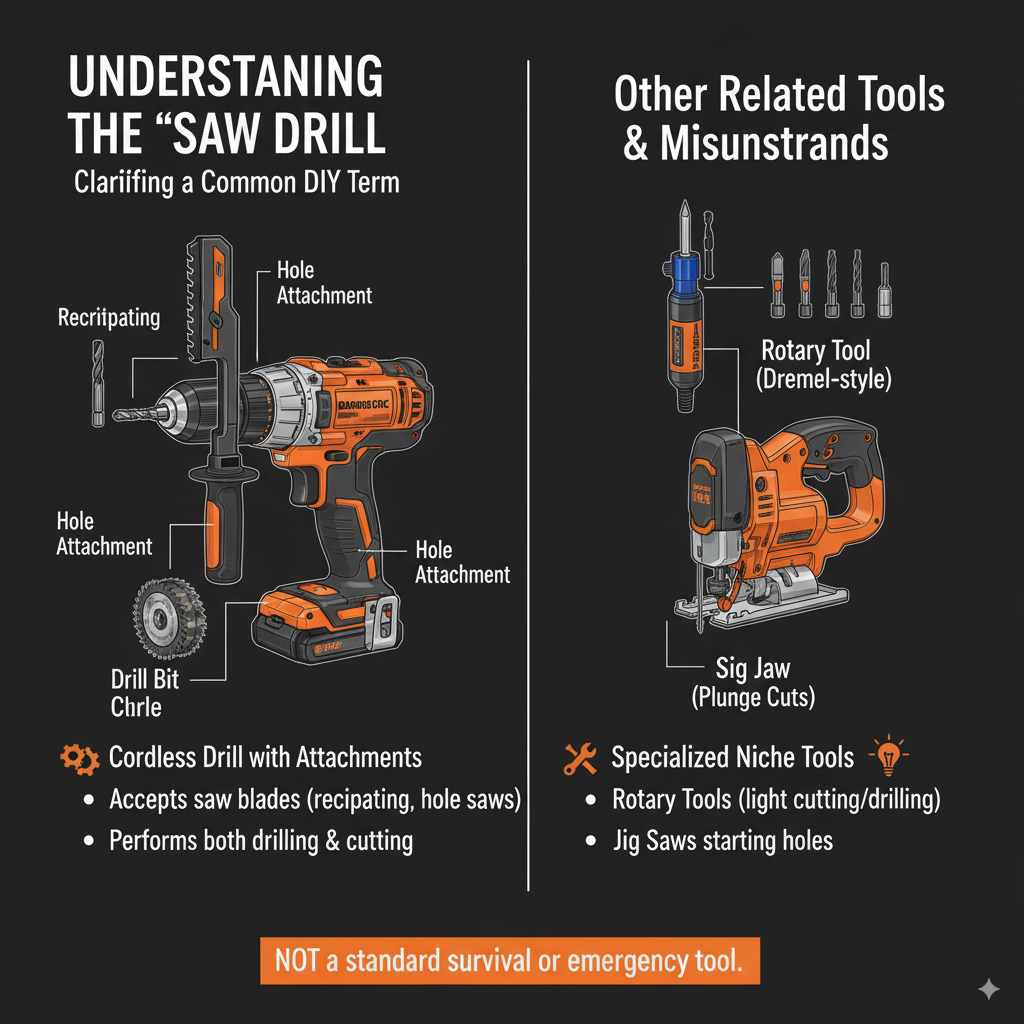
Most commonly, a “saw drill” is a colloquial term for a tool that has both sawing and drilling capabilities. This could refer to:
- A Cordless Drill with Attachments: Some powerful cordless drills can accept various attachments, including saw blades (like jig saw or reciprocating saw attachments) or hole saws. When combined with a standard drill bit, it performs both functions.
- A Specialized Tool: There might be very niche tools designed for specific tasks that combine sawing and drilling actions. However, these are rarely found in general DIY stores or survival kits.
- A Misunderstanding of Tool Names: Sometimes, people might be thinking of a tool like a rotary tool (e.g., a Dremel) which can do both light drilling and cutting with different bits, or a jig saw that can also be used to start holes by plunging.
For the purpose of this guide, we’ll assume “saw drill” refers to a tool that can perform both sawing and drilling functions, whether as a single unit or through interchangeable parts.
The Purpose of a Go-Bag
Before we decide if a “saw drill” is right, let’s quickly recap the goal of a go-bag. A go-bag, also known as an emergency kit or bug-out bag, is a pre-packed collection of essential items you can grab and go in case of an emergency evacuation. These emergencies could include natural disasters like earthquakes, floods, or fires, or other situations requiring you to leave your home quickly.
The goal of a go-bag is to provide:
- Survival Essentials: Water, food, first-aid supplies.
- Shelter and Warmth: Temporary shelter materials, blankets.
- Communication: A way to contact others or get information.
- Navigation: Tools to find your way if you need to travel.
- Tools for Basic Needs: Items to help with minor repairs, creating light, or self-defense.
The emphasis is always on portability, necessity, and versatility. Every item in a go-bag should justify its weight and space.
Assessing the “Saw Drill” for Go-Bag Use
Now, let’s put the “saw drill” under the microscope for its suitability in a go-bag. We need to consider its functionality, size, weight, power source, and overall utility in a survival scenario.
Functionality and Practicality
A tool that can both saw and drill sounds incredibly useful. Imagine needing to cut through a wooden barrier or quickly make a hole for a makeshift shelter. This is where the idea of a “saw drill” becomes attractive.
However, consider the context of a go-bag:
- Power Source: If it’s a power tool, it requires batteries or a power outlet. In an emergency, reliable power is often unavailable. Battery-powered tools can be heavy, and spare batteries take up significant space and weight.
- Size and Weight: Many combination tools, especially power tool attachments, can be bulky. A go-bag needs to be carried, sometimes for long distances, so every ounce counts.
- Durability: Survival tools need to be robust and reliable. Complex tools with multiple functions can sometimes be less durable than simpler, single-purpose tools.
- Specific Needs: What specific sawing or drilling tasks are essential for a typical evacuation scenario? While theoretically useful, is it a priority over water purification or a first-aid kit?
When Might a Sawing/Drilling Capability be Useful?
Let’s think of scenarios where such a tool could be beneficial, even if a dedicated “saw drill” isn’t the best answer:
- Shelter Construction: If you anticipate needing to build a temporary shelter from natural materials or salvageable lumber.
- Creating Access: Cutting through obstacles like wooden planks or doors to gain entry or exit.
- Repair Work: Making quick repairs to equipment or structures.
- Securing Items: Drilling holes to tie down supplies or create makeshift anchors.
These are all valid needs, but the key is finding the most efficient tool to meet them within a go-bag’s limitations.
More Practical Tool Alternatives for Your Go-Bag
Given the challenges of a “saw drill,” especially if it’s a power tool, let’s look at simpler, more effective alternatives that offer sawing and/or drilling capabilities suitable for a go-bag.
1. The Mighty Multi-Tool
A high-quality multi-tool is a staple in many preparedness kits for good reason. Many include:
- Pliers: For gripping, bending, and twisting.
- Knife Blade: For cutting cordage, preparing food, and general utility.
- Saw Blade: Often a small, serrated saw suitable for cutting through branches, thin wood, or plastic.
- Screwdrivers: For tightening or loosening fasteners.
- Can Opener/Bottle Opener: For practical food access.
- Awl/Reamer: Can be used to punch holes in soft materials or enlarge existing ones, which is a rudimentary form of drilling.
Pros:
- Compact and lightweight.
- Multi-functional, offering a variety of tools in one.
- No power source required.
- Versatile for many common tasks.
Cons:
- Saw blade is typically small and best for light-duty cutting.
- Drilling capability is usually limited to an awl or reamer for making small holes.
Popular brands include Leatherman, Victorinox (Swiss Army Knife), and Gerber. Investing in a reputable brand ensures better durability and performance.
2. Folding Saw
For more serious wood cutting needs, a dedicated folding saw is a fantastic addition. These saws are designed to be compact and safe for transport, unfolding to reveal a sturdy blade and handle.
- Types: You can find small pocket saws, bow saws that fold down, or Japanese-style pull saws which are often very efficient.
- Capacity: They can cut through branches, small logs, and lumber much more effectively than a multi-tool saw.
- Weight: Most folding saws are lightweight, typically weighing only a few ounces.
For example, a Bahco Laplander folding saw is a popular, reliable, and relatively inexpensive option found on sites like Bahco’s official website, known for their quality cutting tools.
Pros:
- Excellent cutting power for wood.
- Compact and safe to carry when folded.
- Lightweight.
- No power source needed.
Cons:
- Only performs sawing, no drilling function.
- Takes up slightly more space than a multi-tool.
3. Hand Drill or Brace and Bit
If drilling is a primary concern and you want a non-powered option, a small hand drill or a compact brace and bit set might be considered. However, these tend to be more specialized and can be bulky.
- Hand Drill: A simple hand-cranked drill that spins a bit.
- Brace and Bit: A classic woodworking tool that provides leverage for drilling larger holes.
These are generally too specialized and cumbersome for a standard go-bag compared to the versatility of a multi-tool’s awl or an improvised method.
4. Improvised Solutions
In a true survival situation, resourcefulness is key. You might be able to:
- Make holes with a sharp knife or awl: By twisting and pressing.
- Use friction: For more advanced fire-starting and shelter building, though this is very skill-dependent.
These methods are more about survival skills than packing specific tools.
DIY Aspects vs. Survival Needs
The confusion around “saw drill” often stems from its common use in DIY projects and woodworking. In a workshop, a cordless drill with interchangeable saw and drill bits is incredibly convenient.
Consider this table comparing DIY use vs. go-bag use:
| Feature | DIY Workshop Use (e.g., Woodworking) | Go-Bag Use (Emergency Preparedness) |
|---|---|---|
| Primary Goal | Completing specific projects efficiently and precisely. | Surviving immediate threats, meeting basic needs, evacuation. |
| Power Source | AC power or rechargeable batteries (typically readily available). | Must be self-sufficient; batteries are a concern due to weight/longevity. Solar or hand-crank alternatives may be needed. |
| Tool Size/Weight | Less critical, as tools are usually stored in a workshop. | Highly critical; must be portable and light to carry. |
| Functionality Depth | Versatile, often complex tools preferred. | Simple, robust, multi-tasking tools are prioritized. |
| Durability Needs | Good, but maintenance is usually consistent. | Extreme reliability and durability under harsh conditions are essential. |
| Example Tool Equivalent | Cordless drill/driver with assorted bit attachments (saw, hole saw). | High-quality multi-tool, compact folding saw. |
As you can see, the priorities for a go-bag are vastly different from those of a DIY workshop. What’s convenient and powerful in one context can be impractical and burdensome in another.
What to Pack: Prioritizing Your Go-Bag
When you’re assembling your go-bag, always think about the “Rule of Threes”: You can survive three minutes without air, three days without water, and three weeks without food. This hierarchy of needs should guide your packing decisions.
Tools, while important, typically come after the most critical survival items. If you’re considering a tool for cutting or making holes, ask yourself:
- Is this essential for my likely evacuation scenarios?
- Is there a lighter, more compact, or more reliable alternative?
- Does it rely on a power source I might not have?
For most beginners and even experienced preppers, a good multi-tool that includes a knife and a small saw is usually sufficient for most of the basic “cutting” needs that might arise from a go-bag perspective. If you anticipate needing to process more significant amounts of wood (e.g., for extended shelter or fire), a dedicated, lightweight folding saw is a much better choice than a bulky “saw drill” attachment or tool.
The U.S. government’s ready.gov website provides excellent guidance on building a disaster kit, emphasizing core essentials like water, food, and first aid over specialized tools.
Key Considerations for Selecting Go-Bag Tools
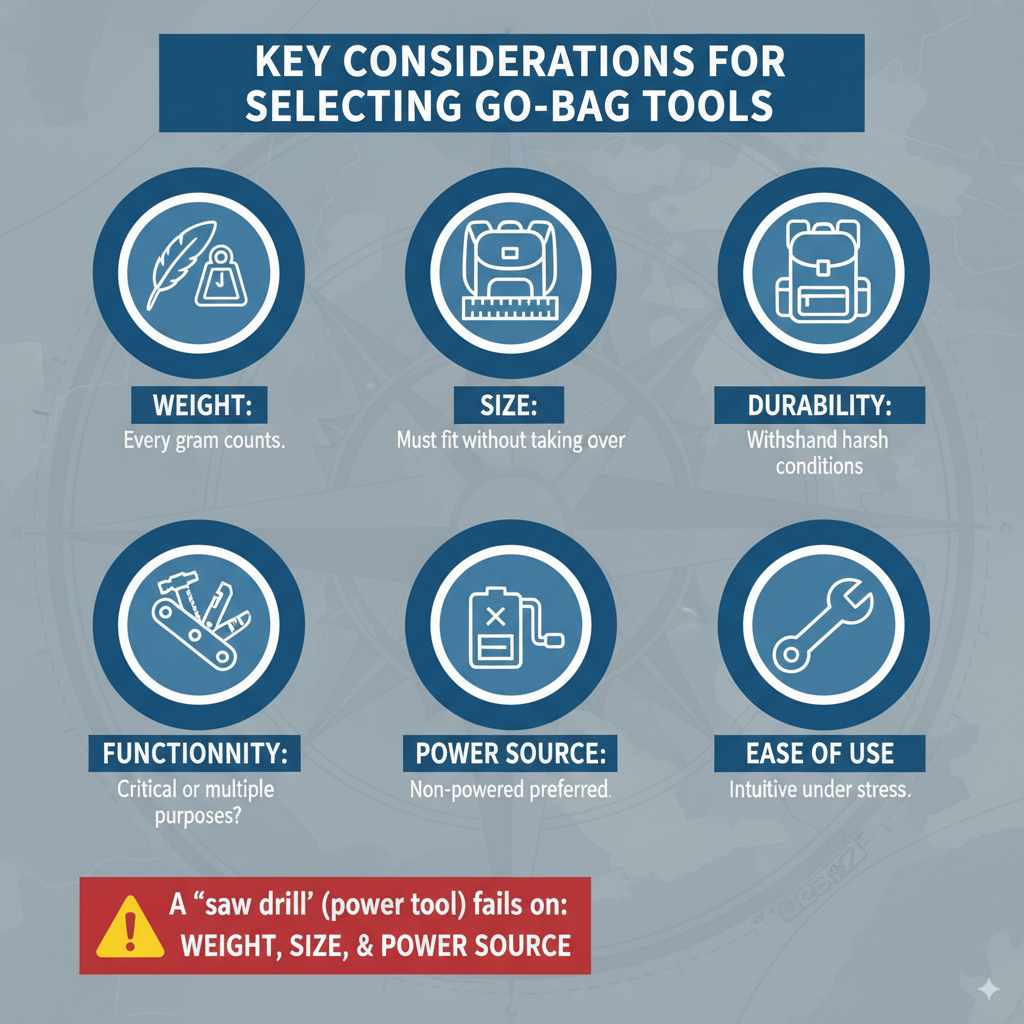
When choosing any tool for your go-bag, keep these in mind:
- Weight: Every gram counts.
- Size: It needs to fit into your bag without taking over.
- Durability: It must withstand harsh conditions and not fail when you need it most.
- Functionality: Does it serve a critical purpose or multiple purposes?
- Power Source: Non-powered tools are generally preferred.
- Ease of Use: You might be under stress; the tool should be intuitive.
A “saw drill,” especially a power tool version, often fails on weight, size, and power source requirements for a go-bag context.
FAQ: Your Go-Bag Tool Questions Answered
Q1: What is a “saw drill” typically used for?
A “saw drill” isn’t a standard tool. It usually refers to either a cordless drill with saw attachments or a tool that combines sawing and drilling functions. These are common in DIY and woodworking for efficient project completion.
Q2: Are multi-tools good for go-bags?
Yes, absolutely! High-quality multi-tools are excellent for go-bags because they are compact, lightweight, and offer a variety of essential functions, including a knife and sometimes a small saw and awl, all in one package.
Q3: Do I need a power tool in my go-bag?
Generally, no. Power tools rely on batteries that can run out or become useless. In an emergency, consistent power is not guaranteed. Non-powered, manual tools are far more reliable for go-bags.
Q4: What is a better alternative to a “saw drill” for survival?
Consider a robust multi-tool for everyday tasks and a dedicated, lightweight folding saw if you anticipate needing to cut wood more extensively. These are more practical, portable, and reliable than a complex “saw drill” for survival scenarios.
Q5: How much cutting power do I need in a go-bag tool?
This depends on your potential scenarios. For basic needs like cutting cordage or small branches, a multi-tool’s saw is often enough. For processing larger wood for shelter or consistent fire, a folding saw is more appropriate.
Q6: Should I pack spare batteries for tool attachments?
It’s generally not recommended. Spare batteries add significant weight and bulk to a go-bag. Prioritize essential survival items and tools that don’t rely on external power.
Q7: Where can I find reliable information on go-bag essentials?
Reputable sources like ready.gov (from FEMA) and the American Red Cross offer comprehensive, expert-tested lists and advice for building emergency preparedness kits.
Conclusion: Smart Packing for Preparedness
So, do you “need the saw drill for go-bag”? The answer is likely no, not in the way you might imagine it from a DIY context. The complexities, power requirements, and bulk of a tool typically called a “saw drill” make it impractical for the essential, portable nature of a go-bag. Your focus should be on lightweight, durable, and independently functional tools.
For cutting and basic hole-making needs in an emergency, a high-quality multi-tool is an invaluable companion. Pair it with a compact folding saw if your preparedness plan involves more significant wood processing. Remember, every item in your go-bag should earn its place by contributing directly to your safety, survival, and ability to navigate emergencies effectively. By choosing wisely and prioritizing practicality, you’ll build a go-bag that truly serves its purpose when you need it most.