How to Use a Step Drill Bit: RPM, Pressure & Sheet Metal Limit
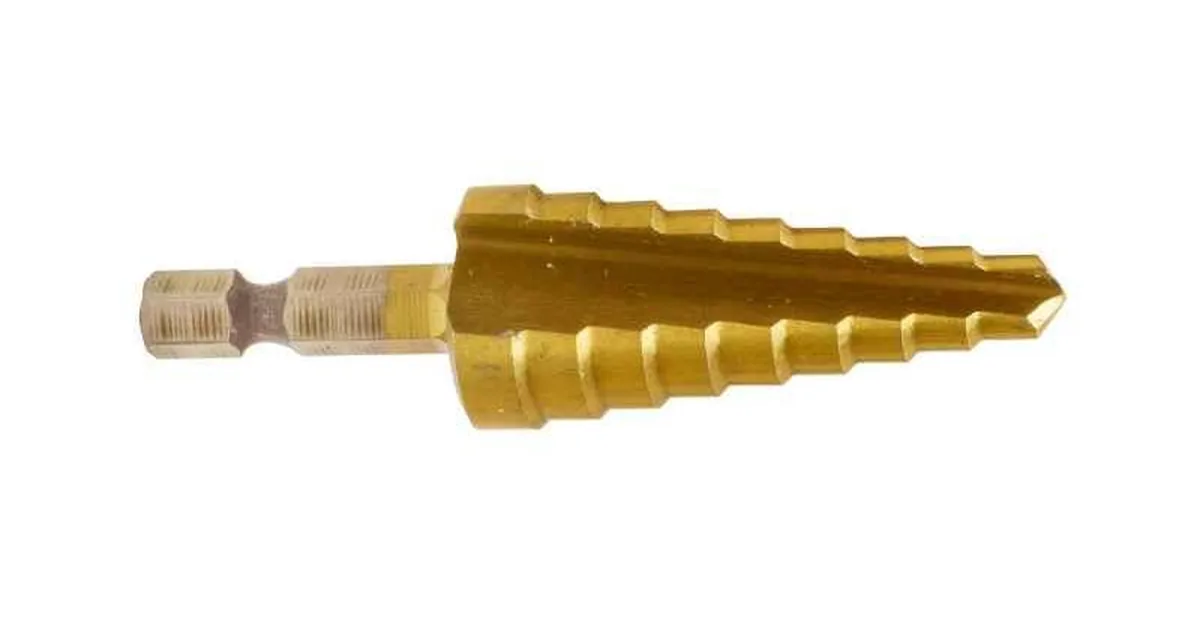
A step drill bit cuts a range of hole diameters with a single cone-shaped bit — run mild steel at 500-900 RPM (stainless at 200-400 RPM), and let each step cut fully before pushing to the next size. Skipping steps or forcing the feed is what chips the titanium coating and leaves an out-of-round hole. This guide covers correct speed and pressure by material, how far a step bit can go before you need a hole saw instead, and how to keep the bit cutting cleanly for years.
Insert your Affiliate Disclosure reusable block here
Quick Answer
Clamp the workpiece, center-punch your mark, and run the bit at 500-900 RPM on mild steel (slower on stainless or thick wood). Feed straight in with steady pressure, back the bit out every few seconds to clear shavings, and stop advancing once the step matches your target hole size — checking against the size marked on the flute, not by eye.
What You Need Before You Start
Best Step Drill Bit Set Pick
DEWALT Step Drill Bit Set, 3-Piece – $62.98
Covers 31 hole sizes from 1/8" to 7/8" across three bits, so you rarely have to swap mid-project — matches the “check the size marked on the flute” step above without guessing between bits.
- Best for: frequent metal and electrical work needing many hole sizes
- Why we picked it: titanium nitride coating holds up at the 500-900 RPM range this guide recommends for mild steel
- Main drawback: priced well above single step-bit options if you only need one or two hole sizes
Compare more step drill bit options
 Option 1 NEIKO 10-Step Bit, 1/4"-1 3/8" – $13.62
|
 Option 2 IRONANT 5-Pc Spiral Flute Set – $24.99
|
 Option 3 5-Pc Titanium Set with Case – $19.94
|
As an Amazon Associate we earn from qualifying purchases.
- A step drill bit rated for your material (HSS for wood, plastic, aluminum, and mild steel; cobalt for stainless or hardened alloys)
- A drill or drill driver capable of variable speed — a fixed-speed drill makes it hard to stay in the correct RPM range
- Clamps or a vise to secure the workpiece
- A center punch or awl to mark the starting point
- Cutting fluid or lubricant for metal, and a backer board for wood or plastic
- Eye protection and gloves
Setting Up: Secure the Workpiece and Mark Your Hole
Clamp the material to a bench or vise before the bit ever touches it — a step bit’s cutting edges grab more aggressively than a twist bit as each step engages, and an unsecured workpiece will spin. Mark the center with a punch or awl so the bit doesn’t wander on the first pass.
- Clamp the workpiece: use a vise, C-clamps, or a drill press vise — hand-holding thin sheet metal is how bits catch and spin the material.
- Center-punch the mark: a dimple keeps the tip from walking when you start the hole.
- Support the underside: for wood or plastic, clamp a scrap board underneath to stop blowout as the bit exits.
Speed and Pressure by Material
Running a step bit too fast is the single biggest cause of a burnt, dulled edge — more so than heavy feed pressure. Match the RPM to the material before you pull the trigger, not partway through the hole.
| Material | Recommended RPM | Notes |
|---|---|---|
| Mild steel / sheet metal | 500-900 RPM | Use cutting fluid; back out every few seconds to clear chips |
| Stainless steel | 200-400 RPM | Drill in one continuous pass — pausing lets the material work-harden around the bit |
| Aluminum / copper / brass | 600-1,000 RPM | HSS bits are sufficient; light cutting oil reduces galling |
| Wood | 1,000-1,500 RPM | Back a scrap board underneath to prevent splintering on exit |
| Plastic (PVC, acrylic) | 400-700 RPM | Slower speed prevents melting and cracking around the hole |
📊 RPM formula for other materials: RPM = (Surface Feet per Minute for the material x 3.82) ÷ bit diameter in inches. Source: Imperial Supplies drill bit RPM chart.
How Thick Can a Step Drill Bit Cut?
A step drill bit is a cone-shaped bit with graduated cutting diameters that is built for sheet materials, not thick stock. Most step bits top out around 3-4mm of steel (roughly 12-16 gauge) before the bit stalls or the hole distorts. Beyond that thickness, switch to a twist bit pilot hole followed by a hole saw, or a dedicated punch.
Step bits and twist bits solve different problems. A twist drill loses control the instant its edges punch through thin sheet metal — it grabs, tears, and leaves an out-of-round, triangular hole. A step bit avoids that because only one diameter is cutting at any given moment, and the flat step geometry sits perpendicular to the workpiece instead of tearing through it.
| Tool | Best Thickness Range | Best For |
|---|---|---|
| Step drill bit | Up to ~3-4mm (12-16 gauge) | Multiple hole sizes in thin sheet metal without swapping bits |
| Twist drill bit | Any thickness, single diameter | One fixed hole size in wood, plastic, or metal up to 1 inch |
| Hole saw | Thicker stock, large diameters | Holes over 1 inch, or metal thicker than a step bit can clear |
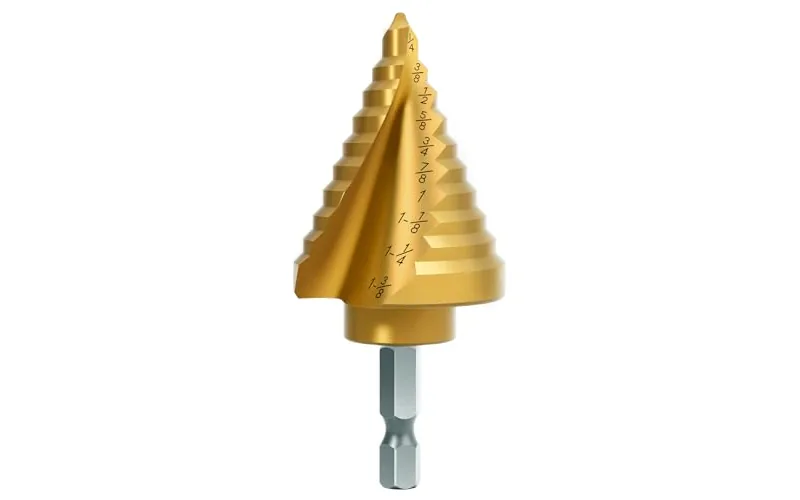
Drilling the Hole Step by Step
- Start slow: begin at a low RPM to let the tip bite without skating across the surface.
- Feed straight in: keep the bit perpendicular to the workpiece — angling it is what chips the cutting edge on the smaller steps.
- Watch the size marks: stop advancing once the step at your target diameter has fully cut through — pushing past it just wears the next step down for no reason.
- Clear chips often: back the bit out every few seconds on metal to let shavings escape instead of packing around the flutes and generating heat.
- Deburr the edge: a quick pass with the largest step, held just at the hole’s edge, knocks off the burr left by the final cut.
“The most common step-bit mistake we see is forcing the bit through at full drill speed the way you would with a twist bit — on 16-gauge steel that just work-hardens the edge and dulls the coating in one hole. Dropping to the low range and letting the bit clear its own chips gets a cleaner hole and extends the bit’s working life.”
Common Mistakes to Avoid
- Running full speed on stainless: stainless work-hardens if you pause or run too fast — drill it in one steady, slower pass.
- Skipping the pilot mark: without a center punch, the tip skates on smooth metal and starts the hole off-center.
- Not clamping thin sheet: an unsecured sheet spins with the bit and can cause a cut or a ruined workpiece.
- Ignoring the size marks: stopping by eye instead of at the etched size mark is the most common reason holes come out slightly oversized.
- Using a step bit on stock over 4mm: the bit stalls or the hole distorts — switch to a twist-bit-plus-hole-saw approach instead.
Caring for Your Step Drill Bit
A step bit that’s wiped down and stored dry will outlast one left in a toolbox drawer with bare metal tools rattling against its coating. After each use, clear away debris, then store the bit somewhere the stepped edges won’t knock against other tools.
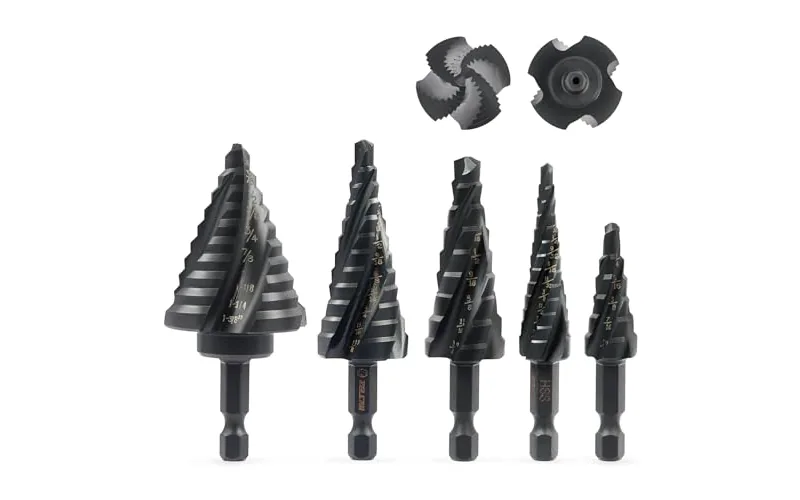
- Wipe debris off with a dry cloth immediately after use, then a brass wire brush on stubborn buildup in the flutes.
- Store in a dedicated case or foam-lined slot — loose bits knocking together chip the coating on the smaller steps first.
- Keep it dry; a light coat of oil before storage prevents rust on carbon-steel bodies.
Where Step Drill Bits Are Useful
Beyond general metalwork, step bits show up most often on metal pipe and electrical box work, cable-routing holes, and door hardware installs where you need several hole diameters in the same panel without swapping bits. For hole-size selection basics on adjacent fixtures, see our guide on hole saw sizing, and for what these bits are used for beyond drilling technique, see what step drill bits are used for.
Frequently Asked Questions
What RPM should I use for a step drill bit on steel?
Run mild steel at 500-900 RPM and stainless steel at 200-400 RPM. Use cutting fluid on both, and back the bit out periodically to clear shavings and keep it from overheating.
Can a step drill bit go through wood?
Yes — an HSS step bit cuts wood cleanly at 1,000-1,500 RPM. Clamp a scrap board underneath the workpiece to prevent splintering as the bit exits the back face.
How thick of metal can a step drill bit handle?
Most step bits are rated for roughly 3-4mm of steel, about 12-16 gauge sheet metal. For anything thicker, drill a pilot hole with a twist bit and finish with a hole saw sized to the target diameter.
Why is my step drill bit slipping instead of cutting?
Slipping usually means the tip wasn’t started on a center-punched mark, the bit is running too fast for the material, or the shank isn’t seated fully in the chuck. Re-punch the mark, drop the RPM, and check the chuck grip before drilling again.
What are the benefits of using a step drill bit?
A single step bit replaces a full set of twist bits for multiple hole sizes, cuts cleaner edges with less chipping on thin material, and drills faster than swapping bits for each diameter.
Conclusion
A step drill bit rewards patience over force: match the RPM to your material, keep the bit perpendicular, and stop at the size mark instead of pushing further. Follow those three habits and one bit will clean up multiple hole sizes across metal, wood, and plastic without the chipped edges or stalled cuts that come from rushing the cut.
Sponsored / affiliate links. As an Amazon Associate I earn from qualifying purchases. I may earn additional commission from eligible campaigns.
 ZELCAN HSS 5PCS Titanium Step Drill Bit Set with Automatic Center Punch for Sheet Metal with Aluminum Case, 50 Sizes in 5 High Speed Multiple Hole Stepped Up Steel Bits for DIY Lovers
 COMOWARE 3PCS M35 Cobalt Step Drill Bit Set with 1/4" Hex Shank, Automatic Center Punch, Two-Flute Impact Design, Ideal for Metal, Stainless Steel, Wood, Plastic