How to Organize Drill Bits in Your Workshop (by Collection Size)
The best way to organize drill bits depends on collection size — under 12 bits fits a labeled case, 12 to 50 bits works well on an indexed wooden stand, and larger collections need a wall-mounted pegboard or dispenser cabinet. Using the wrong system wastes bench space and lets bits roll around until edges chip. This guide covers which storage method matches your collection, how to build a wooden indexed stand, what magnetic and pegboard systems actually cost, and how to prevent rust in damp workshops.
Quick Answer
Sort drill bits by size into a labeled index case ($15-$30) for the fastest workshop access. Wall-mount the case at eye level next to your drill press or workbench. Drill bit indexes with drilled reference holes let you match the bit to the hole at a glance — no measuring required.
Choose the Right Storage Method for Your Collection
Best Drill Bit Organizer Pick
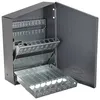
Drill America Drill Bit Index/Case (29 Sizes, 1/16″ to 1/2″)
Heavy-gauge all-steel case with individually labeled slots for all 29 fractional sizes from 1/16″ to 1/2″ in 1/64″ increments. Corrosion-resistant epoxy baked-on coating prevents rust.
- Best for: Fractional twist bit sets in any home or production workshop
- Why we picked it: Steel construction and labeled slots beat plastic cases that crack — slots hold bits at a fixed angle for grab-and-go access
- Main drawback: Holds only fractional sizes; separate index needed for metric, letter, or number series bits
Compare more drill bit organizer options
 Option 1 VEVOR 3-Drawer Drill Bit Dispenser Cabinet
|
 Option 2 Huot 10550 Drill Bit Index (1/16″ to 1/2″)
|
 Option 3 MACXCOIP 29PCS Drill Bit Index Box
|
As an Amazon Associate we earn from qualifying purchases.
Matching storage to collection size is the single decision that determines whether your organizer actually gets used. A beginner with one set of 29 fractional bits needs a different solution than a cabinet maker with 200+ bits across twist, Forstner, spade, and masonry categories. Here is the decision matrix based on collection size:
| Collection Size | Best Storage Method | Estimated Cost |
|---|---|---|
| Under 12 bits | Labeled hard case or small index | $10-$20 |
| 12 to 50 bits | Indexed wooden stand or drill bit index case | $15-$65 |
| 50 to 115 bits | Wall-mounted pegboard or multi-drawer cabinet | $30-$100 |
| 115+ bits (professional) | Huot-style combination index or rolling tool chest | $100-$250 |
One detail most guides skip: a drill bit index with actual drilled reference holes in the lid tells you the right bit size without a ruler. Hold the hole up to a pilot hole in your workpiece and you know instantly whether the fit is right. This is the fastest system for production work where you switch bit sizes frequently.
Wall-Mounted Drill Bit Storage Systems
Wall-mounted storage keeps drill bits off the bench, visible at a glance, and protected from being knocked over. Three systems work well in home and production workshops: indexed wooden stands, magnetic strip arrays, and pegboard with custom hangers.
Indexed Wooden Stand with Size Reference
An indexed wooden stand is a block of wood with holes drilled to hold each bit upright, plus a 1/4-inch plywood strip along the front with a sample hole at every size. You hold the strip to a pilot hole in your workpiece — when the sample hole matches, you have the right bit without measuring. Build one from a 2×4 scrap cut to 12 inches long: drill holes in 1/64-inch increments starting at 1/16 inch, spaced 3/4 inch apart, angled at 10 degrees so bits lean toward you for easy gripping. Mount it on a French cleat above the drill press for direct access. Total material cost: under $5 if you have scrap wood.
Magnetic Strip System
Magnetic strips mounted on a 2×4 wooden frame hold twist bits and small brad-point bits securely. Use two to three heavy-duty magnetic strips (at least 30 lb holding force each) screwed horizontally across the frame, spaced 3 inches apart to prevent bits from touching each other. This system works best for HSS and cobalt twist bits — Forstner bits and spade bits are too heavy and may slip. Mount the frame at eye level within arm’s reach of your drill press. A bonus: the same magnetic strips also hold hex keys, chucks, and other small metal shop tools.
Pegboard with Custom Hangers
Standard 1/4-inch pegboard with 1-inch standoff brackets gives you a modular system you can reconfigure without tools — see our DIY tool rack guide for the same approach applied to your full tool collection, not just drill bits. Dedicated drill bit hangers (two-peg style) hold individual bits at a slight angle for quick grab-and-return. Group bits by type: one zone for twist bits, one for Forstner bits, one for spade bits, one for masonry. Label each zone with a strip of masking tape. For sets that came in a case, hang the case on a large peg rather than pulling individual bits from it — you keep the set’s size markings while keeping everything on the wall. Internal links to related guides: see our comparison of 1/2 vs 3/8 drill bits if you’re deciding which size range to stock first.
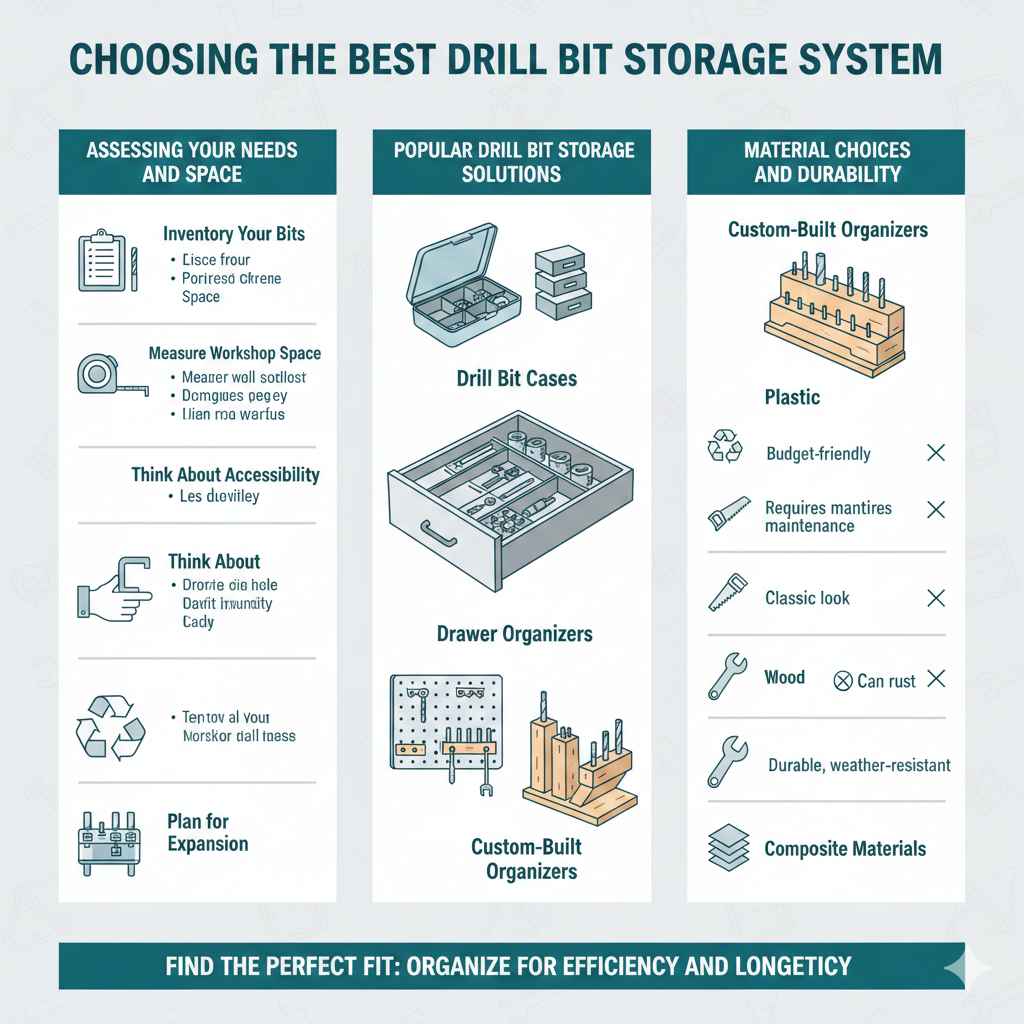
DIY Drill Bit Organizer Builds
Building your own organizer costs less than buying one and lets you match the system to your exact bit count and workshop layout. Three builds cover the most common scenarios.
Simple Wooden Rack with Drilled Holes
Cut a piece of 3/4-inch hardwood or plywood to your desired length (12 to 24 inches covers most standard bit sets). Drill a series of holes sized to match each bit’s shank diameter — a 1/4-inch bit needs a 1/4-inch hole, a 3/8-inch bit needs a 3/8-inch hole. Space holes at least 3/4 inch apart. Label each hole with a permanent marker or router-cut number. Angle the rack at 10 to 15 degrees on a French cleat so bits lean slightly backward and stay put when you reach for them. Finish the wood with boiled linseed oil to resist shop moisture. Total build time: about 45 minutes. See the full build method in our DIY drill bit organizer guide.
PVC Pipe Cubbies
Cut 1-1/2-inch PVC pipe into 4- to 6-inch lengths and make a 45-degree angle cut across the top of each tube. The angled cut creates an open face so you can drop bits in vertically and see the tip at a glance without removing the bit from its slot. Arrange the tubes in a row and fasten them to a strip of 3/4-inch plywood with two screws each. Mount the plywood strip on the wall near your drill press. Group one tube per bit type and label each with a permanent marker. Total material cost: under $10 for a 10-tube setup using standard 1-1/2-inch schedule-40 PVC.
Repurposed Items for Budget Storage
- Mason jars: Group bits by type in clear glass jars. Lid a jar when that bit type is rarely used to prevent dust buildup. Attach the jars to a wall-mounted board by screwing the lids to the board underside, then screw the jars in from below — a classic shop trick that keeps jars at eye level without a shelf.
- Spinning spice rack: A lazy-susan spice rack with 2-inch diameter holes holds most drill bit sets. Spin to the right section instead of hunting through a drawer. Portable enough to carry to the workpiece for on-site drilling.
- Foam insert in a shallow tray: Cut a 2-inch foam layer to fit inside a shallow tray, then use a sharp awl to punch holes at each bit position. Bits sit in the foam vertically with tips protected. Label the foam face with bit sizes using a permanent marker.
Labeling and Size Identification Systems
Any storage system fails without clear labels that survive shop conditions — sawdust, oil, and humidity destroy paper labels within weeks. Three labeling approaches hold up:
- Engraved or routed labels: Use a V-bit in a router or a Dremel engraving attachment to cut size numbers directly into the wood rack face. Fill engraved lines with white or black paint. Permanent and immune to moisture.
- P-Touch label maker tape: Apply over a light coat of shellac on bare wood so the adhesive bonds. Use the largest font setting available. Works on wood, plastic, and metal surfaces.
- Color-coding by bit type: Colored electrical tape or paint-pen dots on the storage position edge — red for masonry, blue for twist, green for Forstner, yellow for spade. Use as a secondary system alongside size labels for fast type identification from across the shop.
How to Prevent Rust on Stored Drill Bits
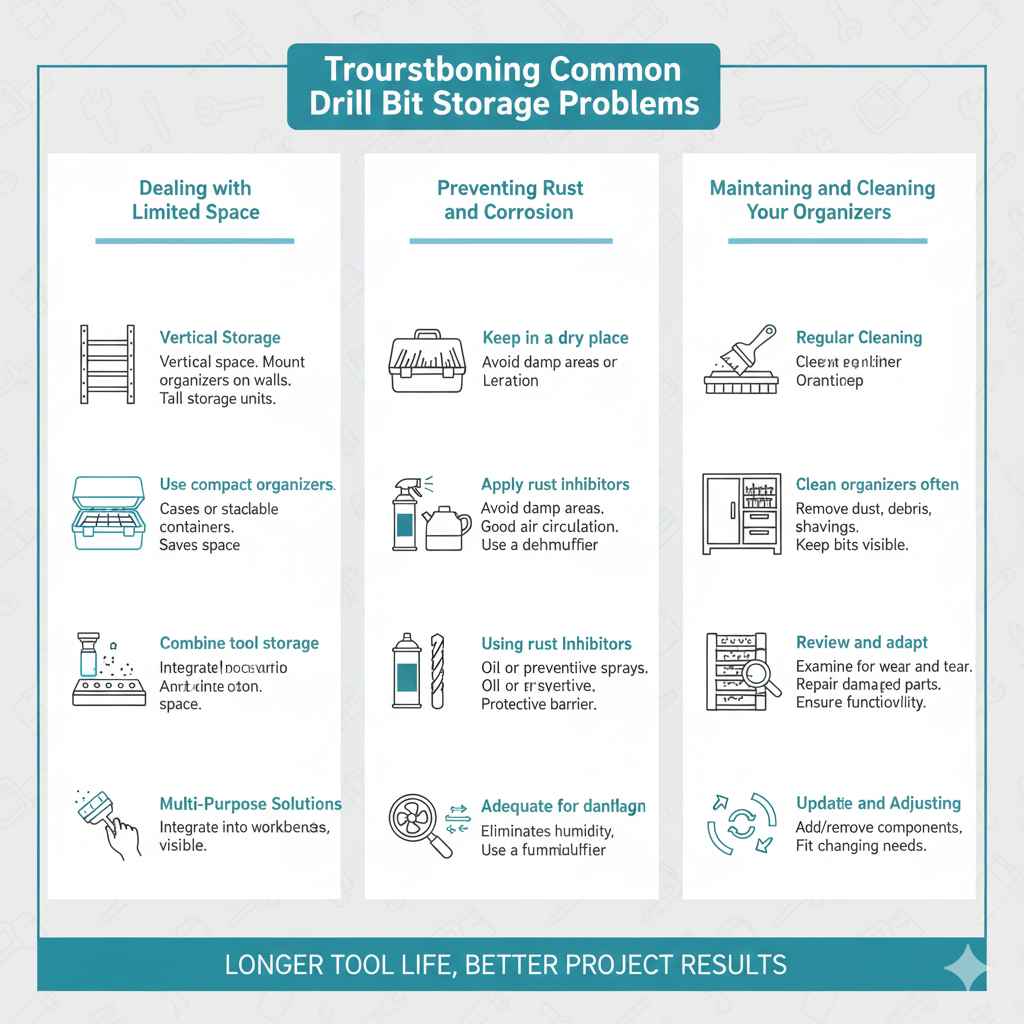
HSS drill bits rust in humid shop environments even when stored correctly. Cobalt bits resist rust better due to the cobalt alloy content, but neither material is immune in a garage or basement shop where humidity swings above 60% seasonally. Three practical prevention steps:
- Wipe with a lightly oiled rag after every use. A few drops of 3-in-One oil or light machine oil on a shop rag, wiped across each bit before returning it to storage, displaces surface moisture. This takes 30 seconds and measurably extends bit life in humid climates.
- Store a VCI packet in every closed case. Vapor Corrosion Inhibitor packets release a chemical vapor that forms a protective layer on metal surfaces. One packet protects an average drill bit case for 12 to 24 months before needing replacement.
- Keep storage away from concrete floors. Concrete absorbs and releases moisture constantly. A wall-mounted system keeps bits above this humidity source. If floor-level storage is unavoidable, keep the case in a sealed plastic bin with a desiccant packet.
“After ruining two sets of HSS twist bits in a damp basement shop, we switched to wiping every bit with machine oil before storage and added VCI packets to each index case. Two seasons later, none have shown surface rust — the oil wipe takes about 30 seconds per session.”
Frequently Asked Questions
What is the best way to store drill bits?
The best way to store drill bits is in a labeled index case or wall-mounted indexed wooden stand that holds each bit in its own slot, sorted by size. Keeping bits separated prevents edge-to-edge contact that chips cutting edges. For fractional twist bits, a steel index case covering 1/16″ to 1/2″ in 1/64″ increments gives the fastest access in a home workshop.
How do you organize drill bits by size?
Organize drill bits by size using a drill bit index case with individually labeled slots for each fractional or metric increment. Start at the smallest size (1/16″ fractional or 1.5 mm metric) and work up in order to the largest. For a DIY wooden rack, drill holes in the rack board in 1/64-inch increments and mark each hole with the corresponding size using a router or permanent marker.
Can you store drill bits vertically?
Yes, storing drill bits vertically — tip up in drilled holes — is one of the most space-efficient methods. Tip-up storage keeps the cutting edge away from the bottom surface and lets you read shank size markings easily. Wall-mounted indexed stands store bits vertically at a slight backward angle so they stay in place without falling forward when the workshop door shakes or the rack is bumped.
How do you keep drill bits from getting dull in storage?
Keep drill bits from dulling in storage by keeping each bit in its own slot so cutting edges never contact other metal surfaces. Wipe bits with a lightly oiled cloth before storage to prevent rust, which is the main cause of edge degradation on stored HSS bits. Avoid storing bits loose in a drawer where they roll and nick each other — a single drawer session can dull an entire set. Also check our guide on 118 vs 135 degree drill bit angles to understand which tip geometry holds an edge longer.
What is a drill bit index?
A drill bit index is a storage case with individually labeled slots for each bit size in a standard series — fractional (1/16″ to 1/2″), metric (1.5 mm to 13 mm), letter (A to Z), or number (1 to 60). The best indexes include a drilled reference strip with a sample hole at each size, so you can match the hole to your workpiece without measuring. Huot and Drill America make widely used steel drill bit indexes for professional and home workshop use.
Final Thoughts
Matching your storage method to bit count is the starting point — a $15 index case handles a standard 29-piece set better than any wall system, but once you cross 50 bits across multiple types, a wall-mounted approach with labeled zones pays for itself in time saved. Build the indexed wooden stand if you want a shop project that doubles as a useful tool; buy the Drill America or Huot steel index if you want reliable access without a build. Either way, wipe bits before storage and keep them separated — the two minutes of maintenance prevents ruined edges and the wait for a replacement set to arrive.
Sponsored / affiliate links. As an Amazon Associate I earn from qualifying purchases. I may earn additional commission from eligible campaigns.