Does Kilz Primer Need to Be Shaken Before Use?
Yes, Kilz primer needs to be shaken or stirred before use – its pigments and solvents separate on the shelf, and applying it unmixed causes blotchy coverage and weak stain blocking. Skip this step and you can end up re-priming a wall you thought you’d already sealed. This guide covers exactly how long to shake each Kilz format, the difference between aerosol and liquid-can prep, and the one situation where a hand shake isn’t enough.
Why Kilz Primer Separates in the Can
Kilz primer is a suspension, not a true solution – solid pigments (titanium dioxide for hide, plus the resins that do the stain-blocking) are dispersed through a liquid carrier rather than dissolved into it. Left sitting on a shelf, gravity pulls the heavier solids downward over time. That’s why an unopened can that’s been stored for a few months often shows a thin, watery layer on top with thicker, paste-like primer settled at the bottom.
This matters more for Kilz than for ordinary wall paint because Kilz’s stain-blocking resins and opacifying pigments are loaded at a higher concentration – that’s what lets it seal water stains, smoke damage, and tannin bleed-through in one coat. If those solids stay settled at the bottom, the primer you actually brush onto the wall is thinner and weaker than what’s printed on the label, and stains can bleed right back through within a few days. The same settling principle applies whenever you’re mixing any primer before use, not just Kilz.
How to Shake or Stir Kilz the Right Way (Aerosol vs. Can)
The correct method depends on the format you bought – aerosol spray cans and liquid cans/gallons are prepped differently, and mixing them up is a common reason people think they “already shook it” when they didn’t do enough.
| Format | Method | How Long |
|---|---|---|
| Aerosol spray can (Kilz Original, Mold & Mildew, Upshot) | Shake by hand | 1 full minute after the internal mixing ball starts rattling, then shake again periodically during use |
| Quart or gallon can, freshly opened (under ~1 week old) | Stir with a flat stick, working from the bottom up | 2–3 minutes, until no streaks or settled sediment remain on the stir stick |
| Quart, gallon, or 5-gallon pail that’s sat longer than a week | Mechanical mixing – a drill-mounted paint mixer paddle, or a store paint shaker | Hand-stirring alone often isn’t enough once solids have fully packed down; have the retailer re-shake it or use a drill mixer for at least 2–3 minutes |
For liquid Kilz, stirring is generally preferred over shaking the sealed can – vigorous shaking of a full can can force air into the primer, and those air bubbles show up as tiny craters once the primer dries. Aerosol cans are the exception: they’re specifically engineered with an internal agitator ball for shaking, and stirring obviously isn’t possible with a sealed spray can.
Best Kilz Primer Pick
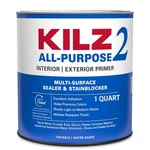 |
Kilz 2 All-Purpose Latex Primer (1 Quart) – $22.69 A water-based, low-odor formula that skips the air-bubble risk of shaking a full can – stir it with a flat stick per the table above and it’s ready to recoat in about an hour.
|
What Happens If You Skip Mixing Kilz Primer
Skipping the shake or stir on Kilz leads to patchy hide and weaker stain blocking, not just a cosmetic issue. If you dip straight into an unmixed can, the first few brushfuls come out thin and watery from the top layer, while the last of the can is over-thick with settled solids. The result is visibly uneven sheen and coverage across the wall, and any stains underneath – water rings, smoke, tannin from cedar or knots – are more likely to bleed back through the topcoat within days or weeks because the stain-blocking resin never got evenly distributed.
If you’ve already applied unmixed primer and it’s still wet, the fix is simple: stop, box the remaining primer back together in the can (or a mixing bucket), stir it properly, and recoat the thin areas once the first pass has dried. If it’s already fully cured, you’ll need a second, properly mixed coat over the weak spots – there’s no way to fix separation after the fact once the film has dried.
When Kilz Doesn’t Need Shaking
Two situations are the real exceptions to “always shake Kilz”: a can that was tinted at the paint counter and machine-shaken right before you left the store, and a can you’re pouring from immediately after opening it for the first time with no storage time in between. In both cases the primer is already evenly mixed, so an extra round of vigorous shaking mainly risks introducing air bubbles rather than improving anything.
That said, “just tinted” only holds if you’re using the can within the same day or two. Even a tinted, freshly shaken can will start to settle again once it sits, so don’t assume a can is still mixed just because it was shaken once at the store a month ago.
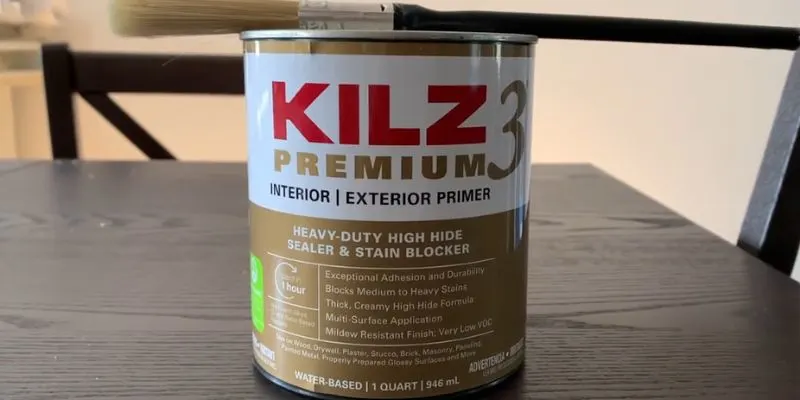
📊 Kilz aerosol primers require shaking for a full 60 seconds after the internal mixing ball begins to rattle, and periodic reshaking during application – Source: KILZ Original Aerosol Primer product page, KILZ.com
Common Mistakes When Mixing Kilz Primer
- Shaking a full liquid can instead of stirring it – traps air that surfaces as tiny craters once the primer dries.
- Stirring only the top inch – the densest settled pigment sits at the very bottom of the can, so a stir stick has to actually scrape the floor of the can, not just swirl the surface.
- Assuming a store-tinted can stays mixed – re-stir any can that’s been sitting more than a day or two, even if it was machine-shaken when purchased.
- Skipping the mixing ball check on aerosols – if you can’t hear the ball rattling before you start shaking, the primer inside is likely still separated and needs more time upside-down/right-side-up to loosen it.
- Pouring straight from an unstirred 5-gallon pail into a roller tray – a pail this size needs a drill-mounted mixing paddle; hand-stirring rarely reaches the settled solids at the bottom of a container that large.
Frequently Asked Questions
Does Kilz Need To Be Mixed Before Use?
Yes, Kilz should be mixed before application. This ensures an even consistency and proper blending of ingredients. Shaking or stirring helps distribute any settled components. Proper mixing enhances the product’s performance and coverage on surfaces. Always follow the manufacturer’s instructions for best results.
How Long Should Kilz Be Shaken?
Aerosol Kilz should be shaken for a full minute after the internal mixing ball starts rattling, then shaken again periodically while spraying. Liquid Kilz in a can or gallon is better off stirred by hand for 2 to 3 minutes, scraping the bottom of the can, rather than shaken. If the can has sat longer than a week, hand-mixing may not be enough and a drill mixer or store paint shaker is more reliable.
Can I Use Kilz Without Shaking It?
Using Kilz without mixing it first is not recommended. Unmixed Kilz applies thin and watery from the top of the can and over-thick from the bottom, causing uneven coverage and weaker stain blocking. Settled pigment and resin can’t seal stains the way the label promises until they’re redistributed. Always stir or shake thoroughly before application.
What Happens If Kilz Is Not Mixed?
Unmixed Kilz leads to patchy hide, visibly uneven sheen, and stains that can bleed back through the topcoat because the stain-blocking resin never got evenly distributed. You may need a second properly mixed coat over the affected areas. Mixing thoroughly before every use is the only way to get the coverage and stain blocking printed on the can.
Should You Shake Or Stir Kilz Primer?
Stir liquid Kilz in a can or gallon rather than shaking it – shaking a sealed can of liquid primer can whip air into the mixture, which shows up as tiny bubble craters once it dries. Aerosol Kilz is the opposite: it’s designed to be shaken, using the internal mixing ball as the signal that it’s ready.
How Do You Know If Kilz Primer Has Gone Bad?
Kilz has likely gone bad if stirring doesn’t bring it back to a smooth, uniform consistency, if it smells sour or rancid rather than its normal mild odor, or if it separates into distinct layers that won’t recombine even after several minutes of mixing. A thin watery layer that fully blends back in after stirring is normal settling, not spoilage. Properly sealed and stored Kilz typically stays usable for several years.
Conclusion
Shake aerosol Kilz for a full minute once the mixing ball rattles, and stir liquid Kilz by hand – or with a drill mixer once a can has sat longer than a week – scraping the bottom until no sediment remains. Getting this step right is what makes the stain-blocking and coverage on the label actually show up on your wall. If you’re deciding which Kilz formula to buy for your project, or whether your surface needs sanding between primer coats, those guides cover the next steps after mixing. For more primer prep and product guides, see the full primers section.
Sponsored / affiliate links. As an Amazon Associate I earn from qualifying purchases. I may earn additional commission from eligible campaigns.