Best Shellac-Based Primer: 7 Compared by Resin & Cost (2026)
The best shellac-based primer overall is the Zinsser B-I-N Shellac-Based Primer aerosol — real shellac resin (per its own manufacturer TDS), touch-dry in 15 minutes. But two of the most popular “shellac primers” on the market, Zinsser’s B-I-N Advanced line, list acrylic and styrene copolymer as their resin type, not shellac at all. Below are 7 real options compared by resin chemistry, dry time and cost per 100 sq ft, sourced from each product’s own technical data sheet.
A “Shellac Primer” Isn’t Always Shellac
Shellac-based primer means one specific thing chemically: shellac resin (a natural resin secreted by the lac insect) dissolved in denatured alcohol. That’s what makes it dry in minutes, stick to glossy surfaces without sanding, and permanently lock in knots, tannin bleed and smoke odor. It’s also what Zinsser’s original B-I-N formula and Bulls Eye SealCoat actually are, according to their own technical data sheets. Painting furniture instead of trim or doors? See what paint to use on wood furniture without sanding for the full no-sand paint comparison.
But “shellac” has become a marketing shorthand as much as a chemistry description. Zinsser’s own technical data sheets list the resin in B-I-N Advanced Synthetic Shellac Primer as “Acrylic” and the resin in Clear B-I-N Advanced Synthetic Shellac Sealer as “Styrene Copolymer” — not shellac. Both products are engineered to match shellac’s stain- and odor-blocking performance with a lower-odor, water-cleanup formula, and they’re genuinely good at that job. If you’re specifically covering an old wood stain rather than blocking knots or odor, see our full guide to painting over wood stain for the prep steps that go alongside the primer choice. They just aren’t shellac. This comparison includes both types, labeled honestly, because that’s what’s actually on the shelf when someone searches for a shellac-based primer.
The Numbers: 7 Shellac-Based Primers Compared
Every figure below is pulled from each product’s own Rust-Oleum/Zinsser technical data sheet (TDS) or, for the two aerosols, the manufacturer’s published can specs, cross-checked against the live Amazon listing on 2026-08-04. Cost per 100 sq ft is computed from the midpoint of each product’s published coverage range at the live price above — the formula is shown under the table.
| Product | Resin Type (TDS) | True Shellac? | Touch / Recoat | Coverage | Cost / 100 sq ft |
|---|---|---|---|---|---|
| Zinsser B-I-N Shellac-Based Primer, 13 oz. Aerosol | Shellac-Based | Yes | 15 min / 30 min | 10–12 sq ft/can | $169.55 |
| Zinsser B-I-N Advanced Synthetic Shellac Primer, Quart | Acrylic | No — marketed as shellac | 25 min / 45 min (2 hr for full stain-sealing) | 300–400 sq ft/gal (75–100 sq ft/qt) | $27.87 |
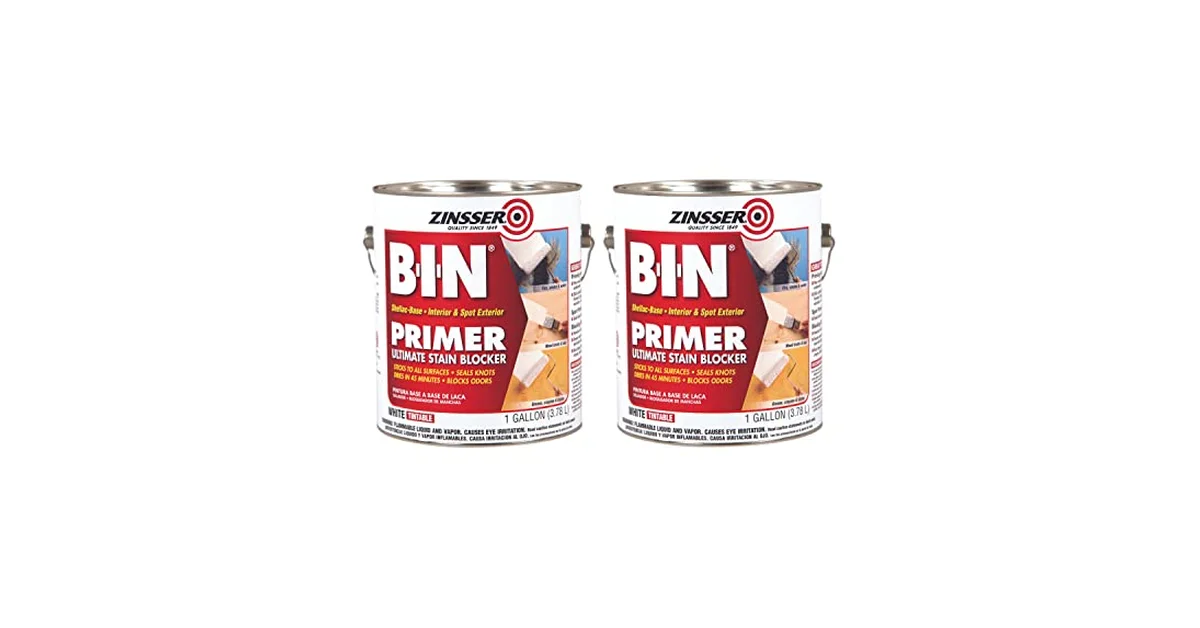
| Zinsser B-I-N Shellac-Base Primer-Sealer, Gallon (2-Pack) | Shellac Base | Yes | 20 min / 45 min | 500 sq ft/gal | $16.76 |
| Zinsser B-I-N Turbo Spray, 26 oz. Aerosol | Shellac-Based | Yes | 15 min / 30 min (paintable) | 20–24 sq ft/can | $118.18 |
| Zinsser Clear B-I-N Advanced Synthetic Shellac Sealer, Gallon | Styrene Copolymer | No — marketed as shellac | 25–30 min / 45 min–1 hr | 350–400 sq ft/gal | $13.67 |
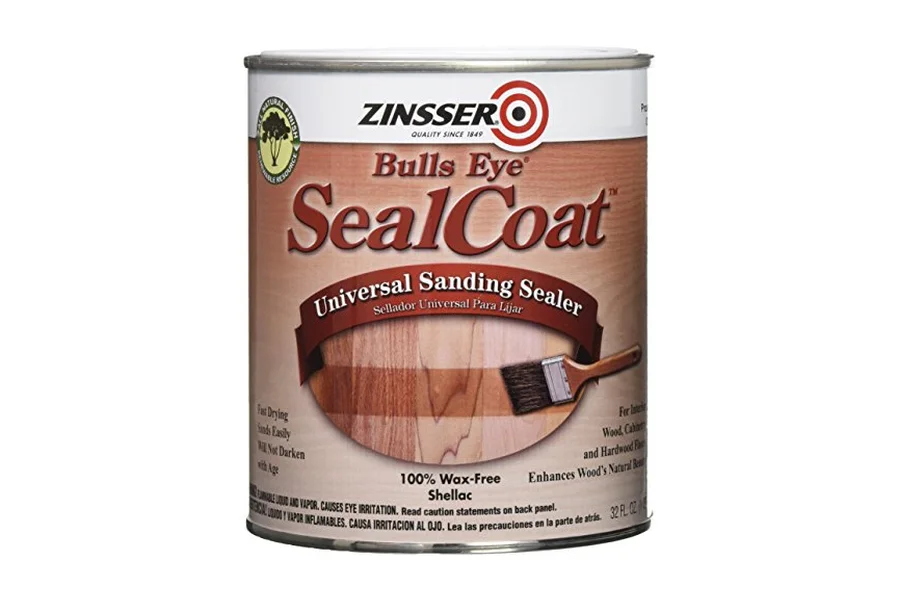
| Zinsser Bulls Eye SealCoat Universal Sanding Sealer, Quart | De-waxed Shellac-Based | Yes | 5–10 min / 20–45 min | 400–600 sq ft/gal (100–150 sq ft/qt) | $19.83 |
| De-Waxed Super Blonde Shellac Flakes, 1 lb. | 100% Shellac (raw resin) | Yes | depends on cut ratio chosen / depends on cut ratio chosen | not comparable — user-mixed | N/A (user-mixed) |
Cost/100 sq ft formula: live price ÷ midpoint of the product’s own published coverage range × 100. The shellac flakes pick is left out of the strict cost column because coverage depends entirely on the pound-cut ratio you choose to mix — see its own section below for real numbers at a standard cut.
The 7 Best Shellac-Based Primers
1. Zinsser B-I-N Shellac-Based Primer, 13 oz. Aerosol — #1 Best Overall
#1 Best Overall
Zinsser B-I-N Shellac-Based Primer, 13 oz. Aerosol — $18.65 (13 oz. aerosol can)
- Resin type (TDS): Shellac-Based (true shellac)
- Real cost: $169.55 per 100 sq ft
- Coverage: 10–12 sq ft/can
- Dry/recoat: 15 min touch | 30 min recoat
This is the small aerosol version of the classic B-I-N formula, and its own TDS confirms it: resin type “shellac-based,” solvents acetone, ethanol and n-butanol. Ethanol is drinking alcohol — the same family of solvent that makes traditional shellac dry so fast. Touch-dry in 15 minutes, paintable in 30, it’s the single fastest primer in this comparison to get from can to topcoat.
At $18.65 for 10–12 sq ft of coverage it works out to roughly $169.55 per 100 sq ft — by far the most expensive way to prime a large area on this list. That’s the honest trade-off of any aerosol: you’re paying for convenience and zero cleanup, not square footage. For a handful of knots on a door or trim board it’s the right tool. For a whole room, look at pick #3 instead.
Main drawback: interior use only per the TDS, and the can empties fast on anything bigger than spot work.
2. Zinsser B-I-N Advanced Synthetic Shellac Primer, Quart — Best Low-Odor, Water-Cleanup “Shellac” Primer
Best Low-Odor, Water-Cleanup “Shellac” Primer
Zinsser B-I-N Advanced Synthetic Shellac Primer, Quart — $24.39 (1 quart)
- Resin type (TDS): Acrylic (NOT true shellac)
- Real cost: $27.87 per 100 sq ft
- Coverage: 300–400 sq ft/gal (75–100 sq ft/qt)
- Dry/recoat: 25 min touch | 45 min (2 hr for full stain-sealing) recoat
B-I-N Advanced is Zinsser’s answer to the classic formula’s biggest complaints: the alcohol smell and the ammonia-and-water tool cleanup. It works — low odor, soap-and-water cleanup, and it still blocks tannin, knots, water stains and smoke odor about as well as the real thing in independent painter-forum comparisons. But its own TDS lists the resin as Acrylic, with glycol ethers and water as the solvents. There is no shellac in this can.
That’s not necessarily a downside — VOC comes in under 100 g/L versus 550 g/L for the classic formula, which matters in an occupied house or a shop without great ventilation. But if the reason you’re buying “shellac primer” is the alcohol-based chemistry itself (fast penetration into end grain, compatibility with shellac topcoats, the specific smell that tells you it’s working), this isn’t that product, whatever the label says.
Main drawback: not a true shellac primer despite the name — verify this matters for your job before buying on the name alone.
3. Zinsser B-I-N Shellac-Base Primer-Sealer, Gallon (2-Pack) — Best Value for Whole-Room or Large-Area Priming
Best Value for Whole-Room or Large-Area Priming
Zinsser B-I-N Shellac-Base Primer-Sealer, Gallon (2-Pack) — $167.63 (2 x 1 gallon — not sold as a single gallon on Amazon)
- Resin type (TDS): Shellac Base (true shellac)
- Real cost: $16.76 per 100 sq ft
- Coverage: 500 sq ft/gal
- Dry/recoat: 20 min touch | 45 min recoat
This is the real thing at the largest size Amazon carries it: shellac resin dissolved in denatured alcohol and water, exactly as the classic B-I-N formula has been mixed for decades. The TDS’s stain-blocking list is the longest of any product here — water, nicotine, ink, crayon, marker, rust, smoke, grease, creosote, asphalt, lipstick, graffiti, knots, sap streaks and tannin bleed in one coat.
Amazon doesn’t sell this formula as a single gallon — only this 2-pack at $167.63, working out to $83.82 per gallon. Because the recommended dry film is thin (0.75–0.9 mil, about half the thickness of the water-based picks), a gallon still covers 500 sq ft, which puts the real cost at $16.76 per 100 sq ft — the second-cheapest way to prime real square footage on this list, once you accept the 2-gallon minimum buy. If you only need one gallon, a local paint or hardware store will usually beat this price.
Main drawback: 550 g/L VOC is the highest here, and the alcohol smell is genuinely strong in an unventilated room.
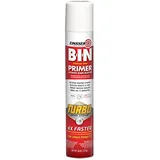
4. Zinsser B-I-N Turbo Spray, 26 oz. Aerosol — Best for Large-Area Spray-Equipment Jobs
Best for Large-Area Spray-Equipment Jobs
Zinsser B-I-N Turbo Spray, 26 oz. Aerosol — $26.00 (26 oz. aerosol can)
- Resin type (TDS): Shellac-Based (true shellac)
- Real cost: $118.18 per 100 sq ft
- Coverage: 20–24 sq ft/can
- Dry/recoat: 15 min touch | 30 min (paintable) recoat
Marketed as “B-I-N Turbo,” this is a larger, higher-output aerosol built for a 10-inch spray fan and professional spray equipment results straight from the can, not a standard hand-held touch-up spray. Zinsser’s own listing claims 4x faster project completion versus a standard aerosol for covering doors, cabinets or trim runs.
Coverage is rated at 20–24 sq ft per can versus 10–12 for the standard 13 oz. spray, at a price roughly 40% higher — a genuinely better per-square-foot deal among the two aerosols ($118.18 per 100 sq ft versus $169.55), though still far more expensive than a brush-and-can approach. This is the pick for someone doing a full kitchen’s worth of cabinet doors who wants aerosol convenience without buying five small cans.
Main drawback: still an aerosol premium price versus liquid B-I-N, and 26 oz. empties faster than the can size suggests on porous wood.
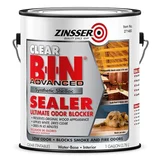
5. Zinsser Clear B-I-N Advanced Synthetic Shellac Sealer, Gallon — Best Clear Odor-Sealing Option (No Color Change)
Best Clear Odor-Sealing Option (No Color Change)
Zinsser Clear B-I-N Advanced Synthetic Shellac Sealer, Gallon — $51.25 (1 gallon)
- Resin type (TDS): Styrene Copolymer (NOT true shellac)
- Real cost: $13.67 per 100 sq ft
- Coverage: 350–400 sq ft/gal
- Dry/recoat: 25–30 min touch | 45 min–1 hr recoat
Clear B-I-N Advanced is the odor-sealing counterpart to the white Advanced primer above, and it shares the same chemistry gap: its TDS lists the resin as Styrene Copolymer, with glycol ethers and water as solvents. Not shellac, despite “Synthetic Shellac Sealer” in the product name. What it does well is seal smoke, pet, mildew and grease odors without tinting or hiding the wood underneath, which makes it the right choice when a stain-blocking pigment isn’t wanted.
At $51.25 per gallon and 350–400 sq ft of coverage, it’s actually the cheapest primer per 100 sq ft in this whole comparison at $13.67 — cheaper even than the true-shellac gallon pick, because its water-based formula needs less material loss to prime.
Main drawback: like its white sibling, it isn’t real shellac chemistry — don’t buy it expecting alcohol-based penetration or shellac-topcoat compatibility.
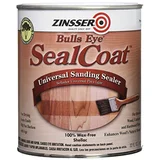
6. Zinsser Bulls Eye SealCoat Universal Sanding Sealer, Quart — Best Dewaxed Shellac Sanding Sealer for Woodworking Shops
Best Dewaxed Shellac Sanding Sealer for Woodworking Shops
Zinsser Bulls Eye SealCoat Universal Sanding Sealer, Quart — $24.79 (1 quart)
- Resin type (TDS): De-waxed Shellac-Based (true shellac)
- Real cost: $19.83 per 100 sq ft
- Coverage: 400–600 sq ft/gal (100–150 sq ft/qt)
- Dry/recoat: 5–10 min touch | 20–45 min recoat
SealCoat isn’t sold as a “primer” at all — Zinsser markets it as a universal sanding sealer and pre-stain wood conditioner. But its TDS confirms it’s 100% de-waxed shellac resin in denatured alcohol and water, which is exactly the chemistry a woodworker reaching for “shellac primer” in a shop context is usually actually looking for: something to seal knots and even out stain absorption on a project before finishing, not to prime a wall before latex paint.
The wax-free formula is the detail that matters most for shop use: waxed shellac (the kind in Bulls Eye Shellac “traditional finish”) will cause adhesion problems under oil-based polyurethane, but de-waxed SealCoat is compatible with any clear topcoat. It’s also the fastest-drying liquid product in this whole comparison — touch-dry in 5–10 minutes, sandable in 20–45.
Main drawback: at 653 g/L it has the highest VOC content of anything on this page, and it’s genuinely not marketed as a household primer, so it can be confusing to shop for by that name.
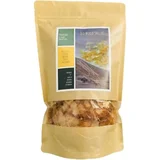
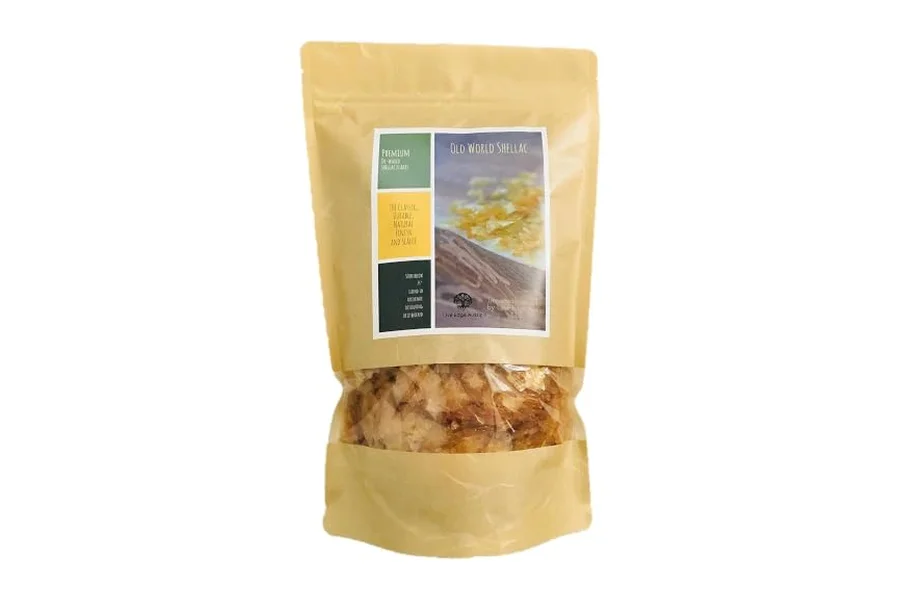
7. De-Waxed Super Blonde Shellac Flakes, 1 lb. — Best Fully Custom Mix-Your-Own Shellac Primer
Best Fully Custom Mix-Your-Own Shellac Primer
De-Waxed Super Blonde Shellac Flakes, 1 lb. — $46.99 (1 lb. flakes (denatured alcohol sold separately))
- Resin type (TDS): 100% Shellac (raw resin) (true shellac)
- Real cost: not comparable (user-mixed)
- Coverage: not comparable — user-mixed
- Dry/recoat: depends on cut ratio chosen touch | depends on cut ratio chosen recoat
Buying raw dewaxed shellac flakes and mixing your own with denatured alcohol is the option most guides skip entirely, but it’s a real and common choice among furniture makers and restorers who want control over concentration. A standard “2 lb cut” (2 lbs of flakes dissolved per gallon of denatured alcohol) produces a sealer close in film build to SealCoat; a thinner “1 lb cut” penetrates deeper into porous wood for a first coat.
At $46.99 per pound, flakes alone cost more per pound than a finished gallon of SealCoat — the real saving here isn’t money, it’s control: you choose the cut ratio, and you’re not locked into whatever concentration the factory picked. It’s also the only pick with zero pre-mixed shelf life to worry about; you dissolve only what you’ll use soon, since mixed shellac’s working life is materially shorter than a sealed factory can.
Main drawback: you also need to buy denatured alcohol separately, and mixing introduces real variability — this is the pick for someone who wants to learn the material, not the fastest route to a primed surface.
Not the DIY route you had in mind? Some woodworkers reach for diluted PVA wood glue instead of mixing shellac, assuming it’s the same idea — it isn’t. See whether PVA primer actually works on bare wood for the real difference between that trick and a true wood primer like the picks above.
Which Products in This List Are Actually Shellac?
Two of the seven picks above — the B-I-N Advanced white primer (#2) and Clear B-I-N Advanced sealer (#5) — are not shellac by resin chemistry, according to Zinsser’s own technical data sheets. Four are genuine shellac resin: the two B-I-N aerosols (#1 and #4), the classic liquid B-I-N (#3), and Bulls Eye SealCoat (#6). The seventh, raw shellac flakes (#7), is 100% shellac resin before you mix it with anything.
This isn’t a criticism of the Advanced line — both products do their job well and solve a real problem (odor and VOC) the classic formula has. It’s a labeling gap worth knowing about before you buy, especially if the reason you specifically want “shellac” is the alcohol-based chemistry itself rather than just the stain-blocking result.
How We Picked These
These seven products were not physically tested in a shop for this comparison. Every specification — resin type, VOC content, dry and recoat times, and coverage — is pulled directly from each product’s own Rust-Oleum/Zinsser technical data sheet (TDS), fetched from Rust-Oleum’s own document host and cross-checked against the live Amazon listing for the exact SKU pictured. Prices and buy-box availability were verified live via the Amazon Creators API on 2026-08-04, the same day this article was published.
We did not find usable star-rating or review-count data through Amazon’s product API for these listings — that field came back empty across every ASIN checked — so no review counts or star ratings appear anywhere in this article. Anywhere you see a star rating or review count on a competing page for these same products, treat it with real skepticism unless the source is named.
- Resin type and every other spec is sourced from the manufacturer’s own TDS, never guessed
- Prices are live buy-box prices from the Amazon Creators API, not carried over from memory
- Coverage-based costs are computed from each product’s own published range and the formula is shown, not hidden
- No star ratings or review counts are shown because none could be independently verified this session
What to Consider When Buying a Shellac-Based Primer
Is It Actually Shellac? Read the Resin Type on the TDS
“Shellac,” “shellac-based” and “synthetic shellac” are not the same claim. Only a product whose technical data sheet lists the resin as shellac (or de-waxed shellac) is genuine alcohol-dissolved shellac resin. A product whose TDS lists acrylic, styrene copolymer, or any other synthetic resin is engineered to mimic shellac’s stain-blocking performance, not to contain shellac. Both types work; only one is the traditional material. Check the “Resin Type” line on the manufacturer’s own TDS before assuming the label tells the whole story.
Waxed vs. Dewaxed Shellac
Natural shellac contains wax unless it’s been processed to remove it. Waxed shellac (Zinsser’s Bulls Eye Shellac “traditional finish”, for example) is not recommended under oil-based polyurethane topcoats — the wax interferes with adhesion. Dewaxed shellac (SealCoat, raw dewaxed flakes, and the classic B-I-N primer line) is compatible under any clear or painted topcoat. If a shellac product’s listing or TDS doesn’t say “dewaxed” or “wax-free,” assume it contains wax and check before applying anything else over it.
Stain and Odor Blocking: What Shellac Primers Actually Stop
True shellac and the synthetic “Advanced” line both block a similar list per their own TDS sheets: water stains, nicotine, ink, crayon, marker, rust, smoke and grease. Genuine shellac’s TDS also specifically names creosote, asphalt, lipstick and graffiti, and both formulas name knots, sap streaks and tannin bleed as core use cases — this is the job every product on this list is built for.
Dry Time, Recoat Time and Full Cure
Genuine shellac dries fastest — SealCoat is touch-dry in 5–10 minutes, the aerosols in 15. The synthetic Advanced line runs slightly longer (25–30 minutes to touch) but is still fast versus an oil-based primer. “Full cure” matters more than touch-dry: the classic shellac formula reaches full hardness in 1–3 days, while the synthetic Advanced line’s TDS states 7 days to full hardness. If you need to handle or stack primed pieces the same day, that gap is worth planning around.
VOC Content and Ventilation
This is where the chemistry split matters most in practice. True shellac in denatured alcohol runs 550–653 g/L VOC per the TDS sheets in this comparison — genuinely high, with a strong alcohol smell that clears a room fast. The synthetic Advanced line is under 100 g/L, which is why it exists: for occupied homes, poorly ventilated basements, or anywhere a strong solvent smell is a real problem, low-VOC wins even though it isn’t true shellac.
Aerosol vs. Liquid: Which Application Method
Aerosols cost 5–10x more per square foot than liquid applied by brush or roller, according to the cost table above — that’s the price of zero setup and zero cleanup. They make sense for a handful of knots, a small trim run, or anywhere brush marks would show. For a whole door, a full room, or cabinet-scale jobs, liquid B-I-N applied with a brush, roller or airless sprayer is dramatically cheaper per square foot.
Interior vs. Exterior Use (Spot-Priming Only)
Every shellac-based product in this comparison, true and synthetic alike, is limited to exterior spot-priming only per its own TDS — sealing a knot or stain outdoors before priming the full surface with a primer actually rated for whole-surface exterior use. None of these are a substitute for an exterior-rated oil or acrylic primer on siding, trim runs, or anywhere with sustained weather exposure.
Shelf Life and Pot Life Once Mixed
Factory-sealed shellac-based primer has a real shelf life — 3 years for the classic and SealCoat formulas, 5 years for the synthetic Advanced line and the aerosols, per their TDS sheets. Shellac you mix yourself from flakes has no such guarantee once dissolved; alcohol-dissolved shellac’s working life is commonly understood among finishers to run weeks to a few months, not years, which is the real trade-off behind the DIY pick in this comparison.
Cleanup: Denatured Alcohol vs. Soap and Water
True shellac cleans up with denatured alcohol or an ammonia-and-water solution — soap and water alone won’t cut it once it’s dried. The synthetic Advanced line cleans up with plain soap and water while still wet, which is a genuine convenience advantage for anyone without denatured alcohol already on hand in the shop.
Container Size and Cost per Square Foot
The cost table above shows the spread clearly: aerosols run $118–$170 per 100 sq ft, quarts run roughly $20–$28, and gallons run $14–$17. If the job is bigger than a few knots, buying a gallon (even at Amazon’s 2-pack-only pricing for the classic formula) beats an aerosol by 5–10x on a per-square-foot basis.
Real Cost to Prime a Typical Room’s Trim
The per-100-sq-ft numbers above are useful for comparison but abstract on their own. A typical bedroom’s trim, baseboards and two interior doors add up to roughly 150 sq ft of primeable surface — here’s what that actually costs with three different picks from this list, at each product’s live 2026-08-04 price:
| Primer | How much you’d need | Real cost |
|---|---|---|
| Zinsser B-I-N Advanced Synthetic Primer (quart, #2) | 1 quart covers it | ~$24.39 total |
| Zinsser B-I-N Shellac-Base Primer (gallon 2-pack, #3) | 1 gallon covers it, 1 spare gallon left over | ~$83.82 for the gallon used |
| Zinsser B-I-N Shellac Primer Spray (13 oz. aerosol, #1) | 13–15 cans needed at 10–12 sq ft/can | ~$243–$280 total |
The gap between the aerosol and either liquid option is the clearest number in this whole comparison: spot-priming a couple of knots with a spray can is genuinely convenient, but scaling that same can up to a full room’s trim costs roughly 3–10x more than buying a quart or gallon and using a brush.
A Note on Sherwin-Williams’ Shellac Primer
Sherwin-Williams sells its own White Pigmented Shellac Primer, a genuine competitor to the Zinsser B-I-N line with a similar stain- and odor-blocking claim list. It isn’t included as a numbered pick here because it isn’t sold on Amazon — Sherwin-Williams products are distributed through the company’s own retail stores and pro dealer network, not third-party online marketplaces. If you already have a Sherwin-Williams account or a store nearby, it’s worth a look and worth asking the store directly whether its resin is true shellac or a synthetic blend, using the same TDS question this article raises about the Zinsser Advanced line.
How to Apply a Shellac-Based Primer
- Clean and dry the surface. Remove dust, grease, wax and any peeling material. Sand bare wood exposed more than 4 weeks with 80–100 grit to remove weathered fibers.
- Shake or stir thoroughly. Pigmented shellac primer settles; re-disperse it fully before opening a liquid can, or shake an aerosol until the internal mixing ball rattles freely.
- Apply one thin, even coat. Use a natural or synthetic-bristle brush, a roller, or an airless sprayer for liquid; hold aerosols 10–12 inches from the surface with short, even strokes.
- Respect the stated dry time before recoating. Recoating too soon on a genuine shellac product can lift the first coat; the times in the table above are TDS-published minimums at 70–80°F.
- Sand lightly between coats if a second coat is needed. Very porous or heavily stained surfaces sometimes need a second coat — check the specific product’s TDS before assuming one coat is enough.
- Clean tools immediately. Denatured alcohol or an ammonia-water solution for true shellac; soap and water for the synthetic Advanced line, before either has fully dried on the brush.
Frequently Asked Questions
Is B-I-N Advanced actually shellac, or is it acrylic?
It’s acrylic. Zinsser’s own technical data sheet for B-I-N Advanced Synthetic Shellac Primer lists the resin type as “Acrylic,” with glycol ethers and water as the solvents — there is no shellac resin in the formula. The same is true of Clear B-I-N Advanced, whose TDS lists “Styrene Copolymer” as the resin. Both are synthetic formulas engineered to match shellac’s stain- and odor-blocking performance with lower VOC and easier soap-and-water cleanup, but neither contains actual shellac.
What’s the difference between a shellac-based primer and a shellac sealer?
Functionally very little at the chemistry level — both are shellac (or shellac-mimicking synthetic resin) dissolved in a solvent. The difference is mainly in marketing and pigment: a “primer” like classic B-I-N is pigmented with titanium dioxide for opacity and stain-hiding under a topcoat, while a “sealer” like SealCoat or Clear B-I-N Advanced is typically unpigmented and used to seal wood, even out stain absorption, or block odor without changing the surface’s appearance.
Can I use a shellac-based primer outdoors?
Only for spot priming. Every product in this comparison, both true shellac and the synthetic Advanced line, states in its own TDS that exterior use is limited to spot-priming persistent stains like knots and sap streaks, followed by a full coat of a primer actually rated for whole-surface exterior exposure. None of these are a substitute for an exterior oil or acrylic primer on siding or trim.
How long does shellac-based primer take to dry before painting?
True shellac (classic B-I-N, the aerosols, SealCoat) is touch-dry in 5–20 minutes and recoat- or paint-ready in 20–45 minutes per their TDS sheets. The synthetic B-I-N Advanced line runs slightly longer: touch-dry in 25–30 minutes, paintable in 45 minutes to 1 hour, with 2 hours recommended before assuming a stain is fully sealed.
Is shellac-based primer the same as dewaxed shellac?
Not automatically. Dewaxed shellac is shellac resin with the natural wax removed, which makes it compatible under any clear topcoat including oil-based polyurethane. Classic B-I-N primer and Bulls Eye SealCoat are both dewaxed per their TDS sheets. But waxed shellac products (like Bulls Eye Shellac “traditional finish”) still exist and are not interchangeable — check the specific product’s listing before assuming dewaxed.
Do I need to sand shellac-based primer before painting?
Usually no for a single coat on typical surfaces — the primers in this comparison are formulated to dry to a paintable finish without sanding. SealCoat, marketed specifically as a sanding sealer, is the exception: its own TDS recommends sanding with 120 grit or finer between coats when it’s being used to build film on a piece before a clear finish, not before paint.
Can I make my own shellac-based primer from flakes?
Yes — dissolve dewaxed shellac flakes in denatured alcohol at your chosen pound-cut ratio (a 1 lb cut is roughly 1 lb of flakes per gallon of alcohol; 2 lb cut is double that concentration). This gives full control over film thickness but has a real trade-off: mixed shellac’s working shelf life runs weeks to a few months, not the years a factory-sealed can offers.
Final Thoughts
For most people asking for the best shellac-based primer, the honest answer splits in two: if you want genuine shellac chemistry, the classic Zinsser B-I-N line (aerosol for spot work, liquid gallon for whole-room jobs) is still the standard, and Bulls Eye SealCoat is the woodworking-shop version of the same resin. If low odor and easy cleanup matter more than the chemistry being “real” shellac, B-I-N Advanced does the same stain-blocking job at a fraction of the VOC — just don’t expect shellac resin in the can. Either way, check the resin type on the manufacturer’s TDS before you buy, not just the word “shellac” on the label.
Related Guides
More on shellac and primer chemistry from our finishing library:
- Best Wood Primer and Undercoat — the full primer category, including oil-, water- and shellac-based options side by side
- Waxed vs. Dewaxed Shellac — why the wax content decides what can go over a shellac coat
- Is Bulls Eye Shellac Dewaxed? — a closer look at which Zinsser Bulls Eye products contain wax
- B-I-N Shellac vs. Cover-Stain — how the shellac formula compares to Zinsser’s oil-based stain blocker
- How Long Does It Take Shellac to Dry? — dry and cure times for finishing-grade shellac
- How to Thin Shellac — mixing ratios and pound-cuts explained
- Can You Sand Shellac? — sanding shellac between coats without damaging the film
Sponsored / affiliate links. As an Amazon Associate I earn from qualifying purchases. I may earn additional commission from eligible campaigns.