Does MDF Decompose? Moisture Damage vs. Biodegradability Explained
MDF does not decompose the way solid wood does, and treating “does it decompose” as one question hides three different answers. Medium-density fiberboard is wood fiber bound together with a synthetic resin (usually urea-formaldehyde) and wax, then pressed into a dense sheet. That resin binder is the reason MDF behaves nothing like a solid wood offcut once it’s exposed to the elements.
Here’s the short version: MDF degrades from moisture damage fast, often faster than solid wood, but whether it counts as “biodegradable” in the composting or landfill sense is a separate, more nuanced question, and whether you can legally burn it is a third question entirely. This guide walks through all three, plus how to actually dispose of MDF responsibly.
Quick Answer: Does MDF Decompose?
Best MDF Moisture Protection Pick
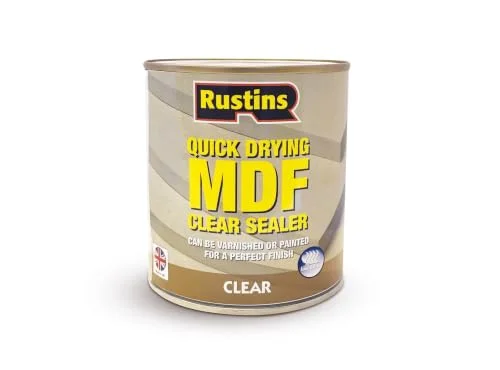 |
Rustins Quick Drying MDF Clear Sealer – $17.50 Since moisture (not time) is what actually breaks MDF down, sealing exposed edges before water ever reaches the fiber is the single most effective thing you can do.
|
Short answer: MDF breaks down physically when it gets wet, swelling, delaminating, and crumbling, much faster than solid lumber, because it has no grain structure to shed water and its resin binder fails once saturated. But “breaking down from water damage” and “biodegrading” are different processes, covered below.
What MDF Is Actually Made Of
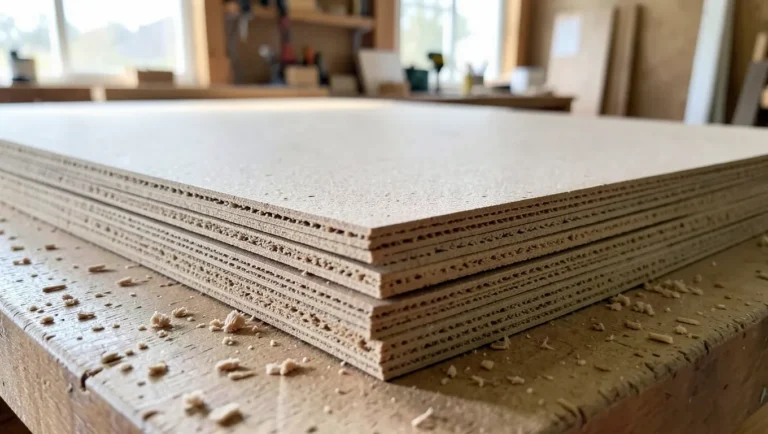
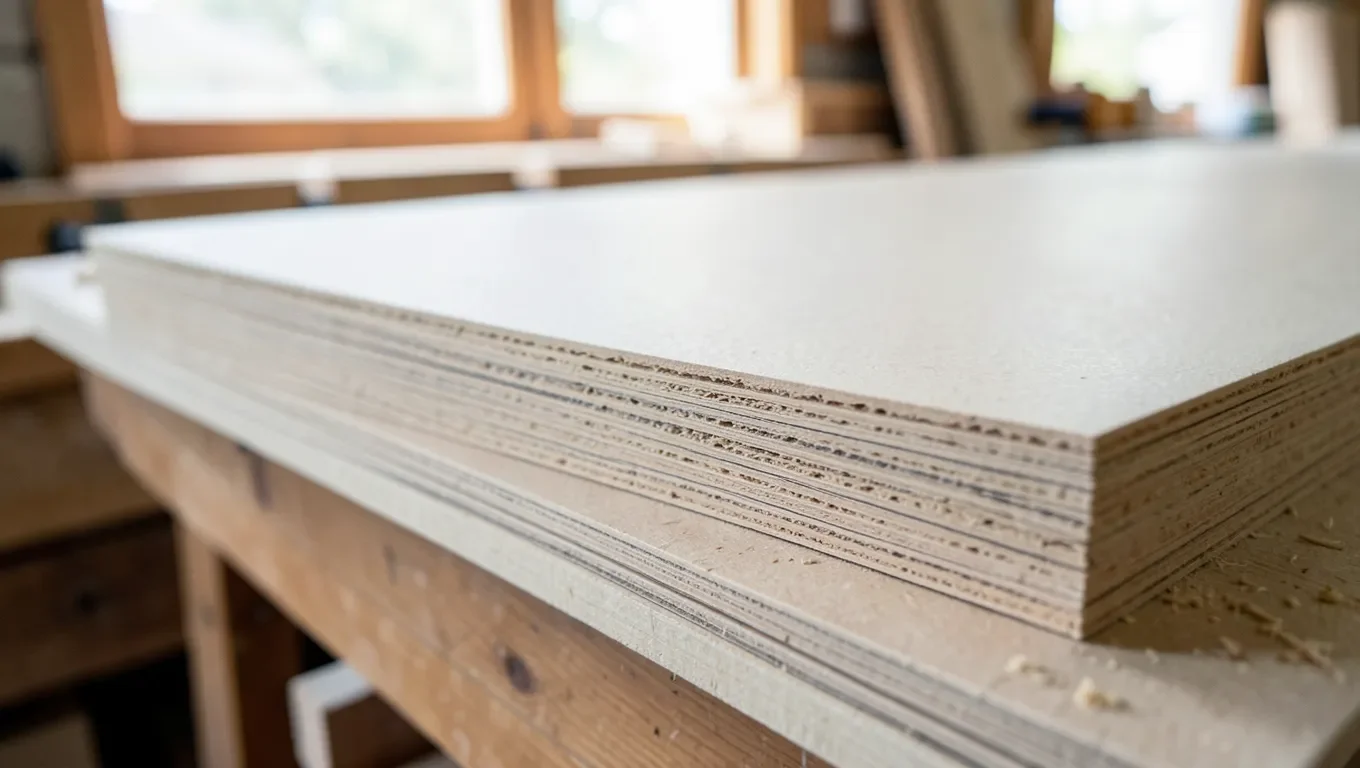
MDF starts as wood fibers, not solid wood chunks like plywood or particleboard use, but fibers broken down almost to a pulp. Manufacturers mix those fibers with a synthetic resin binder (most commonly urea-formaldehyde, sometimes a more moisture-resistant melamine-formaldehyde blend for “moisture-resistant” or MR-grade MDF) and a small amount of wax, then press the mixture under heat and extreme pressure into flat sheets. There’s no grain, no growth rings, and no natural cell structure, just compressed fiber held together entirely by that resin.
That construction is exactly why MDF cuts cleanly, sands to a glass-smooth finish, and takes paint better than almost any other sheet material. It’s also exactly why it has almost no tolerance for water.
Why MDF Breaks Down So Fast in Moisture
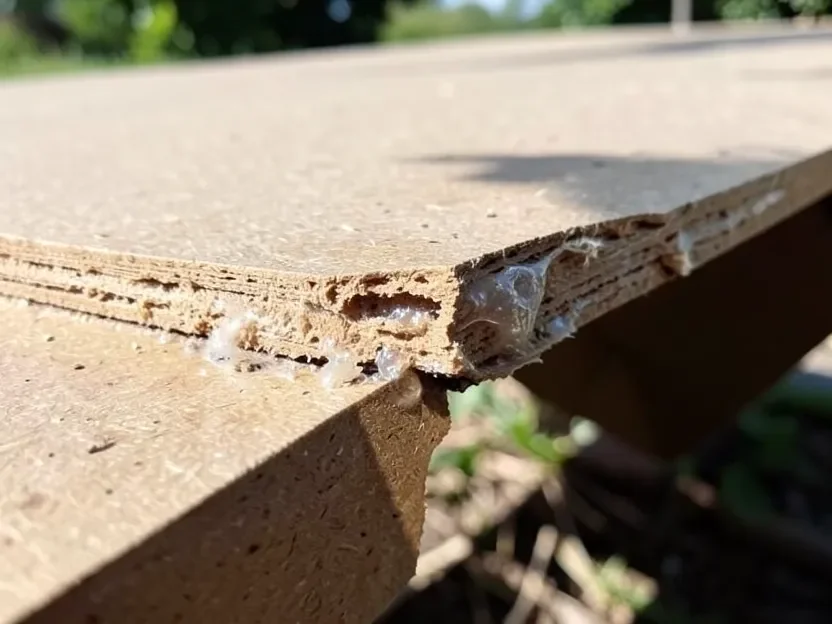
Solid wood has a natural grain structure that sheds and slowly absorbs water along predictable paths, it can get wet repeatedly and dry out without falling apart, which is why outdoor furniture and decking are built from solid lumber. MDF has none of that structure. Its fibers act almost like a sponge: once water reaches the interior, it wicks sideways through the whole sheet instead of penetrating along a grain line.
The real failure point isn’t the wood fiber itself, it’s the resin. Urea-formaldehyde resin is not waterproof. When it’s saturated, the bond holding the fibers together weakens and eventually lets go. That’s why water-damaged MDF doesn’t just warp the way solid wood does, it swells at the edges, the layers separate (delamination), and in bad cases it crumbles back into loose fiber almost like wet cardboard. A single flood or a slow plumbing leak under a cabinet can turn a rigid board into mush within days, not years.
Is MDF Biodegradable? A Different Question Than “Does It Decompose”
This is where most explanations get it wrong by lumping “decomposes from water damage” and “is biodegradable” together. They’re not the same claim.
The wood fiber portion of MDF is organic and can, in principle, biodegrade the same way any wood fiber does. But that fiber only makes up part of the board, the rest is synthetic resin. Urea-formaldehyde resin does not break down the way organic matter does; it’s a manufactured polymer, and it resists the kind of microbial digestion that turns a pile of leaves or a wood chip into compost. In practice, a piece of MDF sitting in a landfill doesn’t compost the way untreated wood scraps do, the resin-bound structure just physically fragments very slowly, leaving persistent material behind long after untreated wood in the same conditions would be gone. So: partially organic, yes. Something you can treat as compostable or reliably biodegradable, no.
Can You Burn or Compost MDF?
No to both, and for related reasons. Composting is out because the resin doesn’t break down in a compost pile, and because the formaldehyde-based binder isn’t something you want concentrating in finished compost that might end up in a vegetable garden.
Burning is a separate and more serious issue: burning MDF releases formaldehyde and other compounds from the resin as it combusts, and a number of municipalities and waste facilities explicitly restrict or ban burning MDF, including in home fireplaces and wood stoves, because of that off-gassing. Treat MDF scraps like a manufactured wood product, not firewood, the “it’s just wood” instinct is exactly the mistake this rule exists to prevent.
MDF vs Solid Wood: How Decomposition Actually Compares
Solid wood, when it does eventually decompose (buried, chipped, or composted), breaks down through fungal and microbial action working on 100% organic material, no synthetic binder to resist that process. It takes time, but it happens relatively cleanly. MDF’s resin binder means it never fully returns to the earth the same way; what’s left behind after the organic fiber portion breaks down is a slower-degrading resin residue.
Where the comparison flips is moisture resistance in the short term: painted or sealed MDF can actually resist minor humidity better than untreated solid wood, right up until the seal fails or water reaches an exposed edge, at which point MDF degrades dramatically faster than solid wood would in the same conditions, because it has no grain to slow the water down once it’s inside.
How to Protect MDF From Moisture Damage
Since moisture, not time, is what actually destroys MDF, protecting it is mostly about controlling water exposure:
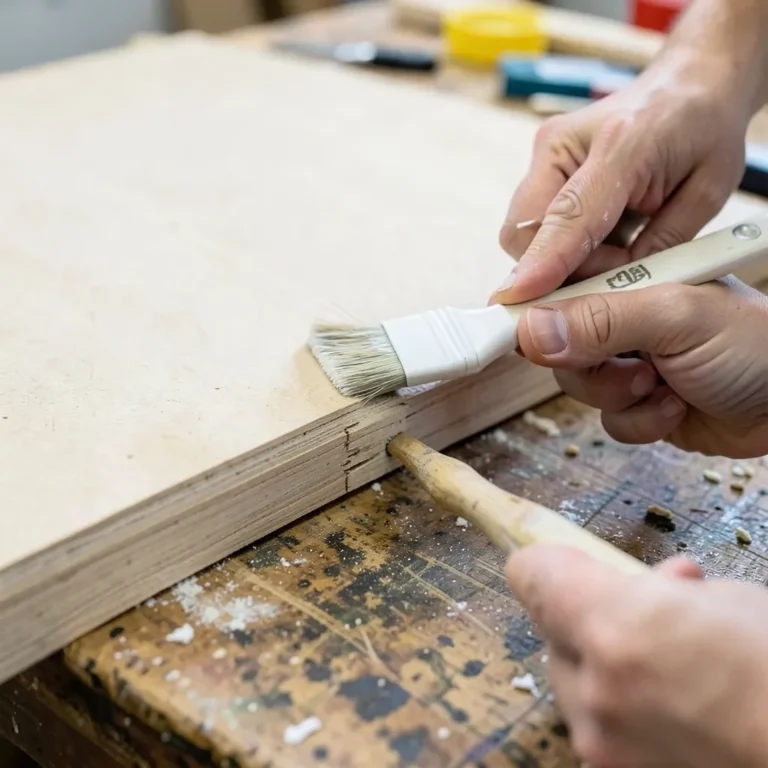
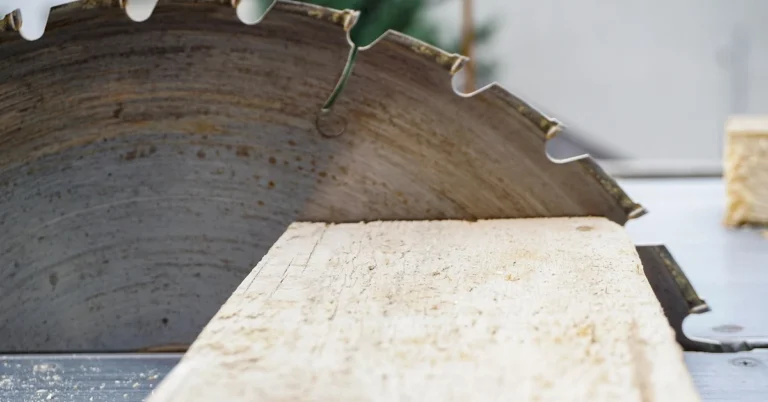
- Seal every cut edge before installation – factory faces are usually primed, but a fresh table saw or router cut exposes raw fiber that wicks water fastest.
- Use MR-grade (moisture-resistant) MDF for kitchens, bathrooms, or anywhere humidity is a given – see our guide on using MDF in a bathroom for grade-specific guidance.
- Keep MDF off concrete floors and away from direct plumbing runs, where slow leaks go unnoticed until the board has already swollen.
- Repaint or reseal any exposed edge if the finish chips or cracks – a small gap is all moisture needs to start delamination.
How to Dispose of MDF Responsibly
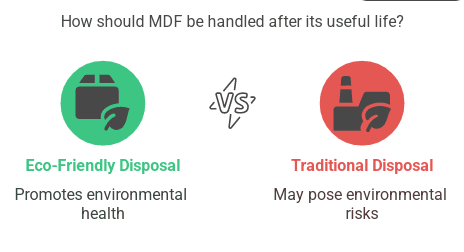
Because MDF isn’t reliably biodegradable and shouldn’t be burned, disposal comes down to a short list of real options: check whether your local waste facility accepts MDF for wood-waste recycling (many general “clean wood” recycling streams reject it specifically because of the resin content, so call first rather than assuming), take it to a general construction-debris drop-off, or reuse offcuts in smaller projects before they become waste at all. If you’re choosing between MDF and a different sheet material for a project you know will eventually be discarded, that’s worth factoring in, see our breakdown of MDF’s environmental impact for the fuller picture.
Frequently Asked Questions
Does MDF Decompose Faster Than Solid Wood?
Yes, once it’s exposed to sustained moisture – MDF has no grain structure to slow water absorption, so its resin binder saturates and fails faster than solid wood’s natural cell structure does. Dry MDF, on the other hand, is dimensionally very stable and won’t decompose from age alone.
Is MDF Biodegradable?
Partially. The wood fiber in MDF is organic and can biodegrade, but the urea-formaldehyde resin binding it together does not break down the same way and resists composting. MDF shouldn’t be treated as compostable or fully biodegradable.
Can You Compost MDF?
No. The resin binder doesn’t break down in a compost pile, and its formaldehyde content isn’t something you want concentrated in compost destined for a garden bed.
Can You Burn MDF Scraps?
You generally shouldn’t. Burning MDF releases formaldehyde and other compounds from its resin binder, and many local waste rules specifically restrict burning it for that reason – treat it as a manufactured wood product, not firewood.
Conclusion
MDF doesn’t “decompose” in one simple sense. It degrades from moisture damage quickly because it has no grain to resist water, but it isn’t reliably biodegradable because of its formaldehyde-resin binder, and burning it isn’t a safe shortcut around either problem. If you’re building with MDF, the real takeaway is the same one that determines whether a project lasts: keep water away from it, seal every cut edge, and dispose of scraps through proper wood-waste channels rather than a burn pile or a compost bin.
Sponsored / affiliate links. As an Amazon Associate I earn from qualifying purchases. I may earn additional commission from eligible campaigns.