Can You Use MDF in a Bathroom? What Actually Happens When It Gets Wet
Short answer: only in the driest parts of the room, and only if every face and edge is sealed before it ever gets installed. Regular MDF (medium-density fiberboard) is compressed wood fiber and resin with no water resistance built in, so a splash that would bead off solid wood or plywood soaks straight into MDF’s exposed edges and swells the board permanently.
That doesn’t rule MDF out of a bathroom entirely. Cabinet carcasses tucked behind doors, decorative trim well above splash height, and painted vanity faces that never see standing water can all last for years on MDF, as long as the sealing is done right and the board never sits in a wet zone like a shower surround or a tub deck. Below is what actually happens to MDF in humid air, which sealer to use on it, and when to reach for plywood or solid wood instead.
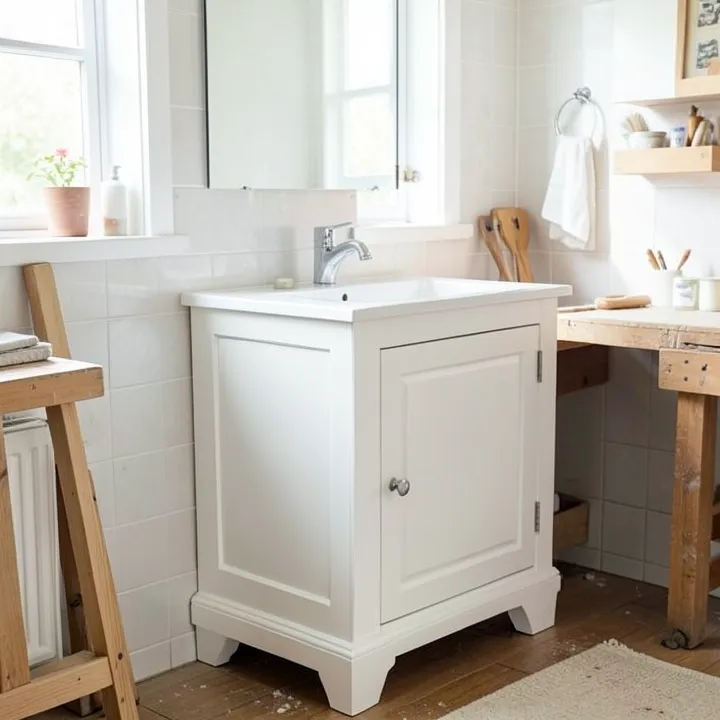
What Happens to Untreated MDF in a Bathroom
Recommended Sealer For MDF Edges
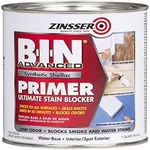 |
Zinsser B-I-N Shellac Primer-Sealer, Quart – $25.57 A shellac-base sealer that soaks into MDF’s raw fiber edges and dries in under an hour, so you can seal, sand, and topcoat the same afternoon.
|
MDF is made by breaking wood down into fine fibers, mixing them with urea-formaldehyde resin and wax, then hot-pressing the mix into a dense, uniform board. That process is what gives MDF its smooth, grain-free surface and makes it so easy to cut and paint, but it also means there’s no natural grain or growth rings to slow water down once it gets in.
The edges are the weak point. A factory face might have a light moisture-resistant coating, but a cut edge is raw fiber, and it wicks water like a sponge. Once water gets into that fiber, the board swells, the edge puffs up and turns soft, and the swelling doesn’t reverse when it dries, because the fibers have already separated. A few humid showers usually won’t do it. Standing water, a slow leak under a sink, or condensation dripping onto an unsealed cut edge for weeks will.
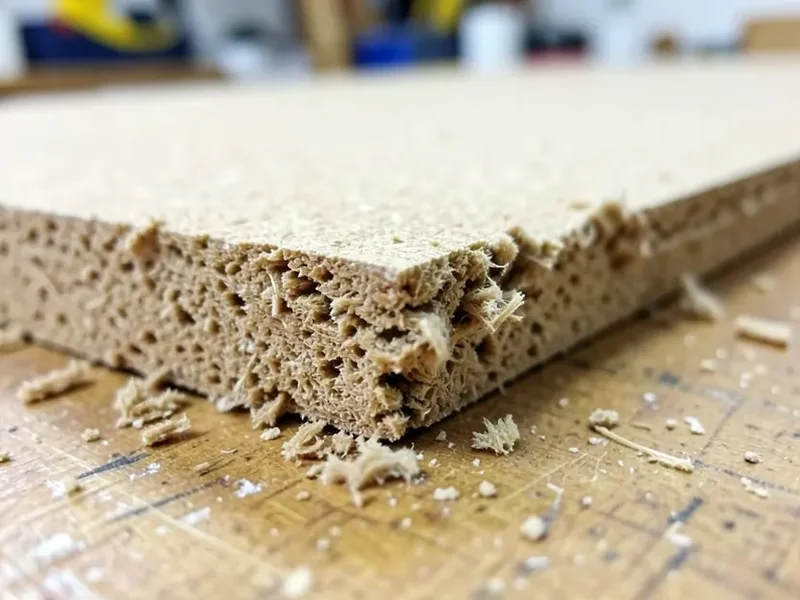
Moisture-Resistant MDF Explained
Home centers also sell moisture-resistant MDF, sometimes labeled MR-MDF and often tinted green so it’s easy to tell apart from standard MDF on a shelf. It uses a different, more water-tolerant resin system, and it swells less and more slowly when exposed to humidity. That makes it a better starting point for a bathroom project, but it is not waterproof, and manufacturers themselves rate it as moisture-resistant, not moisture-proof. It still needs the same sealed edges and painted faces as standard MDF; it just gives you a bigger margin for error if a coat gets thin in one spot or a splash sits a little too long before you wipe it up.
Where MDF Actually Holds Up in a Bathroom
The pattern that actually works in real bathrooms: keep MDF out of direct wetting and give it real ventilation. That means:
- Vanity cabinet carcasses behind fully sealed doors, away from the sink’s splash zone
- Decorative wall trim and picture-frame molding mounted above shower-spray height
- Painted door and drawer fronts, as long as every edge, including the back, got primed before assembly
- Linen cabinet or closet shelving inside the bathroom footprint but outside the actual wet zone
What to keep MDF away from entirely: shower and tub surrounds, any surface inside the spray pattern of a shower head, baseboard at floor level in a walk-in shower, and anywhere water could pool and sit, like under a freestanding tub. In those spots, no amount of sealant buys you enough time.
How to Seal MDF So It Survives the Humidity
The order matters more than the product. Prime and seal every face and edge before assembly, including the back of a panel and any edge that a factory-finished sheet already looks “done” on, because once you cut it, that cut is raw again.
- Sand cut edges lightly to knock down any fuzz, then wipe off the dust.
- Brush on a shellac-base primer-sealer (like the Zinsser B-I-N above) on every face and edge, including ones that will be hidden inside the cabinet once it’s assembled.
- Let it dry fully. Shellac-base sealers are usually recoat-ready in under an hour, which is one reason they work well for MDF edges specifically.
- Apply two coats of a bathroom-rated enamel or urethane topcoat over the sealer for the final color and moisture barrier.
- Re-seal any new cut you make later. Drilling a hole for new hardware or trimming a panel on-site exposes fresh, unsealed fiber.
Better Alternatives for High-Moisture Zones
For anything inside the actual wet zone, skip MDF altogether. Marine-grade or exterior-grade plywood uses waterproof glue between real wood veneers, so it doesn’t have MDF’s loose-fiber edge problem and tolerates the occasional soaking far better. See our guide to how plywood and OSB handle getting wet for the difference between panel types. Solid woods with natural rot resistance, like teak or cedar, cost more but need less babying around moisture. For trim pieces right at floor or tub level, a cellular PVC trim board is worth considering too, since it doesn’t absorb water at all, so it can’t swell no matter how it’s installed. If you’re deciding between engineered panels for a bathroom build generally, our MDF vs. OSB comparison breaks down where each one is actually the better choice.
Maintenance Tips That Actually Matter
Wipe up standing water on or near MDF surfaces right away instead of letting it air-dry. It’s the time water spends in contact with the sealant, not just the amount, that eventually breaks a coating down. Run the bathroom exhaust fan during every shower and for 15-20 minutes after, since ambient humidity does slower damage than a direct splash but adds up over months. Check caulk lines around a vanity or cabinet once a year; a cracked bead lets water track behind the panel where you can’t see it happening. If you do spot a soft or swollen patch, don’t just repaint over it. Cut it out and patch it, because the swelling itself doesn’t reverse.
Frequently Asked Questions
Is MDF Safe in the Bathroom?
It’s safe to use for cabinet carcasses, trim above splash height, and sealed cabinet faces, but not for anything inside a shower or tub’s direct spray. Safe here means it won’t degrade quickly, not that it’s waterproof, so every face and edge still needs a full sealer-and-topcoat treatment before it goes near a humid room. For a part-by-part breakdown of where MDF works in a whole cabinet, see our guide on whether MDF can be used for cabinets.
Is MDF Ruined If It Gets Wet?
A quick splash that’s wiped up fast usually won’t ruin a properly sealed panel. But once the fiber itself absorbs water and swells, that swelling is permanent, since drying it out doesn’t shrink the fibers back down. If an edge or corner has visibly puffed up or gone soft, that section needs to be cut out and replaced, not sanded or repainted.
Can You Use MDF Paneling in a Bathroom?
Yes, for wall paneling outside the direct wet zone, as long as every edge and the back of each panel gets primed before installation, not just the visible face. Keep the bottom edge of any panel at least a few inches off the floor and caulked, since floor-level moisture and splashback are what usually get paneling first.
When Should You Not Use MDF?
Skip MDF anywhere it could sit in standing water or take direct shower spray, such as tub surrounds, shower walls, and floor-level trim inside a walk-in shower. It’s also the wrong choice for anything structural that needs to hold real weight over a span, like a shelf bracket or ledge, since MDF sags under sustained load more than plywood or solid wood.
Bottom Line
MDF can work in a bathroom, but only outside the direct wet zone and only when every face and edge gets sealed before installation, not just the parts you can see once it’s assembled. For vanity carcasses, trim, and cabinet faces, a shellac-base sealer plus a bathroom-rated topcoat gets you years of service. For anything inside a shower or tub surround, spend the extra money on marine plywood, solid wood, or PVC trim instead, since no sealant fixes MDF sitting in standing water.
Sponsored / affiliate links. As an Amazon Associate I earn from qualifying purchases. I may earn additional commission from eligible campaigns.