Does Whitewood Stain Well? Not Without This Step First
Yes, whitewood stains well, but only if you treat it first. “Whitewood” isn’t a single tree species. It’s a lumberyard trade name for spruce, pine, and fir (SPF) boards sold interchangeably as one grade, and that species mix is exactly why one board can look rich and even while the one next to it comes out blotchy. Stain it raw and you’re gambling on which of three woods you actually got. Prep it correctly and it takes color as well as boards costing three times as much.
Most articles on this topic tell you to “sand it and use a pre-stain conditioner” without explaining why whitewood needs that step more than other softwoods do. The short version: whitewood is really three different woods sold under one label, and each absorbs stain at a different rate. Once you know that, the fix stops being a mystery and becomes a checklist.
What “Whitewood” Actually Is (And Why That Matters for Staining)
Walk into any home center and the “whitewood” bin is stocked with dimensional lumber stamped SPF — spruce, pine, and fir grouped together because they have similar strength and weight for framing purposes. The mills don’t sort by species after that; a single bundle can mix Engelmann spruce, lodgepole pine, and balsam fir boards, each with its own grain structure, resin content, and density. That’s fine for a wall stud nobody will ever see. It’s a problem the moment you stain it, because those three woods don’t absorb stain at the same rate, and you often can’t tell which species a given board is just by looking at it unfinished.
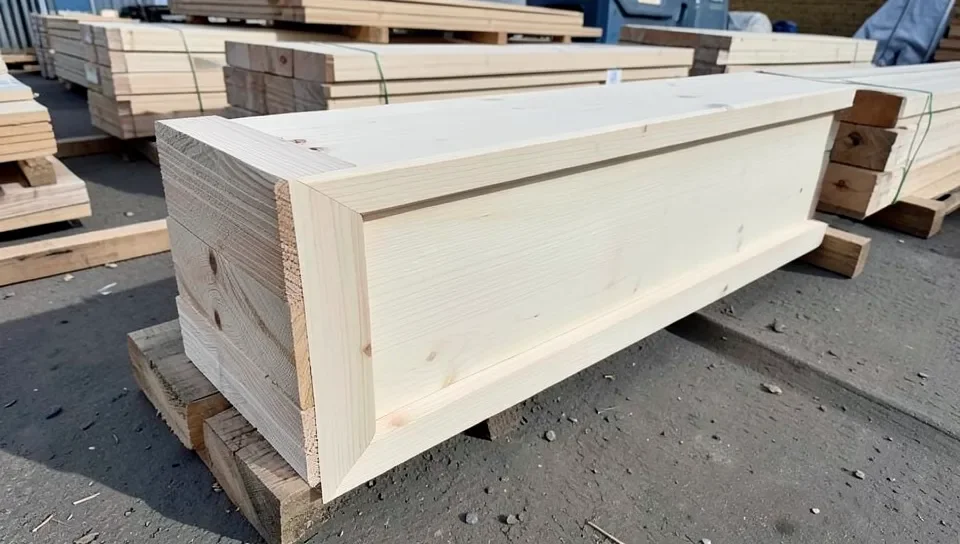
Pine boards in the mix tend to have more resin pockets and wider grain bands, which soak up stain fast and dark. Spruce and fir are denser and more uniform, so they take stain lighter and more evenly. Grab three “whitewood” boards from the same bundle and stain them with the same brush and the same can, and you can end up with three visibly different results. That inconsistency, not the wood being inherently “bad,” is the real reason whitewood has a reputation for staining unevenly.
Prevents Blotching On Whitewood
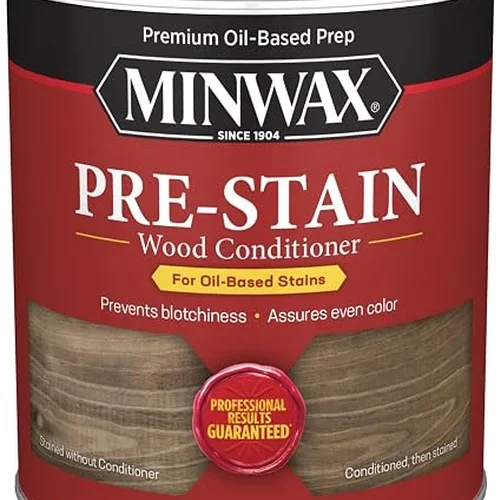 |
Minwax Pre-Stain Wood Conditioner, 1 Quart – $19.79 Applied before an oil-based stain, this evens out how the different woods in a whitewood/SPF board absorb color so you don’t get the light-and-dark patchwork described above.
|
Why Whitewood Blotches When You Stain It
Blotching happens when stain soaks into some areas of the wood faster than others, leaving dark splotches next to lighter patches instead of one even tone. On whitewood, two things cause it. First, the species mix described above — a resin-heavy pine section next to a tighter-grained spruce section will simply drink stain at different speeds. Second, even within a single board, early-growth wood (the softer, lighter rings laid down in spring) absorbs far more stain than the dense late-growth wood next to it, so you get the “watermark” or “tiger stripe” look even on a board that’s a single species end to end.
Neither of those is a defect you can sand away entirely — it’s the structure of the wood. What you can do is slow the stain’s absorption everywhere at once so the differences between fast-absorbing and slow-absorbing areas matter less. That’s the entire job of a pre-stain wood conditioner: it partially seals the wood’s pores first, so when the stain goes on, it can’t rush into the resin pockets and thin-walled early-growth cells any faster than it soaks into the denser areas.
How to Prep Whitewood So the Stain Goes On Even
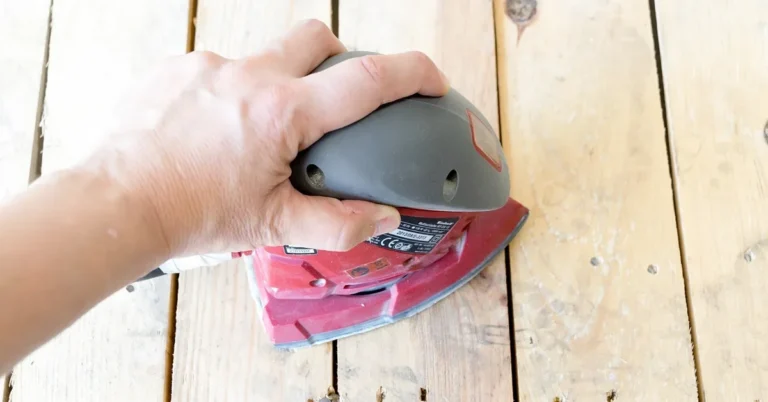
Start with 120-grit sandpaper to knock down mill marks and raised grain, then move to 180 or 220-grit for the final pass. Stopping at 120-grit alone leaves scratches that show up darker once stained, because stain pools in the scratch grooves; skipping straight to 220 without the coarser pass first takes much longer to remove mill marks. Wipe the sanded surface with a tack cloth or a slightly damp rag — not soaking wet — to pull off dust before you condition it.
Apply the pre-stain conditioner with a brush or rag, working with the grain, and let it sit for about 15 minutes. That number matters more than it sounds: wait less than that and it hasn’t had time to even out absorption; wait several hours or overnight and it can dry hard enough to seal the wood too much, blocking the stain instead of just evening it out. Most oil-based conditioners are formulated to be stained over the same day, typically within about two hours of application, so plan the conditioning and staining as one work session rather than spreading it across a weekend.
Choosing a Stain for Whitewood: Gel vs. Oil vs. Water-Based
All three stain types can work on conditioned whitewood, but they behave differently on it:
| Stain Type | How It Behaves on Whitewood | Best Use Case |
|---|---|---|
| Gel Stain | Sits mostly on the surface instead of soaking in, so species-to-species absorption differences matter less | Most blotch-resistant choice; good for beginners |
| Oil-Based | Penetrates deeper for richer color, but needs a conditioner to control absorption speed | Warmest, deepest color when paired with conditioning |
| Water-Based | Dries fast and raises the wood grain more, but is lower-odor and easier to clean up | Indoor projects where dry time and ventilation matter |
If you’ve been burned by blotching on whitewood before, gel stain is the easiest way to avoid a repeat, since it doesn’t rely on even penetration the way liquid stains do. Darker colors such as Jacobean or a dark walnut tend to mask minor unevenness better than pale washes or whitewash finishes, which show every absorption difference because there’s so little pigment to hide behind.
Application Technique That Actually Prevents Blotching
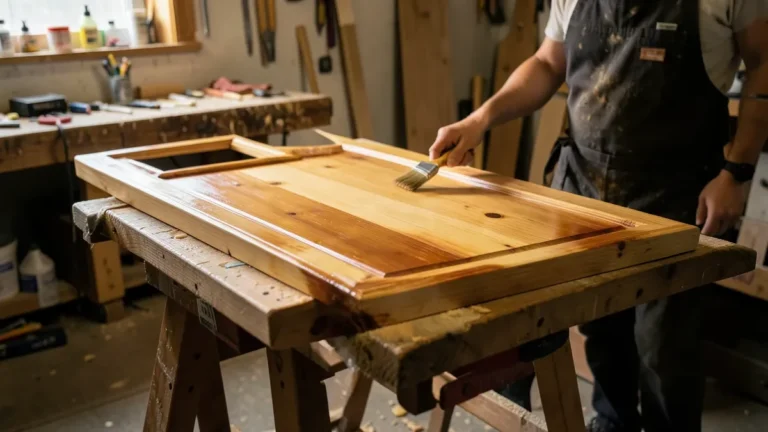
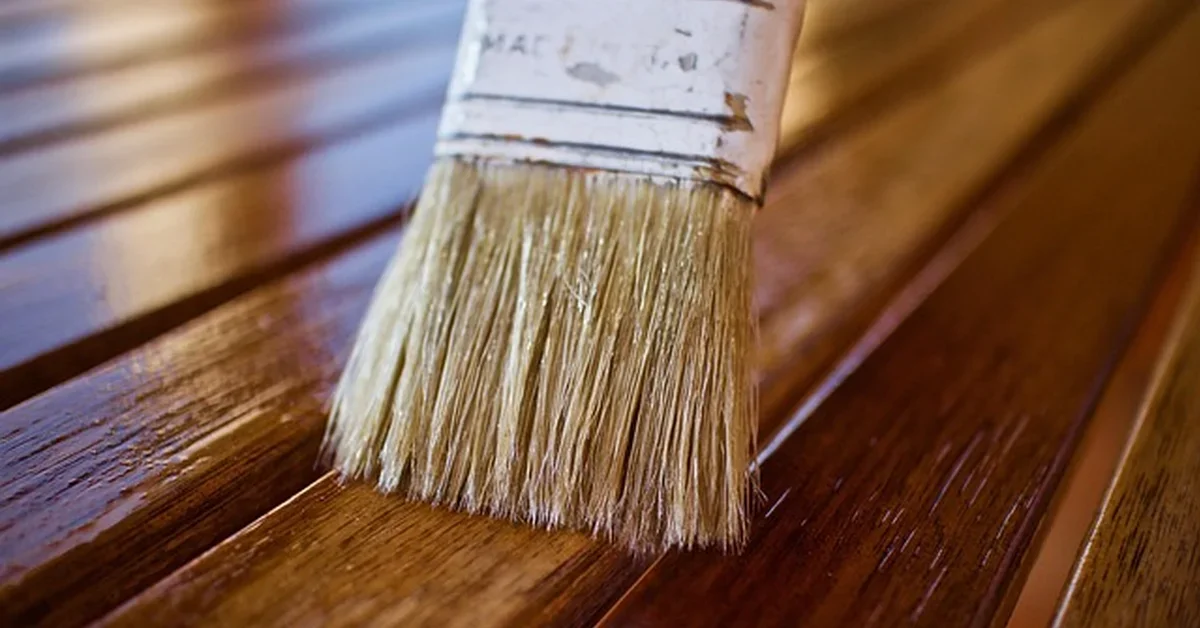
Apply stain with a natural-bristle brush for the most control, working in the direction of the grain and covering one full board or panel before stopping, so you don’t create a hard edge where a stopping point dried. Let the stain sit for two to five minutes, then wipe off the excess with a clean cloth — the longer you leave unwiped stain sitting, the darker and more uneven the result, since it keeps soaking into whichever areas are still absorbing fastest.
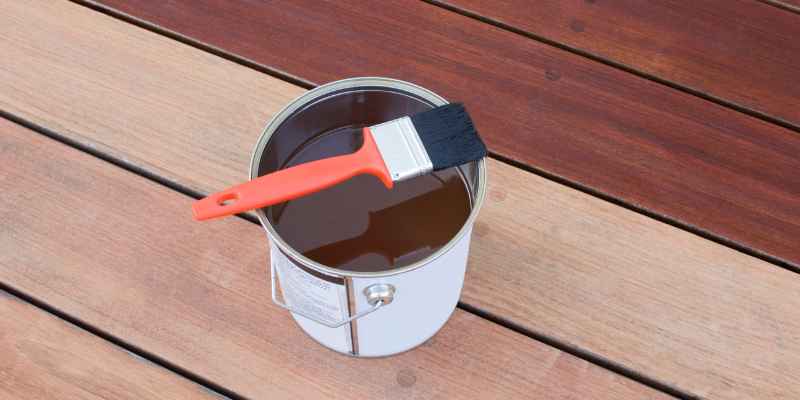
For a darker, richer tone, apply a second coat once the first is fully dry (check the can’s recoat time, typically 4 to 8 hours for oil-based stains) rather than trying to get there in one heavy coat. A light scuff-sand with 320-grit paper between coats helps the second coat bond evenly. Two thin coats consistently look more even than one thick one on whitewood, because a thick single coat gives the fast-absorbing areas more time to pull ahead before you wipe it.
Protecting the Finish After Staining
Once the stain has fully cured (give it at least 24 hours, longer in humid or cold conditions), seal it with a topcoat. Oil-based polyurethane adds warmth and the most abrasion resistance, which matters on whitewood since it’s a soft wood that dents and scuffs more easily than hardwood even after staining. Water-based polyurethane stays clearer and won’t amber the color over time, which is worth considering if you stained toward a gray or whitewash tone. Two to three thin coats, lightly sanded between each with 320-grit paper, will outlast a single heavy coat and won’t show brush marks as readily.
Frequently Asked Questions
Does Whitewood Take Stain Well?
Yes, but unevenly if you skip prep. Whitewood is a mix of spruce, pine, and fir sold under one name, and those species absorb stain at different rates, which is what causes the blotchy reputation. Sanding through 120 to 220-grit and applying a pre-stain wood conditioner before staining evens out that absorption and gives consistent, professional-looking color.
What Type of Stain Is Best for Whitewood?
Gel stain is the most forgiving choice because it sits on the surface rather than soaking in unevenly. Oil-based stains give the richest color but need a pre-stain conditioner to control absorption. Water-based stains dry faster and have less odor but raise the wood grain more, so a light sanding after the first coat dries helps smooth it back down.
How Can I Prepare Whitewood for Staining?
Sand with 120-grit, then 180 or 220-grit, wiping away dust with a tack cloth between passes. Apply a pre-stain wood conditioner and let it sit for about 15 minutes — not longer than roughly two hours — then apply your stain while the conditioner is still fresh. This single step is the difference between even color and the splotchy look whitewood is known for.
Can I Achieve a Dark Finish on Whitewood?
Yes. Darker colors like Jacobean or dark walnut tend to hide minor absorption differences better than light washes, since there’s more pigment covering the wood. Conditioning the wood first still matters even for dark stains — it prevents the darkest areas from turning almost black while lighter areas stay noticeably paler. Apply a second coat after the first fully dries if you want the color even deeper.
Conclusion
Whitewood stains well once you treat it like what it actually is: three different softwoods sold under one label, each absorbing color at its own rate. Sand through the grits, condition it for about 15 minutes before staining, and pick a stain type that matches how much control you want over the final look. Skip the conditioner and you’re relying on luck to get a board where all three species happen to match; use it and whitewood takes stain as evenly as lumber costing far more.
Sponsored / affiliate links. As an Amazon Associate I earn from qualifying purchases. I may earn additional commission from eligible campaigns.