Why Is My Stain Not Drying? The 4 Real Causes (And Fixes)
A stain that won’t dry is almost always caused by one of four things: high humidity or cold shop temperature, too thick a coat left on the surface, an old or partially-used can of stain, or a mismatch between oil-based and water-based products applied too soon after each other.
Most articles on this topic tell you to “improve ventilation” and leave it there. That’s only half the story. Oil-based and water-based stains don’t actually dry the same way – one cures through a chemical reaction with air, the other simply evaporates – and knowing which one you’re dealing with changes what will actually fix a tacky, gummy, or still-wet surface. Below are the four real causes, in the order they actually show up in shops and job sites, plus what to do about each one.
The Four Real Reasons a Stain Won’t Dry
Best For Wiping Off Excess Stain
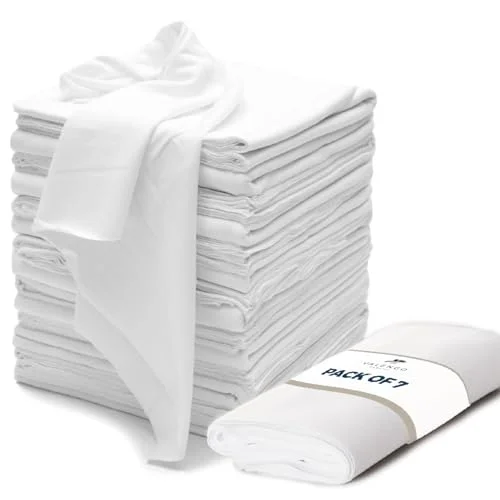 |
Valengo Lint-Free Cotton Rags – $9.98 The single biggest fix on this page is wiping off excess oil-based stain before it skins over – these low-lint cotton rags do that without leaving fibers behind in the finish.
|
Here’s what’s actually happening on your project, ranked by how often it’s the real culprit.
1. Too Much Stain Was Left on the Surface
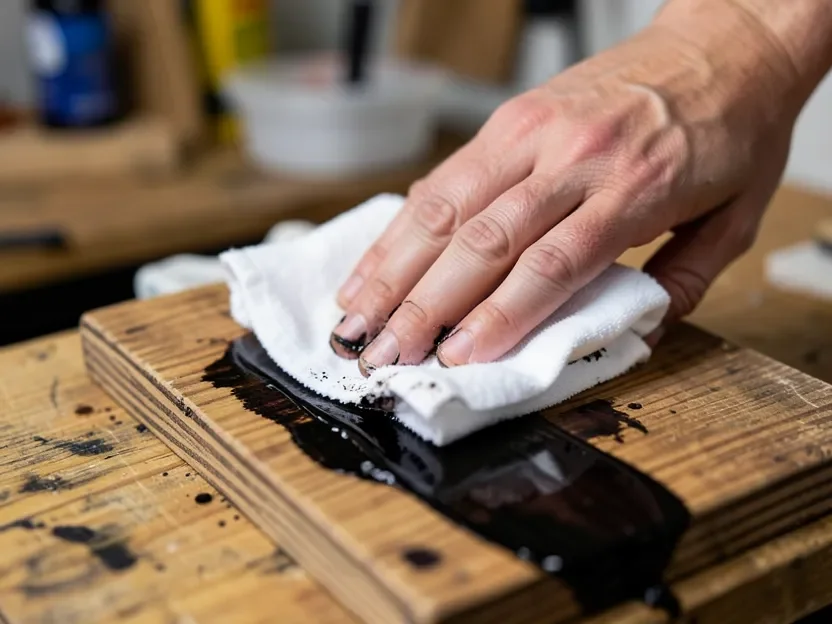
This is the most common cause, and it’s almost never mentioned in generic drying-time charts. Wood stain is designed to penetrate the surface, not sit on top of it. With oil-based stain especially, the manufacturer’s instructions call for wiping off the excess with a clean cloth after a short dwell time (usually 5 to 15 minutes). Skip that step, or wipe too lightly, and you’re left with a pooled film of stain sitting on top of the wood instead of soaked into it. That surface film isn’t penetrating or curing the way it’s supposed to, so it stays tacky and gummy for a lot longer than the can’s label suggests – sometimes days instead of hours. If your project still feels sticky to the touch and you can see a shiny, uneven film rather than a flat, absorbed color, this is almost certainly what happened. The fix is to go back over the surface with a clean lint-free rag and lift off as much of that excess as you can before it fully skins over.
2. Humidity and Cold Temperatures Are Slowing the Chemistry
Oil-based and water-based stains dry through two genuinely different processes, and that difference matters more than most guides admit. Water-based stain dries by evaporation – the water simply needs to leave the finish, which is why it’s fast in a warm, dry, low-humidity room and painfully slow in a damp basement or garage. Oil-based stain is different: it cures through oxidation, a chemical reaction between the oil and oxygen in the air, similar to how linseed oil hardens. That reaction slows dramatically in cold temperatures and doesn’t happen well below about 50°F, and high humidity in the air interferes with it too. That’s why the same can of oil-based stain that dries in six hours on a warm, dry afternoon can still feel wet the next morning in a cold, damp shop. Aim for 65-85°F and moderate humidity (below 50% if possible), and if that’s not realistic in your space, a fan for airflow or a dehumidifier for a damp basement both genuinely help – they just help with different problems.
3. The Stain Itself Is Old or Has Gone Bad
Oil-based stains have a shelf life, and it’s shorter than most people assume once the can has been opened. Every time you open a can, air gets in, and the same oxidation reaction that’s supposed to happen on your wood starts happening slowly inside the can instead. The driers and resins that make the stain cure properly can break down over a year or two of intermittent use, especially if the can wasn’t sealed tightly or was stored somewhere with big temperature swings, like an unheated garage. Signs of a stain that’s gone bad include a strong rancid or sour smell (different from the normal solvent smell), a skin or film on top of the liquid, separation that won’t remix no matter how long you stir it, or a noticeably thicker, gloopy consistency. If your can is more than a year or two old and any of that applies, don’t fight it – a bad can of stain will not cure properly no matter how much ventilation or heat you throw at the problem, and it’s a cheap enough product that it’s not worth the risk on a finished project.
4. Water-Based and Oil-Based Products Were Layered Too Soon
Applying a water-based topcoat over oil-based stain that hasn’t fully cured – or the reverse – is a real chemistry-compatibility problem, not just a rushed-schedule issue. Oil-based stain needs to finish its oxidation cure (usually 24-72 hours depending on conditions) before a water-based product goes over it; if you topcoat too early, the water-based layer can’t bond properly, and the moisture in it can actually re-soften the stain underneath, trapping solvent and extending the tacky feeling well past when it should have dried. Always check that the stain is fully cured, not just dry to the touch, before switching product types, and when in doubt, stick with the same base (oil over oil, water over water) for stain and topcoat on the same project.
Oil-Based vs. Water-Based Drying Times
Both stain types are sensitive to temperature and humidity, but they respond to different fixes because they dry through different mechanisms – evaporation for water-based, oxidation for oil-based.
| Type of Stain | Typical Dry-to-Touch Time | Full Cure Time | How It Dries |
|---|---|---|---|
| Water-Based | 1-2 hours | 24 hours | Evaporation of water |
| Oil-Based | 6-24 hours | 24-72 hours | Oxidation (chemical cure) |
How to Fix a Stain That’s Still Wet or Tacky
If your project is already stuck in this state, work through these steps in order rather than jumping straight to heat or chemicals. If the surface is sticky rather than wet, our guide on why wood stain stays tacky and how to wipe it off covers that case:
- Wipe off any pooled excess first. Use a clean, dry, lint-free cotton rag and blot – don’t rub – to lift off surface stain that never penetrated.
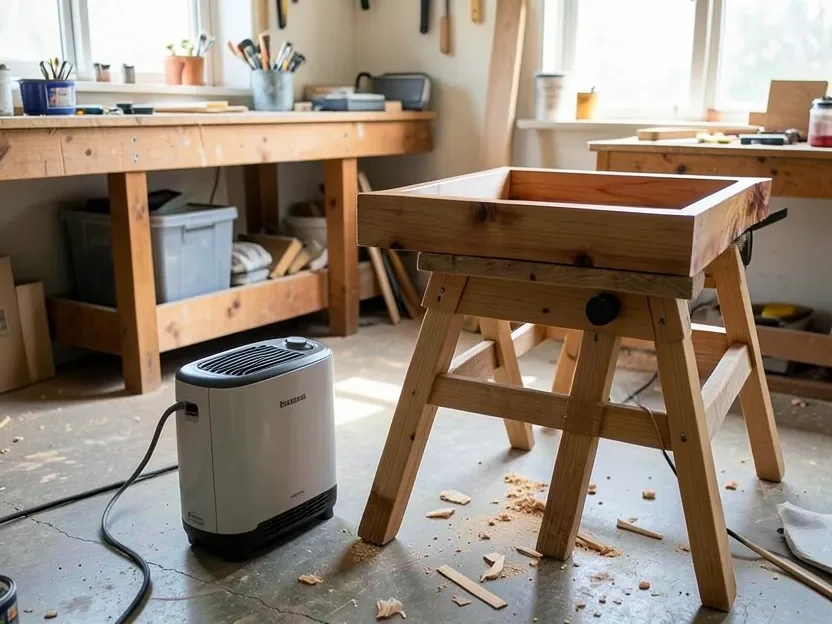
- Improve airflow, don’t add heat directly. A fan aimed across the surface (not a heat gun or space heater pointed at it) moves stale, moisture-heavy air away without cooking the finish or causing it to skin over unevenly.
- Pull humidity out of the room if you’re in a basement or garage. A portable dehumidifier can take a damp shop from 70%+ humidity down to a range where oxidation and evaporation both work properly, often overnight.
- Give oil-based stain real time before you panic. 24 hours of tackiness on oil-based stain in cool or humid conditions is normal, not a failure – don’t start troubleshooting until you’re past that window.
- If it’s still wet after 48-72 hours with good airflow and moderate temperature, suspect an old can or a too-thick coat rather than the environment, and consider a light wipe-down with mineral spirits on an oil-based stain to remove uncured surface residue.
Preventing This on Your Next Project
Most of this comes down to slowing down at two specific moments: application and timing. Apply stain in thin, even coats with a brush or rag, and actually time the manufacturer’s recommended dwell window instead of guessing – then wipe off every bit of excess you can before it starts to skin over. Check the can’s date or your own memory of when you bought it; if oil-based stain has been open for more than a year and smells off or has separated, replace it rather than troubleshoot it. Work in conditions between 65-85°F with moderate humidity when you can control it, and if you can’t, plan for longer cure times rather than fighting the weather. Finally, if you’re switching between oil-based and water-based products on the same piece, wait for a full cure (not just dry-to-touch) before the next coat goes on.
When to Call a Professional
Most slow-drying stain resolves with time, airflow, and humidity control. Call in a flooring or finishing professional if you notice any of the following, since these point to a bigger problem than drying time alone:
- The surface is still fully sticky after 72+ hours of good airflow and moderate temperature
- You see new discoloration, blotching, or cloudiness that wasn’t there when you applied the stain
- A sour, rancid, or chemical odor develops instead of fading
- Mold or mildew starts forming on or under the finish
- The finish is bubbling, wrinkling, or peeling away from the wood
A professional finisher can strip a botched coat safely and identify whether the underlying issue is the product, the substrate, or how a previous coat was applied – something that’s hard to diagnose confidently once several layers are involved. For related product-compatibility questions, our guide on gel stain vs. oil-based stain covers how those two formulations differ in cure time and layering.
Frequently Asked Questions
Why Isn’t My Stain Drying Properly?
The four most common causes are leaving too much excess stain on the surface instead of wiping it off, high humidity or cold temperature slowing evaporation or oxidation, an old or partially used can of stain that’s chemically degraded, and applying a water-based product over oil-based stain (or vice versa) before the first coat fully cured. Check for pooled surface film first – it’s the most common and easiest to fix.
How Long Should Stain Take to Dry?
Water-based stain is typically dry to the touch in 1-2 hours and fully cured in about 24 hours. Oil-based stain is dry to the touch in 6-24 hours but needs 24-72 hours to fully cure, since it hardens through a chemical oxidation reaction rather than simple evaporation. Cold or humid conditions extend both timelines significantly.
Can I Speed Up Stain Drying Time?
Yes. Wipe off any excess stain that’s sitting on the surface instead of soaked in, increase airflow with a fan, and use a dehumidifier if you’re working in a damp basement or garage. Avoid pointing direct heat, like a heat gun or space heater, at the surface – it can cause uneven curing or damage the finish rather than genuinely speeding up the chemistry.
What Should I Do If Stain Still Won’t Dry After a Few Days?
First rule out humidity and temperature – both should be in a normal room-temperature range with moderate humidity. If conditions are fine and it’s still tacky after 48-72 hours, the most likely causes are excess stain that was never wiped off or an old, degraded can of stain. At that point, wiping the surface with a clean rag (and mineral spirits for oil-based stain) to remove uncured residue is usually more effective than waiting longer.
Conclusion
A stain that won’t dry almost always traces back to one of four things: leftover excess sitting on the surface, humidity or cold temperature slowing the chemistry, an old can that’s past its useful life, or two incompatible product types layered too close together. Identify which one applies to your project, address that specific cause, and give oil-based stain the full cure time it actually needs before judging it a failure. Get those four right and a properly applied stain will dry the way the can promises.
Sponsored / affiliate links. As an Amazon Associate I earn from qualifying purchases. I may earn additional commission from eligible campaigns.