Eastern Red Cedar vs Western Red Cedar Guide
Sometimes, knowing which wood to pick can be tricky, especially when names sound so alike. Many folks get confused when they see “Eastern Red Cedar” and “Western Red Cedar.” They might look similar but are actually quite different! This guide is here to clear things up easily.
We’ll break down everything you need to know about these two popular trees, step by step. Get ready to learn the key differences in a way that’s super simple to follow.
Understanding Eastern Red Cedar
Eastern Red Cedar is a common evergreen tree found across eastern North America. It’s often recognized for its aromatic wood and its ability to thrive in various conditions, from dry, rocky soils to moist bottomlands. This tree plays an important role in many ecosystems, providing food and shelter for wildlife.
Its distinctive scent makes it popular for specific uses, and it’s a familiar sight in many landscapes.
Botanical Identity and Growth
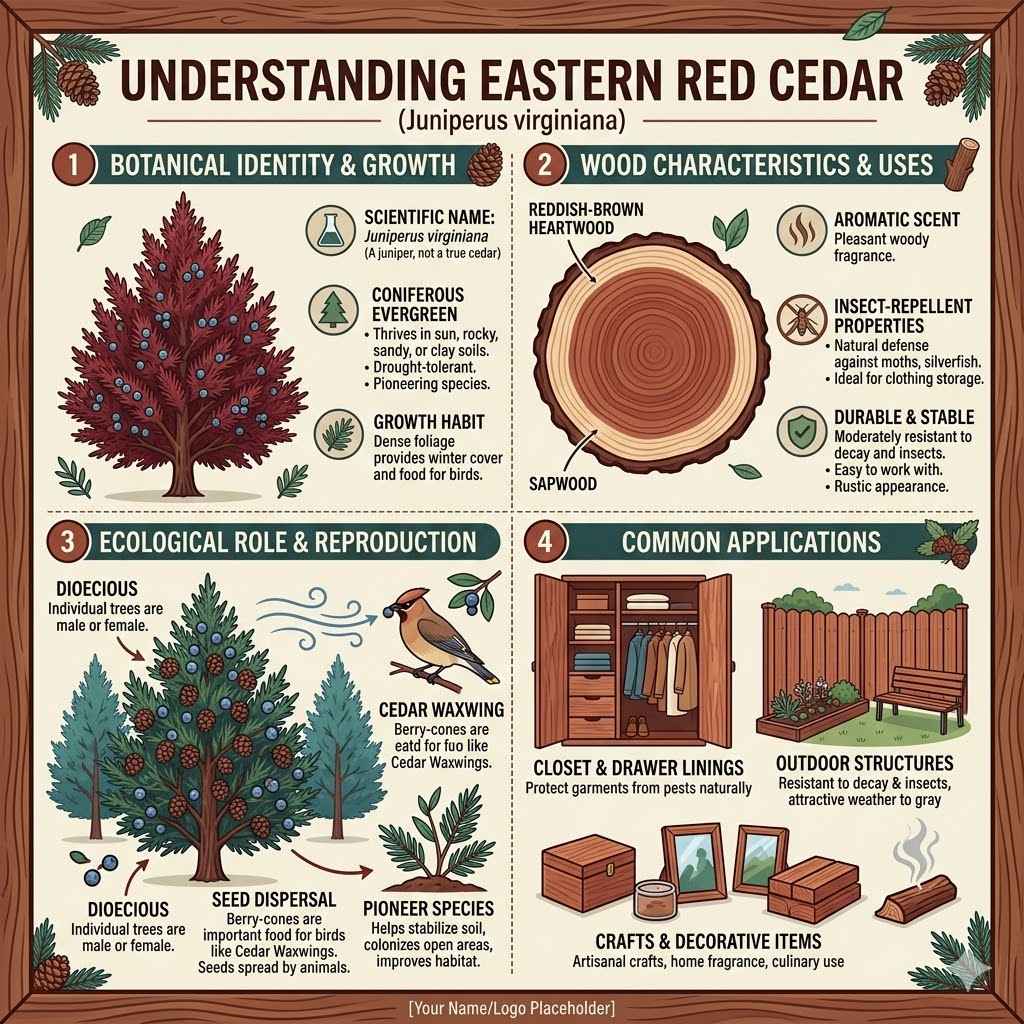
Eastern Red Cedar, scientifically known as Juniperus virginiana, is not a true cedar but a juniper. It’s a coniferous evergreen that can grow quite tall, sometimes reaching 50 feet or more. The tree typically has a dense, pyramidal shape when young, often becoming more irregular with age.
It produces small, berry-like cones that are a food source for birds. This species is known for its resilience and ability to colonize open fields and disturbed areas, often being one of the first trees to appear.
The wood of Eastern Red Cedar is known for its reddish-brown heartwood and pale sapwood. It’s relatively lightweight but can be quite durable. A significant characteristic is its natural insect-repellent properties, especially against moths, which makes it a favored material for lining closets and chests.
Its aromatic scent, often described as pleasant and woody, is another reason for its popularity.
- Growth Habits: Eastern Red Cedar prefers full sun and can grow in a wide range of soil types, from sandy to clay. It is drought-tolerant once established. The tree’s lifespan can be quite long, with some individuals living for hundreds of years. It’s adaptable to various climates across its native range.
- Reproduction: The tree is dioecious, meaning individual trees are either male or female. Female trees produce the characteristic blue-green, berry-like cones. These cones are important food for various bird species, including cedar waxwings and flickers. Pollination occurs via wind, and seeds are dispersed by animals.
- Ecological Role: As a pioneer species, Eastern Red Cedar helps stabilize soil and improve habitat for wildlife. Its dense foliage provides excellent cover during winter months. The berries offer a vital food source when other food is scarce. It’s a valuable component of many forest and woodland ecosystems.
Wood Characteristics and Uses
The wood from Eastern Red Cedar is highly valued for its unique properties. Its rich, reddish-brown color is visually appealing, and the aromatic scent it emits is a natural pest deterrent. This makes it a practical choice for storage solutions and decorative elements.
The wood is also quite stable, meaning it doesn’t warp or shrink much after being cut and dried.
When it comes to durability, Eastern Red Cedar is moderately resistant to decay and insects. This inherent resistance means it can last a long time, even when exposed to moisture or outdoor conditions, though it’s not as tough as some hardwoods. It’s often used for fencing, outdoor furniture, and small decorative items.
Because it’s relatively soft, it’s easy to work with using standard woodworking tools.
- Aroma and Pest Resistance: The distinctive, pleasant scent of Eastern Red Cedar comes from compounds within its wood. This aroma is a natural repellent for moths, silverfish, and other common household pests. This property makes it ideal for lining closets, chests, and drawers where clothes and linens are stored. Many people find the scent itself to be soothing and relaxing.
- Color and Appearance: The heartwood of Eastern Red Cedar is a vibrant reddish-brown, which contrasts nicely with its lighter, creamy sapwood. Over time, the color can deepen or mellow. The grain is typically straight but can sometimes be wavy, adding character to its appearance. It’s often used in rustic or traditional decor.
- Workability: This wood is easy to cut, shape, and finish. Its softness means tools cut through it cleanly without much resistance. This makes it a good choice for DIY projects or for beginners learning woodworking skills. It glues well and takes finishes nicely, although some finishes might affect the natural aroma.
Common Applications
Eastern Red Cedar finds its way into many different products. Its aromatic quality is a major selling point, especially for items that come into contact with fabrics. Because it’s resistant to insects, it’s a popular choice for building things that need to last outdoors, like fences and outdoor furniture.
It’s also used for decorative purposes due to its attractive color and scent.
Beyond practical uses, this wood is often incorporated into crafts and smaller woodworking projects. Its pleasant smell makes it suitable for cedar blocks or sachets. It’s also sometimes used for decorative paneling or even as a material for smoking wood in culinary applications, adding a unique flavor to foods.
Its versatility makes it a valuable resource.
- Closet and Drawer Linings: This is perhaps the most well-known use. Cedar planks or panels are often installed in closets and drawers to protect clothing from moths and other fabric-damaging insects. The natural aroma helps keep pests away without the need for chemical treatments. This is a time-tested method for preserving garments.
- Outdoor Structures: The natural resistance to decay and insects makes Eastern Red Cedar an excellent choice for outdoor projects. It’s frequently used for privacy fences, garden beds, decks, and outdoor furniture. When exposed to the elements, it weathers to a silvery gray color, which many find attractive.
- Crafts and Decorative Items: Smaller pieces of Eastern Red Cedar are used for making decorative items such as small boxes, picture frames, and ornaments. Cedar blocks or shavings are popular for home fragrance products. Its unique scent and attractive color make it a favorite for artisanal crafts.
Exploring Western Red Cedar
Western Red Cedar is a magnificent evergreen tree native to the Pacific Northwest of North America. It is renowned for its large size, beautiful reddish-brown wood, and exceptional durability. This species is a cornerstone of the forestry industry in its region and is highly sought after for its natural resistance to decay and insects.
Its distinctive aroma and striking appearance make it a premium building material for a wide range of applications.
Botanical Identity and Growth
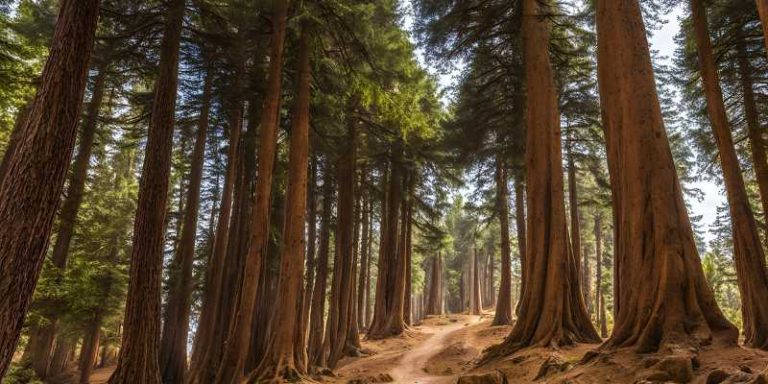
Western Red Cedar, or Thuja plicata, is a true cedar. It’s a large coniferous tree, often growing to impressive heights of 100-150 feet, with some reaching over 200 feet. It has a majestic, often columnar or conical shape, with drooping branches that are densely covered in scale-like leaves.
These leaves are aromatic when crushed, releasing a pleasant, spicy scent. It’s known for its longevity, with many trees living for hundreds, and even over a thousand, years.
The wood of Western Red Cedar is perhaps its most defining feature. It possesses a beautiful reddish-brown color that can deepen with age. The wood is known for being lightweight yet strong, and most importantly, incredibly resistant to rot, decay, and insect infestation.
This makes it an ideal material for outdoor use and structures that need to withstand moisture and the elements. It’s also known for its excellent dimensional stability, meaning it stays put once installed and doesn’t easily warp or twist.
- Size and Longevity: Western Red Cedar is one of the largest members of the cypress family. Mature trees can have immense girths and soar to great heights, creating impressive forest canopies. Their long lifespan is a testament to their resilience against environmental challenges. These ancient trees are a sight to behold in their natural habitat.
- Leaf and Cone Structure: The foliage consists of flat, scale-like leaves arranged in opposite pairs, giving the branchlets a flattened appearance. These leaves are evergreen and have a distinctive aroma. The tree produces small, elongated cones that mature in a single season. These cones are important for seed dispersal and the propagation of the species.
- Habitat and Ecosystem: Western Red Cedar typically grows in moist, shady environments, often found in old-growth forests alongside other conifer species like Douglas fir and hemlock. It plays a crucial role in the Pacific Northwest’s forest ecosystem, providing habitat and food for various wildlife. Its presence indicates a healthy, stable forest environment.
Wood Characteristics and Uses
The wood of Western Red Cedar is highly prized for its exceptional qualities, making it a premium choice for construction and design. Its rich, reddish-brown hue provides a warm and inviting aesthetic, while its natural oils offer remarkable protection against decay and insects. This makes it a durable and long-lasting material, especially suitable for exterior applications where it faces harsh weather conditions.
Beyond its aesthetic appeal and natural resilience, Western Red Cedar is also remarkably stable. This means it resists shrinking, swelling, and warping, which is a significant advantage in building projects. It’s lightweight for its strength, making it easier to handle and install.
The wood’s natural aromatic properties, while less pronounced than Eastern Red Cedar, still contribute to its pleasant scent and can offer some pest deterrence.
- Durability and Decay Resistance: Western Red Cedar is naturally resistant to rot, fungi, and insect damage due to the presence of natural oils called thujaplicins. This makes it an outstanding choice for outdoor projects such as decks, fences, siding, and outdoor furniture, where it can withstand exposure to moisture and insects for many years without significant degradation.
- Dimensional Stability: This wood has excellent stability, meaning it undergoes minimal shrinking and swelling when exposed to changes in humidity. This characteristic reduces the likelihood of warping, cracking, or cupping, ensuring that structures built with Western Red Cedar maintain their shape and integrity over time. This stability is a key reason for its use in high-quality exterior applications.
- Appearance and Aroma: The wood displays a beautiful, uniform reddish-brown color that can weather to a silvery gray when exposed to sunlight over time. The grain is typically straight and fine, giving it a smooth, elegant finish. It also has a mild, pleasant aroma that adds to its appeal, though it’s not as strong as the scent from Eastern Red Cedar.
Common Applications
Western Red Cedar is a versatile wood that is used in a wide array of applications, from construction to decorative finishes. Its outstanding durability and resistance to the elements make it a top choice for outdoor projects. It’s also valued for its beauty and natural aesthetic qualities, making it a popular material for interior design elements as well.
Because of its resistance to decay and insects, it’s frequently selected for areas that are exposed to moisture, such as bathrooms and kitchens, as well as for outdoor structures. Its natural beauty also lends itself to crafting high-quality furniture, decking, and fencing that can stand the test of time. Homeowners and builders alike appreciate its long-lasting performance and attractive appearance.
- Siding and Exterior Cladding: Western Red Cedar is a popular choice for home siding due to its beauty, durability, and resistance to weather and insects. It can be installed in various profiles, offering a natural and attractive look. Its natural oils protect the wood, reducing the need for frequent maintenance and ensuring a long lifespan for the structure.
- Decking and Patios: The rot and insect resistance of Western Red Cedar make it an excellent material for outdoor decks and patios. It can withstand direct contact with the ground and exposure to rain and sun without succumbing to decay. This durability ensures that decks built with this wood will remain strong and beautiful for years.
- Fencing and Posts: Western Red Cedar is a preferred material for fencing, especially for fence posts that are driven into the ground. Its natural resistance to decay in moist soil conditions makes it highly durable. This leads to fences that require less frequent replacement and maintenance, offering long-term value and aesthetic appeal to properties.
- Interior Paneling and Trim: While widely used outdoors, Western Red Cedar also enhances interior spaces. It is used for wall paneling, ceilings, and trim, bringing a warm, natural aesthetic to interiors. Its pleasant aroma can also contribute to a comforting ambiance within a home or building.
Key Differences Between Eastern and Western Red Cedar
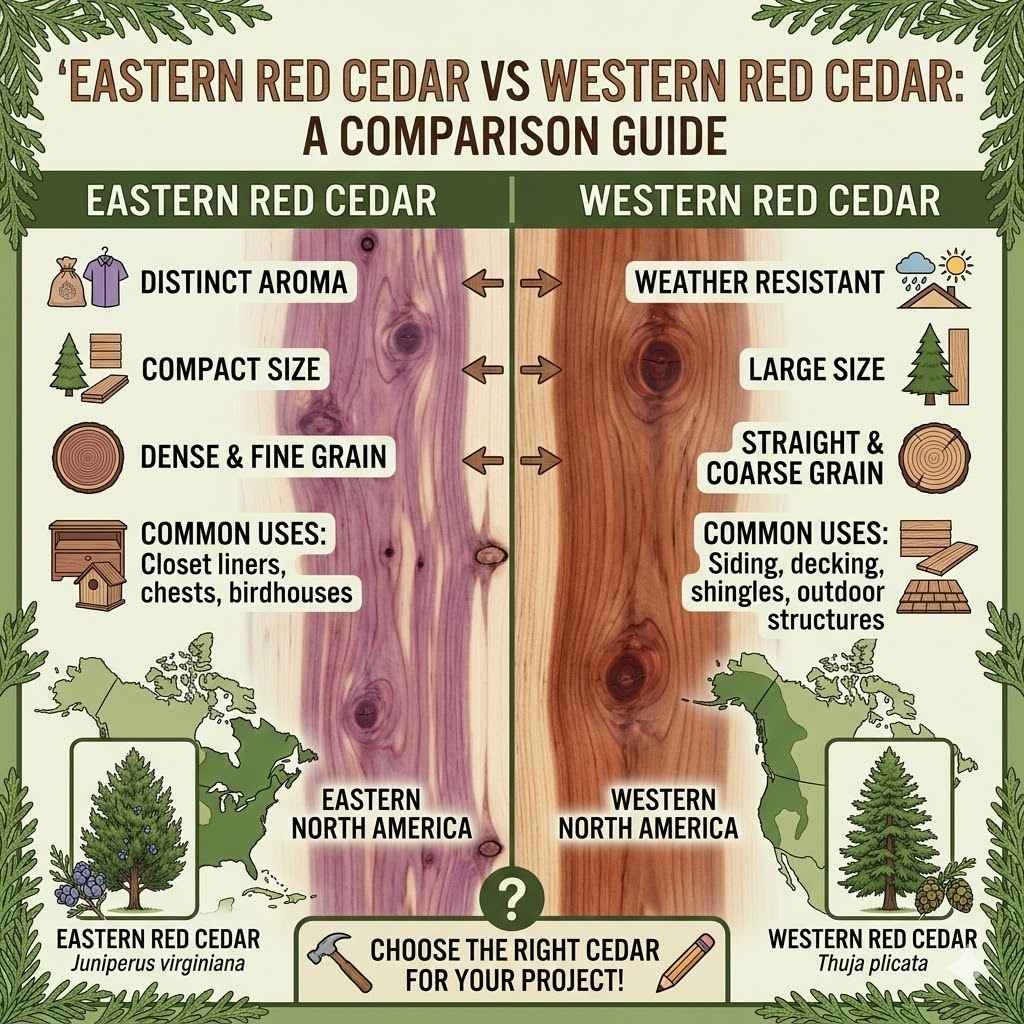
When comparing Eastern Red Cedar and Western Red Cedar, the distinctions become clear. While both are reddish-toned woods and offer some level of natural resistance, their origins, botanical classifications, and primary uses differ significantly. Understanding these differences is key to selecting the right wood for your specific needs.
The main differences lie in their species, size, wood properties, and common applications.
One of the most fundamental distinctions is that Eastern Red Cedar is a juniper (Juniperus virginiana), while Western Red Cedar is a true cedar (Thuja plicata). This botanical difference leads to varied growth patterns and wood characteristics. For example, Western Red Cedar trees grow much larger and live longer than Eastern Red Cedar trees.
The intensity of their aromatic properties and their specific resistances also vary.
Botanical Classification and Origin
The first major difference lies in their scientific classification and where they come from. Eastern Red Cedar, known botanically as Juniperus virginiana, is actually a type of juniper, not a true cedar. It is native to eastern North America, spanning from the Atlantic coast to the Great Plains.
It thrives in a variety of soil conditions and is often found in open fields, pastures, and mixed woodlands.
In contrast, Western Red Cedar, or Thuja plicata, is a true cedar and is a member of the cypress family. It is indigenous to the Pacific Northwest region of North America, typically growing in cooler, moister climates, often in old-growth forests. Its native range includes parts of western Canada and the northwestern United States.
This geographical separation and botanical classification influence their growth habits, wood properties, and ecological roles.
- Eastern Red Cedar (Juniperus virginiana): This is a juniper species. It is widely distributed across eastern and central North America. It is known for its adaptability to various soil types and climates, often growing in more open or disturbed areas. It is considered a pioneer species in many ecosystems.
- Western Red Cedar (Thuja plicata): This is a true cedar species, belonging to the cypress family. It is native to the moist coastal and inland mountainous regions of the Pacific Northwest. It thrives in shade and requires consistent moisture for optimal growth, often found in dense forest environments.
Wood Properties Comparison
When examining the wood itself, several key differences emerge. Eastern Red Cedar’s heartwood is a striking reddish-brown, while its sapwood is pale. It is lightweight and possesses a strong, distinctive aroma that is highly effective at repelling moths and other insects.
While moderately resistant to decay, it is not as exceptionally durable as Western Red Cedar in ground contact or constant moisture.
Western Red Cedar’s wood is also reddish-brown but can vary in tone. It is lighter in weight and known for its superior resistance to decay, rot, and insects, thanks to its natural oils. This makes it exceptionally well-suited for outdoor applications.
Its dimensional stability is also a significant advantage, meaning it’s less prone to warping or shrinking compared to many other wood species. The aroma of Western Red Cedar is pleasant but much less potent than that of Eastern Red Cedar.
| Property | Eastern Red Cedar | Western Red Cedar |
|---|---|---|
| Botanical Name | Juniperus virginiana | Thuja plicata |
| Wood Type | Juniper | True Cedar |
| Color | Reddish-brown heartwood, pale sapwood | Reddish-brown, can darken with age |
| Aroma | Strong, distinctive, moth-repelling | Mild, pleasant, less potent |
| Decay Resistance | Moderate | Excellent |
| Insect Resistance | High (especially moths) | Excellent |
| Dimensional Stability | Good | Excellent |
| Weight | Light | Very Light |
Primary Uses and Suitability
The distinct properties of each wood dictate their most common and suitable uses. Eastern Red Cedar’s intense aroma and moth-repelling qualities make it a prime choice for interior applications like lining closets, chests, and drawers. Its moderate decay resistance is sufficient for some outdoor uses, but it’s not the top choice for constant ground contact or harsh weather exposure.
Western Red Cedar, with its superior decay and insect resistance, along with its excellent dimensional stability, is predominantly used for outdoor construction. This includes siding, decking, fencing, and outdoor furniture. It can also be used for interior finishes, offering a natural beauty.
Its ability to withstand the elements makes it a long-lasting and reliable material for structures exposed to moisture and weather.
- Eastern Red Cedar Applications: Primarily used for aromatic purposes such as closet and drawer linings, cedar chests, moth repellent sachets, and decorative items. It’s also used for outdoor applications where extreme durability is not the primary concern, like some types of rustic fencing or garden bed edging.
- Western Red Cedar Applications: Ideal for exterior construction like siding, decking, fences, pergolas, and outdoor furniture. It is also used for interior paneling, saunas, and roofing shakes due to its beauty and durability. Its resistance to moisture makes it suitable for bathrooms and kitchens.
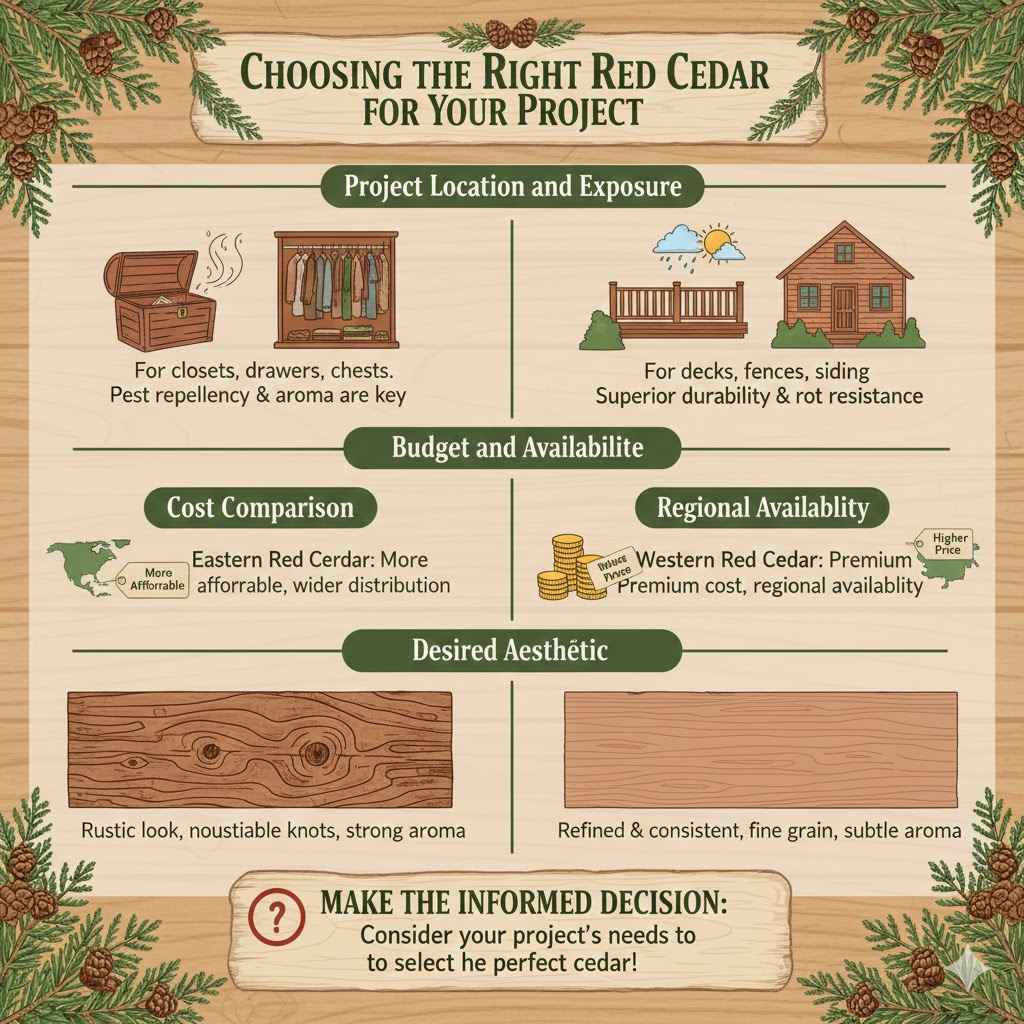
Choosing the Right Red Cedar for Your Project
Deciding between Eastern Red Cedar and Western Red Cedar boils down to what you need the wood to do. If your main concern is repelling moths and adding a pleasant scent to interior spaces, Eastern Red Cedar is your go-to. Its natural fragrance is its strongest asset for these indoor uses.
However, if you are building something that will be outdoors, like a deck, fence, or siding, and needs to withstand rain, sun, and bugs for a long time, then Western Red Cedar is the better and more appropriate choice. Its superior durability and resistance to decay make it a much more suitable material for these demanding environments. Consider the location and exposure of your project when making your selection.
Project Location and Exposure
The most critical factor in choosing between Eastern and Western Red Cedar is where your project will be located and how much it will be exposed to the elements. If your project is indoors and you want to protect clothes from moths or simply enjoy the aromatic scent, Eastern Red Cedar is an excellent and cost-effective option. Its strong fragrance is its main benefit here.
For outdoor projects, such as building a deck, fence, or exterior siding, Western Red Cedar is the clear winner. Its exceptional resistance to rot, decay, and insects makes it far more durable when exposed to constant moisture, sunlight, and varying temperatures. It is designed to last for decades in harsh outdoor conditions, making it a superior choice for longevity and structural integrity.
- Indoor Projects: For closets, drawers, chests, and decorative items where pest repellency and aroma are key, Eastern Red Cedar is ideal. It provides a natural moth barrier and a pleasant scent without chemicals. Its visual appeal is also a plus for decorative interior pieces.
- Outdoor Projects: For decks, fences, siding, pergolas, and outdoor furniture, Western Red Cedar is the superior choice. Its inherent resistance to moisture, decay, and insects ensures long-term durability and structural soundness in exposed environments. It can withstand significant weather challenges.
Budget and Availability
The cost and accessibility of each type of cedar can also influence your decision. Eastern Red Cedar is generally more widely available across a larger geographic area of North America and is often more budget-friendly than Western Red Cedar. Its abundance makes it an easier and often cheaper choice for many projects, especially those that do not require extreme outdoor durability.
Western Red Cedar, while highly prized for its quality, can be more expensive and may have more limited availability depending on your location. Its cost reflects its premium performance characteristics and the logistics of harvesting and transporting this large timber from the Pacific Northwest. If budget is a major constraint, it’s worth comparing prices and considering if Eastern Red Cedar might suffice for less demanding applications.
- Cost Comparison: Eastern Red Cedar is typically more affordable than Western Red Cedar. Its wider distribution and ease of harvesting contribute to its lower price point. Western Red Cedar, being a premium wood with excellent durability properties, generally commands a higher price.
- Regional Availability: Eastern Red Cedar is readily available throughout much of the eastern United States and Canada. Western Red Cedar is most common in western North America but can be shipped elsewhere, though transportation costs can increase its overall price.
Desired Aesthetic
Both types of cedar offer a beautiful reddish-brown hue, but their grain patterns and overall appearance can differ. Eastern Red Cedar often has a more rustic look with a distinct contrast between its dark heartwood and lighter sapwood. It can be prone to more knots, which some people find adds character.
Its strong aroma is a key part of its appeal.
Western Red Cedar typically has a finer, more uniform grain and a smoother texture. It’s known for its elegant appearance and can be finished to a very smooth surface. While it has a pleasant aroma, it’s not as overpowering as Eastern Red Cedar.
For projects where a refined, high-end look is desired, especially for exterior cladding or fine interior woodwork, Western Red Cedar might be preferred.
- Eastern Red Cedar Aesthetic: Often features a more rustic appearance with noticeable grain variations and knots. The rich reddish-brown color is a prominent feature, along with its strong, characteristic aroma. It’s chosen for its natural charm and aromatic qualities.
- Western Red Cedar Aesthetic: Offers a more refined and consistent appearance with a finer grain and smoother texture. The reddish-brown color is elegant, and it can be finished to a high degree. Its subtle aroma contributes to its pleasant natural appeal without being overpowering.
Frequently Asked Questions
Question: Is Eastern Red Cedar good for outdoor furniture
Answer: Eastern Red Cedar has moderate resistance to decay and insects, making it suitable for some outdoor furniture, especially pieces that are not in constant contact with the ground or extreme moisture. However, Western Red Cedar is generally a better choice for outdoor furniture due to its superior durability and resistance to the elements.
Question: Can I use Eastern Red Cedar for decking
Answer: While Eastern Red Cedar can be used for decking, it is not as durable as Western Red Cedar. Western Red Cedar’s excellent resistance to rot and decay makes it a more suitable and long-lasting option for high-traffic outdoor surfaces like decks that are exposed to weather year-round.
Question: Does Western Red Cedar repel moths
Answer: Western Red Cedar does offer some natural insect-repelling properties due to its oils, but it is not as effective as Eastern Red Cedar for repelling moths. Eastern Red Cedar is specifically known for its strong aroma that deters moths and other fabric pests, making it the preferred choice for closet linings.
Question: Which cedar is better for privacy fences
Answer: Western Red Cedar is generally the better choice for privacy fences. Its superior resistance to decay and insects means it will last much longer when exposed to the elements and in contact with the soil. Eastern Red Cedar can be used, but it may require more maintenance and may not last as long.
Question: What is the main difference between the two
Answer: The main difference is that Eastern Red Cedar is a juniper and is best known for its strong moth-repelling aroma for indoor use, while Western Red Cedar is a true cedar that boasts superior durability and resistance to decay and insects, making it ideal for outdoor construction projects.
Conclusion
You now have a clear picture of Eastern Red Cedar versus Western Red Cedar. Eastern Red Cedar excels indoors with its potent aroma for pest control. Western Red Cedar is the champion for outdoor projects due to its unmatched durability.
Choose Eastern for closets and Western for decks and fences. This knowledge helps you make the right wood choice every time.