Farmhouse Hardwood Flooring: Best Wood Types and Finishes
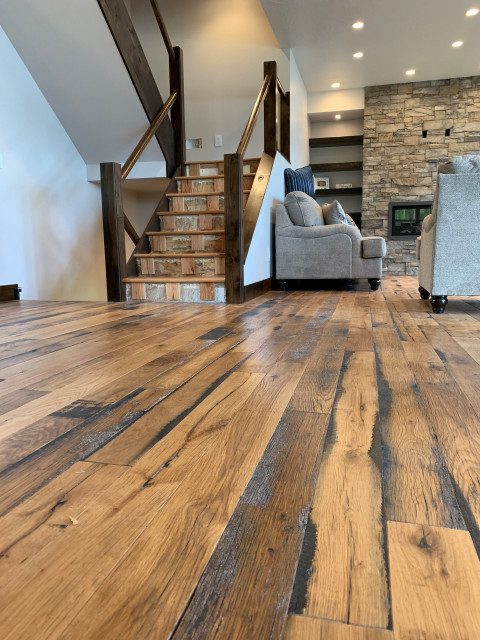
Farmhouse hardwood flooring is defined less by species and more by three specific choices: wide planks (5 inches or wider, versus the 2-3 inch strips common in traditional hardwood), a matte or low-sheen finish that reads as worn-in rather than glossy, and a wood tone or wire-brushed texture that shows real grain character instead of a uniform factory-smooth surface. Get those three choices right and almost any hardwood species can read as farmhouse style. Here’s how to choose the wood, finish, and plank width that actually deliver the look.
Choosing the Right Wood Species
- White oak: the most common farmhouse choice – strong, moderate grain figure, and takes a wire-brushed texture especially well.
- Hickory: one of the hardest domestic species, with dramatic color and grain variation between boards, which suits farmhouse’s intentionally rustic, less-uniform look.
- Reclaimed or distressed oak/pine: genuine reclaimed lumber (or new wood distressed to look reclaimed) with real saw marks, nail holes, and character marks reads as authentically farmhouse rather than manufactured.
- Pine: the historically accurate choice for real farmhouse construction, though softer and more prone to denting than oak or hickory – a real tradeoff between authenticity and durability.
Plank Width and Texture
Width does more visual work than species: 5 to 8-inch wide planks are the standard farmhouse range, since wider boards show more of each board’s individual grain character and reduce the busy, repetitive look of narrow strip flooring. Wire-brushing (a texturing process that removes softer wood fibers between grain lines) adds a hand-hewn texture that’s become a defining farmhouse hallmark. Hand-scraped finishes go a step further, mimicking the look of boards individually finished by hand rather than milled uniformly.
Finish and Sheen
Sheen level matters as much as color for the farmhouse look. Matte and low-luster finishes read as lived-in and natural; high-gloss finishes read as formal and contemporary, working against the style. Whitewashed or gray-toned finishes are especially associated with modern farmhouse interiors, while warmer honey and amber tones lean more traditional-farmhouse. Whichever tone you choose, a matte or satin sheen (not semi-gloss or high-gloss) is what keeps it reading as farmhouse rather than traditional formal hardwood.
Best For Keeping A Matte Farmhouse Finish Looking Right
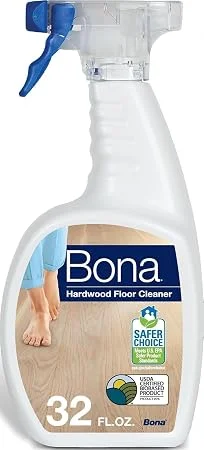 |
Bona Hardwood Floor Cleaner Spray, 32oz – $8.97 A wax-free, residue-free formula matters more on matte and low-sheen finishes, which show cloudy buildup from the wrong cleaner far more visibly than a glossy finish would.
|
Maintenance Considerations
- Use a hardwood-specific, residue-free cleaner – wax-based or oil-soap products build up a film that shows as cloudiness, especially on matte finishes.
- Wide planks show seasonal gaps more visibly than narrow strip flooring, since each board expands and contracts more in absolute terms – a normal characteristic, not a defect, but worth expecting.
- Distressed and wire-brushed textures hide scratches better than a smooth, glossy finish, which is a practical bonus for households with kids or pets, not just an aesthetic choice.
- Softer species like pine dent more easily – use furniture pads and expect some visible wear character over time, which is generally embraced rather than avoided in farmhouse-style interiors.
Conclusion
Farmhouse hardwood flooring comes down to plank width, texture, and sheen more than any single wood species – wide boards (5-8 inches), a wire-brushed or hand-scraped texture, and a matte or low-luster finish are what create the look. White oak and hickory are the most common modern choices, while reclaimed or distressed pine leans into historical authenticity. Match your maintenance routine (residue-free cleaners, in particular) to the matte finish that defines the style, and the flooring will keep looking right for years.
Frequently Asked Questions
What makes flooring look like farmhouse style?
Three factors define the look: wide planks (5-8 inches, versus narrow traditional strips), a wire-brushed or hand-scraped texture that shows real grain character, and a matte or low-sheen finish rather than glossy. Any hardwood species can read as farmhouse style with the right combination of these three.
What is the best wood species for farmhouse flooring?
White oak is the most common modern choice for its strength and how well it takes a wire-brushed texture. Hickory offers more dramatic natural color variation. Reclaimed or distressed pine leans into historical farmhouse authenticity, though it’s softer and dents more easily.
Should farmhouse flooring be glossy or matte?
Matte or satin sheen is standard for farmhouse style. High-gloss finishes read as formal and contemporary, which works against the intentionally rustic, lived-in look the style is going for.
How do I clean matte or wire-brushed hardwood floors?
Use a hardwood-specific, residue-free cleaner rather than wax-based or oil-soap products, which can build up a visible film on matte finishes. Regular dry sweeping or vacuuming (with a hardwood-safe attachment) between wet cleanings keeps grit from scratching the textured surface.
Sponsored / affiliate links. As an Amazon Associate I earn from qualifying purchases. I may earn additional commission from eligible campaigns.
 East West Furniture SP-7HH02 Sango Premier Engineered Hardwood Flooring - European Oak - 1/2 in x 7 in x Random Length Handscraped, 26.24 sqft/box, Special Walnut
 East West Furniture SP-5HH05 Sango Premier Engineered Hardwood Flooring - European Oak - 1/2 in x 7 in x Random Length Handscraped, 26.24 sqft/box, Shadow Grey