How to Get Rid of Cat Urine Smell Hardwood Floors: Quick Solutions
If the odor keeps coming back, especially in humid weather, vinegar and baking soda alone aren’t enough — cat urine crystallizes into uric acid salts as it dries, and those crystals aren’t water-soluble, so they survive most surface cleaning. Only an enzymatic cleaner actually breaks the uric acid down; everything else is just masking the smell temporarily.
This is the single biggest reason “I cleaned it but the smell came back” happens with hardwood floors specifically — wood’s grain and seams let urine soak below the surface, where a surface wipe-down can’t reach the crystallized residue.
Causes Of Cat Urine Smell
Cats spray or urinate outside the litter box for a few common reasons: stress or anxiety (a new pet, a move, a change in routine), a litter box that’s too dirty, a urinary tract infection or bladder stones making normal urination painful, or arthritis making it hard for an older cat to climb into the box. Ruling out a medical cause with a vet visit is worth doing if the behavior is new or repeated.
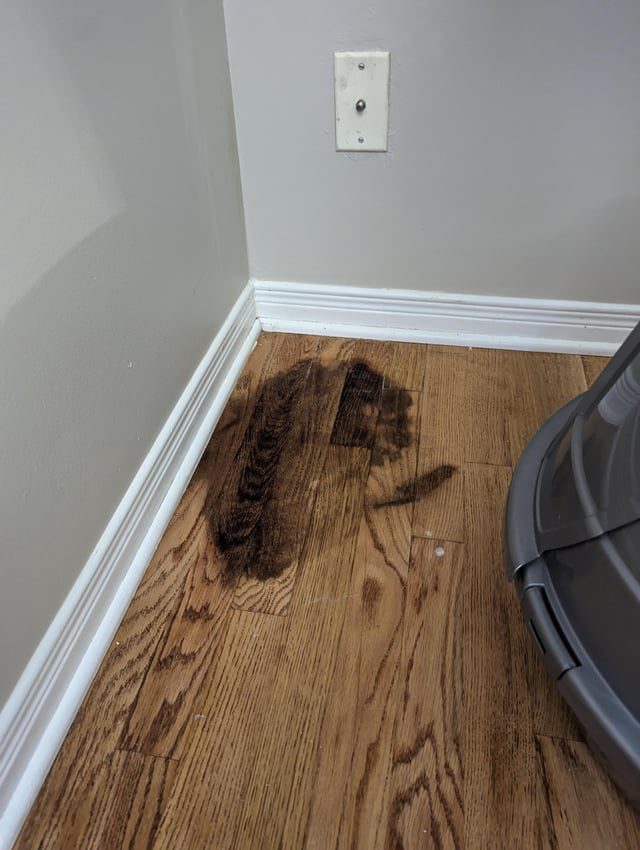
Hardwood is especially bad at holding onto the smell because it’s porous at the seams and any worn or unsealed spots in the finish. Urine seeps past the surface into the wood itself, and as it dries it crystallizes into uric acid salts that re-release odor whenever humidity rises — which is why a spot that seemed “clean” can start smelling again on a muggy day.
Best For Dried, Recurring Odor
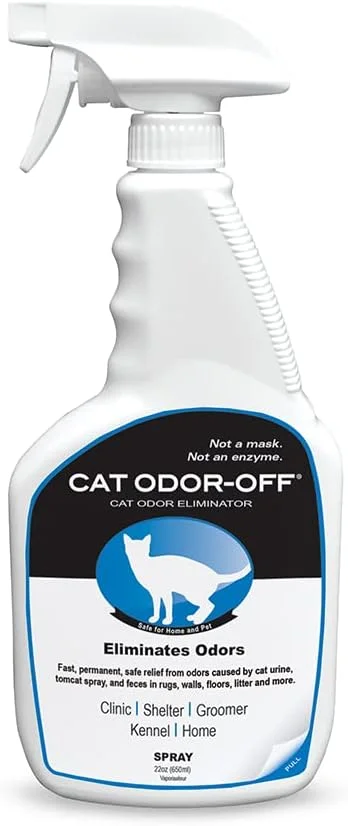 |
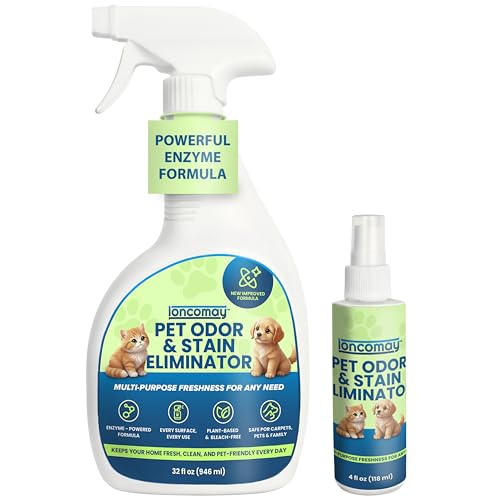
Thornell Cat Odor-Off Spray, 22oz – $18.95 Actually breaks down uric acid crystals rather than masking the smell — the step vinegar alone can’t do.
|
Immediate Actions
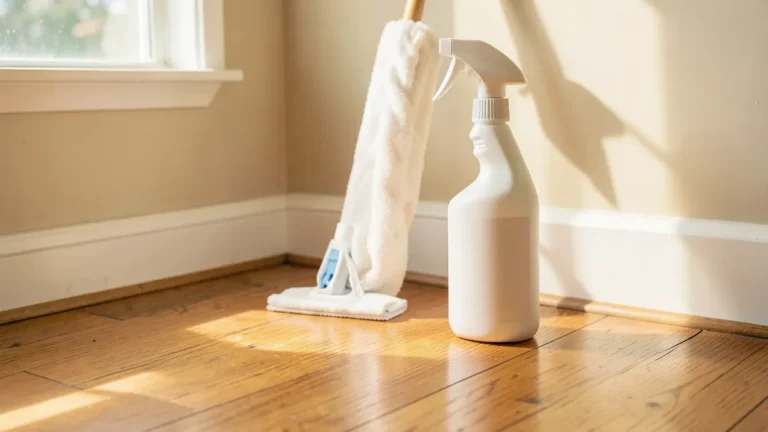
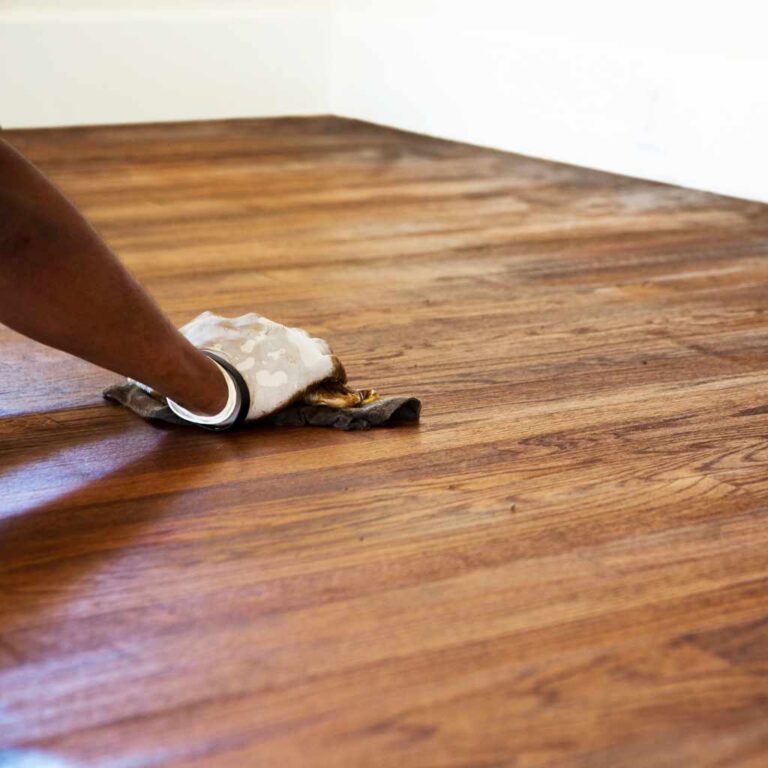
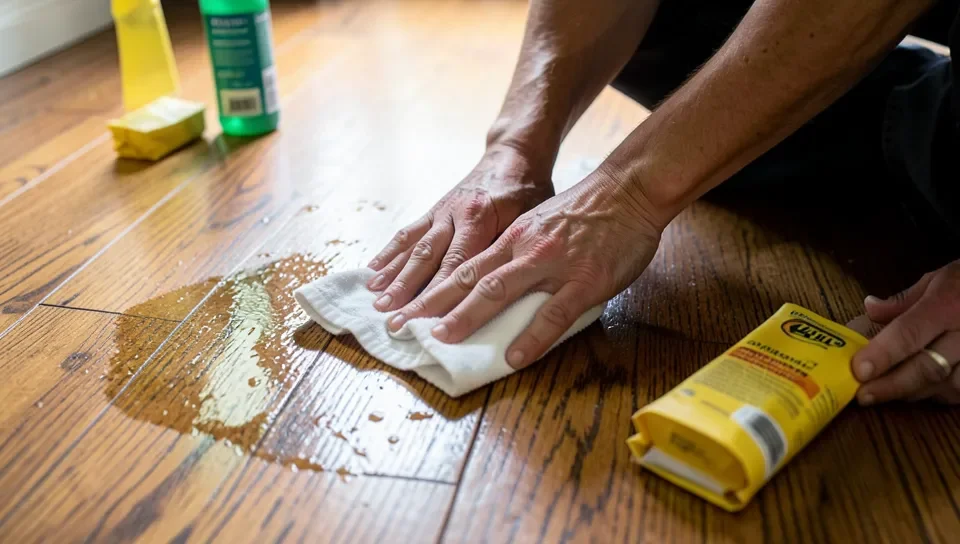
Blot fresh urine immediately with a clean cloth or paper towel — press down, don’t rub, since rubbing spreads the liquid into a wider area and pushes it deeper into the wood grain. Absorb as much as possible before it has a chance to soak in.
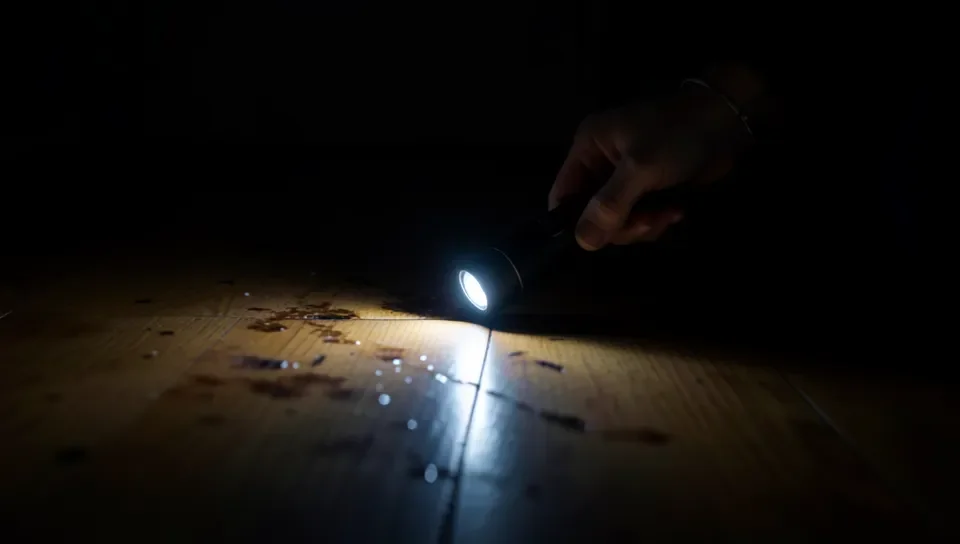
Avoid ammonia-based cleaners specifically — ammonia is a component of urine, and some cleaners containing it can actually encourage a cat to re-mark the same spot. Don’t scrub harshly, since that can damage the floor’s finish, and test any cleaner on a hidden area first. A black light in a dark room reveals old, dried stains that aren’t visible under normal lighting, which is useful for finding every spot that needs treatment, not just the obvious one.
Why Vinegar Only Handles Part Of The Problem
A vinegar-and-water solution is genuinely useful on a fresh spot — the mild acid neutralizes the ammonia smell of new urine and is safe for finished hardwood. What it doesn’t do is break down uric acid crystals once urine has dried and soaked into the wood; those crystals are the actual source of lingering, recurring odor, and vinegar simply isn’t the right chemistry to dissolve them. Baking soda sprinkled after a vinegar treatment helps absorb surface odor but has the same limitation.
For a stain that’s already dried or one that keeps coming back, an enzymatic cleaner is the actual fix — it uses bacterial enzymes specifically formulated to digest uric acid and organic waste, breaking the crystals down into odorless compounds rather than covering the smell. Look for one labeled safe for sealed hardwood floors and follow the soak time on the label; enzymes need time (often 10-15 minutes or longer) to work, not just a quick wipe.
Preventive Measures
Keep the litter box scooped daily and fully cleaned weekly — a dirty box is one of the most common reasons cats look elsewhere. If a cat repeatedly targets one spot, treat that area with an enzymatic cleaner (residual scent, even faint, can draw a cat back to the same location) and consider a citrus-scented deterrent, since most cats dislike the smell.
Clean any fresh accidents immediately rather than letting them dry, since prevention is far easier than treating a set-in, crystallized stain later. If accidents happen often at one spot, a vet visit to rule out a medical cause is worth it before assuming it’s purely behavioral.
When To Call Professionals
Persistent odor that survives repeated enzymatic treatment usually means urine has soaked past the finish into the wood itself, or into the subfloor beneath a seam. At that point, a flooring professional has options a home treatment doesn’t — sanding and refinishing the affected boards, or in severe cases replacing a section of flooring. Warped, discolored, or spongy wood is also a sign to call a professional rather than continuing to treat the surface.
This covers cat urine specifically. For the general chemistry of why urine odor persists, a bleach-and-ammonia safety warning worth knowing before you clean, and what to do if odor has soaked past the finish into the wood, see our urine odor removal guide for wood floors.
Frequently Asked Questions
How Do You Get The Smell Of Cat Urine Out Of Hardwood Floors?
Blot fresh urine immediately, then clean with vinegar and water for light or fresh spots. For dried or recurring odor, use an enzymatic cleaner, which breaks down the uric acid crystals that vinegar can’t dissolve.
Can You Get Pet Urine Smell Out Of Hardwood Floors?
Yes, in most cases. Vinegar and water handle fresh spots, but an enzymatic cleaner is usually necessary for odor that has already set in, since it targets the uric acid crystals directly rather than just masking the smell.
What Removes Cat Urine Smell From Wood Floors?
An enzymatic cleaner formulated for pet urine is the most reliable fix for wood floors, since it breaks down the uric acid crystals that cause recurring odor. Blotting and vinegar help with fresh spots but don’t fully resolve dried-in stains.
Can Vinegar Neutralize Cat Urine Odor?
Vinegar neutralizes the ammonia smell of fresh urine but doesn’t break down the uric acid crystals that form as urine dries, which is why the odor can return later even after a vinegar cleaning. An enzymatic cleaner is needed for a dried or recurring stain.
Conclusion
Blot and treat fresh accidents with vinegar right away, but reach for an enzymatic cleaner the moment a spot has dried or the smell keeps returning — that’s the actual fix for uric acid crystals, not a stronger scrub or more vinegar. If the odor persists after enzymatic treatment, the urine has likely soaked past the finish, and a flooring professional is the next step.
Sponsored / affiliate links. As an Amazon Associate I earn from qualifying purchases. I may earn additional commission from eligible campaigns.