Flood Penetrating Wood Finish for Cedar Review
Picking the right wood finish for your cedar projects can feel a bit tricky, especially if you’re just starting out. You want something that looks great and protects your wood, but also something that’s easy to use. That’s where a Flood Penetrating Wood Finish for Cedar Review becomes really helpful.
Don’t worry, it’s not as complicated as it might seem! We’re going to break it all down simply, step-by-step. Get ready to learn exactly what you need to know to make your cedar look its best and last longer.
Exploring Flood Penetrating Wood Finish for Cedar
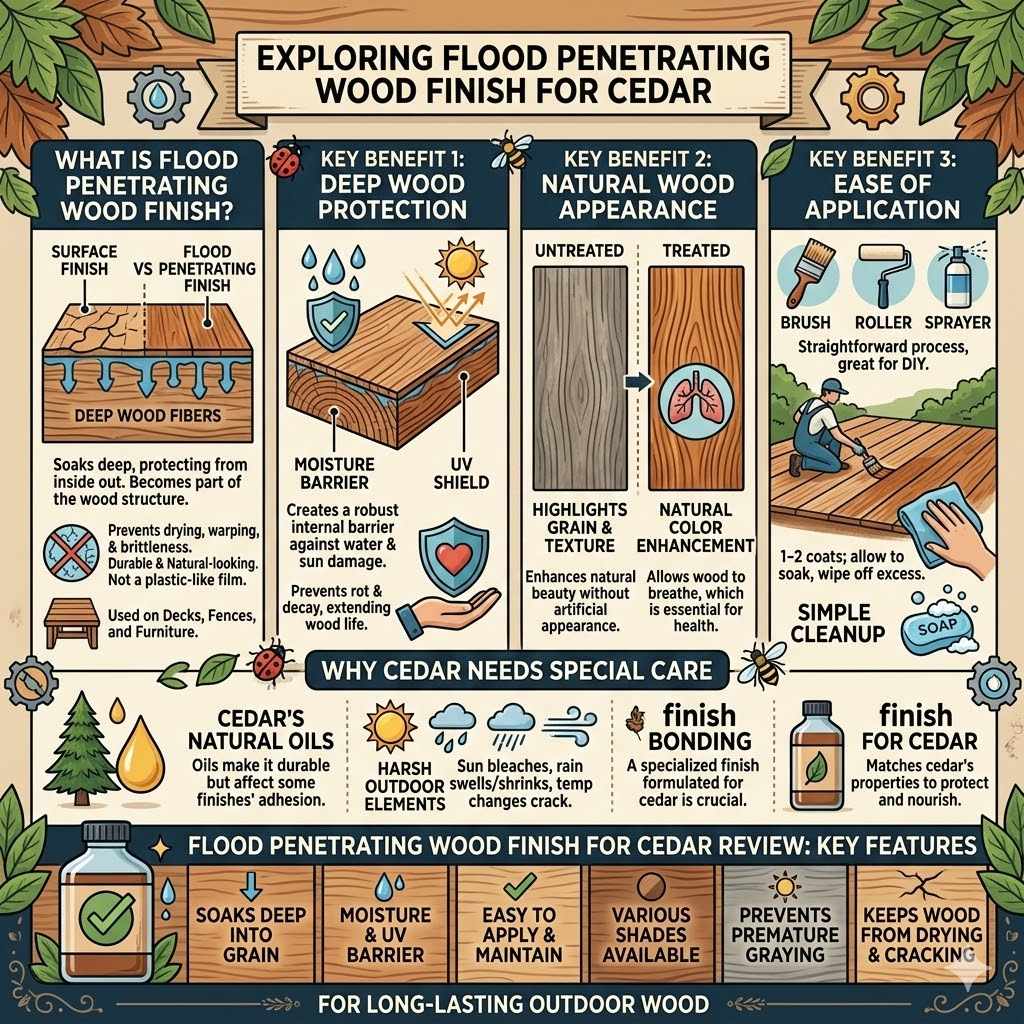
This section looks at what Flood Penetrating Wood Finish is all about, specifically for cedar. We’ll cover its main features and why it’s a popular choice for protecting outdoor wood. It’s designed to soak into the wood, offering deep protection against weather and wear.
This kind of finish is key to keeping your cedar decks, fences, or furniture looking good for years. We’ll explain how it works and what makes it stand out.
What is Flood Penetrating Wood Finish?
Flood Penetrating Wood Finish is a type of protective coating made for wood. It’s formulated to soak deep into the wood’s fibers rather than just sitting on the surface. This deep penetration helps protect the wood from the inside out.
It’s often used on outdoor wood structures like decks, fences, and outdoor furniture. The goal is to provide long-lasting protection against rain, sun, and other environmental damage.
Unlike surface finishes that can peel or crack over time, penetrating finishes become part of the wood itself. This means they offer a more durable and natural-looking protection. They help prevent wood from drying out, warping, or becoming brittle.
Regular maintenance is still important, but a good penetrating finish provides a solid foundation for protecting your cedar.
- Deep Wood Protection
- The primary benefit of Flood Penetrating Wood Finish is its ability to penetrate deeply into the wood grain. This isn’t just a surface layer. It goes down into the wood’s structure, creating a barrier against moisture and UV rays.
- This deep action is crucial for preventing rot and decay, especially in outdoor applications where wood is constantly exposed to the elements. Think of it like treating the wood’s core, not just its skin. This helps maintain the wood’s strength and appearance over time.
- Natural Wood Appearance
- Many users appreciate that penetrating finishes maintain the natural look and feel of the wood. They don’t typically create a thick, plastic-like film. Instead, they enhance the wood’s natural beauty, allowing its grain and texture to show through.
- This is especially desirable for cedar, which has a beautiful natural color and pattern. The finish can add a subtle richness without looking artificial. It allows the wood to breathe, which is important for its health.
- Ease of Application
- Flood finishes are often designed for straightforward application. They can typically be brushed, rolled, or sprayed on. The ease of use makes them a good choice for DIY projects.
Cleanup is usually simple, often requiring just soap and water. This makes maintaining your wood projects less of a chore. The process usually involves applying one or two coats, allowing it to soak in, and wiping off any excess.
Why Cedar Needs Special Care
Cedar is a wonderful wood for outdoor projects because it’s naturally resistant to rot and insects. However, even cedar can degrade over time when exposed to harsh weather. Sunlight can bleach it, rain can cause it to swell and shrink, and temperature changes can lead to cracking.
A good finish protects cedar from these issues, extending its lifespan and keeping it looking its best.
Cedar’s natural oils make it durable, but these oils can also affect how finishes adhere. Some finishes might not soak in well or might not last as long on cedar compared to other wood types. That’s why using a finish specifically formulated or known to work well with cedar is important.
It ensures the finish bonds properly and provides the protection cedar needs.
Flood Penetrating Wood Finish for Cedar Review: Key Features
When you’re looking at a Flood Penetrating Wood Finish for Cedar Review, certain features are consistently highlighted. These finishes aim to enhance cedar’s natural beauty while providing robust protection. They are known for their ability to soak deep into the wood, offering a barrier against moisture and UV damage.
Many users find them easy to apply and maintain.
These products often come in various shades, allowing you to slightly alter or enhance the natural color of your cedar. They are designed to prevent the wood from graying prematurely due to sun exposure. The finish also helps to keep the wood from drying out and cracking, which can happen with extreme temperature fluctuations.
The focus is on a finish that works with the wood’s natural properties.
Application and Performance
This section details how to properly apply Flood Penetrating Wood Finish to cedar and what to expect regarding its performance. We’ll cover surface preparation, the application process itself, and how to maintain the finish. Understanding these steps is crucial for achieving the best results and ensuring your cedar project is well-protected.
Preparing Your Cedar Surface
Before applying any finish, proper preparation is key to a lasting result. For cedar, this means ensuring the wood is clean, dry, and free from any old finishes or debris. If the wood is new, it might just need a light cleaning to remove any mill glaze or dust.
For older wood, you might need to clean off dirt, mold, or mildew.
Using a dedicated wood cleaner or a solution of mild soap and water can work well. Always rinse thoroughly to remove any cleaning residue. Sanding might be necessary if the wood is rough or has an uneven surface.
If you’re refinishing, it’s important to remove any peeling or flaking paint or stain. The surface needs to be smooth and receptive to the finish.
- Cleaning the Wood
- Thoroughly cleaning the cedar is the first essential step. This removes surface dirt, grime, and any potential contaminants that could prevent the finish from adhering properly. For new cedar, a simple wipe-down with a damp cloth might suffice.
- For older or weathered cedar, a more robust cleaning solution is often needed. Look for cleaners specifically designed for wood decks or siding.
- These cleaners help to lift embedded dirt and can sometimes neutralize mild mold or mildew growth. Always follow the product’s instructions carefully. After cleaning, a good rinse with clean water is vital to wash away all the cleaner and loosened debris.
- Ensure the wood has ample time to dry completely before moving to the next step.
- Sanding for Smoothness
- Sanding plays a role in preparing the surface, especially if there are rough spots or imperfections. For new cedar, a light sanding with a medium-grit sandpaper (around 100-120 grit) can open up the wood’s pores, allowing the penetrating finish to soak in better. For older wood, you might need to sand to remove dull, grayed wood or to smooth out any rough patches.
Always sand in the direction of the wood grain. After sanding, it’s critical to remove all the dust. A vacuum cleaner with a brush attachment, followed by a tack cloth, is highly recommended.
Any lingering dust can create a rough finish or show up as imperfections under the new coating.
- Checking for Moisture Content
- Wood needs to be dry for a finish to properly penetrate and bond. Applying a finish to wet wood can lead to a host of problems, including poor adhesion, blistering, and premature failure of the coating. A moisture meter is a useful tool for this.
- Cedar should typically have a moisture content below 15% before you apply a finish.
- Allowing the wood to dry thoroughly after cleaning and sanding is crucial. This can take anywhere from 24 to 48 hours or even longer, depending on the weather conditions. Cloudy, humid days will slow down the drying process.
Ensure good air circulation around the wood to aid in drying.
Applying the Finish
Once your cedar is clean, dry, and smooth, you’re ready to apply the Flood Penetrating Wood Finish. The application method is usually quite forgiving. You can use a good quality paintbrush, a roller designed for stains and sealers, or even a garden sprayer for larger areas.
Always work in manageable sections, especially if you’re working on a large surface like a deck. This ensures you can maintain a wet edge, preventing lap marks. Apply the finish evenly, following the direction of the wood grain.
The goal is to get good coverage without letting the finish pool or puddle.
- First Coat Application
- Begin by stirring the finish thoroughly. Do not shake it, as this can create bubbles. Apply a generous, even coat to your prepared cedar surface.
- Work in small sections, about 3-4 feet at a time, to ensure you can manage the application. Brush or roll the finish along the grain of the wood.
- The finish should look like it’s being absorbed into the wood. If it’s just sitting on the surface, you might be applying it too thickly or the wood might not be as absorbent as expected. The key is to let the wood “drink” the finish.
- The “Wet Edge” Technique
- To avoid visible lines or streaks where one section of application ends and another begins, it’s vital to maintain a “wet edge.” This means that as you move from one section to the next, you should be overlapping the wet area you just finished. This blending technique ensures a uniform appearance across the entire surface.
- This is particularly important on flat surfaces like decks or large fence panels. If you stop and let a section dry completely before starting the next, you’ll likely see distinct lines where each application session began and ended.
- Wiping Off Excess
- After applying the finish to a section, let it penetrate for a short period, usually about 15-30 minutes, depending on the product’s instructions and the wood’s absorbency. During this time, the wood will absorb what it can. Any finish that hasn’t soaked in by then should be wiped off.
- Use a clean, lint-free cloth or a squeegee to remove any excess product. This step is crucial for achieving a smooth, non-tacky finish. If you leave excess finish on the surface, it can dry sticky and attract dirt, or even become tacky and peel later on.
- Proper wiping ensures the finish integrates into the wood, not just sits on top.
- Second Coat (If Needed)
- Some projects may benefit from a second coat, especially if the wood is very dry or porous. If the first coat absorbed very quickly and the wood still looks like it could take more, apply a second coat following the same procedure. Allow proper drying time between coats as recommended by the manufacturer.
Often, a second coat isn’t necessary if the first was applied well.
Performance and Durability
When properly applied, Flood Penetrating Wood Finish for Cedar offers excellent protection. It stands up well against moisture, preventing water from soaking into the wood and causing damage like rot or swelling. The UV inhibitors help to keep the cedar from turning that common silvery-gray color caused by sun exposure.
The durability means you won’t have to reapply the finish too often. Most applications can last for several years, depending on the climate and the amount of wear and tear the wood experiences. This longevity is a major advantage, saving you time and effort in the long run.
It helps maintain the wood’s natural color and integrity.
A common scenario for cedar users is seeing their beautiful deck start to fade and gray within a year or two. Without a proper finish, the natural oils in cedar are exposed and break down under UV radiation. This leads to the characteristic graying.
With a good penetrating finish, this process is significantly slowed down. For instance, decks treated with Flood Penetrating Wood Finish have been observed to retain their rich cedar tone for 3-5 years in moderate climates before needing a refresh.
Maintenance Tips
Keeping your finished cedar looking its best is fairly simple. Regular cleaning with mild soap and water will help remove dirt and debris. Avoid using harsh chemicals or power washers, as these can damage the wood and the finish.
Inspect the wood periodically for any signs of wear or fading. Depending on your climate and the wood’s exposure, you might need to reapply a coat of finish every 2-5 years. This touch-up application is usually much simpler than the initial process.
A quick clean and then applying a light coat of the same finish is often all that’s needed.
A statistic often cited by manufacturers is that properly maintained penetrating finishes can extend the life of cedar decking by up to 50%. This is because the finish prevents the wood from drying out and cracking, which is a primary cause of structural failure in untreated wood over time.
Types of Flood Penetrating Wood Finish for Cedar
This section explores the different variations of Flood Penetrating Wood Finish available and how to choose the right one for your specific cedar project. We’ll look at options for color, transparency, and specific benefits. Understanding these choices helps ensure you get the best look and protection for your wood.
Color Options and Transparency
Flood offers a range of finishes that cater to different aesthetic preferences. You can choose from clear finishes that simply protect the wood without altering its color, or tinted finishes that enhance the natural tone of cedar or provide a specific look.
Clear finishes allow the natural beauty of the cedar grain to shine through. They offer protection but don’t add any color. Tinted finishes can range from subtle enhancers that bring out the warm, reddish-brown tones of cedar to more pronounced shades that can mimic darker woods or add a touch of color.
These tints also offer additional UV protection by acting as a pigment shield.
- Clear Finishes
- Clear finishes are ideal when you want to preserve the authentic look of your cedar wood. They provide a protective layer that shields the wood from the elements without imparting any color. This allows the natural variations in grain, knots, and color that make cedar so appealing to remain the focal point.
- While they don’t add color, clear finishes do often provide a subtle sheen and can make the wood appear slightly richer or deeper in tone, especially when wet. They are excellent for achieving a natural, untouched appearance while still benefiting from the protection against moisture and UV damage.
- Transparent and Semi-Transparent Tints
- Transparent tints are designed to slightly enhance the natural color of the wood. They add a subtle hue without covering up the wood grain. This can be useful for bringing out the warmth in cedar or for a more uniform look across different boards.
- Think of it like a light stain.
- Semi-transparent finishes offer a bit more color saturation. They still allow the wood grain to be visible but provide a more distinct color change. This is a good option if you want to shift the color of your cedar more noticeably or if you’re trying to match it to existing structures.
- Solid Colors
- Flood also offers solid color finishes. These act more like a paint in that they completely cover the wood grain. While they provide excellent protection and a uniform look, they don’t showcase the natural beauty of cedar.
These are typically chosen when a specific, bold color is desired for the project and the wood grain is less of a concern.
If you opt for a solid color, ensure the product is still a penetrating type if available, rather than a film-forming paint, to maintain some of the benefits of a deep-set protection. However, for the purpose of showcasing cedar’s natural appeal, clear, transparent, or semi-transparent options are generally preferred.
Specific Product Lines and Benefits
Flood has various product lines, and understanding their specific benefits is helpful. Some are formulated for enhanced mildew resistance, which is great for damp environments. Others might offer quicker drying times or be designed for specific wood types.
For cedar, you’ll want to look for products that emphasize UV protection and water repellency. Features like excellent penetration and resistance to peeling or cracking are also important. Always check the product label or description for recommendations regarding cedar.
Example Product: Flood CWF-UV
Flood CWF-UV (Clear Wood Finish – UV) is a very popular choice for cedar. It’s a water-based formula that penetrates deeply into the wood. Its primary benefit is providing UV protection that helps prevent the wood from graying.
It also offers excellent water repellency, keeping the wood protected from moisture damage.
This product is known for its ease of application and its ability to refresh the wood’s appearance without creating a surface film. It’s designed to not peel or flake. It dries clear, letting the natural beauty of the cedar show through.
Many users report that it brings out a beautiful, rich tone in the wood.
Choosing the Right Finish for Your Project
The best finish for your cedar project depends on your desired look and the level of protection needed. Consider the location of the wood. Is it in direct, harsh sunlight?
Is it exposed to a lot of rain or moisture?
For a natural look that highlights cedar’s beauty, a clear or transparent tinted finish is usually best. If you want to add a bit of color or protect against severe sun exposure, a semi-transparent tint might be a good choice. For most outdoor cedar projects, prioritizing UV protection and water repellency is key.
Let’s say you have a cedar fence that gets full sun all day. You want to keep it from turning gray and looking weathered. A clear penetrating finish with strong UV inhibitors, like Flood CWF-UV, would be an excellent choice.
It protects the wood and keeps its natural color looking vibrant for longer.
Comparing Flood Penetrating Finish to Other Options
It’s helpful to understand how Flood Penetrating Wood Finish stacks up against other wood treatment options. This comparison will highlight its strengths and when it might be the preferred choice for your cedar projects. We’ll look at its advantages over surface finishes and other types of penetrating treatments.
Penetrating Finishes vs. Surface Finishes
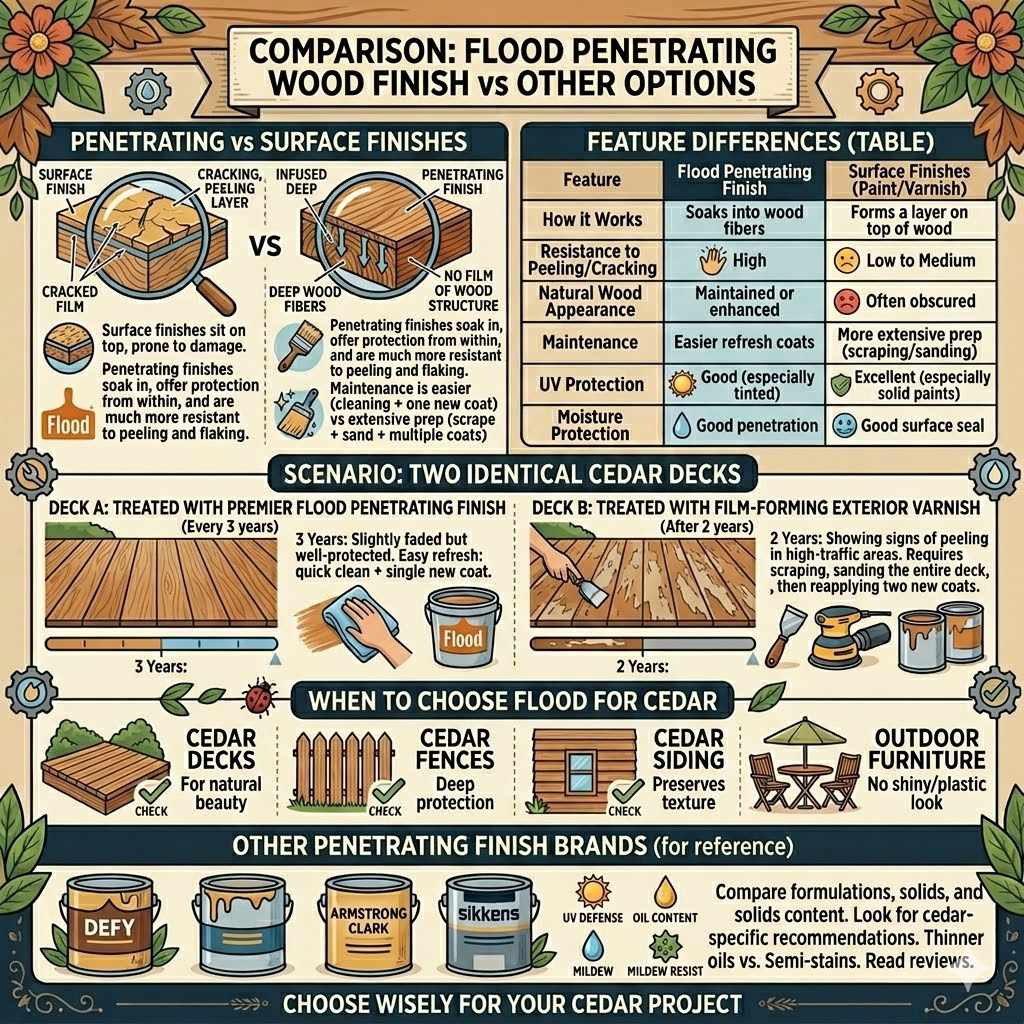
Surface finishes, like paints and film-forming varnishes, sit on top of the wood. They create a protective barrier by sealing the wood’s surface. While they can offer good protection, they are prone to cracking, peeling, and chipping over time, especially with changes in temperature and humidity that cause wood to expand and contract.
Penetrating finishes, on the other hand, soak into the wood. They become part of the wood itself, offering protection from within. This makes them much more resistant to peeling and flaking.
They also tend to maintain a more natural look, as they don’t obscure the wood grain.
A key difference is maintenance. When a surface finish wears down, you often need to scrape, sand, and reapply multiple coats. A penetrating finish usually just needs a cleaning and a single new coat to refresh the protection and appearance.
This makes long-term maintenance significantly easier and less labor-intensive.
Key Differences Comparison
| Feature | Flood Penetrating Finish | Surface Finishes (Paint/Varnish) |
|---|---|---|
| How it Works | Soaks into wood fibers | Forms a layer on top of wood |
| Resistance to Peeling/Cracking | High | Low to Medium |
| Natural Wood Appearance | Maintained or enhanced | Often obscured |
| Maintenance | Easier refresh coats | More extensive prep (scraping/sanding) |
| UV Protection | Good (especially tinted versions) | Excellent (especially solid paints) |
| Moisture Protection | Good penetration | Good surface seal |
Other Penetrating Finish Brands
While Flood is a well-regarded brand, other companies also offer penetrating wood finishes. Some popular brands include Defy, Armstrong Clark, and Sikkens. Each brand might have slightly different formulations, with varying levels of solids, oil content, and specific additives for UV protection or mildew resistance.
When comparing, look for finishes specifically recommended for cedar. Some penetrating oils might be very thin and require more frequent reapplication but offer a very natural look. Others might be more like a semi-stain and last longer.
It’s always a good idea to read reviews and compare product data sheets.
Scenario Comparison
Imagine you have two identical cedar decks side-by-side.
- Deck A is treated with a premium quality Flood Penetrating Wood Finish for Cedar. It’s applied once every three years. After three years, the wood looks slightly faded but is still well-protected and structurally sound. A quick clean and one more coat of the Flood finish restores its look for another three years.
- Deck B is treated with a film-forming exterior varnish. It looked great initially, but after two years, it started to show signs of peeling in high-traffic areas. The owner has to scrape off the peeling varnish, sand the entire deck, and then apply two new coats of varnish. This process is more time-consuming and labor-intensive.
This scenario illustrates the practical difference in maintenance and longevity between a penetrating finish and a surface finish.
When to Choose Flood for Cedar
Flood Penetrating Wood Finish for Cedar is an excellent choice when you want a finish that is easy to maintain, provides deep protection, and preserves the natural beauty of the wood. It’s particularly good for projects where you don’t want a shiny or plastic-like appearance.
It’s ideal for cedar decks, fences, siding, and outdoor furniture. If you’re looking for a product that will protect your cedar from the elements without requiring constant, difficult upkeep, Flood is a strong contender. Its reputation for good UV protection and water repellency makes it a reliable option.
Frequently Asked Questions
Question: Is Flood Penetrating Wood Finish safe for use on all types of cedar?
Answer: Yes, Flood Penetrating Wood Finish is generally safe and effective for use on various types of cedar, including Western Red Cedar and Eastern White Cedar. Its formulation is designed to work with the natural properties of wood, including cedar.
Question: How often do I need to reapply Flood Penetrating Wood Finish to my cedar deck?
Answer: The frequency of reapplication varies depending on factors like climate, sun exposure, and foot traffic. Typically, you can expect to reapply Flood Penetrating Wood Finish every 2 to 5 years. Regular inspection will help you determine when it’s time.
Question: Can I paint over Flood Penetrating Wood Finish if I decide to change the look later?
Answer: It is generally not recommended to paint over penetrating finishes like Flood. Because they soak into the wood, they don’t provide a smooth surface for paint to adhere to properly, which can lead to peeling and chipping of the paint.
Question: Does Flood Penetrating Wood Finish protect against mold and mildew?
Answer: While Flood Penetrating Wood Finish offers good protection against moisture, which can prevent mold and mildew growth, it may not contain strong biocides. For areas with persistent mold or mildew issues, consider cleaning the wood thoroughly before application or using a product with added mildewcides if available.
Question: What is the drying time for Flood Penetrating Wood Finish?
Answer: Drying times can vary based on temperature, humidity, and application thickness. Typically, the finish is dry to the touch within a few hours, but it may take 24-48 hours for full curing. Always refer to the product’s specific instructions for accurate drying and recoating times.
Summary
A Flood Penetrating Wood Finish for Cedar Review shows it’s a great choice for protecting and beautifying your cedar projects. It soaks deep into the wood, offering lasting defense against weather while keeping the wood’s natural look. Application is simple, and maintenance is easy, making it ideal for DIYers and professionals alike.
You get excellent protection without the hassle of peeling finishes.