Backyard Discovery Kings Peak Cedar Playset: Safety Setup Guide
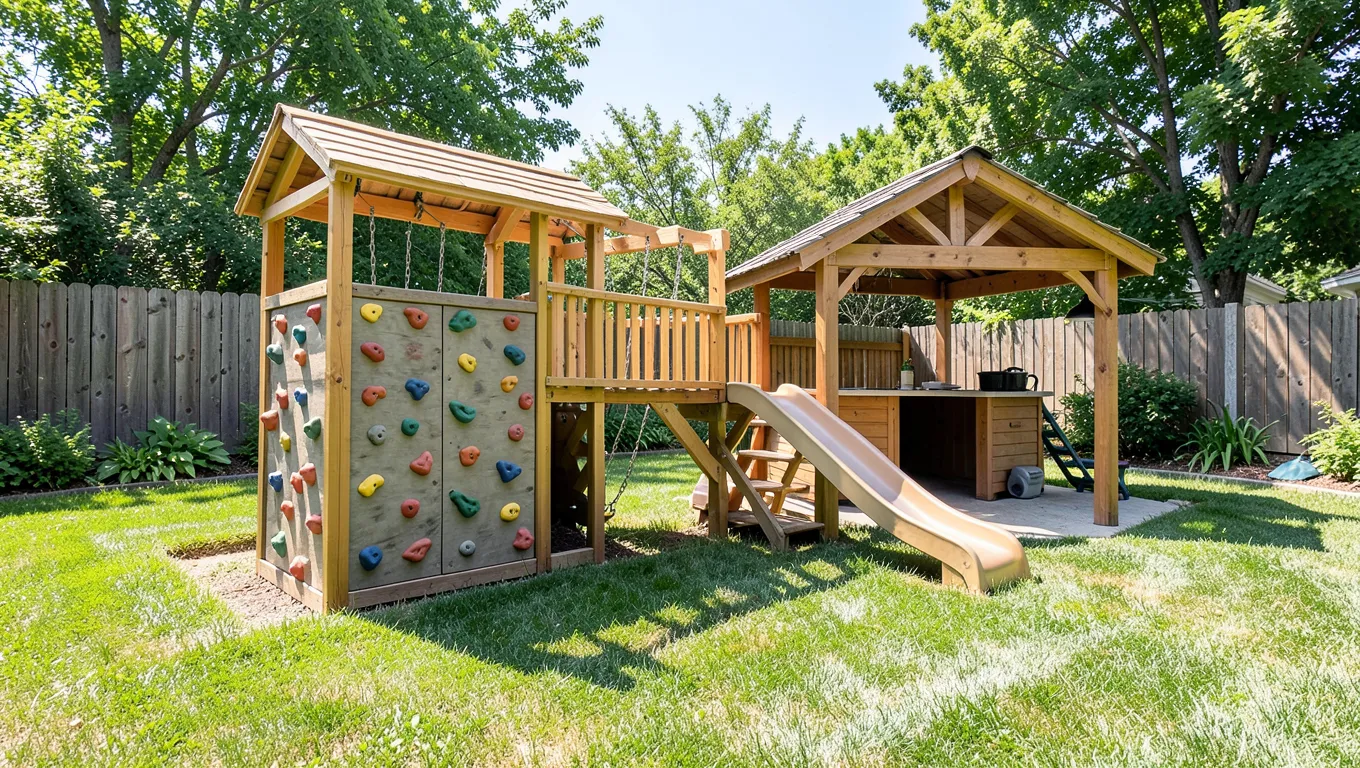
The Backyard Discovery Kings Peak is an all-cedar backyard playset with a rock wall, wave slide, covered clubhouse, and web swing, built for kids roughly ages 3–10. Cedar wood is the real headline feature — it’s naturally rot- and insect-resistant without chemical treatment, which is why it holds up outdoors for years with basic care. But the part most reviews skip entirely is the safety setup around the playset itself: fall-zone clearance, ground surfacing, and hardware checks that matter more to how safely your kids actually use it than any feature on the spec sheet.
What’s Actually in the Kings Peak
Best Fall-Zone Surfacing Upgrade
 |
Playsafer Rubber Mulch Nuggets, 40 lb – $44.99 CPSC guidance calls for real impact-absorbing surfacing under and around a playset — grass and dirt don’t count. Rubber mulch won’t compact or blow away the way wood mulch does.
|
- Rock climbing wall leading up to the fort deck
- Covered clubhouse with a wood roof and a small balcony/lookout
- Wave slide off the main deck
- Web swing plus standard belt swings on the swing beam
- Staircase entry to the fort, in addition to the rock wall
Exact dimensions, weight capacity, and current pricing change with Backyard Discovery’s model-year updates and retailer, so check the current listing on the retailer’s own product page rather than trusting a number quoted in an old review — including, frankly, older versions of this article. What doesn’t change year to year is the material: it’s genuine cedar, not a cedar-look composite, which is the thing actually worth verifying before you buy.
Why Cedar Specifically
Cedar’s heartwood contains natural oils (thujaplicins) that resist rot and deter wood-boring insects without any chemical pressure-treatment. That’s the practical reason playset makers use it outdoors: it survives years of rain, sun, and ground contact on the legs with just occasional cleaning and an oil-based sealant every couple of years, rather than needing the pressure-treated lumber (and its chemical preservatives) you’d want to keep kids away from touching directly. It will still gray with UV exposure like any untreated wood outdoors — that’s cosmetic weathering, not decay, and a light sanding plus a UV-blocking outdoor oil restores the color if you want to maintain it.
The Safety Setup Most Reviews Skip
The playset itself is only half of the safety picture. The U.S. Consumer Product Safety Commission’s Public Playground Safety Handbook lays out the ground rules that apply to any home swing set, cedar or otherwise — and these are the details that actually prevent the injuries that make playground-equipment headlines:
- Fall-zone clearance: at least 6 feet of clear space in every direction around stationary equipment like the fort and rock wall. For the swing beam specifically, extend that clearance in front of and behind the swings to roughly twice the height of the top pivot bar — a swinging child covers far more ground than a standing one.
- Impact-absorbing surfacing: grass, dirt, and concrete are not adequate under or around play equipment. CPSC guidance calls for a cushioning material — roughly 9 inches of wood mulch or chips, 9 inches of sand, or a rated rubber mulch product — extending through the full fall zone described above, not just directly under the equipment.
- Guardrails on elevated platforms: any deck or platform higher than about 30 inches should have a full guardrail, not just a partial barrier, for school-age kids; for platforms used by kids under 5, that threshold drops to about 20 inches.
- Hardware gaps: S-hooks and rings connecting swings and chains should be pinched fully closed — if you can fit a dime through the gap, it’s open enough to snag drawstrings on a hoodie or jacket, which is a real and documented strangulation hazard. Check these at assembly and again once or twice a season, since wood movement and use can work hardware loose over time.
- Head-entrapment openings: any gap a child’s body could fit through but their head couldn’t get stuck sideways in is a hazard — CPSC’s rule of thumb is that openings should be smaller than about 3.5 inches or larger than about 9 inches, nothing in between.
None of this is specific to Kings Peak or to Backyard Discovery — it applies to any home playset. But it’s worth doing a walk-through checklist after assembly (and again each spring) rather than assuming the equipment being well-built covers the whole safety picture. The surfacing and clearance around the set matter as much as the set itself.
Assembly and Upkeep
Like most large cedar playsets, this is a multi-hour build best done with two adults and a full socket/drill set on hand — budget the better part of a weekend rather than an afternoon. After assembly, plan on:
- Re-checking all bolts and hardware after the first month of use, once the wood has settled slightly, then once or twice a season after that.
- Sanding down any splinters that raise on high-touch spots (the rock wall handholds and staircase rails tend to go first) and re-oiling if you want to slow the natural graying.
- Topping up ground surfacing periodically — loose fill mulch and sand compact and scatter over time and lose cushioning depth if not refreshed.
Frequently Asked Questions
How many kids can play on it at once?
Most cedar playsets of this size comfortably handle 3–5 kids across the different stations (swings, slide, rock wall, clubhouse) at once, with adult supervision recommended regardless of group size.
Is it easy to assemble?
It’s a substantial build — plan for a full weekend with two adults, not a quick afternoon project. Backyard Discovery’s BILT app provides guided, illustrated assembly steps for most of their sets.
Can it stay outside year-round?
Yes — cedar’s natural oils make it rot- and insect-resistant outdoors without chemical treatment. It will gray with sun exposure over time, which is cosmetic, not structural; occasional sanding and an oil-based outdoor sealant will restore the color if you want to maintain it.
What ground surfacing should go under it?
Grass, dirt, and concrete don’t provide enough fall cushioning. CPSC playground safety guidance recommends roughly 9 inches of wood mulch, wood chips, or sand (or a rated rubber mulch product) extending through the full fall zone around the equipment, including the extended zone in front of and behind swings.
What safety checks should I do after assembly?
Confirm S-hooks and rings are pinched fully closed (no gap wide enough to fit a dime through), check that elevated platforms have full guardrails, and verify at least 6 feet of clearance in every direction — more behind and in front of the swings. Re-check hardware after the first month and each new season.
Sponsored / affiliate links. As an Amazon Associate I earn from qualifying purchases. I may earn additional commission from eligible campaigns.