Restofinisher vs Restor-A-Finish: Two Very Different Products
Restofinisher and Howard Restor-A-Finish are two unrelated products with similar names, not one brand spelled two ways. Restor-A-Finish is a solvent-based finish restorer from Howard Products with a published safety data sheet. Restofinisher is a separate restorer sold through restofinisher.com, whose page lists no ingredients. This guide covers what each is, what reviewers report, what Restor-A-Finish can and cannot fix, and the safety rules that come with it.
Restofinisher vs Restor-A-Finish: What Each Product Actually Is
Best Neutral Restorer Pick
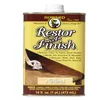 |
Howard Restor-A-Finish, 16 fl oz, Neutral ($7.49) The real Howard product behind the name this page keeps untangling. Neutral is the shade Howard says works on all wood tones, which makes it the safest first bottle for a test spot.
|
As an Amazon Associate we earn from qualifying purchases.
Most searches for “resto finisher” come from people who read a recommendation for Howard Restor-A-Finish and typed the name wrong, or who saw an ad for Restofinisher and wanted a second opinion. The two end up on the same results page, which is why they get compared. The table lays out what each maker publishes, using only pages I read for this update.
| Detail | Howard Restor-A-Finish | Restofinisher |
|---|---|---|
| Seller | Howard Products Inc., Paso Robles, CA (named on its safety data sheet) | restofinisher.com (the page I read gave an email and phone number but no street address) |
| Ingredients published | Yes: the safety data sheet lists seven components with percentage ranges | Not on the page I read |
| How it is applied | Wipe on with a cloth or 0000 steel wool, then wipe dry | Described as wipe-on, wipe-off |
| Finishes it claims to work on | Restores existing finishes such as lacquer, shellac and varnish; warns about hard plastic-like finishes, floors and exterior surfaces | “All finished wood surfaces” per its own page, with no stated exclusions |
| Color choices | Nine: Neutral, Maple-Pine, Golden Oak, Cherry, Walnut, Mahogany, Dark Walnut, Dark Oak, Ebony Brown | Not stated on the page I read |
| Independent review signal | Sold for years through major retailers | Trustpilot: 3.2 out of 5 from 5 reviews; BBB: B- rating, not accredited, 7 customer reviews |
What Reviewers Say About Restofinisher
The review pool for Restofinisher is small, so treat it as a signal rather than a verdict. On Trustpilot the listing shows 3.2 out of 5 from five reviews, four of them one-star. Reviewers there describe the liquid as thin, colorless and runny, say it did not restore the spot they tried it on, and in two cases report non-delivery or trouble getting help. One reviewer who says they have 45 years in wood coatings argues that real restoration means stripping to bare wood.
The BBB profile reads less harshly: a B- rating, no accreditation, one complaint closed in the last three years and seven customer reviews. The company’s own site promises a “30-Day money-back guarantee” and calls the product “non-toxic and odorless,” while a Trustpilot reviewer calls it smelly. Those claims conflict, and without an ingredient list there is no way to check either. If you order it anyway, keep the packaging, photograph the results and use a payment method that allows disputes.

What Is Inside Restor-A-Finish: The Safety Data Sheet Numbers
Howard’s marketing describes Restor-A-Finish as a small amount of stain combined with solvent and restoring oils. The safety data sheet (issued October 2021) is more specific, and it is the reason this product needs respect. Howard withholds exact percentages as a trade secret but lists ranges.
| Component | Share of the formula |
|---|---|
| Petroleum distillates, hydrotreated heavy paraffinic (mineral oil type) | 30 to 60% |
| Petroleum distillates, light hydrotreated | 10 to 30% |
| Isopropanol | 5 to 10% |
| Acetone | 1 to 5% |
| Methyl ethyl ketone | 1 to 5% |
| Xylene | 1 to 5% |
| Ethylbenzene | 0.1 to 1% |
Flash point 39 F (3.9 C), classed “Danger: highly flammable liquid and vapor” | Source: Howard Products safety data sheet, 2021
Two things follow from those numbers. Roughly 40 to 90 percent of the bottle is petroleum distillate, which is why it behaves like a thin oil that soaks into a finish instead of sitting on top. And a flash point of 3.9 C means the liquid gives off ignitable vapor at ordinary room temperature, so the fire risk is real in a closed garage or basement.
Safety: Flammable Solvents, Ventilation and Used Rags
The safety data sheet and the label directions agree on the main points. This is a consumer product, but it is not a casual one.
- Keep it away from heat, sparks, open flames, pilot lights and electric motors. The SDS warns that vapors can travel a considerable distance to an ignition source and flash back.
- Work with cross ventilation. The label says to open windows and doors, and to increase fresh air or wear a NIOSH-approved organic vapor respirator if your eyes water or you get headaches or dizziness.
- Wear protective gloves and eye protection. The SDS lists serious eye irritation, suspected carcinogenicity, suspected reproductive harm and an aspiration hazard.
- The SDS states that pregnant or breastfeeding women must not handle the product.
- Do not mix it with other chemicals, do not decant it into unlabeled bottles, and keep it out of reach of children.
- Protect carpet, fabric and linoleum: the label says a spill may leave a permanent stain. If it spills, scrub immediately with soap and water or a stain remover and wipe dry.
On used rags and steel wool pads, the SDS I read gives no rag-specific instruction. It says to wipe small spills with absorbent material, dispose of waste according to local regulations and keep everything away from ignition sources. Treat solvent-wet cloths as flammable waste, do not leave them bunched indoors, and check your local household hazardous waste rules. Because the formula contains acetone, our guide to removing acetone from wood explains what to do if solvent lands on a surface you did not mean to treat.
What Restor-A-Finish Can and Cannot Fix
Howard says the product removes white heat rings and water marks, sun fade, oxidation and smoke damage by penetrating the existing finish. The key word is existing. The table sorts common problems by what Howard’s own directions and FAQ support.
| Problem | Fit | What Howard’s material says |
|---|---|---|
| White heat rings and water marks in the finish | Good fit | Rub in with 0000 steel wool along the grain; reapply if needed, without excessive rubbing |
| Sun fade, dull or oxidized finish | Good fit | Quick wipe-on, wipe-off; some finishes absorb it fast, others need longer |
| Light surface scratches | Good fit | Blends light scratches; test pressure first |
| Deep gouges or finish worn down to bare wood | Poor fit | It restores a finish that is still there; repair or refinish instead |
| Hard plastic-like, imitation wood or some hard polyurethane finishes | May not work | Howard warns it may not penetrate these |
| One-step stain and poly finishes | May not work | Howard says it may not work well |
| Floors and exterior surfaces | Not recommended | Howard lists both as not recommended |
| Planning to add polyurethane on top | Avoid | FAQ says polyurethane should not be used over it |
If the surface is a floor, Restor-A-Finish is the wrong tool by Howard’s own guidance, and our guide to darkening hardwood floors without sanding covers floor-specific options. If the finish has failed completely, see how to strip finish from wood and our broader wood restoration guide.

How to Apply Restor-A-Finish: Cloth or 0000 Steel Wool
These steps follow Howard’s printed directions. Our full walkthrough, with a cleaning and prep section, is in how to use Restor-A-Finish.
- Choose the color: match the shade to your existing finish, or use Neutral if unsure, and see the Restor-A-Finish color guide for all nine.
- Test first: try it on an inconspicuous area to check color, penetration and whether you need a cloth or steel wool.
- Apply to a pad, not the wood: put it on a small cloth pad and never pour it directly on the finish.
- Work a small area: rub with the grain, lightly but firmly enough to blend the damage, and wipe dry immediately.
- Use 0000 steel wool for stubborn marks: for white rings, oxidation or light scratches, apply with a pad of super fine steel wool, rubbing lightly with the grain and testing pressure first because finishes vary in hardness.
- Carved or detailed wood: use a small paintbrush or soft toothbrush, then wipe dry.
- Wait 30 minutes, then protect: follow with Howard Feed-N-Wax, and reapply it when the finish starts to look dry.
If steel wool leaves a high-gloss finish looking dull, Howard recommends its Restor-A-Shine polishing compound to buff out the fine scratches. For repairs beyond finish blending, such as water rings that go deeper than the finish, our guide to removing water marks from wood furniture and our furniture finish repair guide cover more cases.
Restor-A-Finish vs Feed-N-Wax, Restor-A-Shine, Danish Oil and Stripping
A common mistake is treating these as interchangeable. Each does a different job, and Howard sells three of them to be used in sequence.
| Product or method | Job | Key point from Howard’s material |
|---|---|---|
| Restor-A-Finish | Restores color and blends damage in an existing finish | Wipe on, wipe off; no topcoat needed |
| Feed-N-Wax | Maintains and protects afterward | A gel of beeswax, carnauba wax and orange oil; apply 30 minutes after restoring |
| Restor-A-Shine | Buffs fine scratches back to gloss | For high-gloss pieces after steel wool |
| Danish or tung oil | Builds a new oil finish in the wood | Soaks in and solidifies; Restor-A-Finish soaks in while carrying stain, per Howard’s FAQ |
| Strip and refinish | Replaces a failed finish | The route when the finish is gone or peeling; see our stripping guide |
If you want only a wax and oil routine without the solvent step, our review of beeswax for furniture restoration compares options. For pieces you value as antiques, Howard notes that Restor-A-Finish preserves the original patina because it does not strip the finish, which is a point in its favor over refinishing.
Cost: What the Bottles Actually Cost
Amazon’s product data on 2026-10-07 listed Howard Restor-A-Finish in the 16 fl oz size at $7.49 for Neutral, $9.99 for Dark Walnut and $10.98 for the plain 16 oz listing, and the 8 fl oz Neutral at $16.48. That works out to about $0.47 per ounce for the cheapest 16 oz bottle against about $2.06 per ounce for the 8 oz bottle, so the larger size is roughly four times cheaper by volume. Prices change daily, so check the live listing.
A Trustpilot reviewer compared Restofinisher at about $34 for one cup with Howard’s roughly $10 for two cups. I could not verify the Restofinisher price from its own page, which only advertised a discount, so treat that as one buyer’s report.
Frequently Asked Questions
Is Restofinisher the same as Restor-A-Finish?
No. Restor-A-Finish is made by Howard Products Inc. of Paso Robles, California. Restofinisher is a separate wood restorer sold through restofinisher.com. The names are similar, and the word “Restofinisher” is a common misspelling of Restor-A-Finish, but they are different products from different companies with different information published about them.
Does Restor-A-Finish require removing the old finish?
No. Howard describes Restor-A-Finish as a penetrating formula that restores most existing finishes without removing any of the existing finish. That is also the limit: it works on a finish that is still there. Wood that is bare or has a failed, peeling coating needs a different repair.
Is Restofinisher legit or a scam?
This page cannot call it either way. What can be said from public sources: the product page I read lists no ingredients, a small number of Trustpilot reviewers report that it did not work or that they struggled to get a refund, and the company’s site promises a 30-day money-back guarantee. Check the return terms before you order, and use a card with purchase protection.
Can you use Restor-A-Finish on kitchen cabinets?
Often yes, but cabinet finishes vary. Howard warns that the product may not penetrate hard plastic-like finishes, some hard polyurethane finishes, or one-step stain and poly finishes. Test on an inconspicuous spot such as the inside edge of a door, and keep the room ventilated because the formula is flammable.
Can you put polyurethane over Restor-A-Finish?
Howard’s FAQ says polyurethane should not be used over it. The directions add that if you must use a clear coat, wait 30 days for Restor-A-Finish to dry fully, test the new finish on a hidden spot, and do not put wax under it. For most jobs the better plan is to skip the topcoat and use Howard Feed-N-Wax to maintain the restored finish.
Is Restor-A-Finish safe to use indoors?
Only with strong ventilation and no ignition sources. The safety data sheet classes it as a highly flammable liquid with a flash point of 39 F (3.9 C), and the label says to use cross ventilation, keep it away from flames, pilot lights and sparking motors, and increase fresh air or wear an organic vapor respirator if your eyes water or you get a headache or dizziness.
Bottom Line
Restofinisher and Restor-A-Finish are different products, and only one of them publishes ingredients, directions and a safety data sheet. If you have an old finish that is dull, faded or lightly marked, Howard Restor-A-Finish in Neutral is the documented option, applied in a ventilated space with no flame or spark nearby. If the finish is gone, peeling or on a floor, skip it and refinish instead.
Sponsored / affiliate links. As an Amazon Associate I earn from qualifying purchases. I may earn additional commission from eligible campaigns.