Softwood vs Hardwood Firewood: Which Should You Burn?
Choose Softwood when you need quick ignition, kindling, shoulder-season heat, or a short outdoor fire. Choose Hardwood Firewood when you want longer burns, steadier heat, and overnight loads. Pick the wrong one and you waste fuel, fight smoke or rapid burnouts, and lose useful heat. This guide explains how softwood and hardwood perform in stoves, fireplaces, and outdoor fires, where each one works best, and where each one fails.
| Factor | Softwood | Hardwood Firewood | Winner |
|---|---|---|---|
| Ignition | Lights easily and helps a fire catch fast | Usually needs more heat and more time to catch | Softwood |
| Burn duration | Burns faster and is better for short fires | Burns longer and is better for sustained heat | Hardwood Firewood |
| Coal bed | Makes a lighter coal bed | Makes a stronger coal bed for steady reloads | Hardwood Firewood |
| Seasoning time | Often seasons in 3-12 months | Often needs 12-36 months, sometimes longer | Softwood |
| Best fit for a wood stove | Useful for starting the fire | Better for overnight heat and fewer reloads | Hardwood Firewood |
| Best fit for kindling | Common choice for quick ignition | Usually too dense for that job | Softwood |
| Smoke and creosote risk when wet | Higher if wet or if the fire smolders | Higher if wet or if the fire smolders | Tie |
Which is better for your fire?
Neither wood type wins every time. Softwood is usually the better starter, and hardwood is usually the better holder of heat. The right choice depends on a fast flame, a long coal bed, or a fire that needs to stay hot for hours in a stove, fireplace, or outdoor ring.
Why appliance type changes the answer
A wood stove benefits from long-burning fuel that leaves useful coals behind, so hardwood often fits that job better. A fireplace or fire pit is less demanding if the goal is a short, bright burn, where softwood can be a practical choice. Appliance design changes how much the fire needs to coals, draft, and hold temperature.
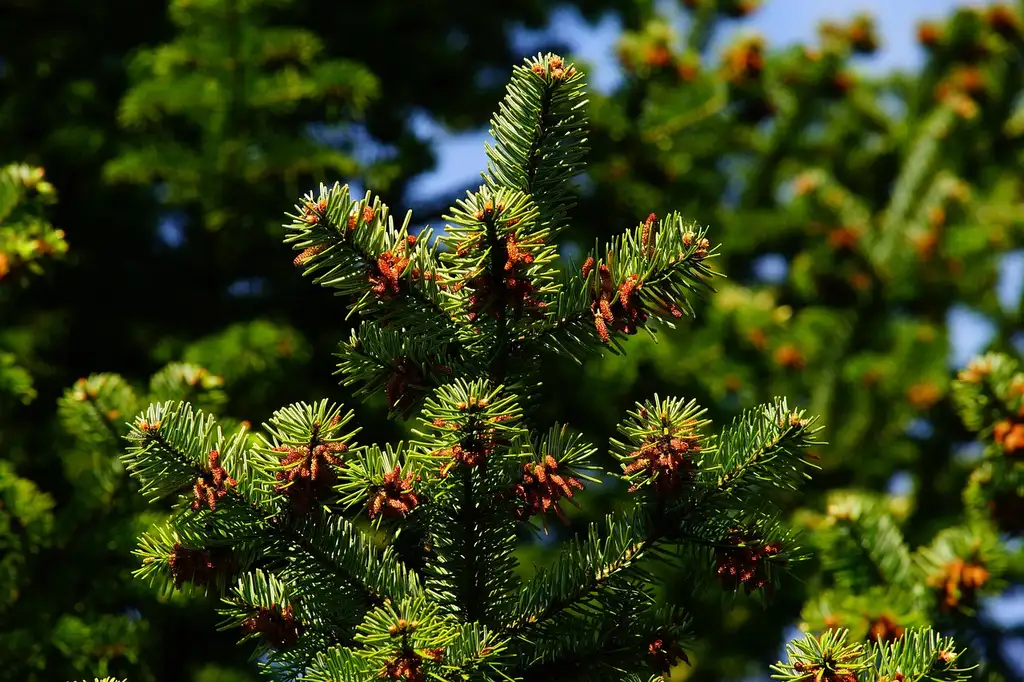
Hardwoods and softwoods are classified botanically, not by how hard they feel. Hardwoods come from deciduous trees that generally shed leaves in fall. Softwoods come from coniferous trees like evergreens. That botanical difference usually tracks with density, resin content, and how the wood behaves in the firebox.

Softwood vs hardwood at a glance
Softwood is usually easier to light and faster to burn. Hardwood is usually denser, heavier for its size, and better at holding heat longer. On a volume basis, hardwood often lands in the 20-30+ million BTU per cord range, while softwood often falls around 12-20 million BTU per cord, though species and dryness matter.
Deciduous vs coniferous trees
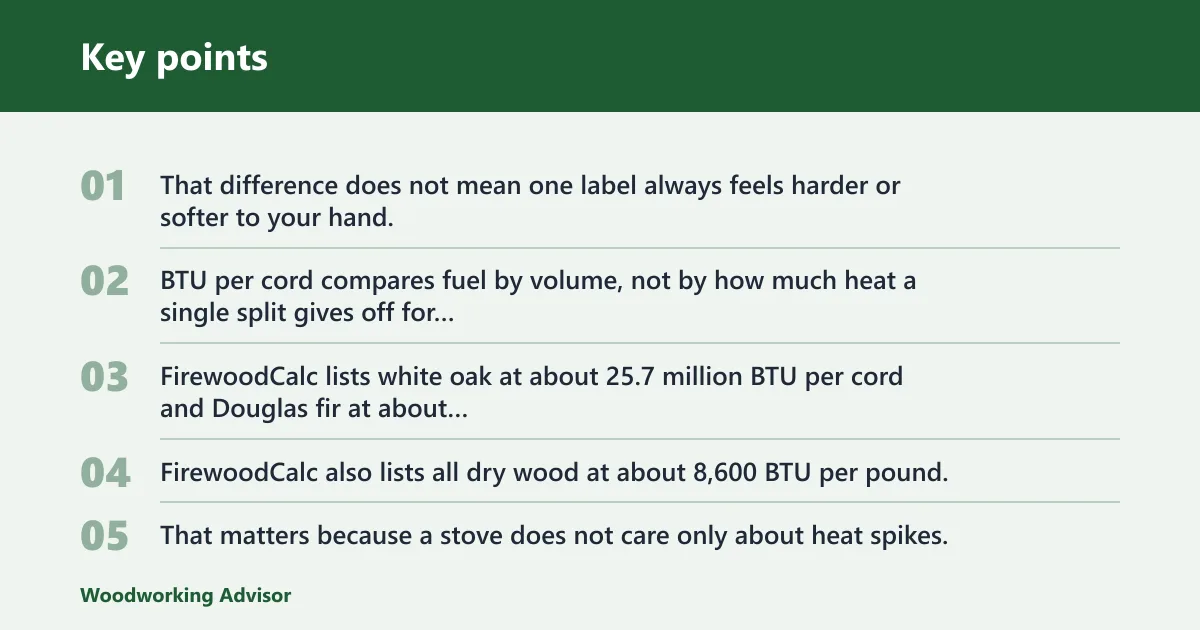
Hardwood comes from deciduous trees. Softwood comes from coniferous trees. That difference does not mean one label always feels harder or softer to your hand, but it does help explain why hardwoods usually make better coals and why softwoods usually light faster.
BTU per cord, burn time, and coal bed
BTU per cord compares fuel by volume, not by how much heat a single split gives off for a few minutes. FirewoodCalc lists white oak at about 25.7 million BTU per cord and Douglas fir at about 20.7 million BTU per cord. FirewoodCalc also lists all dry wood at about 8,600 BTU per pound.
That matters because a stove does not care only about heat spikes. It also cares about how long the fuel keeps producing usable heat and whether it leaves a coal bed strong enough to relight the next load.
Seasoning time and moisture target
Seasoning time is not the same for every species. The same source says most softwoods are ready to burn in 6 months or less, while white oak can take 24-36 months to fully season. As a broader rule, softwood often seasons in about 3-12 months, while hardwood commonly needs about 12-36 months.
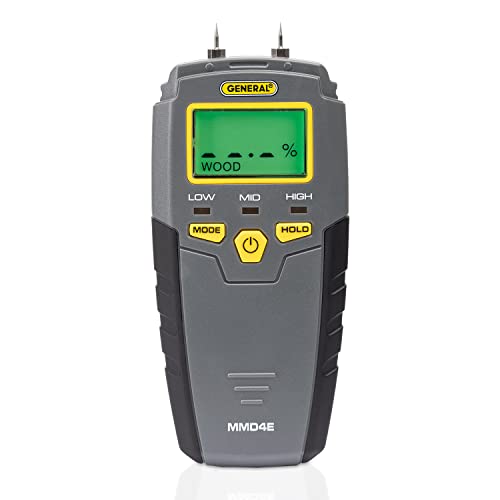
Firewood is generally recommended to be at or below about 20% moisture for safe burning. The Log People gives that target for softwood logs, and it applies to hardwood too. Wet wood turns heat into steam, smokes more, and raises creosote risk in chimneys and stove pipe.
When should you burn softwood?
Burn softwood when you want a fast start, a short fire, or a quick rise in flue temperature. It is a strong choice for kindling, shoulder-season fires, and outdoor fires where you want flame now rather than a long coal bed later.
Kindling and fast ignition
Softwood is commonly used as kindling because it lights easily and helps raise appliance temperature quickly. A comparison of several hardwoods and softwoods found that softwood is easier to ignite than hardwood. That quick light-off helps the flue draft stabilize sooner.
Shoulder-season fires and quick ambiance
In mild weather, you may want heat for an hour or two, not through the night. Softwood fits that job well because it reaches useful heat quickly and does not leave the same heavy coal bed that can overheat a small firebox or linger after the room already feels warm.
Say your home is cool on a 50-degree evening and you want a 90-minute fire in the living room. A few dry softwood splits can warm the appliance quickly. The trade-off is that the fire will need more attention and more frequent reloads than hardwood.
Outdoor fire pits and short burns
Fire pits often reward quick ignition and visible flame. Softwood can work well there, especially when the goal is a short gathering rather than an all-night fire. Keep the pieces dry and modest in size, because oversized splits can smolder before they fully catch.
When should you burn hardwood?
Burn hardwood when you want fewer reloads, a longer burn, and a coal bed that carries heat forward. That makes hardwood the better fit for overnight stove loads, long evening burns, and situations where you do not want the fire to fade fast after ignition.
Overnight heat in a wood stove
A wood stove usually benefits from long-burning, coal-producing fuel. Hardwood fits that job because it tends to burn longer and leaves more useful coals behind. That does not mean every hardwood performs the same, but it does mean the category usually suits overnight heat better than softwood.
Longer coal bed for steady heat
A stronger coal bed matters when you reload a stove or fireplace and want the next load to catch without a cold start. Hardwoods such as red oak and cherry are listed in the Utah State University comparison, and the page notes that hardwoods tend to be more difficult to split, which often tracks with their density.
Suppose a stove is loaded at 10 p.m. for heat until morning. Hardwood is the safer bet because the fire can keep useful coals alive longer. Softwood may catch faster, but it is more likely to leave you with a cooler firebox and less lasting heat.
When you want fewer reloads
If you want to tend the fire less often, hardwood is usually the better choice. It burns slower, which means fewer trips to the stove or fireplace. That slower pace is especially useful in cold weather, when a quick fire that burns out too soon is more trouble than it is worth.
Softwood firewood decision table
This table turns the choice into a burn-goal decision. Match the wood to the job, then check moisture and split size before you load the firebox.
| Scenario | Best wood type | Why it works | Likely failure mode | 20% moisture reminder |
|---|---|---|---|---|
| Cold-start stove | Softwood | Lights fast and helps the flue warm quickly | Wet splits stall the draft and smoke up the stove | Use wood at or below 20% |
| Overnight heat | Hardwood Firewood | Burns longer and leaves a better coal bed | Softwood burns through too quickly for the job | Use wood at or below 20% |
| Quick ambiance fire | Softwood | Fast flame and short burn suit a brief fire | Overloading can make the fire race and fade | Use wood at or below 20% |
| Shoulder-season fire | Softwood | Useful when you want heat for a short window | Hardwood can leave too much residual heat | Use wood at or below 20% |
| Kindling | Softwood | Small pieces catch quickly and raise temperature | Large pieces delay ignition and waste kindling space | Use wood at or below 20% |
| Fire pit | Softwood | Good for fast light and a short social fire | Green wood smokes heavily and is unpleasant nearby | Use wood at or below 20% |
| Smoky fireplace risk | Hardwood Firewood | Dry hardwood can help sustain hotter, cleaner burning | Any wet wood or smoldering load can smoke badly | Use wood at or below 20% |
What causes smoke and creosote?
Wet wood and smoldering fires cause most of the trouble, not wood type alone. Creosote forms when smoke cools and condenses in the chimney, so a cool, oxygen-starved fire is a problem whether the wood is softwood or hardwood. Dry fuel and a hot burn matter more than the label on the pile.
Why moisture matters more than species
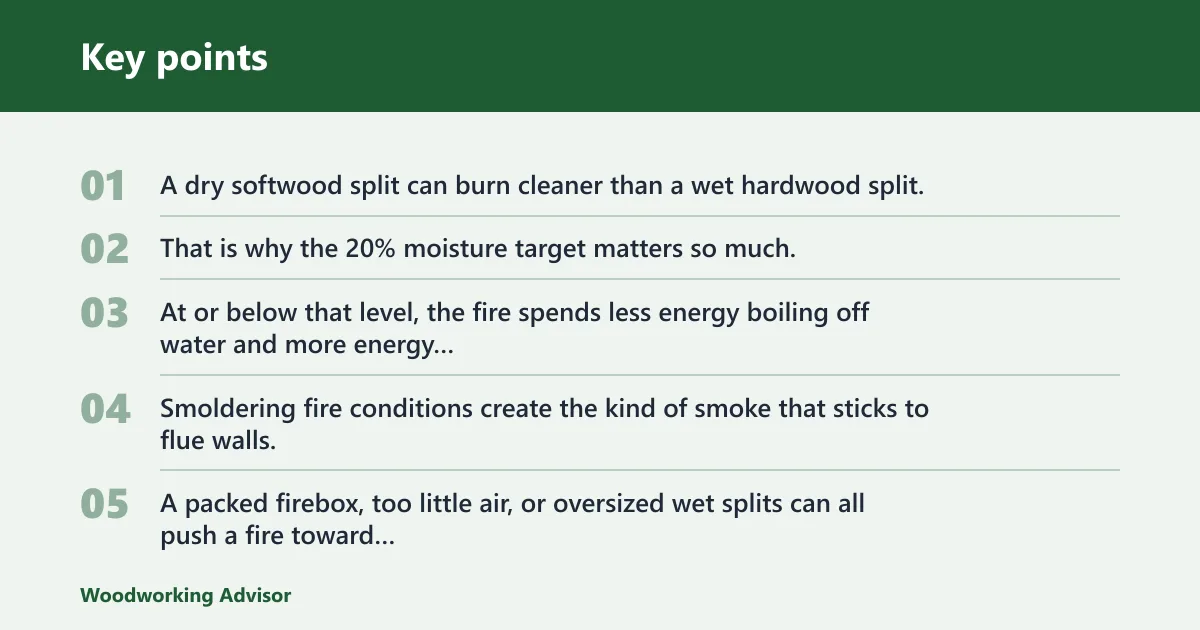
A dry softwood split can burn cleaner than a wet hardwood split. That is why the 20% moisture target matters so much. At or below that level, the fire spends less energy boiling off water and more energy making heat, which helps reduce visible smoke and chimney deposits.
How smoldering increases buildup
Smoldering fire conditions create the kind of smoke that sticks to flue walls. A packed firebox, too little air, or oversized wet splits can all push a fire toward smoldering. Resin in softwood can add smoke if the wood is wet, but wet fuel and low temperature are the real failure pair.
A common first-timer mistake is loading a stove with thick, damp softwood, then shutting the air down too early to slow the burn. The result is a lazy fire, more smoke, and more buildup in the flue. Dry wood split to a practical size does far less damage.
Choose Softwood if… / Choose Hardwood Firewood if…
Choose Softwood if you need quick ignition, kindling, shoulder-season heat, or a short outdoor fire. Choose Hardwood Firewood if you want a longer burn, a stronger coal bed, or overnight heat in a wood stove. The moisture target stays the same for both: at or below 20%.
Choose Softwood if…
- You want the fire to light fast.
- You are starting a stove, fireplace, or pit and need flue temperature up quickly.
- You want a short burn rather than a long coal bed.
- You are using dry kindling or small splits for ignition.
Choose hardwood firewood if…
- You want longer heat with fewer reloads.
- You are loading a wood stove for overnight use.
- You need a stronger coal bed for the next load.
- You have time to season wood properly and can wait through the longer dry-down period.
Simple buying checklist
- Match the wood to the burn goal: start fast or burn long.
- Check that the wood is at or below 20% moisture.
- Use smaller splits when you want quick ignition.
- Use larger, dry splits when you want a longer burn in a stove.
- Do not assume softwood is bad or hardwood is perfect; dry fuel and hot combustion matter most.
Frequently asked questions
Is hardwood better than softwood for firewood?
Hardwood is better when you want longer burn time, stronger coals, and steadier heat. Softwood is better when you want faster ignition and shorter burns. The better choice depends on the appliance and the job, not just the wood label.
Does softwood burn hotter than hardwood?
Softwood can feel hotter at the start because it lights quickly and flames up fast, but hardwood usually holds heat longer. Dry wood contains about 8,600 BTU per pound regardless of type, so burn behavior depends heavily on moisture, density, and how the fire is managed.
Which burns longer, hardwood or softwood?
Hardwood usually burns longer because it is denser and tends to leave a better coal bed. Softwood burns faster, which can be useful for quick heat or short fires, but it is usually the weaker choice when duration matters most.
Is softwood bad for chimneys or creosote?
Softwood is not automatically bad for chimneys. Creosote risk rises when wood is wet or the fire smolders, and that can happen with either wood type. Dry softwood burned hot and correctly can be a normal part of a safe firing routine.
Can you heat a house with softwood?
Yes, you can heat a house with softwood if the wood is dry enough and the supply is steady. The trade-off is that it burns faster, so you may need more frequent reloads. For long overnight heat, hardwood usually makes life easier.
How long does softwood take to season?
Softwood often seasons in 3-12 months, and FirewoodCalc says most softwoods are ready to burn in 6 months or less. Exact timing depends on species, split size, airflow, stacking, and weather. Always check moisture rather than relying on the calendar alone.
What is the best wood for kindling?
Softwood is usually the best kindling because it lights easily and helps the firebox or stove temperature rise quickly. Small, dry pieces are more useful than large, damp chunks, especially when you need draft to establish before adding bigger fuel.
Which wood is best for a wood stove?
Hardwood Firewood is usually the best choice for a wood stove when the goal is longer heat and fewer reloads. Softwood still has a place as starter fuel, especially for cold starts and getting the stove hot enough for cleaner, steadier combustion.
Should you mix hardwood and softwood in the same fire?
Yes, mixing them is common and often practical. Softwood can start the fire quickly, then hardwood can carry the burn longer. Keep both dry, size the splits to the firebox, and avoid smothering the load with too much fuel at once.
Sponsored / affiliate links. As an Amazon Associate I earn from qualifying purchases. I may earn additional commission from eligible campaigns.