Grand Fir vs Douglas Fir: How to Tell Them Apart (and Which to Use)
The fastest way to tell grand fir and Douglas fir apart isn’t the needles — it’s the cones. Grand fir cones stand upright on the branch and fall apart before they ever hit the ground, while Douglas fir cones hang down and drop whole, with a distinctive three-pointed bract poking out between each scale. That one trick settles the identification question in seconds, which most comparisons of these two trees never mention.
Beyond looks, the two trees serve very different purposes. Grand fir (Abies grandis) is a true fir prized for its citrusy fragrance and soft needles, which is why it shows up on Christmas tree lots every winter. Douglas fir (Pseudotsuga menziesii) isn’t a true fir at all — the genus name means “false hemlock” — and it’s one of the most heavily harvested structural timber species in North America, framing everything from garage walls to glulam beams.
Origins and Habitat
Best for Checking Lumber Before You Build
 |
General Tools MMD4E Moisture Meter – $37.70 Whether you end up with grand fir or Douglas fir, moisture content is what actually determines how the wood performs once it’s cut.
|
Grand fir grows natively through the moist lowland forests of the Pacific Northwest and into the northern Rockies, usually along river bottoms and shaded valleys where the soil stays damp year-round. Douglas fir has a much larger native range, stretching from British Columbia down through California and east into the Rockies, and it has since been planted commercially in Europe, New Zealand, and Chile because it tolerates a wider range of soils and rainfall.
That range difference matters if you’re planting one: grand fir wants consistent moisture and struggles in a dry, exposed yard, while Douglas fir handles drier summers and more sun once it’s established, which is one reason it’s the default choice for reforestation and commercial plantations.
Whichever species you end up buying — construction lumber, a beam, or even a live Christmas tree — moisture content is what actually determines how it performs. Framing lumber above about 19% moisture is graded “green” and will shrink and check as it dries in place, and a Christmas tree that’s already drying out is a fire risk long before it looks obviously brown. A cheap pinless meter takes the guesswork out of both situations in under a minute.
Identification: Needles, Bark, and Cones
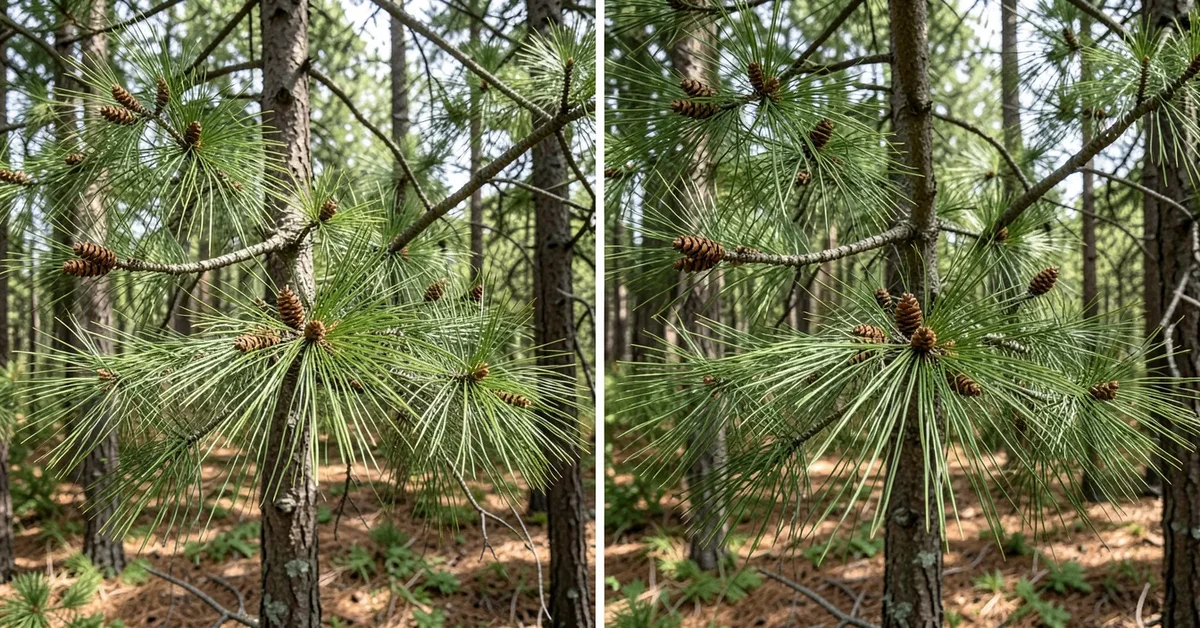
Grand fir needles are flat, glossy dark green on top with two pale stripes underneath, and they’re arranged in a distinctly flat spray along the twig — crush a few and you’ll get a strong orange-and-pine scent that’s unmistakable. Douglas fir needles are also flat but sit all the way around the twig rather than in a flat plane, and they’re a duller blue-green with a softer, less citrusy smell.
Bark tells a similar story as the trees mature. Young grand fir bark stays smooth and gray with resin blisters, roughening only slightly with age. Douglas fir bark starts smooth too, but by maturity it turns thick, corky, and deeply furrowed in dark reddish-brown ridges — that bark thickness is actually a survival trait, letting older Douglas firs shrug off low-intensity wildfire that would kill a younger tree outright.
Still, the cone test beats both of those for a quick, certain ID. Every true fir, grand fir included, holds its cones upright near the top of the crown, and those cones disintegrate scale by scale on the branch — you almost never find an intact fir cone on the ground. Douglas fir cones hang downward like a typical pinecone, fall to the ground whole, and carry the three-pronged bract that field guides describe as looking like a mouse’s back legs and tail ducking into the cone.
Growth Rate and Mature Size
Douglas fir is the faster grower of the two, typically adding 24 to 36 inches a year once established, versus 12 to 24 inches for grand fir. That gap compounds over decades. Grand fir tops out in the 150 to 260 foot range in old growth, which is already enormous, but coastal Douglas fir is one of the tallest tree species on the planet, with confirmed specimens over 300 feet and a handful of century-old giants pushing past 330 feet. Trunk diameter follows the same pattern — mature Douglas fir routinely runs 5 to 6 feet across at the base, noticeably thicker than a grand fir of similar age.
Wood Quality and Best Uses
This is where the practical difference really shows up for anyone buying lumber rather than planting a tree. Grand fir wood is soft, light, and straight-grained, which makes it easy to cut and nail but limits it to non-structural roles: pulp and paper, interior door cores, moulding, and general light-frame work where load-bearing strength isn’t the priority.
Douglas fir wood is a different category of material. It’s noticeably harder and denser, with one of the best strength-to-weight ratios of any commercial softwood, and that’s exactly why it dominates structural framing, engineered beams, subflooring, and plywood veneer. The tradeoff is that it’s tougher to cut and more prone to pitch and knots, and it can twist or check as it dries if it isn’t kiln-dried properly. If you’re comparing weather exposure specifically rather than structural strength, our breakdown of fir wood’s weather resistance versus Douglas fir covers that side in more depth.

Wildlife and Ecological Role
Both species anchor healthy forest ecosystems, just in slightly different ways. Grand fir’s dense, low branching gives songbirds and small mammals reliable winter cover, and its seed cones feed squirrels and crossbills through the fall. Douglas fir’s thick, deeply furrowed bark hosts insect populations that woodpeckers rely on, and its extensive root system is one of the more effective erosion barriers on steep Pacific Northwest slopes — a big reason it’s favored in post-logging reforestation.
Planting and Care
Both trees want full sun and a planting hole roughly twice the width of the root ball, backfilled with the native soil rather than heavily amended compost, which can actually discourage roots from spreading outward. Water deeply right after planting, then keep the root zone consistently moist (not soggy) through the first two growing seasons while the root system establishes — this matters more for grand fir, which is far less forgiving of a dry spell than Douglas fir once mature.
After year two, established Douglas fir needs little supplemental watering outside of true drought. Grand fir still benefits from occasional deep watering during hot, dry stretches. Both benefit from a 2 to 3 inch mulch ring (kept away from direct contact with the trunk) and an annual check for the pests below rather than routine fertilizing, which most established conifers don’t need.
Common Pests and Problems
Aphids and spider mites show up on both species, usually as sticky residue or fine yellow stippling on the needles, and a strong water spray or insecticidal soap handles light infestations. Bark beetles are the more serious threat — they bore into stressed or drought-weakened trees, and by the time you see pitch tubes on the trunk, the infestation is often already established. Keeping trees adequately watered during drought is the best prevention, since beetles target weakened trees far more than healthy ones.
Root rot from overwatering or poor drainage is the other recurring problem, especially on grand fir planted in heavy clay soil. If you see needle yellowing that starts at the bottom of the tree and works upward, check drainage before assuming it’s a pest or nutrient issue — that pattern points to roots sitting in water, not a bug problem.
Frequently Asked Questions
Is Grand Fir the Same As Douglas Fir?
No. Grand fir is a true fir in the genus Abies, while Douglas fir belongs to a separate genus, Pseudotsuga, despite the shared common name. Their cones, bark, and typical uses are all different.
Is Grand Fir a Good Christmas Tree?
Yes — grand fir is a popular Christmas tree choice because of its strong citrus fragrance, soft needles that won’t jab your hands during decorating, and sturdy branches that hold ornaments well.
What Is the Real Difference Between Fir and Douglas Fir?
True firs, including grand fir, have soft flat needles and cones that stand upright and disintegrate on the branch. Douglas fir has needles arranged around the twig rather than in a flat spray, and its cones hang down and fall intact with a signature three-pointed bract. For outdoor lumber rather than landscaping, the bigger practical difference is decay resistance — see our full breakdown of fir wood’s weather resistance compared to Douglas fir.
What Are the Disadvantages of Douglas Fir?
Douglas fir is more susceptible to bark beetle attack and certain fungal rots than some hardwoods, needs proper kiln-drying to avoid warping or twisting, and its higher density makes it noticeably harder to cut and fasten by hand than a softer wood like grand fir.
Bottom Line
Pick grand fir when fragrance and soft needles matter more than strength — Christmas trees, light interior trim, or ornamental planting in a consistently moist spot. Pick Douglas fir when you need real structural performance: framing, beams, or a fast-growing landscape tree that tolerates a drier site once established. If you’re buying rough lumber and can’t tell which species you’ve got, the cone test on any nearby mature tree will settle it faster than comparing needles or bark.
Sponsored / affiliate links. As an Amazon Associate I earn from qualifying purchases. I may earn additional commission from eligible campaigns.