Wood Hardness Scale: Janka Ratings for 75+ Wood Types
The Janka hardness scale rates wood by the force, in pounds-force (lbf), needed to press a steel ball halfway into its surface — balsa scores 100, red oak 1,290, Australian buloke 5,060. Picking wood below your project’s real traffic level means dents within months, not years. This guide ranks 77 species by Janka number and shows what’s actually “hard enough” for flooring, furniture, and outdoor use.
Quick Answer
Janka hardness is a wood’s resistance to denting, measured in pounds-force (lbf) needed to embed a 0.444-inch steel ball halfway into its surface. For hardwood flooring, look for at least 1,200 lbf — homes with dogs or heavy furniture do better above 1,300 lbf. Softwoods like pine (870 lbf) suit trim, not daily impact.
What the Janka Hardness Scale Actually Measures
Best Wood Filler for Dent Repair Pick
Gorilla All Purpose Wood Filler, Natural Finish, 16 oz
A water-resistant, stainable filler for the dents and gouges that lower-Janka species (pine, poplar, soft maple) pick up over time.
- Best for: repairing dents in softwood trim, furniture, and flooring below ~1,200 lbf
- Why we picked it: sands and stains close to natural wood tone, unlike tinted putties
- Main drawback: needs full cure time before sanding — rushing it leaves a soft spot
Compare more wood repair options
 Option 1 ROBERTS Quick-Repair Putty (Brown)
|
 Option 2 J-B Weld KwikWood Epoxy Putty
|
 Option 3 Lifreer 16-Color Wood Filler Sticks
|
As an Amazon Associate we earn from qualifying purchases.
The Janka hardness test is a wood-industry standard that measures the force required to embed an 11.28mm (0.444-inch) steel ball halfway into a wood sample, expressed in pounds-force (lbf) or newtons (N). Developed by Austrian-born researcher Gabriel Janka in the early 20th century and standardized under ASTM D1037, the test uses heartwood samples at roughly 12% moisture content, free of knots. A higher number means more force was needed to make the dent — so the wood resists denting, scratching, and wear better. For the exact lab procedure behind that number, see how the Janka ball test is actually performed.
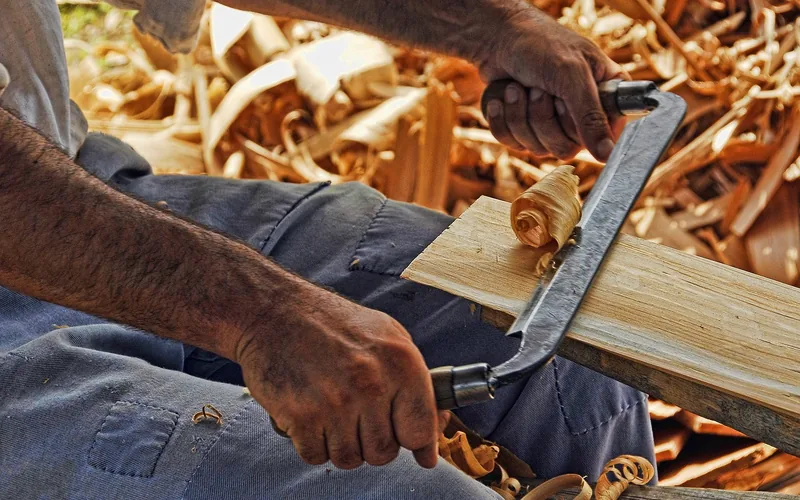
The test also gives a rough read on how hard a species is to nail, screw, or saw by hand: the same density that resists a steel ball also resists a drill bit. That’s why oak takes noticeably more effort to hand-saw than pine, and why pre-drilling matters more on hickory than on cedar.
Janka Hardness Chart: 77 Wood Species Ranked
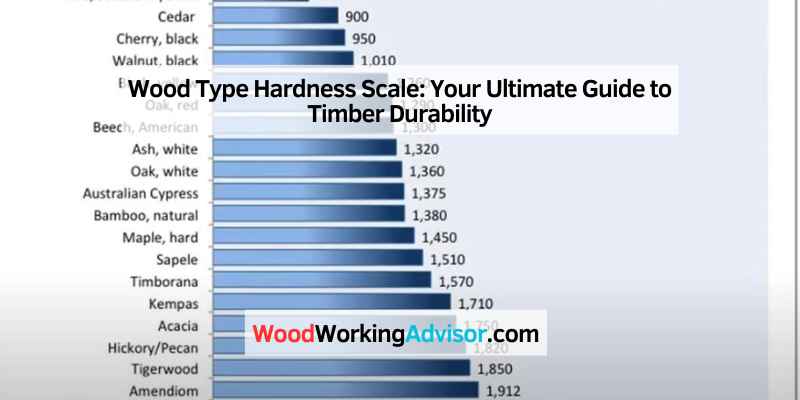
The table below ranks 77 domestic and imported species from softest to hardest, compiled from Janka hardness reference data (Wikipedia’s Janka hardness test entry, Toolstoday’s Janka chart, and Bell Forest Products’ hardwood database). Values can vary 5–15% between sources depending on the specific sample tested, moisture content, and growing region — treat these as reliable comparison points, not lab-certified figures for a specific board.
| Species | Janka Hardness (lbf) | Category | Best For |
|---|---|---|---|
| Balsa | 100 | Softwood | Model making, insulation — far too soft for furniture or floors |
| Western Red Cedar | 350 | Softwood | Outdoor siding, closets, fence boards |
| Eastern White Pine | 380 | Softwood | Trim, paneling, low-traffic furniture |
| Basswood | 410 | Softwood | Hand carving, model work |
| Cypress | 510 | Softwood | Outdoor beams, siding, boat building |
| Sitka Spruce | 510 | Softwood | Guitar tops, aircraft-grade framing |
| Yellow Poplar | 540 | Softwood | Paint-grade furniture, drawer boxes |
| Red Alder | 590 | Softwood | Cabinetry, veneer, electric guitar bodies |
| Spanish Cedar | 600 | Softwood | Cigar boxes, closet lining, humidor interiors |
| Douglas Fir | 660 | Softwood | Structural framing, exposed beams |
| Black Limba | 670 | Hardwood | Furniture, decorative veneer |
| Sycamore | 770 | Hardwood | Butcher blocks, cabinetry, veneer |
| Mahogany (Genuine) | 800 | Hardwood | Fine furniture, boat interiors, musical instruments |
| American Elm | 830 | Hardwood | Bent furniture parts, tool handles |
| Southern Yellow Pine | 870 | Softwood | Structural framing, porch flooring |
| Lacewood | 891 | Hardwood | Decorative veneer, accent furniture |
| Cherry (Black Cherry) | 950 | Hardwood | Cabinetry, fine furniture, trim |
| Soft Maple | 950 | Hardwood | Furniture, flooring in lighter-traffic rooms |
| Black Walnut | 1,010 | Hardwood | Fine furniture, gunstocks, cabinetry |
| Holly | 1,020 | Hardwood | Inlay work, marquetry, small turned items |
| African Mahogany | 1,100 | Hardwood | Furniture, boat building |
| Mango | 1,100 | Hardwood | Furniture, cutting boards |
| Teak | 1,155 | Hardwood | Outdoor furniture, boat decking |
| Koa | 1,170 | Hardwood | Ukuleles, guitars, decorative furniture |
| Acacia | 1,180 | Hardwood | Butcher blocks, flooring, furniture |
| Redheart | 1,200 | Hardwood | Turning, inlay, decorative accents |
| Yellow Birch | 1,260 | Hardwood | Cabinetry, flooring, plywood veneer |
| Narra | 1,260 | Hardwood | Furniture, flooring in Southeast Asia |
| Red Oak (Northern) | 1,290 | Hardwood | Flooring, cabinetry, furniture — the US baseline hardwood |
| Makore | 1,294 | Hardwood | Furniture, decorative veneer |
| American Beech | 1,300 | Hardwood | Flooring, tool handles, butcher blocks |
| White Ash | 1,320 | Hardwood | Tool handles, baseball bats, flooring |
| Shedua | 1,330 | Hardwood | Furniture, flooring, turned items |
| Ebiara | 1,350 | Hardwood | Flooring, furniture |
| White Oak | 1,360 | Hardwood | Flooring, outdoor furniture, whiskey barrels |
| Eucalyptus | 1,400 | Hardwood | Flooring, outdoor decking |
| Hard Maple (Sugar Maple) | 1,450 | Hardwood | Bowling alleys, basketball courts, flooring |
| Sweet Birch | 1,470 | Hardwood | Flooring, cabinetry, furniture |
| Sapele | 1,500 | Hardwood | Furniture, guitar necks, flooring |
| Canarywood | 1,520 | Hardwood | Turning, accent furniture |
| Honey Locust | 1,548 | Hardwood | Flooring, fence posts, furniture |
| Afrormosia | 1,560 | Hardwood | Outdoor furniture, boat decking (teak substitute) |
| Merbau | 1,712 | Hardwood | Decking, flooring |
| Black & White Ebony | 1,780 | Exotic hardwood | Musical instrument fittings, inlay |
| Afzelia | 1,810 | Exotic hardwood | Flooring, outdoor furniture |
| Hickory / Pecan | 1,820 | Hardwood | Tool handles, flooring, drumsticks — hardest common US hardwood |
| Zebrawood | 1,830 | Exotic hardwood | Decorative furniture, veneer |
| Yellowheart | 1,878 | Exotic hardwood | Turning, inlay, accent furniture |
| Wenge | 1,930 | Exotic hardwood | Flooring, furniture, guitar fretboards |
| Bolivian Rosewood | 1,960 | Exotic hardwood | Furniture, musical instruments |
| Padauk | 1,970 | Exotic hardwood | Turning, inlay, accent furniture |
| Ziricote | 1,970 | Exotic hardwood | Guitar bodies, turning, knife handles |
| Bocote | 2,010 | Exotic hardwood | Turning, knife handles, gunstocks |
| Sucupira | 2,140 | Exotic hardwood | Flooring, outdoor furniture |
| Leopardwood | 2,150 | Exotic hardwood | Furniture accents, turning |
| Goncalo Alves | 2,160 | Exotic hardwood | Furniture, flooring, turning |
| Chechen | 2,200 | Exotic hardwood | Flooring, furniture |
| Honduras Rosewood | 2,200 | Exotic hardwood | Musical instruments, fine furniture |
| Santos Mahogany | 2,400 | Exotic hardwood | Flooring — a popular hard alternative to genuine mahogany |
| Bubinga | 2,410 | Exotic hardwood | Furniture, guitar bodies, turning |
| East Indian Rosewood | 2,440 | Exotic hardwood | Furniture, musical instruments — often traded as palisander (see how it compares to walnut) |
| Purpleheart | 2,520 | Exotic hardwood | Flooring, furniture accents, turning |
| Jatoba (Brazilian Cherry) | 2,690 | Exotic hardwood | Flooring — a very hard, dent-resistant floor choice |
| Granadillo | 2,700 | Exotic hardwood | Flooring, turning, knife handles |
| Madagascar Rosewood | 2,720 | Exotic hardwood | Fine furniture, musical instruments |
| Osage Orange | 2,760 | Exotic hardwood | Tool handles, archery bows, fence posts |
| Bloodwood | 2,900 | Exotic hardwood | Turning, inlay, accent furniture |
| Cocobolo | 2,960 | Exotic hardwood | Knife handles, turning, small luxury items |
| Gaboon Ebony | 3,080 | Exotic hardwood | Musical instrument fittings, fine inlay |
| Macassar Ebony | 3,220 | Exotic hardwood | Fine furniture, musical instruments |
| Desert Ironwood | 3,250 | Exotic hardwood | Knife handles, small turned items |
| Cumaru | 3,330 | Exotic hardwood | Decking — a common Ipe alternative |
| African Blackwood | 3,670 | Exotic hardwood | Woodwind instruments, fine inlay |
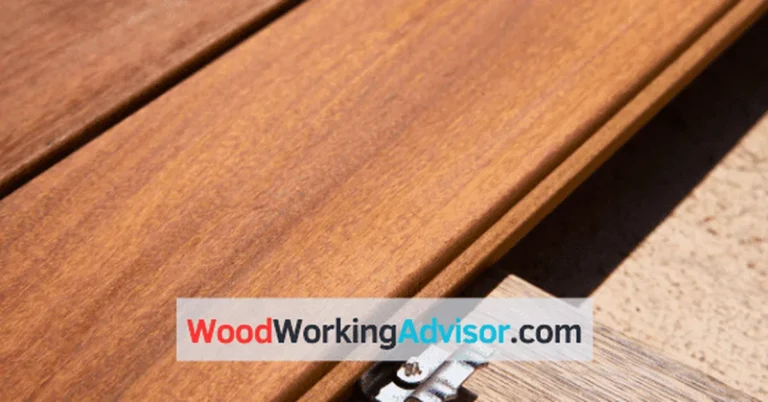
| Ipe (Brazilian Walnut) | 3,680 | Exotic hardwood | Decking, outdoor structures — extreme weather resistance |
| Snakewood | 3,800 | Exotic hardwood | Turning, exotic small items — among the hardest woods sold commercially |
| Lignum Vitae | 4,380 | Exotic hardwood | Ship propeller-shaft bearings, mallets — historically the hardest wood in trade |
| Australian Buloke | 5,060 | Exotic hardwood | Not commercially milled — the hardest wood ever recorded |
How to Read Your Project’s Janka Number
A raw lbf number only matters relative to what the wood has to survive. Here’s the practical threshold for each common use:
Flooring
Residential flooring generally needs at least 1,000–1,200 lbf — red oak (1,290 lbf) or hickory handle normal foot traffic without trouble. Homes with large dogs, kids, or heavy furniture that gets rearranged do better above 1,300 lbf; that’s where hickory (1,820 lbf) and imported species like Brazilian cherry earn their premium price.
Furniture
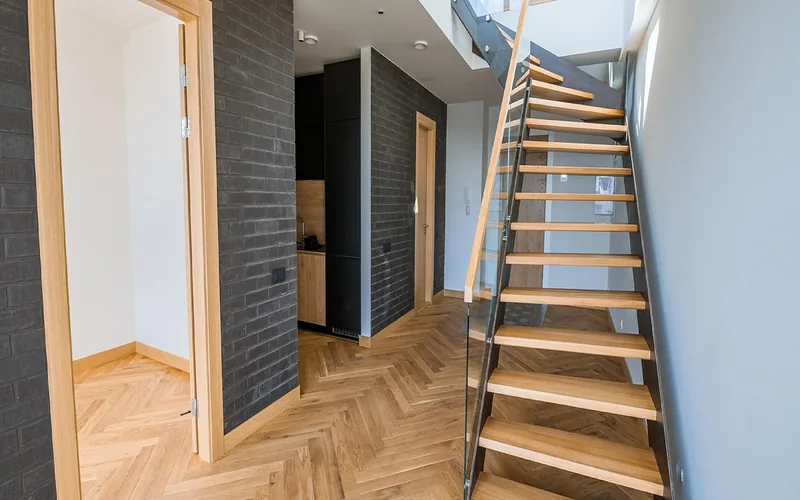
Tabletops and chair frames that see daily use do well anywhere from 900–1,500 lbf — walnut (1,010 lbf), cherry (950 lbf), and maple (1,450 lbf) are the standard picks. Purely decorative pieces (display cabinets, picture frames) can go softer since they don’t take impact.
Outdoor Furniture and Decking
Outdoors, rot and UV resistance matter as much as hardness. Cedar (350 lbf) is soft but naturally rot-resistant, which is why it dominates fencing and siding despite a low Janka number. For decking that takes foot traffic and furniture legs, Ipe (3,680 lbf) and cumaru (3,330 lbf) are the two most common high-hardness choices — both are also naturally rot-resistant, which is the real reason they’re sold for decks rather than the Janka number alone.
Turning, Carving, and Hand Tools
Lower numbers aren’t a downside here — basswood (410 lbf) and butternut are prized specifically because they carve cleanly with hand tools. Save the 2,000+ lbf exotics (cocobolo, ebony, bloodwood) for small turned items like knife handles and pens, where their hardness shows up as a fine, glass-smooth finish rather than a fight with your gouge.
Common Mistakes People Make With the Janka Scale
Higher Janka isn’t automatically “better.” A 3,000+ lbf exotic is overkill (and a pain to nail or plane by hand) for a picture frame that will never take an impact. Match the number to the actual traffic the piece will see.
Janka hardness isn’t the same as strength. It measures dent resistance, not how much weight a beam can bear or how well the wood resists bending (that’s modulus of rupture, a separate test). A structural species like Douglas fir has a modest 660 lbf Janka rating but excellent bending strength — that’s exactly why it frames houses instead of hardwood.
Numbers shift between sources. Expect 5–15% variance on the same species depending on which lab tested it, the moisture content of the sample, and whether the wood was tested on the face grain or end grain. Treat any single lbf figure as a comparison point, not a lab certificate for the specific board in front of you.
📊 The gap between Southern Yellow Pine (870 lbf) and Red Oak (1,290 lbf) is only 420 lbf on paper — but it’s the practical difference between a floor that dents under a dropped cast-iron pan and one that doesn’t. Source: Janka hardness reference data (Toolstoday, Wikipedia).
“In the shop, the jump from red oak (1,290 lbf) to hard maple (1,450 lbf) is more noticeable at the tool than the number on paper suggests — chisels and hand planes need re-sharpening measurably sooner working maple all day.”
Frequently Asked Questions
What is the Janka hardness scale for wood species?
The Janka hardness scale measures the force, in pounds-force (lbf), needed to embed a steel ball halfway into a wood sample. Higher ratings mean the wood resists denting and wear better, which is why it’s the standard reference for choosing flooring and furniture wood.
What type of wood is the hardest in the world?
Australian buloke is the hardest wood ever recorded on the Janka scale, at roughly 5,060 lbf — about four times harder than red oak. It isn’t commercially milled for furniture or flooring, so the hardest wood you can actually buy is typically Lignum Vitae (4,380 lbf) or snakewood (3,800 lbf).
What is a good Janka hardness rating for hardwood flooring?
For most homes, 1,000–1,200 lbf is enough — red oak (1,290 lbf) is the industry baseline. Homes with large dogs, heavy foot traffic, or furniture that moves often do better above 1,300 lbf, which is where hickory (1,820 lbf) and imported species like Brazilian cherry come in.
Does Janka hardness matter for outdoor furniture and decking?
It matters less than rot and UV resistance. Cedar (350 lbf) is soft but naturally decay-resistant, which is why it’s a standard outdoor choice despite a low Janka number. High-hardness deck species like Ipe (3,680 lbf) are chosen mainly for their rot resistance and longevity — the extreme hardness is a side benefit, not the main reason.
Is a higher Janka rating always better?
No. A higher rating means better dent resistance, but it also means the wood is harder to saw, nail, and plane by hand, and it’s usually more expensive. For carving, turning small items, or trim that won’t take impact, a softer wood like basswood or pine is the better practical choice.
Conclusion
The Janka number only matters relative to the job: match it to real foot traffic for flooring, real impact risk for furniture, and rot resistance (not just hardness) for anything outdoors. For a deeper look at how these species compare beyond hardness — grain, color, and workability — see our complete types of wood guide.
Sponsored / affiliate links. As an Amazon Associate I earn from qualifying purchases. I may earn additional commission from eligible campaigns.