Hammer vs Impact Drill Which Tool Should You Pick
Picking the right tool can be tricky when you’re just starting out. For many, the question Hammer vs Impact Drill: Which Tool Should You Choose? is a common one.
It’s easy to get confused because both tools can drill holes. But they do it in different ways and are best for different jobs. Don’t worry, we’ll break it down super simply.
We’ll show you step by step how to know which one is the best for what you need. Get ready to learn what makes each drill special!
Understanding Hammer Drills
What Is A Hammer Drill And How It Works
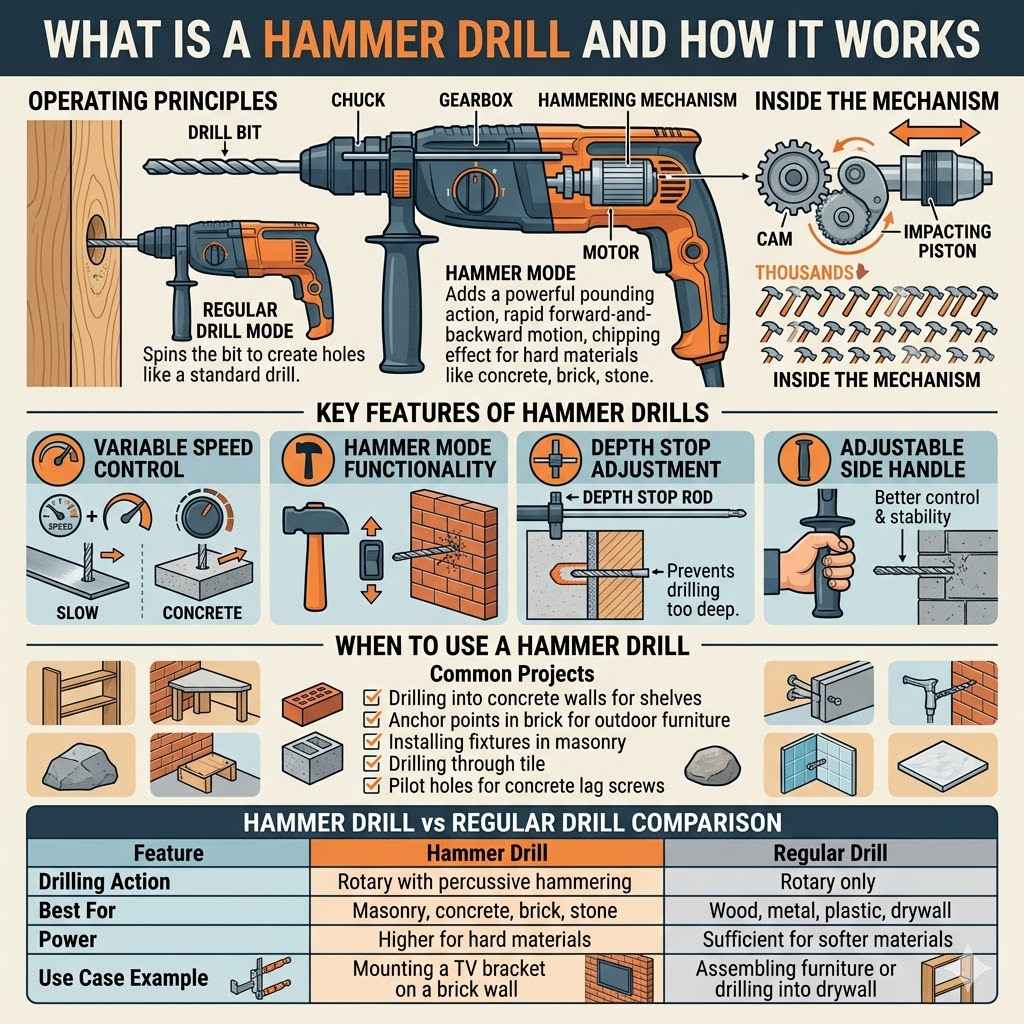
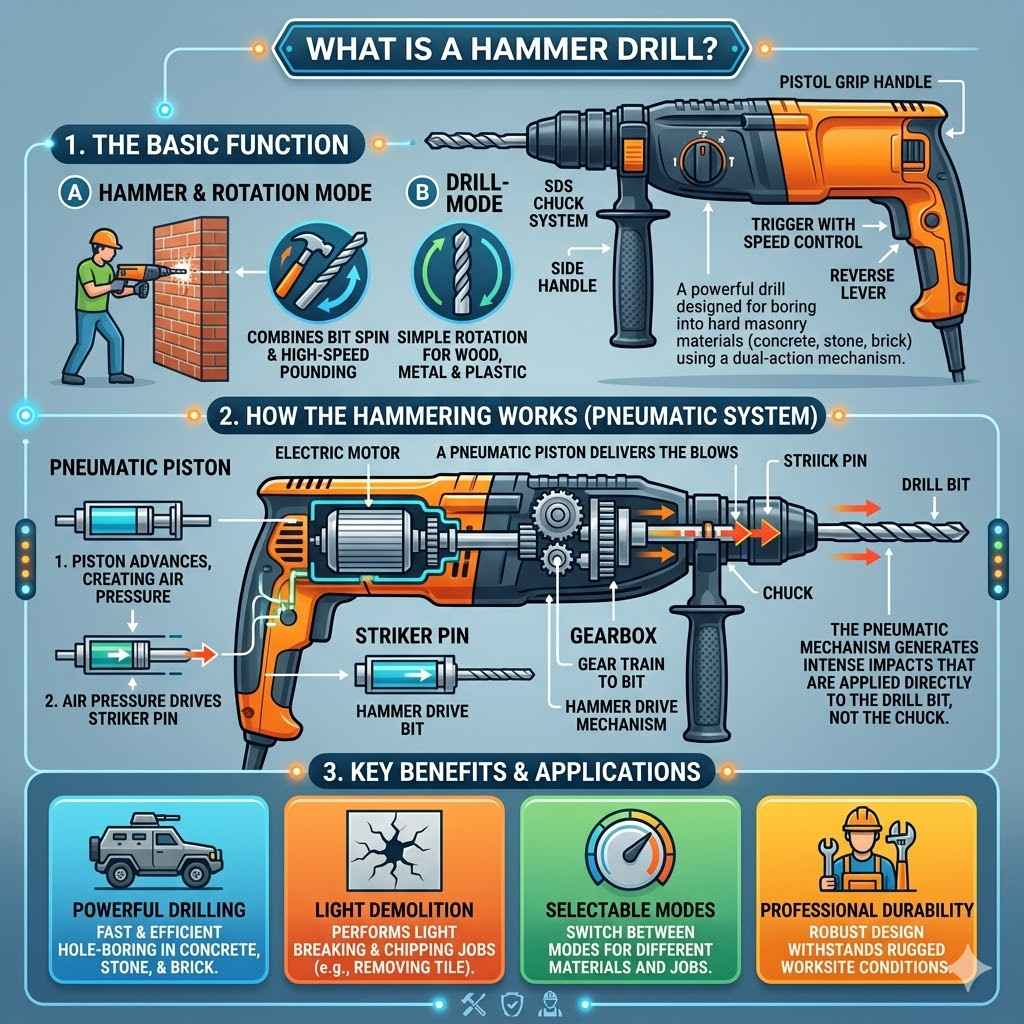
A hammer drill is a power tool that has two main modes: drilling and hammering. When you use it in drill mode, it works just like a regular drill, spinning a bit to make holes. But when you switch it to hammer mode, it adds a powerful pounding action.
This pounding happens very fast, thousands of times per minute. This makes it much easier to drill into hard materials.
The hammering action comes from a mechanism inside the drill that makes the chuck (where the drill bit goes) move forward and backward rapidly. This forward and backward motion, combined with the spinning, creates a chipping effect. It’s like having a tiny hammer hitting the drill bit as it turns.
This is what allows it to break through tough stuff like concrete, brick, or stone.
The force of the hammer action can be adjusted. Some hammer drills have a dial to control how strong the hammering is. This is useful because you don’t always need the full power.
For softer materials or when you just need to make a small hole, a lighter hammer action is better.
Key Features of Hammer Drills
- Variable Speed Control This lets you choose how fast the drill bit spins. Slower speeds are good for starting a hole or for drilling into softer materials. Faster speeds are better for drilling into harder surfaces or when you need to get the job done quickly. Being able to control the speed helps you avoid mistakes and makes the drill easier to handle. It’s a really important feature for versatility.
- Hammer Mode Functionality This is what makes a hammer drill different. When turned on, it adds a percussive action to the rotation. This pounding makes it effective for drilling into masonry and concrete. Without this feature, drilling into these materials would be very difficult and slow. It’s the core of what a hammer drill does best.
- Depth Stop Adjustment Many hammer drills come with a depth stop. This is a rod that you can attach to the drill. It lets you set exactly how deep the drill bit will go. This is super helpful when you need to drill holes to a specific depth, like for wall anchors. It prevents you from drilling too deep and damaging the surface behind your material.
- Adjustable Side Handle For better control and stability, especially when using the hammer function, a hammer drill often has an adjustable side handle. This handle attaches to the body of the drill and gives you a second grip. It allows you to apply more pressure evenly and keeps the drill from twisting in your hands. This makes drilling into tough materials much safer and easier.
When To Use A Hammer Drill
A hammer drill is your go-to tool for drilling into hard, dense materials. Think about building a shelf on a brick wall or hanging a heavy picture frame on a concrete block. These are jobs where a regular drill would struggle or just wouldn’t work at all.
It’s perfect for drilling into concrete foundations, stone, or thick masonry. It can also handle drilling through tile if you need to install something like a bathroom fixture. Even for very dense wood, the hammer action can sometimes help to break through knots or tough grain.
Some projects where a hammer drill shines include:
- Drilling holes in a concrete wall to mount cabinets or shelves.
- Creating anchor points in a brick exterior for outdoor furniture or a pergola.
- Installing new fixtures or outlets in a masonry home.
- Drilling through tile for plumbing or electrical work.
- Creating pilot holes for large lag screws in concrete.
Hammer Drill vs Regular Drill Comparison
| Feature | Hammer Drill | Regular Drill |
|---|---|---|
| Drilling Action | Rotary with percussive hammering | Rotary only |
| Best For | Masonry, concrete, brick, stone | Wood, metal, plastic, drywall |
| Power | Higher for hard materials | Sufficient for softer materials |
| Use Case Example | Mounting a TV bracket on a brick wall | Assembling furniture or drilling into drywall |
This table shows the big difference. A regular drill spins. A hammer drill spins and pounds.
For tough jobs, pounding makes a huge difference.
Exploring Impact Drills
What Is An Impact Drill And How It Works
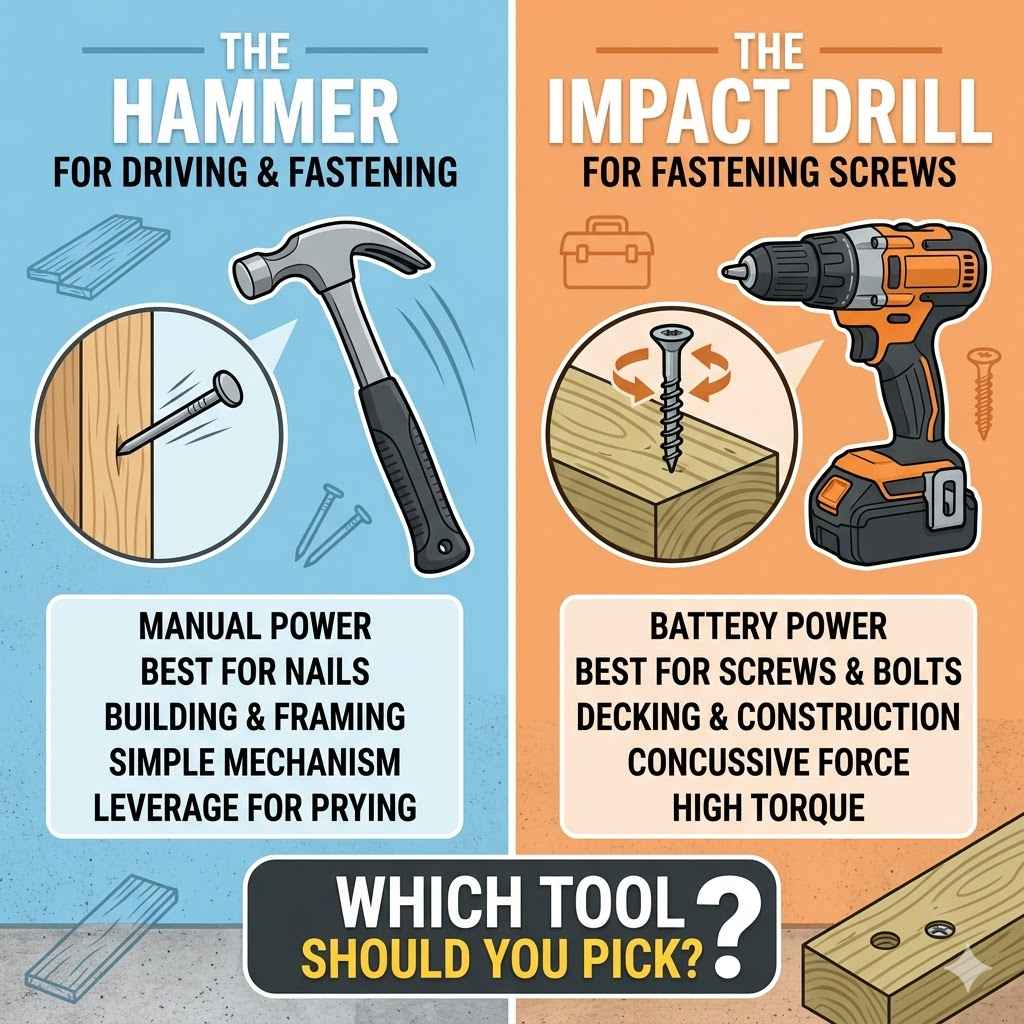
An impact drill, also known as an impact driver, is a different kind of power tool. It’s designed specifically for driving screws and bolts, but it can also drill holes. What makes it unique is its “impact” action.
This isn’t a hammering motion like a hammer drill. Instead, it delivers quick, powerful rotational twists.
When you squeeze the trigger on an impact drill, it spins a bit and then delivers a rapid series of rotational impacts or “kicks.” These impacts are applied in the same direction as the rotation, essentially giving the screw head a strong, sharp twist. This makes it incredibly effective at driving long screws or bolts into tough materials without the bit slipping or the screw head stripping.
The mechanism involves a rotating mass that strikes an anvil. This happens very quickly, so you hear a distinct buzzing or ratcheting sound when it’s in use. This action transfers a lot of torque, which is rotational force, directly to the screw.
It can be much more powerful than a regular drill for driving fasteners.
Impact drills are also usually more compact and lighter than hammer drills. This makes them easier to handle for extended periods. They are the favorite tool for many professionals for tasks that involve lots of fasteners.
Key Features of Impact Drills
- High Torque Output Impact drills deliver significantly more torque than standard drills. This rotational force is what allows them to drive screws and bolts with ease. This high torque is crucial for fastening in dense materials or when using large fasteners. It means less effort for you and a more secure hold.
- Impact Mechanism This is the defining feature. Instead of percussive hammering, it uses rapid rotational impacts. These quick twists help to overcome resistance when driving fasteners. They prevent the bit from camming out, meaning the bit slips out of the screw head. This protects the screw head and makes the job faster.
- Variable Speed Trigger Like most power tools, impact drills have a trigger that controls speed. You can control how fast the bit spins and impacts. A light touch provides slow rotation for precise starting of a screw. Squeezing harder increases speed and impact force for faster driving. This control is vital for different types of fasteners and materials.
- Compact and Lightweight Design Impact drivers are generally smaller and lighter than hammer drills. This makes them very comfortable to hold and use for long periods. Their compact size also allows them to fit into tighter spaces, making them ideal for working in confined areas like inside cabinets or under sinks.
When To Use An Impact Drill
An impact drill is the best tool for any job that involves driving a lot of screws or bolts. If you’re building a deck, putting together flat-pack furniture, or installing drywall, an impact drill will make the job much faster and easier.
It’s excellent for driving long screws into wood or composite materials. It’s also great for lag bolts, which are very thick and tough to drive by hand or with a regular drill. The impact action means you’re less likely to strip the screw head or break the screw.
Here are some common tasks perfect for an impact drill:
- Assembling large pieces of furniture or cabinetry.
- Building a wooden deck or fence.
- Installing siding or roofing materials.
- Driving large lag bolts into framing for structural support.
- Working on automotive repairs that require driving many bolts.
Impact Drill vs Regular Drill Comparison
| Feature | Impact Drill | Regular Drill |
|---|---|---|
| Primary Action | Rotational impacts (twisting) | Rotary only |
| Best For | Driving screws and bolts | Drilling holes, light fastening |
| Torque | Very High | Moderate |
| Use Case Example | Driving long deck screws | Drilling pilot holes for screws |
The table highlights the key difference. Impact drills are about twisting power for fasteners. Regular drills are more about spinning for holes.
Hammer Drill vs Impact Drill Which Tool Should You Choose
Direct Comparison Hammer vs Impact Drill
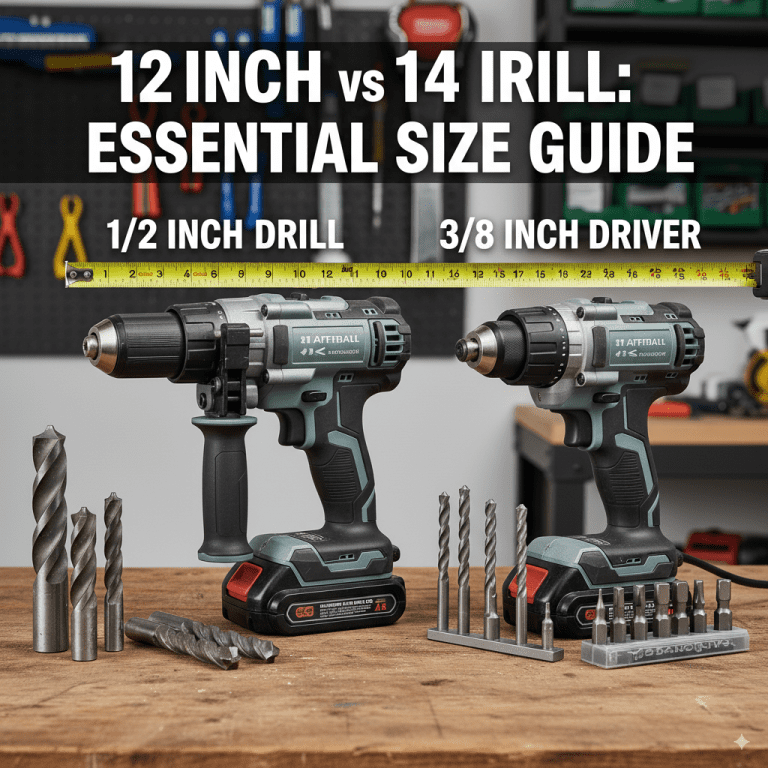
When you look at a Hammer vs Impact Drill: Which Tool Should You Choose?, the main difference comes down to the type of work you need to do. A hammer drill is designed to punch holes through hard things. An impact drill is built to twist screws and bolts in with a lot of force.
They are not interchangeable for their main jobs, though they can sometimes do each other’s tasks poorly.
Think of it like this: the hammer drill uses a forward and backward pounding action, like a tiny jackhammer, combined with spinning. This breaks apart hard materials like concrete. The impact drill uses a rapid series of powerful twists, like a super-fast wrench, to sink fasteners deep into material.
While an impact drill can drill holes and a hammer drill can drive screws, neither is ideal for the other’s primary function. Using a hammer drill to drive many screws can be tiring and less effective. Using an impact drill for drilling into concrete will be slow and may not even work.
Drilling Capabilities
Both hammer drills and impact drills can drill holes. However, their effectiveness varies greatly depending on the material.
A hammer drill excels at drilling into hard surfaces. This includes concrete, brick, stone, and dense masonry. Its percussive action helps to break up the material as the bit spins, allowing it to penetrate effectively.
For these materials, a hammer drill is far superior to an impact drill or a regular drill.
An impact drill can drill holes in wood, metal, and plastic. It spins like a regular drill. It can be very fast for these softer materials due to its high torque.
However, it lacks the percussive hammering action needed for masonry. If you try to drill concrete with an impact drill, it will be extremely slow and may overheat or stall.
A regular drill, in comparison, is best for wood, metal, and plastic. It spins without any hammering or rotational impacts. It’s a good all-around tool for basic drilling needs but struggles with hard materials.
Fastening Capabilities
When it comes to driving screws and bolts, the impact drill is the clear winner. Its rotational impact mechanism delivers a tremendous amount of torque. This allows it to sink long screws or lag bolts into wood or other materials quickly and easily.
The impact action helps prevent the screw head from stripping. It also reduces the strain on your wrist. If you have a project with many screws, an impact drill will save you a lot of time and effort.
A hammer drill can drive screws, but it’s not its primary strength. You can use it in drill mode for fastening. However, it won’t deliver the same high torque as an impact drill.
If you try to drive screws in hammer mode, you’ll likely damage the screw head or the material.
A regular drill is suitable for driving smaller screws or when less torque is needed. For larger fasteners or in dense materials, a regular drill may struggle and could overheat.
Power and Torque Explained
Understanding power and torque is key to choosing between these tools. Torque is the rotational force. It’s what makes a drill or driver turn something.
Higher torque means it can turn harder things or turn them faster under load.
An impact drill has very high torque. This is due to its special impact mechanism that delivers sharp twists. This is why it’s great for driving screws and bolts, especially in tough materials where regular drills would stop or struggle.
A hammer drill also has good torque, but its main power comes from the combination of spinning and pounding. The pounding action helps it break through hard surfaces, which requires a different kind of force than pure twisting. Its torque is sufficient for drilling, but for driving fasteners, it’s generally less than an impact drill.
A regular drill has moderate torque. It’s enough for most everyday tasks like drilling small holes or driving small screws. However, it lacks the extreme torque of an impact driver or the specialized action of a hammer drill for tough jobs.
When You Might Need Both
For the serious DIYer or a professional contractor, having both a hammer drill and an impact drill is often ideal. They serve different, complementary purposes. You might use the hammer drill for drilling holes into concrete to mount something, and then use the impact drill to drive the screws that hold it in place.
Imagine you are building an outdoor structure. You might use a hammer drill to create holes in a concrete patio for anchor bolts. Then, you would use an impact drill to drive those anchor bolts firmly into place.
This combination covers a wide range of tasks. It ensures you have the right tool for the job, making your work more efficient and less frustrating. Many tool brands offer kits that include both a hammer drill and an impact drill, often with batteries and chargers, which can be a cost-effective option.
Choosing the Right Tool for Your Project
DIY Home Improvement Projects
For most home improvement tasks around the house, you’ll find yourself needing different tools for different jobs. If you frequently hang pictures, mount shelves, or do basic assembly, a good regular drill might be enough. However, if you plan on any work involving masonry, like drilling into brick or concrete walls, a hammer drill becomes essential.
Consider the materials you’ll be working with most often. If your home has brick or concrete walls and you want to install anything on them, a hammer drill is a wise investment. If your projects mainly involve wood, like building a garden planter or assembling furniture, an impact drill will be a significant upgrade for driving screws quickly and easily.
Many homeowners start with a basic drill. As they tackle more involved projects, they realize the benefits of specialized tools. A hammer drill opens up possibilities for wall mounting and structural work.
An impact drill speeds up any task involving screws and bolts, reducing fatigue and improving accuracy.
Professional Use Cases
In professional trades, the choice between a hammer drill and an impact drill is critical for efficiency and productivity. Electricians, plumbers, and general contractors often rely on both tools daily.
Electricians might use a hammer drill to bore holes through concrete walls for running conduit or wiring. They might then use an impact drill to quickly mount electrical boxes or secure fixtures. Plumbers might use a hammer drill to create anchor points for pipes in masonry and an impact drill to drive the fasteners holding them in place.
For framing carpenters, an impact drill is almost indispensable. Driving hundreds of screws or lag bolts in a day would be exhausting without one. They use it for everything from framing walls to installing subflooring.
A common scenario for a contractor:
- Drill holes into concrete foundation for a deck ledger board using a hammer drill with a masonry bit.
- Drive lag bolts through the ledger board into the foundation using an impact drill for a secure attachment.
- Use the impact drill to drive deck screws into the joists, completing the frame quickly.
Sample Scenarios
Let’s look at a couple of scenarios to help you decide.
Scenario 1: You want to hang a heavy mirror on your living room wall. Your wall is made of drywall with wooden studs behind it. You will likely need to find a stud to support the mirror’s weight.
A regular drill is sufficient for drilling pilot holes into the wood stud. If you are using screws that require a bit more force, an impact drill would make driving them easier and faster than a regular drill. A hammer drill is not needed here.
Its hammering action would be unnecessary and could damage the drywall.
Scenario 2: You need to install a wall-mounted TV bracket onto a brick exterior wall of your house. You must drill into the brick to create anchor points for the bracket. A hammer drill is essential for this task.
Its percussive action will allow you to bore holes into the hard brick. After drilling the holes, you will use the hammer drill in drill mode (or switch to an impact drill if you have one) to drive the masonry anchors and bolts securely into the brick. An impact drill alone would struggle immensely to drill into brick.
Frequently Asked Questions
Question: Can I use an impact drill to drill holes in concrete?
Answer: While an impact drill can spin a drill bit, it lacks the hammering action needed for concrete. It will be very slow, difficult, and may not be effective. A hammer drill is the correct tool for drilling into concrete.
Question: Is a hammer drill good for driving screws?
Answer: A hammer drill can drive screws when set to its regular drill mode. However, it does not offer the high torque of an impact drill. Using it in hammer mode for screws can damage the screw head or material.
Question: Which tool is better for assembling furniture?
Answer: An impact drill is generally better for assembling furniture, especially if it involves many screws or larger ones. It drives screws quickly and with less effort, preventing stripped screw heads. A regular drill can also work for lighter furniture assembly.
Question: Do I need both a hammer drill and an impact drill?
Answer: It depends on your projects. If you only do light DIY like hanging pictures, a regular drill might be enough. If you do work with masonry or need to drive many screws quickly, having both is highly beneficial.
They complement each other well.
Question: What’s the difference in noise between a hammer drill and an impact drill?
Answer: Both can be noisy, but impact drills tend to have a more distinct, rapid “ratcheting” or “buzzing” sound due to their rotational impacts. Hammer drills produce a pounding noise when in hammer mode, which can be louder and more jarring.
Summary
Choosing between a hammer drill and an impact drill depends on the job. Hammer drills excel at drilling into hard materials like concrete and brick. Impact drills are best for driving screws and bolts with high torque.
For most DIYers, a regular drill is a starting point. If you work with masonry, get a hammer drill. If you drive many screws, an impact drill is a game changer.
For comprehensive projects, owning both is ideal.