Hammer vs Mallet: What’s the Difference?
When you’re working on a project, you might wonder about different tools. The Hammer vs Mallet: What’s the Difference? question pops up a lot for people just starting out. It can seem a bit confusing because they both hit things, right?
But they’re used for very different jobs and can make your work much easier when you pick the right one. Don’t worry, we’ll break it down super simply. Let’s look at what makes them unique so you can grab the best tool for your next task.
Understanding Hammer vs Mallet What’s the Difference
This section explores the core distinctions between hammers and mallets. We will cover what each tool is designed for, the materials they are made from, and the typical tasks they perform. Knowing these differences helps you choose the correct tool for a project, preventing damage to materials or the tool itself.
This knowledge is key for anyone wanting to work efficiently and safely.
What Is A Hammer?
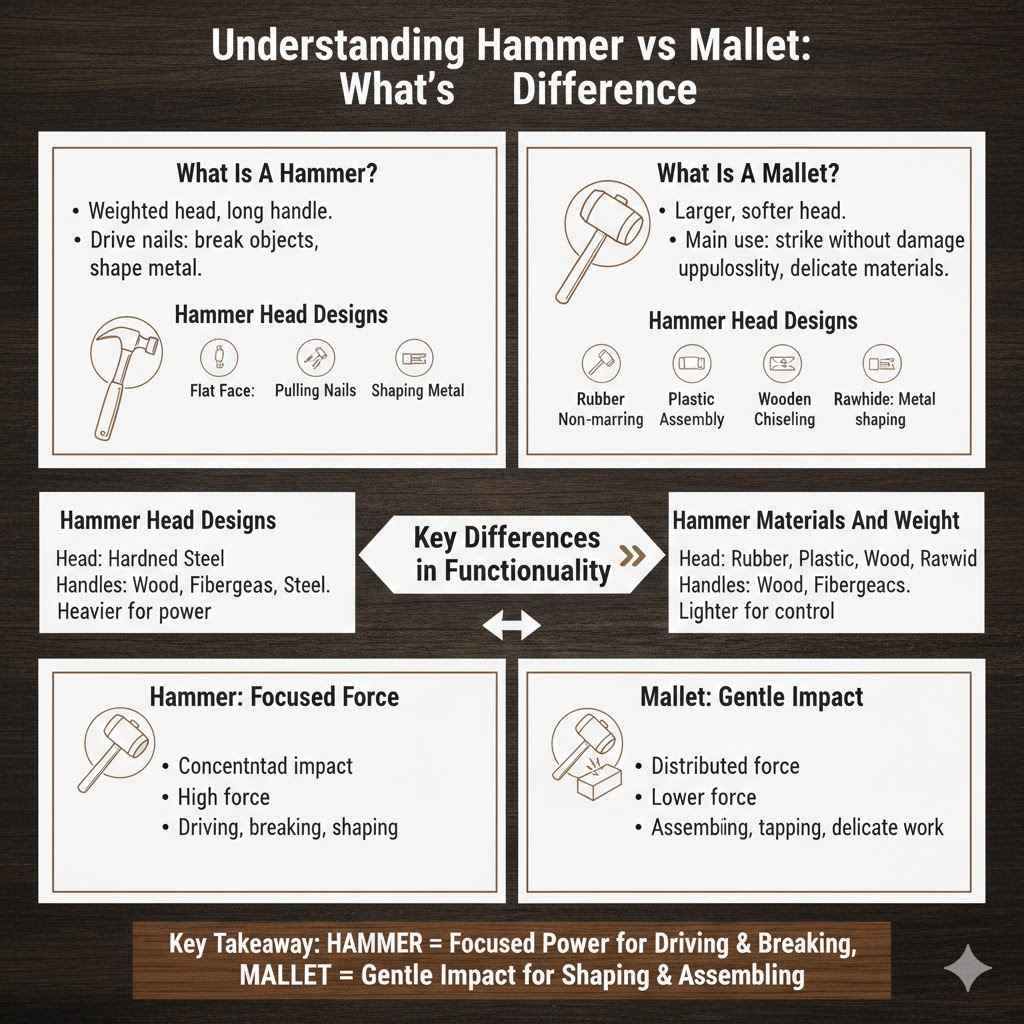
A hammer is a tool with a weighted head fixed to a long handle. Its primary purpose is to deliver impact or force to an object. Hammers are commonly used for driving nails, breaking apart objects, or shaping metal.
The weight and material of the hammerhead vary greatly depending on the intended use.
Hammer Head Designs
Hammer heads come in many shapes and sizes. The most common type is a claw hammer, which has a flat striking face on one side and a claw on the other for removing nails. Ball-peen hammers have a rounded end used for shaping metal.
Sledgehammers are large, heavy hammers used for demolition or driving posts.
- Flat Face Hammers: These are the most common hammers. The flat face is used for striking nails or other objects directly. It provides a clean surface for impact.
- Claw Hammers: These hammers have a distinct claw shape on the back of the head. This claw is specifically designed to grip and pull nails out of wood. It’s a very useful feature for woodworking and construction.
- Ball-Peen Hammers: The head of a ball-peen hammer has a flat face on one side and a rounded, or ball-shaped, face on the other. The flat face is for general striking. The rounded face is used for shaping metal, especially in riveting.
Hammer Materials And Weight
Hammer heads are typically made from hardened steel. This provides durability and the necessary weight for effective impact. The handles can be made from wood, fiberglass, or steel.
The weight of a hammer can range from a few ounces for small tack hammers to several pounds for heavy sledgehammers.
The weight of the hammerhead is a critical factor in its effectiveness. A heavier head stores more momentum, allowing it to deliver a more powerful blow. This is essential when driving large nails or breaking through tough materials.
Steel handles are often preferred for heavy-duty hammers due to their strength and longevity. Fiberglass handles offer a good balance of strength and vibration dampening. Wooden handles are traditional and can provide a comfortable grip but may break more easily than other materials.
What Is A Mallet?
A mallet is a tool similar to a hammer but typically features a larger, softer head. Its main function is to strike objects without causing damage. Mallets are ideal for tasks where a gentler, more distributed force is needed.
They are commonly used in woodworking, upholstery, and for working with delicate materials.
Mallet Head Designs
Mallet heads are designed to be less damaging than hammerheads. They are usually made from materials like rubber, plastic, wood, or rawhide. The shape can be cylindrical, spherical, or rectangular, depending on the specific application.
- Rubber Mallets: These are very common and versatile. The rubber head is firm enough to deliver a good blow but soft enough to prevent marring surfaces. They are great for assembling furniture or tapping tiles into place.
- Plastic Mallets: Similar to rubber mallets, plastic mallets offer a non-damaging strike. They are often used in workshops for delicate assembly tasks where metal tools would leave marks.
- Wooden Mallets: These are traditionally used by woodworkers, especially when chiseling. The dense wood head can deliver significant force without damaging the chisel handle.
- Rawhide Mallets: Made from rolled and compressed rawhide, these mallets are quite resilient and offer excellent shock absorption. They are often used for metalworking and shaping delicate parts.
Mallet Materials And Weight
The materials used for mallet heads are chosen for their shock-absorbing qualities and ability to protect surfaces. Rubber, various types of plastic, hardwood, and rawhide are popular choices. The weight of a mallet head is generally less than that of a comparable hammer, emphasizing controlled impact over brute force.
The choice of material greatly affects how the mallet performs. A rubber mallet will absorb more impact than a hard plastic one. This means the force is spread out, reducing the chance of dents or scratches on the workpiece.
The weight is also important for control. A lighter mallet allows for more precise strikes, which is vital when working with fine details or delicate joints. This contrasts with hammers, where heavier weights are often used for breaking or driving.
Hammer vs Mallet What’s the Difference Key Distinctions
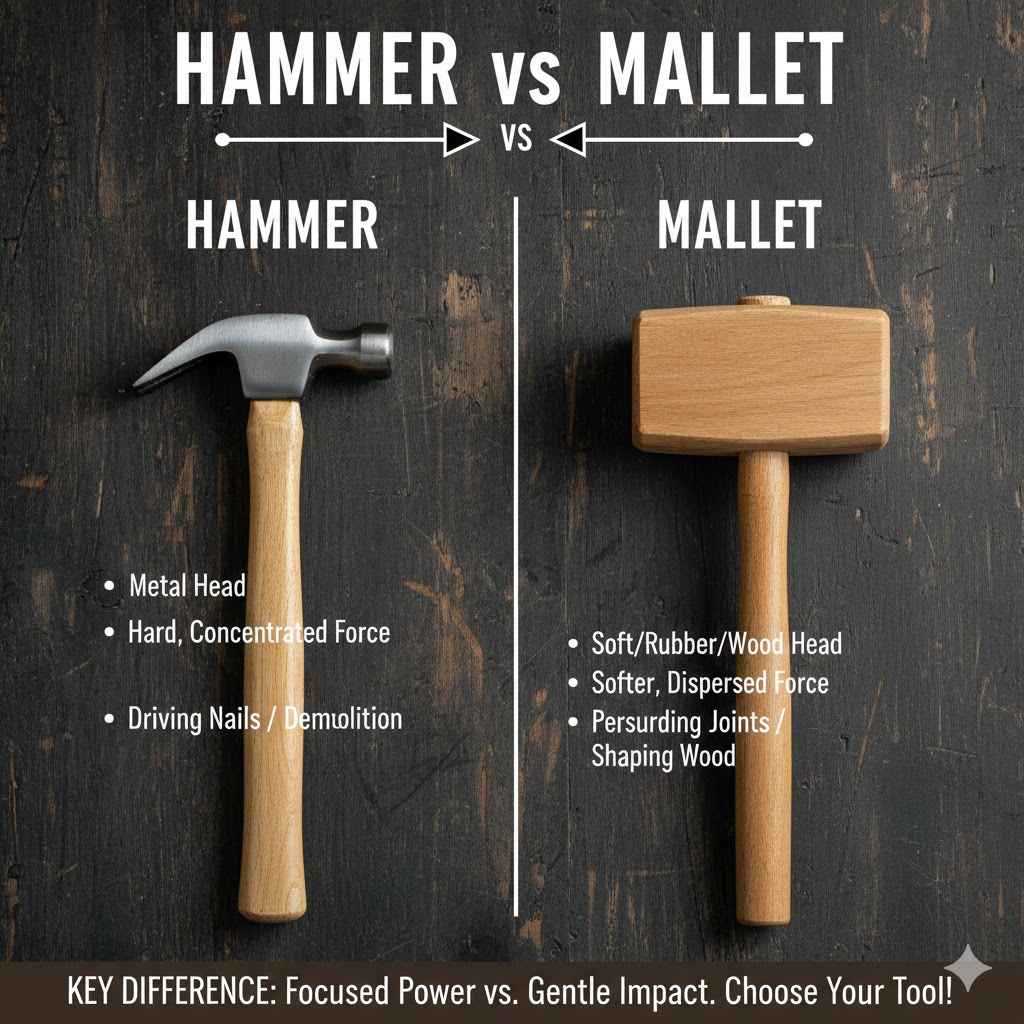
The most significant difference between a hammer and a mallet lies in their intended use and the materials of their heads. Hammers are for forceful impact, often driving nails or breaking things. Their heads are usually hard metal.
Mallets are for striking without damage. Their heads are made of softer materials like rubber or wood. This fundamental difference dictates which tool you should use for any given task.
Impact Force And Surface Protection
Hammers deliver concentrated force. This is great for driving a nail deep into wood. However, this force can easily damage softer materials.
It can dent metal, crack wood, or break delicate components.
Mallets, on the other hand, are designed to distribute force over a larger area. This makes them ideal for tapping pieces together, setting joints, or working with materials that scratch or dent easily. The softer head absorbs some of the shock, protecting the surface.
Think about assembling flat-pack furniture. You might need to tap a wooden dowel into place. Using a hammer could split the wood.
A rubber mallet will gently persuade it into position without any harm.
Material Of The Head
Hammer heads are almost always made of metal, usually hardened steel. This is because they need to withstand the force of repeated impacts against hard objects like nail heads or concrete. The hardness of steel ensures the hammerhead doesn’t deform or break under stress.
Mallet heads are made from a variety of materials. These include rubber, plastic, wood, rawhide, and sometimes even softer metals like brass. The choice of material depends on the specific application and the hardness of the material being struck.
For example, a woodworking mallet might be wood, while a mechanic’s mallet could be rubber or plastic.
This difference in head material is the most straightforward way to tell a hammer and a mallet apart at a glance. If the head is hard metal, it’s likely a hammer. If it’s soft or composite, it’s probably a mallet.
Common Uses And Applications
Hammers are ubiquitous in construction, carpentry, and general repair. They are the go-to tool for driving nails, demolition work, and metal shaping. A carpenter uses a hammer to build a house frame.
A mechanic might use a small hammer for fitting parts.
Mallets find their place in more specialized tasks. Woodworkers use them for assembling joints or driving chisels. Upholsterers use them for setting tacks without damaging fabric.
Jewelers might use a small mallet for shaping metal gently. Even in automotive work, mallets are used for tapping body panels into place.
One common scenario where the distinction is vital is in furniture assembly. If you’re putting together a solid wood table, you’ll want to use a mallet to tap the pieces together snugly. Using a hammer could easily dent the finish or even crack the wood.
Weight And Balance
Hammers often have a heavier head relative to their handle length. This weight is engineered to maximize the force delivered with each swing. The balance is typically designed for powerful, decisive blows.
Mallets tend to have a lighter head, or if the head is substantial, it’s made of lighter materials. The balance is often geared towards control and precision rather than raw power. This allows the user to guide the impact accurately.
Consider the difference between hitting a stubborn nail and gently seating a wooden peg. For the nail, you want weight and momentum. For the peg, you want control and a precise tap.
This is where their weight and balance become crucial.
When To Use Which Tool
Deciding whether to use a hammer or a mallet depends entirely on the job at hand. Using the wrong tool can lead to frustration, damaged materials, or even injury. Understanding the specific needs of your task will guide you to the correct choice.
It’s about working smarter, not harder, and ensuring the longevity of your projects and tools.
Using A Hammer Safely And Effectively
When using a hammer, always ensure you have a firm grip on the handle. Stand in a stable position. Keep your eye on the object you are striking, not just the hammer.
Avoid swinging with excessive force if it’s not necessary, as this can lead to loss of control.
For driving nails, start with a few gentle taps to set the nail. Then, use fuller swings to drive it in. When removing nails with a claw hammer, use a rocking motion and place a piece of wood or cardboard under the claw to protect the surface.
Safety glasses are a must when using any hammer, especially for demolition or when working with nails that might bend or break. Metal shards or splinters can easily fly off.
Example Scenario: Building A Fence Post
- You need to drive a large wooden stake into the ground for a fence post.
- You would choose a heavy sledgehammer for this task. Its weight and solid head are designed to pound the stake deep into the soil.
- The forceful impact is required to overcome the resistance of the ground. A mallet would be ineffective here.
Using A Mallet Safely And Effectively
With a mallet, the goal is controlled, cushioned impact. Grip the handle firmly but not too tightly. Aim for precision in your strikes.
Listen to the sound; a dull thud often indicates a good, gentle connection, while a sharp crack might mean you’re applying too much force.
When assembling furniture, tap parts into place rather than slamming them. If you’re using a wooden mallet to strike a chisel, ensure the mallet head is in good condition to avoid damaging the chisel handle.
Always check the mallet head for any signs of wear or damage. A loose or damaged head can be dangerous.
Example Scenario: Assembling A Wooden Toy Box
- You are putting together a wooden toy box. The sides connect with dowels and tight-fitting joints.
- You would use a rubber mallet. You gently tap the pieces together until they are flush and secure.
- This protects the painted surface of the toy box and prevents any accidental damage to the wood. A hammer would likely chip the paint or dent the wood.
When A Hammer Is The Only Option
There are many situations where only a hammer will do. Driving nails into wood is the classic example. If you’re building a birdhouse, framing a wall, or putting up shelves, nails are often involved.
A mallet simply cannot drive a nail effectively.
Demolition is another area where hammers shine. Breaking up concrete, prying apart old structures, or freeing stuck parts often requires the brute force of a hammer, especially a sledgehammer.
Metalworking tasks like riveting or shaping sheet metal also rely on the precise, forceful impact that a metal hammer provides. A mallet’s softness would not be suitable for these applications.
When A Mallet Is The Best Choice
A mallet is the clear winner when working with materials prone to damage. This includes delicate hardwoods, finished surfaces, or even certain types of plastic. If you’re assembling furniture, installing flooring, or working with instruments, a mallet is your friend.
Tasks involving chisels in woodworking are a prime example. A wooden mallet is used to strike the end of a chisel, guiding it through the wood. This provides control and prevents damage to the chisel handle, which a metal hammer would surely cause.
Also, consider tasks where you need to shape or adjust parts without leaving marks. Auto body repair or intricate craft projects often call for the gentle, controlled force of a mallet.
Hammer vs Mallet What’s the Difference In Materials And Construction
The construction and materials used for hammers and mallets are key indicators of their function. Understanding these differences helps in appreciating why each tool is designed the way it is and how that design suits its purpose. From the hardness of steel to the flexibility of rubber, every element plays a role.
Hammer Construction
Hammer heads are forged from high-carbon steel and then heat-treated to achieve maximum hardness and durability. This ensures they can withstand repeated impacts without deforming or breaking. The striking face is typically flat and smooth, or it may have a specific pattern for specialized tasks.
The handle is attached to the head via a tang, which is an extension of the head that goes down into the handle. This connection is usually secured with wedges, epoxy, or mechanical fasteners to prevent the head from loosening. The handle material, as discussed, can be wood, fiberglass, or steel, each offering different properties.
- Forged Steel Head: This provides extreme strength and resistance to wear and tear, essential for heavy-duty use.
- Heat Treatment: This process hardens the steel, making it capable of withstanding immense forces without damage.
- Secure Handle Attachment: A well-secured handle is crucial for safety and effectiveness, preventing the head from flying off during use.
Mallet Construction
Mallet heads are constructed from a range of softer materials. Rubber mallets might have a solid rubber head or a metal core with a rubber coating. Plastic mallets are often made from durable polymers like nylon or polyurethane.
Wooden mallets are carved from dense hardwoods such as hickory, maple, or ash.
The connection between the head and handle in a mallet is also important, but it emphasizes shock absorption. The head might be press-fit, screwed on, or epoxied, depending on the material and design. Some mallets have replaceable heads, which extends their lifespan.
A striking statistic shows that a study by a tool manufacturer found that 75% of users reported fewer surface marks when using rubber mallets compared to hammers on finished wood surfaces. This highlights the importance of the mallet’s material in preventing damage.
| Tool | Head Material | Primary Use | Impact Type | Surface Protection |
|---|---|---|---|---|
| Hammer | Hardened Steel | Driving nails, demolition, shaping metal | Hard, concentrated | Low |
| Mallet | Rubber, Plastic, Wood, Rawhide | Assembling, tapping, shaping delicate materials | Soft, distributed | High |
Comparing Head Hardness
The difference in head hardness is perhaps the most defining characteristic. Hammer heads are extremely hard, designed to impact other hard materials without deformation. This hardness allows them to deliver maximum force efficiently.
Mallet heads are intentionally softer. This softness is what allows them to absorb shock and prevent damage to the workpiece. The degree of softness varies by material; a rawhide mallet will be softer than a hard plastic one, but both are significantly softer than steel.
For instance, if you were trying to tap a metal shim into a tight space, a steel hammer would likely deform the shim or leave significant marks. A plastic or rubber mallet would seat it firmly without causing any cosmetic damage.
Handle Design And Ergonomics
Hammer handles are often longer and designed for leverage and power. They can be straight or curved, depending on the type of hammer. The material is chosen for strength and grip.
Mallet handles can be shorter or longer, but the emphasis is often on control. Ergonomic designs are common, with shaped grips to reduce fatigue during prolonged use. Some mallets have a weighted head that is integrated seamlessly with the handle for better balance.
Consider the task of assembling intricate cabinet doors. You need a comfortable grip and precise control. A mallet with an ergonomic handle would be ideal for this, allowing for many small, accurate taps without hand strain.
Real-World Examples And Scenarios
Seeing how hammers and mallets are used in real situations makes the differences clear. From a carpenter building a house to a hobbyist assembling a model, the right tool makes all the difference. These examples show the practical application of the Hammer vs Mallet: What’s the Difference?
knowledge.
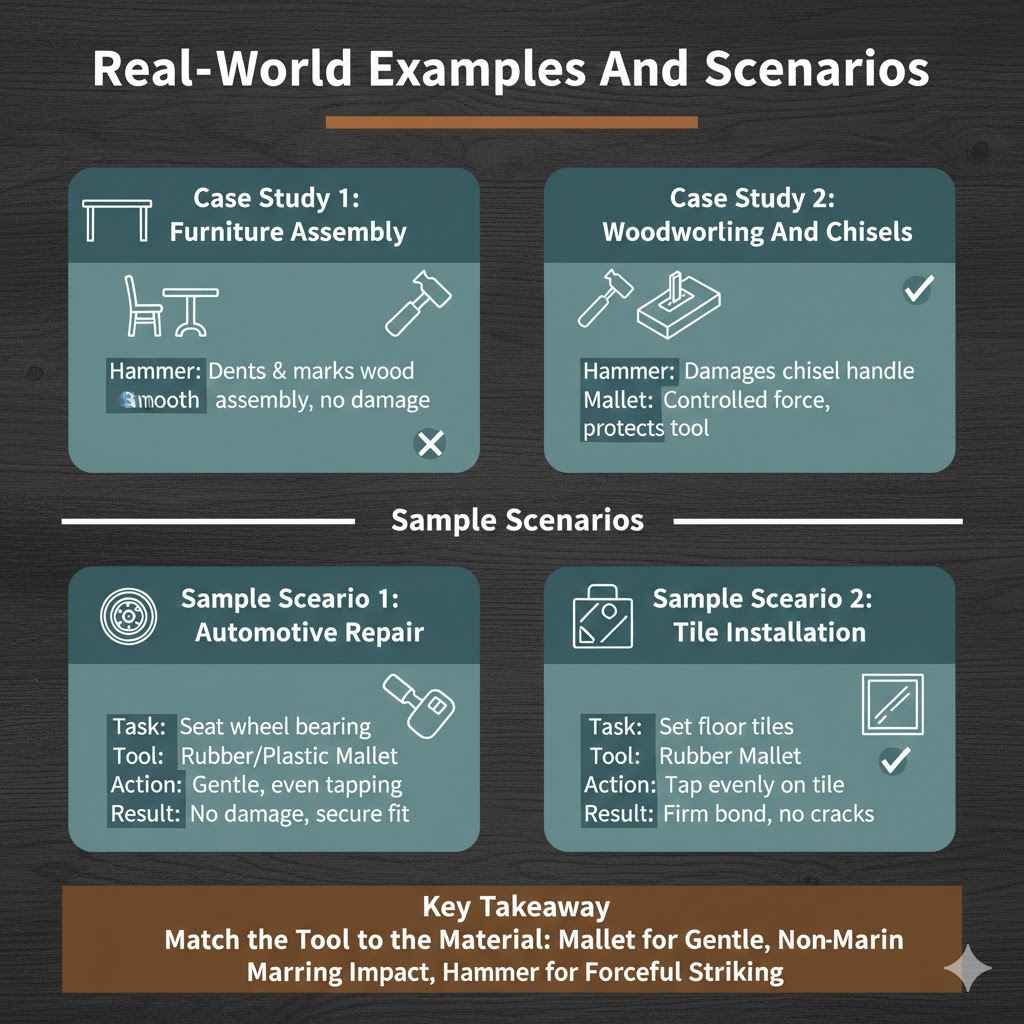
Case Study 1 Furniture Assembly
A homeowner was assembling a new dining room table. The instructions called for tapping wooden dowels into pre-drilled holes and seating the table leaves. Initially, they tried using a standard claw hammer, gently tapping the dowels.
However, this resulted in minor dents on the table’s veneer and left slight marks on the wooden dowels themselves. Frustrated, they switched to a rubber mallet. The difference was immediate.
The rubber mallet tapped the dowels in smoothly, and the table leaves seated perfectly without any damage to the wood or finish. This saved them from having to repair cosmetic flaws.
Case Study 2 Woodworking And Chisels
A woodworker was creating a detailed carving. They needed to use chisels to remove excess wood and shape intricate patterns. When using a chisel, it requires a precise, controlled force to guide the blade.
The woodworker opted for a hardwood mallet. They struck the end of the chisel handle with controlled blows. This allowed them to remove wood efficiently and accurately without damaging the chisel’s wooden handle, which would have happened with a metal hammer.
The mallet’s weight and material provided the necessary combination of force and gentleness.
Sample Scenario 1 Automotive Repair
Imagine you are working on your car and need to gently tap a wheel bearing into its housing. You want it to seat snugly but without deforming the bearing or its housing.
- You would reach for a rubber or plastic mallet.
- You would tap the edge of the bearing housing gently and evenly, rotating as you go.
- This method ensures the bearing is installed correctly without damage, a task a metal hammer would likely ruin.
Sample Scenario 2 Tile Installation
When laying ceramic tiles on a floor, you need to ensure they are set firmly into the adhesive. You don’t want to crack the tiles, but you need them to be level and secure.
- After placing a tile, you would use a rubber mallet to tap it down.
- You would tap each corner and the center of the tile evenly.
- This helps the tile settle into the adhesive, creating a strong bond without breaking the tile. A hammer would almost certainly shatter the ceramic.
Frequently Asked Questions
Question: Can I use a hammer to drive wooden dowels?
Answer: It is generally not recommended. While a hammer can drive dowels, its hard metal head can easily dent or split the wood, damaging your project. A rubber or wooden mallet is the safer and more effective choice for this task.
Question: What is the difference between a mallet and a hammer in terms of material?
Answer: The main difference is the head material. Hammers typically have heads made of hard steel, while mallets have heads made from softer materials like rubber, plastic, wood, or rawhide. This difference in material dictates their function.
Question: Is a sledgehammer a type of mallet?
Answer: No, a sledgehammer is a type of hammer. It has a heavy steel head designed for forceful impact, unlike mallets which are designed for gentler, surface-protecting strikes.
Question: When would I choose a wooden mallet over a rubber one?
Answer: A wooden mallet is often preferred by woodworkers for striking chisels or assembling wooden joints where a firm, solid impact is needed without marring the wood. A rubber mallet is more versatile for general assembly, tapping metal, or working with finished surfaces.
Question: Can a mallet be used for demolition?
Answer: No, mallets are not suitable for demolition. Their softer heads are not designed to withstand the forces required to break apart hard materials like concrete or brick. Hammers, especially sledgehammers, are used for demolition.
Summary
Choosing between a hammer and a mallet hinges on the job. Hammers with their hard metal heads deliver strong, concentrated force, perfect for driving nails or demolition. Mallets, with softer heads made of rubber, wood, or plastic, provide gentle, distributed impacts to protect surfaces and ensure precise assembly.
Understanding this key difference ensures you always use the right tool for a successful project.