How Big Is a 7/32 Drill Bit Exact Size Explained
Have you ever picked up a drill bit and wondered exactly how big it is? It’s a common question for folks just starting out with DIY projects or home repairs. Sometimes, the sizes can seem a bit confusing, especially when they are given as fractions.
But don’t worry! We’re going to clear up all the confusion about How Big Is a 7/32 Drill Bit? Exact Size Explained.
We’ll break it down super simply, step by step, so you’ll know exactly what you’re working with. Get ready to learn everything you need to know.
Understanding Drill Bit Sizing
Drill bit sizes can seem a little tricky at first glance. They come in different measurement systems, like standard fractions, millimeters, and lettered bits. Knowing which is which helps you pick the right one for your job.
This section explains the basics so you can tell them apart easily.
Fractional Drill Bit Sizes
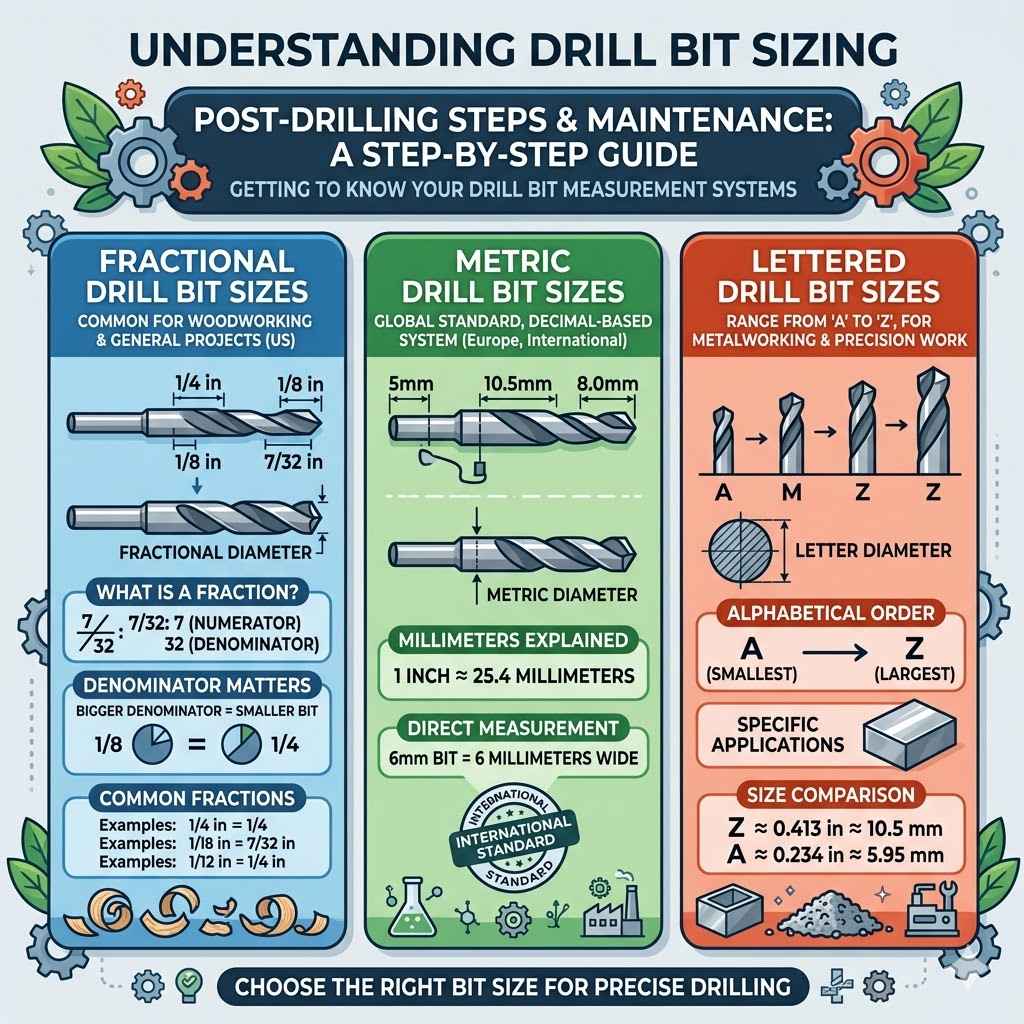
Most drill bits you’ll find in the United States use fractional inch measurements. These are common for woodworking and general home projects. You’ll see sizes like 1/4 inch, 1/8 inch, and of course, 7/32 inch.
These fractions represent the diameter of the drill bit’s cutting edge. The larger the number in the denominator (the bottom number of the fraction), the smaller the bit. For example, a 1/8 inch bit is smaller than a 1/4 inch bit.
The reason we use fractions is historical. It’s a system that’s been around for a long time, and many tools and materials are still made to these measurements. Understanding these fractions is key to picking the correct size for drilling holes.
- What is a fraction? A fraction shows a part of a whole. In drill bit sizes, the top number is the numerator, and the bottom number is the denominator. For example, in 7/32, 7 is the numerator and 32 is the denominator.
- Denominator matters The denominator tells you how many equal parts the whole inch is divided into. A bigger denominator means smaller parts, and thus a smaller drill bit.
- Common fractions You’ll often see common fractions like 1/4 (which is 8/32) and 1/2 (which is 16/32). Knowing these helps you compare.
Metric Drill Bit Sizes
Outside the United States, especially in Europe and many other parts of the world, drill bits are measured in millimeters. These sizes are usually whole numbers or have decimal points, like 5mm or 10.5mm. They are part of the metric system, which is a decimal-based system.
Metric sizes are very straightforward. A 5mm drill bit is exactly 5 millimeters in diameter. There are no complex fractions to figure out.
This system is used globally for most scientific and industrial measurements.
When working with tools from different regions or with imported materials, you might encounter metric sizes. It’s helpful to have a way to convert between inches and millimeters if you need to match a drill bit to a specific hole size requirement.
- Millimeters explained A millimeter is a very small unit of length. There are about 25.4 millimeters in one inch.
- Direct measurement Metric sizes are direct measurements. A 6mm bit is 6 millimeters wide.
- International standard The metric system is the standard for most countries, making metric drill bits easy to understand if you’re familiar with metric measurements.
Lettered Drill Bit Sizes
There’s also a system of drill bits called lettered bits. These range from ‘A’ to ‘Z’. They are often used in metalworking and for specific applications.
Each letter corresponds to a specific diameter, and they don’t follow a simple fractional or metric pattern.
For example, an ‘A’ bit is the smallest, and a ‘Z’ bit is the largest in this series. The sizes can overlap with fractional and metric sizes, which can sometimes cause confusion. If you see a bit labeled with a letter, it’s good to know its exact diameter.
The lettered system was developed to fill in gaps between common fractional sizes or for specialized industrial uses. They offer a wide range of diameters, providing more options for precise drilling.
- Alphabetical order The letters go from A to Z, with ‘A’ being the smallest and ‘Z’ being the largest.
- Specific applications Lettered bits are often preferred for metal drilling and precision work.
- Size comparison A ‘Z’ bit is roughly 0.413 inches or 10.5 millimeters. An ‘A’ bit is about 0.234 inches or 5.95 millimeters.
How Big Is a 7/32 Drill Bit? Exact Size Explained
Now let’s focus on our main question: How big is a 7/32 drill bit? This is a common size, especially for woodworking and general repairs. Understanding its exact measurement will help you use it correctly.
This section will give you the precise answer and put it into context.
The Diameter of a 7/32 Drill Bit
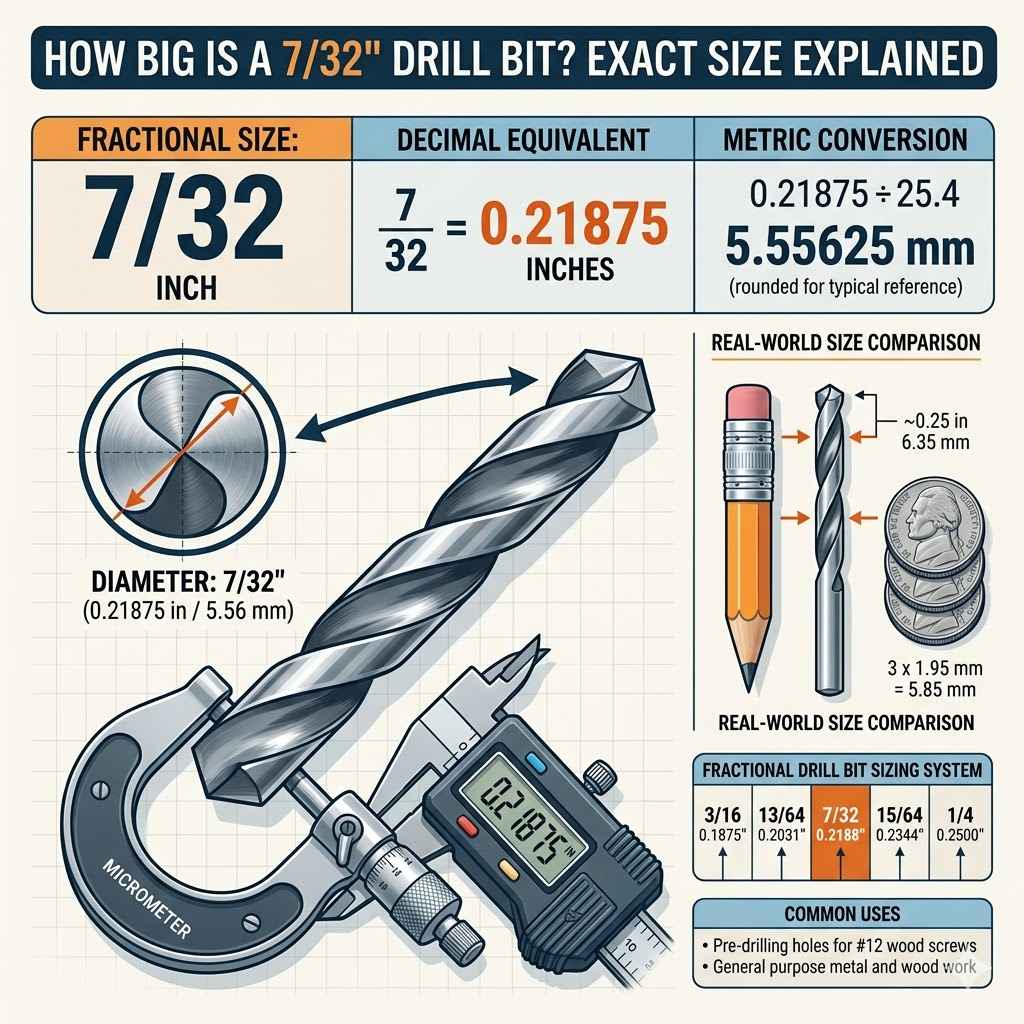
A 7/32 drill bit has a diameter of exactly seven thirty-seconds of an inch. This means if you take one whole inch and divide it into 32 equal parts, the drill bit’s cutting edge would measure the length of 7 of those parts.
In simple terms, it’s a bit less than a quarter of an inch. A quarter of an inch is 8/32. So, a 7/32 bit is just slightly smaller than a 1/4 inch bit.
This small difference can be important for some projects.
The diameter is measured across the widest part of the drill bit’s tip, where it makes contact with the material. This is the size of the hole the drill bit will create.
- Fractional measurement The size 7/32 is a fraction of an inch.
- Exact diameter The bit’s diameter is 7 divided by 32 inches.
- Visual comparison It’s smaller than 1/4 inch (which is 8/32 inch).
Converting 7/32 to Millimeters
To understand the size of a 7/32 drill bit in the metric system, we need to convert it. This is helpful if you are using tools or materials measured in millimeters.
To convert 7/32 of an inch to millimeters, we first find the decimal value of 7/32. Seven divided by thirty-two equals 0.21875. Now, we multiply this by the conversion factor of millimeters per inch, which is approximately 25.4.
So, 0.21875 inches multiplied by 25.4 mm/inch gives us approximately 5.55625 millimeters. For practical purposes, this is often rounded to 5.5mm or 5.6mm, depending on the precision needed.
This means a 7/32 drill bit will create a hole that is about 5.5mm to 5.6mm in diameter. This is a useful conversion to remember when you need to match hole sizes or work with metric fasteners.
- Conversion formula Inches x 25.4 = Millimeters.
- Decimal equivalent 7/32 inch = 0.21875 inches.
- Resulting metric size 0.21875 inches x 25.4 mm/inch = ~5.56 mm.
Comparing 7/32 to Other Common Sizes
It’s useful to see how the 7/32 drill bit compares to other common sizes. This gives you a better sense of its place in the drill bit family. Understanding these comparisons helps you choose the right tool for the job.
Let’s look at some popular drill bit sizes and their equivalents:
| Fractional Size | Decimal Inch | Approx. Millimeters |
|---|---|---|
| 1/8″ | 0.125″ | ~3.18 mm |
| 3/16″ | 0.1875″ | ~4.76 mm |
| 7/32″ | 0.21875″ | ~5.56 mm |
| 1/4″ | 0.250″ | ~6.35 mm |
| 5/16″ | 0.3125″ | ~7.94 mm |
| 3/8″ | 0.375″ | ~9.53 mm |
As you can see from the table, the 7/32 inch bit falls between the 3/16 inch (which is 5.6/32 inches) and the 1/4 inch (which is 8/32 inches) drill bits. It’s a size that offers a bit more clearance than a 3/16 bit but is smaller than a standard 1/4 inch bit.
This size is often used when you need a hole that is slightly larger than common smaller bits but smaller than typical larger bits. It’s a good intermediate size for many tasks.
- Slightly smaller than 1/4 7/32 is one thirty-second of an inch smaller than 1/4.
- Larger than 3/16 7/32 is four thirty-seconds larger than 3/16 (which is 4/32).
- Common in hardware You’ll find screws, bolts, and other hardware that fit perfectly into holes drilled with a 7/32 bit.
Applications for a 7/32 Drill Bit
Knowing the exact size of a 7/32 drill bit is helpful, but what is it actually used for? This section will explore common applications where this specific size is a great fit. Understanding its uses helps you decide when to grab it from your toolbox.
Drilling Pilot Holes
One of the most common uses for a 7/32 drill bit is drilling pilot holes. A pilot hole is a small hole drilled before inserting a screw. It helps prevent the wood from splitting, especially near edges or when using larger screws.
For many wood screws, especially those around a #8 or #10 size, a 7/32 inch pilot hole is ideal. It provides enough guidance for the screw to enter straight without creating excessive friction or splitting the wood fibers. The slight looseness ensures the screw threads can grip effectively.
If you are building furniture, decks, or doing any woodworking where screws are involved, having a 7/32 drill bit handy is very useful. It ensures a cleaner and stronger joint by preparing the material properly.
- Prevents splitting Pilot holes help guide screws and keep wood from cracking.
- Screw size matching This size is good for screws that are roughly 1/4 inch in diameter or slightly less.
- Stronger connections Proper pilot holes lead to more secure and durable connections in woodworking projects.
Working with Specific Fasteners
Many types of fasteners are designed to fit perfectly into holes created by specific drill bit sizes. A 7/32 inch drill bit is commonly used for fasteners like small bolts, machine screws, or certain types of anchors.
For example, some bolts with a 1/4 inch outer thread might require a pilot hole of 7/32 inches. This allows the bolt’s threads to engage properly with the material without being too tight or too loose. It ensures a snug fit for optimal holding power.
When you need to join two pieces of material securely, matching the drill bit size to the fastener is crucial. A 7/32 bit is a common choice for many standard hardware components you’ll encounter in DIY and construction.
- Bolt clearance It provides the right amount of space for many 1/4 inch bolts to thread into.
- Machine screws Used for drilling holes for machine screws that will be tapped or used with a nut.
- Anchor preparation Some wall anchors, especially for medium-duty applications, require a 7/32 inch hole.
Creating Holes for Dowels or Pins
In woodworking, dowels are often used to join pieces of wood together without screws. Dowels are cylindrical wooden pegs. A 7/32 inch drill bit can be used to drill holes for small dowels.
When using dowels, the hole needs to be just the right size for the dowel to fit snugly. If the hole is too large, the joint won’t be strong. If it’s too small, you won’t be able to insert the dowel easily.
Similarly, this drill bit size can be used for creating holes for small metal pins or other cylindrical components that need to fit into a precise opening. It’s a versatile size for various joining and assembly tasks.
- Dowel insertion Creates holes that accept 7/32 inch dowels for strong wood joints.
- Pin holes Suitable for drilling holes for small metal pins or shafts.
- Accurate fit Ensures a tight and secure fit for dowels or pins, contributing to structural integrity.
Choosing the Right Drill Bit
With all the different sizes and types of drill bits available, it’s important to know how to pick the right one for your project. This section will guide you through the decision-making process so you always select the correct drill bit.
Reading Project Plans or Instructions
The best way to know which drill bit to use is to check your project plans or assembly instructions. Manufacturers often specify the exact drill bit size needed for each step, especially for things like pilot holes or screw placement.
If you’re following a guide, pay close attention to any mention of drill bit sizes, usually given in fractions or millimeters. For example, instructions might say “drill a 7/32 inch pilot hole” or “use a 5.5mm drill bit.”
Always trust the specifications provided by the designer or manufacturer. They have usually tested these sizes to ensure the best results for stability, appearance, and ease of assembly.
- Follow specifications Always check if your project plans list specific drill bit sizes.
- Precision is key Using the exact size recommended ensures parts fit together correctly.
- Avoid guesswork Relying on plans removes the need to guess which size might work best.
Matching Drill Bits to Fasteners
When you’re not following specific plans, you can often determine the right drill bit size by looking at the fasteners you’re using. This is especially true for screws and bolts.
For wood screws, a general rule is to use a pilot hole drill bit that is smaller than the screw’s shank but larger than its threads. For a 1/4 inch diameter screw, a 7/32 inch drill bit for the pilot hole is often a good choice.
For bolts, the drill bit size should typically match the bolt’s nominal diameter if you are tapping threads into the material, or be slightly larger if the bolt will pass through freely. Always check the fastener’s specifications if available.
- Screw pilot holes For a 1/4″ screw, a 7/32″ pilot hole is often suitable.
- Bolt through holes For a bolt to pass through, the hole should be the same size as the bolt.
- Thread tapping If you are creating your own threads, use a “tap drill size” recommended for the tap you are using.
Understanding Material Properties
The material you are drilling into also plays a role in choosing the right drill bit. Different materials have different densities and strengths.
For soft woods like pine, a 7/32 inch bit for a 1/4 inch screw is usually fine. For hardwoods like oak or maple, you might need a slightly larger pilot hole to prevent splitting. This is because hardwoods are denser and resist screw insertion more.
When drilling into metal, you’ll need drill bits designed specifically for metal, and the size choice depends on whether you are drilling clearance holes or holes for tapping threads. Always use cutting fluid for metal to reduce heat and wear.
- Softwoods Generally allow for smaller pilot holes relative to screw size.
- Hardwoods May require slightly larger pilot holes to prevent splitting due to density.
- Metals Need specialized bits and lubrication for efficient and safe drilling.
Tool Maintenance for Drill Bits
Keeping your drill bits in good condition ensures they work efficiently and last longer. Proper maintenance prevents rust, dullness, and damage, making your drilling tasks easier and more precise. This section covers simple steps to maintain your drill bits.
Cleaning Your Drill Bits
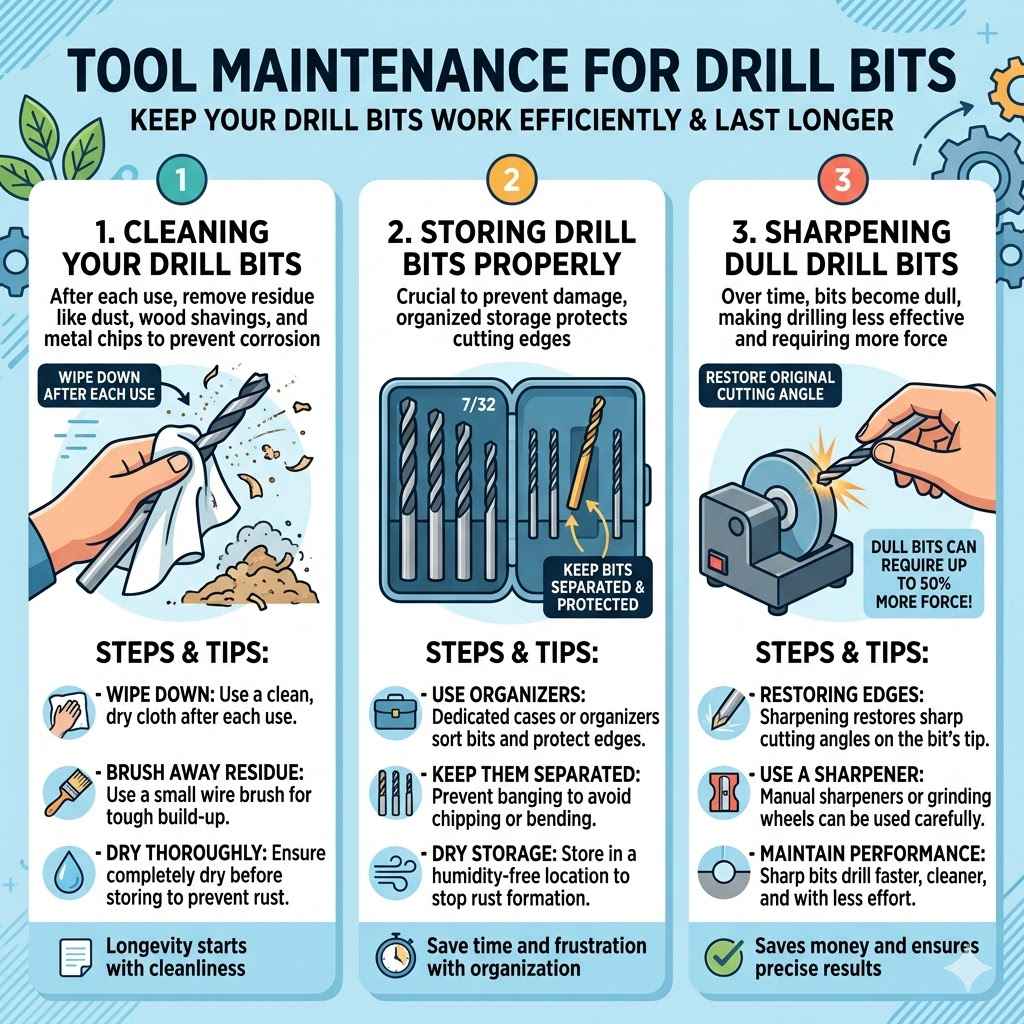
After each use, it’s important to clean your drill bits. Metal drill bits can accumulate dust, wood shavings, metal chips, or other debris. This residue can cause corrosion or interfere with the bit’s cutting action.
A simple way to clean them is to wipe them down with a dry cloth. For more stubborn residue, you can use a brush or a bit of degreaser. Make sure the bits are completely dry before storing them to prevent rust.
Keeping your bits clean not only makes them look better but also ensures they perform at their best for your next project. Cleanliness is a key part of tool longevity.
- Wipe down Use a clean, dry cloth to remove dust and debris after each use.
- Brush away residue For tougher build-up, a small wire brush can be helpful.
- Dry thoroughly Always ensure bits are completely dry before storing to prevent rust.
Storing Drill Bits Properly
Proper storage is crucial for preventing damage and keeping your drill bits organized. A messy toolbox can lead to bits getting lost, bent, or dulled.
A drill bit organizer or case is ideal. These cases keep bits separated, protecting their cutting edges from chipping or bending. If you don’t have a dedicated organizer, you can use small containers or compartments to keep them from rolling around.
Store them in a dry place away from moisture to prevent rust. A well-organized set of drill bits means you can quickly find the size you need, saving you time and frustration during your projects.
- Use organizers Dedicated drill bit cases or organizers protect and sort bits.
- Keep them separated Prevent bits from banging against each other to avoid damage.
- Dry storage Store in a location free from humidity to prevent rust formation.
Sharpening Dull Drill Bits
Over time, drill bits can become dull, making them less effective and requiring more force to drill holes. Dull bits can also cause wood to splinter or metal to be cut unevenly.
You can sharpen most drill bits using a sharpening stone or a drill bit sharpener. The goal is to restore the original cutting angle on the bit’s edges. For common fractional bits like 7/32, this is a straightforward process if done carefully.
Sharpening your bits saves money by extending their life and ensures you get clean, precise holes every time. It’s a skill that pays off for any DIY enthusiast or professional.
A common statistic is that a dull drill bit can require up to 50% more force to drill through a material. This not only makes the job harder but also puts extra strain on your drill motor.
- Restoring edges Sharpening restores the sharp cutting angles on the bit’s tip.
- Use a sharpener Manual sharpeners or grinding wheels can be used.
- Maintain performance Sharp bits drill faster, cleaner, and with less effort.
Frequently Asked Questions
Question: What is the exact diameter of a 7/32 drill bit in inches?
Answer: The exact diameter of a 7/32 drill bit is 0.21875 inches.
Question: How does a 7/32 drill bit compare to a 1/4 inch drill bit?
Answer: A 7/32 drill bit is slightly smaller than a 1/4 inch drill bit. One quarter inch is equal to 8/32 inches, so the 7/32 bit is 1/32 of an inch smaller.
Question: Can I use a 7/32 drill bit for metal?
Answer: Yes, you can use a 7/32 drill bit for metal, provided it is a bit designed for metal. Always use a cutting fluid when drilling metal to prevent overheating and damage.
Question: What is the metric equivalent of a 7/32 drill bit?
Answer: The metric equivalent of a 7/32 drill bit is approximately 5.56 millimeters (which is often rounded to 5.5mm or 5.6mm).
Question: Why are pilot holes important when using a 7/32 drill bit?
Answer: Pilot holes are important to prevent wood from splitting, especially near edges, and to guide screws straight. A 7/32 pilot hole is often ideal for 1/4 inch screws.
Wrap Up
You now know exactly how big a 7/32 drill bit is. It measures 0.21875 inches in diameter, which is about 5.56 millimeters. This common size is perfect for pilot holes, specific fasteners, and dowel applications.
Trust your project plans or match it to your hardware for the best results. Keep your bits clean and sharp for perfect holes every time.