How to Remove Carpet Glue From Hardwood Floors Safely
Not all carpet glue comes off a hardwood floor the same way, and the wrong first move can do more damage than the glue itself — the most commonly recommended solvent for this job, acetone, strips a wood floor’s finish just as fast as it dissolves the adhesive. What actually works depends on whether you’re dealing with fresh water-based glue, old cured solvent-based adhesive, or (in houses built before 1980) black cutback mastic that needs to be handled differently for safety reasons. This guide walks through identifying what you’ve got, then the freeze, heat, and citrus-solvent methods that get it off without taking the finish with it.
Identify the Glue Before You Touch It
Carpet installers use one of two adhesive families, and telling them apart takes thirty seconds. Press a cloth dampened with warm water onto a small glue spot and hold it there for a couple of minutes. If the glue softens and turns tacky again, it’s water-based — the more common choice in homes carpeted since the late 1980s. If it stays hard and rubbery under the damp cloth, it’s a solvent-based or urethane adhesive, which needs heat or a citrus solvent rather than water to break down. Older homes need one more check before either method: see the black mastic warning further down before you start scraping. (If you’re clearing glue off a bare subfloor rather than a finished floor with a topcoat to protect, our guide to removing carpet glue from a subfloor covers that slightly different situation.)
Once you know the type, a citrus-based remover with a built-in scraper handles both fresh and dried residue on a finished floor without the risk that comes with straight acetone or mineral spirits.
Best Citrus Remover for Hardwood-Safe Glue Removal
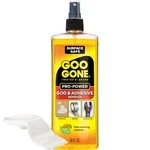 |
Goo Gone Pro-Power Adhesive Remover with Scraper, 16 Fl Oz – $19.99 A citrus-oil formula that softens both water-based and solvent-based carpet glue without the finish-stripping risk of straight acetone, and it ships with its own plastic scraper.
|
Older Homes: Check for Black Mastic Before You Start
If the carpet you’re pulling up was installed before 1980, don’t start scraping until you’ve looked at the adhesive itself. A thick, black, tar-like glue — often called cutback mastic — was the standard flooring adhesive for decades and commonly contained asbestos fibers as a binder. Water-based carpet glues used since the late ’80s and ’90s don’t carry this risk, but black mastic does, and dry-scraping or sanding it can release fibers into the air. If you see a black, tarry residue under an old carpet, the safer move is to leave it undisturbed and have a sample tested by a local asbestos abatement service before doing anything else — this is the one situation on this page where a citrus remover and a plastic scraper aren’t the answer.
The Freeze-and-Scrape Method (Safest First Try)
For small spots of water-based glue, cold works before chemicals do. Set an ice cube directly on the glue for about five minutes — a sandwich bag underneath keeps meltwater off the surrounding finish. Cold makes the adhesive brittle enough to lift with a plastic putty knife held at a low angle, working from the edge of the spot inward. Never use a metal scraper on a finished floor; even a light-handed pass with steel can scratch through polyurethane or wax in a way that shows under raking light. This method won’t touch cured solvent-based adhesive, but it’s worth trying first on any water-based spot because it risks nothing to the finish.
Heat Method for Dried, Hardened Glue
Dried or hardened glue that the freeze method won’t budge usually responds to heat instead. A hair dryer on its warm (not hottest) setting, held about four inches above the spot and moved constantly for 30-second passes, softens most adhesives without scorching the finish the way a heat gun can if it’s held too close or too long. Once the glue looks glossy and slightly tacky again, lift it immediately with the plastic scraper while it’s still warm — it re-hardens fast as it cools. Work in small sections, roughly a square foot at a time, rather than heating the whole area at once; glue that cools back down before you get to it just has to be reheated.
Citrus Solvent for Stubborn Residue
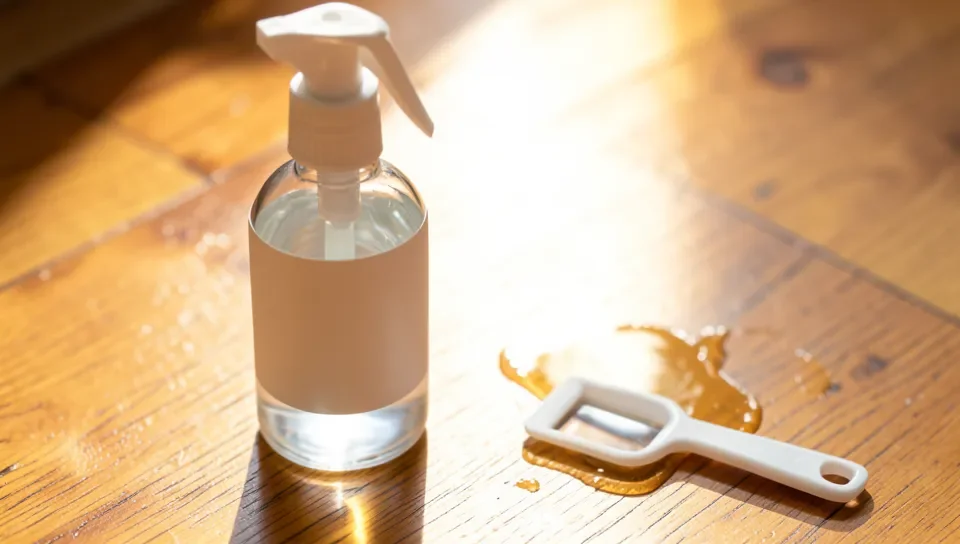
For the thin, tacky film that’s left behind after most of the glue is gone, a citrus-based adhesive remover finishes the job. Apply it directly to the residue, let it sit for three to five minutes so the citrus oils have time to break down the adhesive bond, then wipe or lightly scrape with the plastic tool. Test any remover on a hidden spot first — inside a closet or under an appliance — and give it a few minutes to confirm it doesn’t dull or cloud the finish before treating the visible floor. Wipe the area with a barely damp cloth afterward to lift any oily residue the remover leaves behind, since a film left on the surface can make the floor feel slightly tacky underfoot.
The One Solvent to Skip: Acetone
Acetone is the adhesive-removal advice you’ll see recommended most often online, and it’s genuinely effective on the glue — the problem is it’s just as effective on a polyurethane or lacquer finish. Acetone dissolves the same class of finishes that protect a hardwood floor, so a solvent strong enough to break down cured carpet adhesive is also strong enough to cloud, soften, or strip the finish it’s sitting on. The same caution applies to mineral spirits and paint thinner on anything but an unfinished or already-stripped floor. If the freeze and heat methods haven’t fully cleared a stubborn patch, reach for a citrus-based remover before reaching for acetone.
When Glue Covers the Whole Floor, Not Just a Spot
Spot removal works for a rug pad outline or a few patches, but if a full room of carpet glue was troweled edge to edge onto the wood, spot treatment isn’t realistic — you’ll spend a weekend on it and still leave uneven patches in the finish where you worked harder in some spots than others. At that scale, sanding and refinishing the floor is usually the better outcome: a flooring contractor can confirm the wood has enough thickness left for at least one more sanding pass (solid hardwood typically has several refinishes left in it; engineered hardwood often has only one, if any), then sand the glue off along with the old finish and refinish the whole surface evenly.
Restoring the Floor’s Shine Afterward
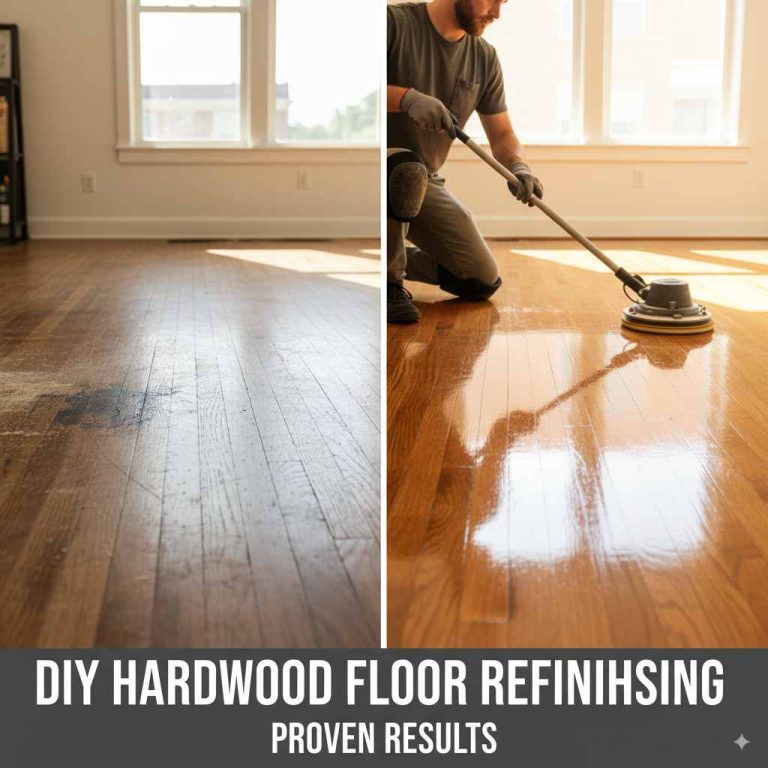
Once the glue and any solvent residue are gone, the floor usually looks dull in the treated spots even though the finish underneath is intact — that’s residue haze, not damage. Clean the whole area with a hardwood-safe cleaner rather than plain water, buff dry with a soft cloth, and the shine typically comes back on its own. If a spot still looks flat or slightly etched after cleaning, a wood floor polish made for your specific finish type (polyurethane and oil finishes use different products, and our guide to polyurethane coats on hardwood floors covers how to tell what you have) can even it out; avoid all-purpose furniture polish, which can leave a slippery film on a floor.
Frequently Asked Questions
Does acetone remove carpet glue from hardwood floors safely?
No. Acetone dissolves carpet glue effectively, but it also dissolves polyurethane and lacquer finishes, so it can cloud or strip a finished hardwood floor. Use a citrus-based adhesive remover instead, which targets the glue without the same risk to the finish.
Is it safe to remove old carpet glue myself, or could it contain asbestos?
Water-based carpet glues used since the late 1980s carry no asbestos risk. But if the carpet was installed before 1980 and the adhesive is a thick, black, tar-like mastic, don’t dry-scrape or sand it — that type commonly contained asbestos, and disturbing it can release fibers. Have a sample tested before removing it yourself.
Is Goo Gone safe on hardwood floors?
Yes, a citrus-based remover like Goo Gone’s Pro-Power formula is safe on most finished hardwood when tested on a hidden spot first. Apply it, let it sit for three to five minutes, then lift the softened residue with a plastic scraper and wipe the area with a barely damp cloth to remove any oily film.
What tool should I use to scrape carpet glue off wood floors?
A plastic putty knife or plastic floor scraper, never metal. Even a light pass with a steel blade can scratch through a polyurethane or wax finish in a way that shows under angled light, while plastic won’t cut the wood surface even if you press harder than intended.
Why won’t ice or heat remove all the glue?
Ice and heat work well on water-based carpet glue but have less effect on cured solvent-based or urethane adhesives, which respond better to a citrus solvent. If freezing or warming a spot doesn’t loosen it within a couple of tries, switch to a citrus-based remover rather than repeating the same method longer.
Sponsored / affiliate links. As an Amazon Associate I earn from qualifying purchases. I may earn additional commission from eligible campaigns.