What Padding Goes Under Hardwood Floors? (Nail-Down vs. Floating)
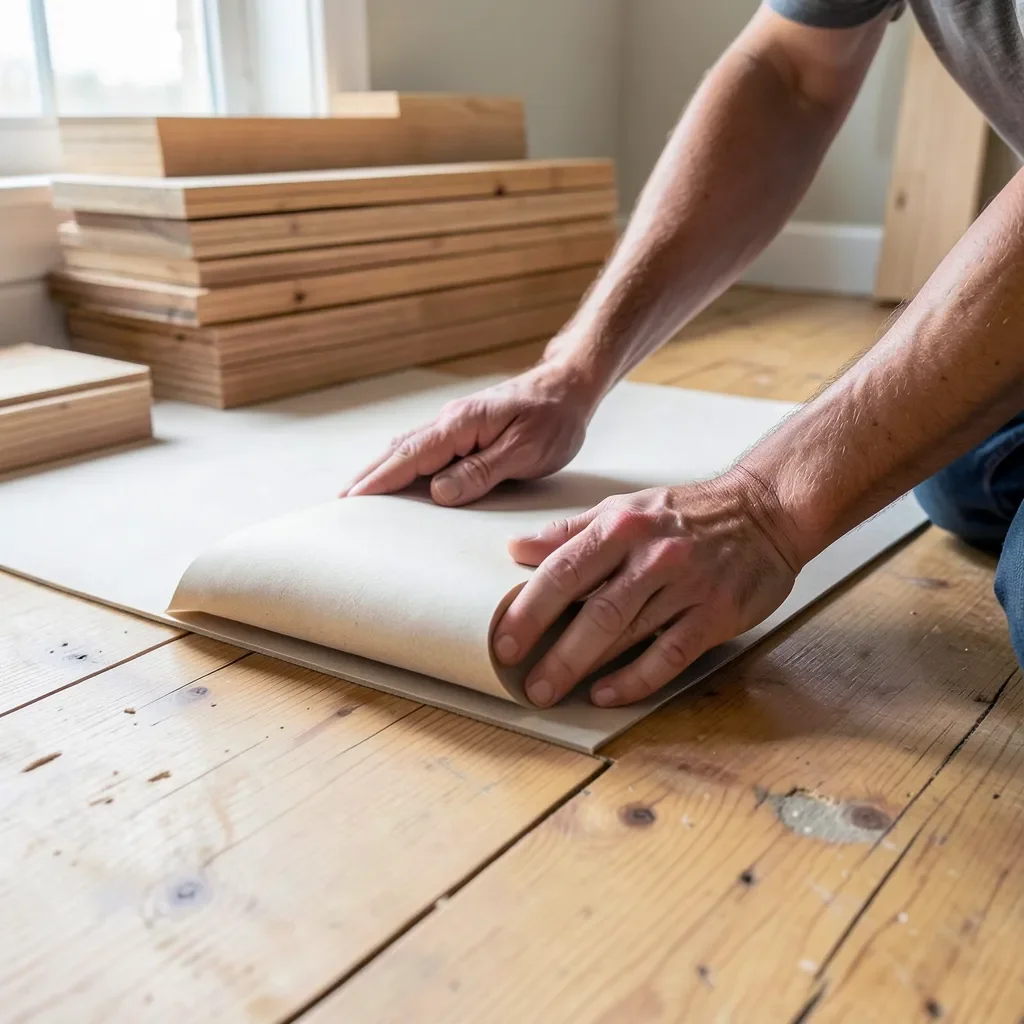
Solid hardwood installed nail-down uses 15-pound felt or rosin paper underneath, not foam or cork padding. Foam cushioning lets nailed-down boards flex and squeak, and several flooring manufacturers void the warranty if it’s used under a nail-down install. Floating floors are the exception — foam, cork, or rubber underlayment is correct there, and often required. This guide breaks down which pad matches your installation method, the real moisture and sound specs, and the mistakes that void warranties.
Does Nail-Down Hardwood Need Padding, or Just Floating Floors?
Best Floating-Floor Underlayment Pick
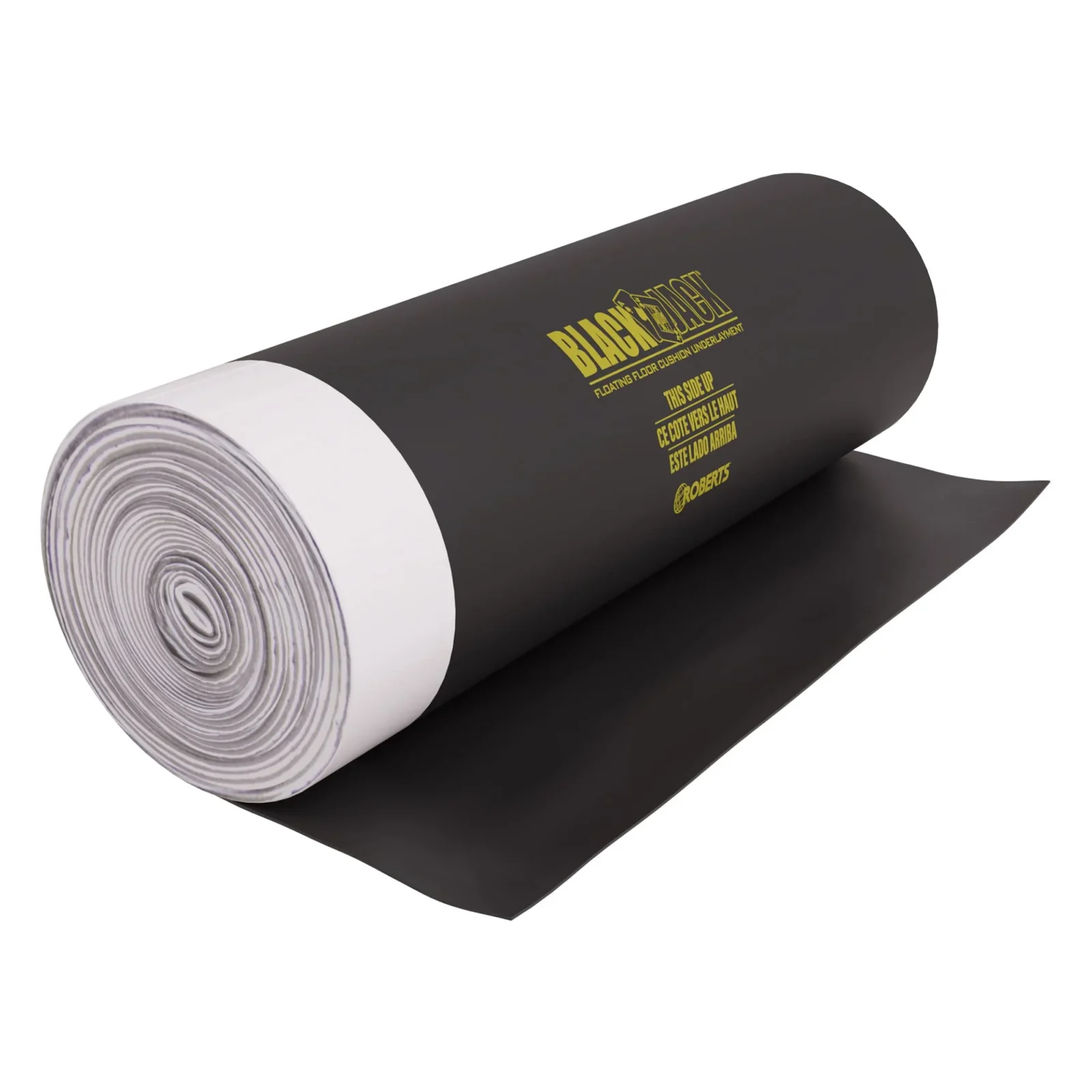 |
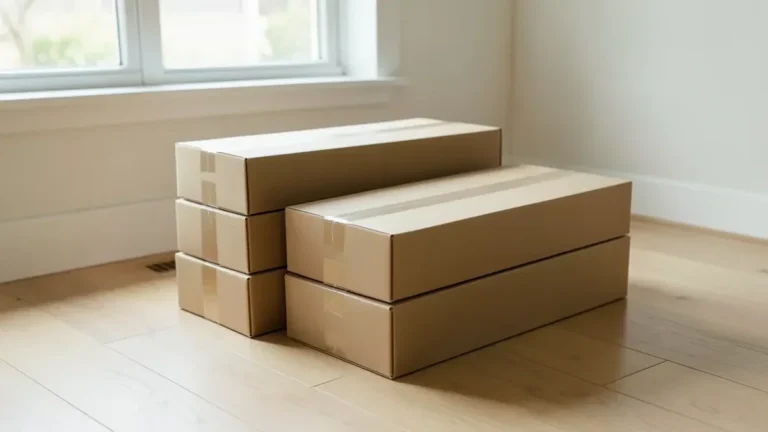
Roberts Black Jack Underlayment (600 sq ft) – $161.99 This 2.5mm felt-and-foam combo is built for floating engineered wood or laminate installs — real cushioning and sound dampening, not the moisture-trapping foam this guide warns against using under a nail-down floor.
|
Installation method decides the answer, not the wood species. Nail-down solid hardwood gets a thin, non-cushioning layer — 15-lb asphalt-saturated felt or rosin paper — whose job is moisture retarding and reducing squeaks, not comfort. Floating engineered wood or laminate gets real cushioning underlayment (foam, cork, or rubber) because the planks aren’t fastened to the subfloor and need a pad to absorb impact and sound. Glue-down engineered wood usually needs no separate pad at all — the adhesive itself bonds the plank to the subfloor. Using a cushioned foam pad under a nail-down floor is the single most common mistake in this category, and it’s exactly what several major manufacturers list as a warranty voider.
Underlayment Options Compared: Felt, Rosin Paper, Foam, Cork, Rubber
Rosin paper and felt look similar but behave differently: felt is asphalt-saturated and slightly sticky, giving real moisture resistance; rosin paper is smooth and dry, creating a friction layer that lets wood slide slightly as it expands and contracts, which cuts down on squeaks better than felt does. Neither is a cushioning product.
| Material | Installation Type | Cushioning? | Moisture Protection |
|---|---|---|---|
| 15-lb felt paper | Nail-down solid hardwood | No | Moderate (asphalt-saturated) |
| Rosin paper | Nail-down solid hardwood | No | Minimal — best for squeak reduction |
| Foam pad | Floating engineered/laminate | Yes | Depends — look for a built-in vapor barrier |
| Cork | Floating engineered, sound-sensitive rooms | Yes | None — needs a separate vapor barrier |
| Rubber | Floating floors, basements | Yes | Good — water-resistant |
How to Install Felt or Rosin Paper Under Nail-Down Hardwood
- Confirm the subfloor is clean, dry, and flat: Sweep debris and check flatness with a straightedge — padding paper won’t fix an uneven subfloor.
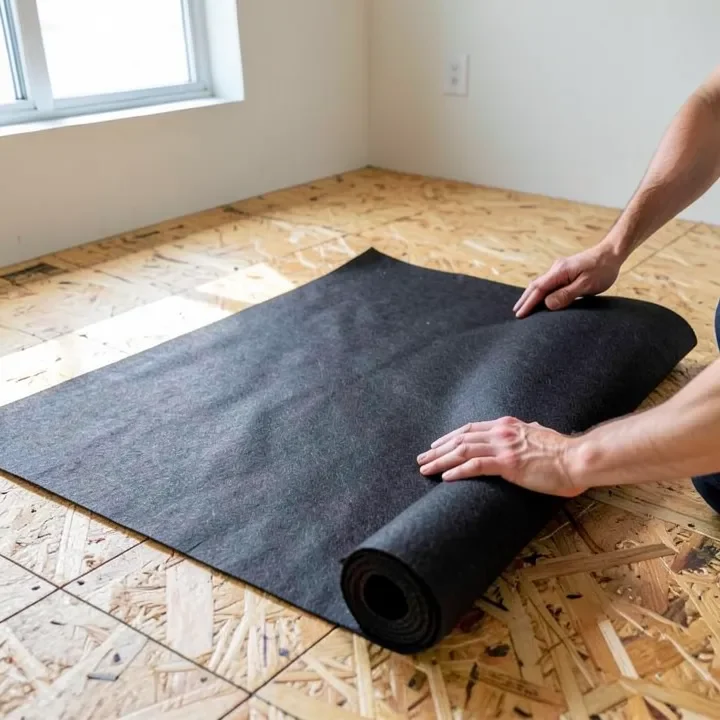
- Roll out felt or rosin paper in one direction: Run it perpendicular to the direction the hardwood planks will run, working from one wall across the room.
- Overlap seams by 4 inches: This keeps moisture and dust from working through the seams once flooring goes down.
- Staple every 6 to 8 inches: Just enough to hold the paper flat during installation — the flooring nails will secure it permanently.
- Trim at the walls: Cut flush to the wall line; the baseboard or quarter round will cover the edge.
- Snap chalk lines through the paper: Mark your starting line for the first course directly on top of the installed paper.
Underlayment for Floating Engineered Wood Floors
Floating floors need an underlayment that actually cushions, because the planks click together and rest on top of the pad rather than being fastened down. Look for three things on the packaging: a built-in vapor barrier (critical over concrete slabs and basements), a thickness between 2 and 3mm (thicker isn’t always better — too much cushioning can make click-lock seams flex and eventually fail), and a sound rating if the floor is going over a shared ceiling in a condo or apartment, where HOA rules often specify a minimum IIC (Impact Insulation Class) score.
Underlayment Mistakes That Void Warranties or Cause Squeaks
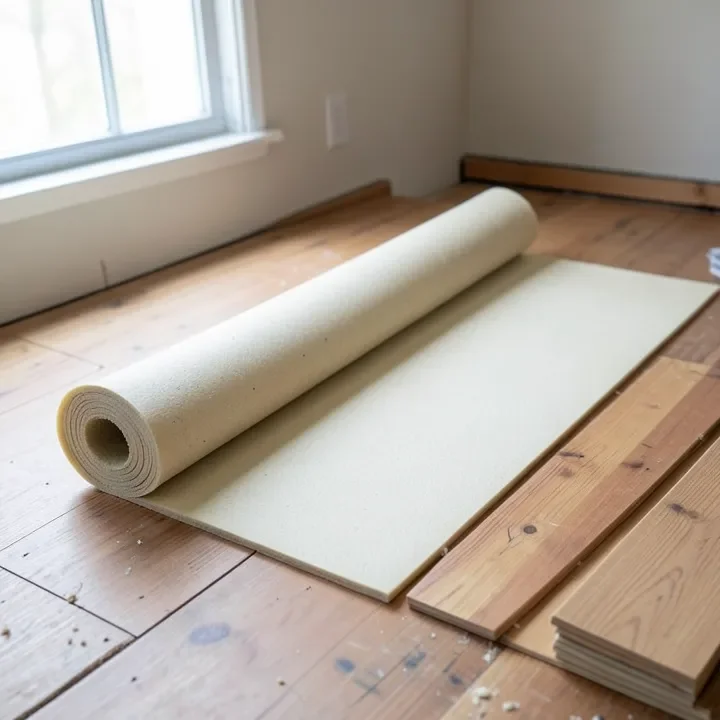
Reading the flooring manufacturer’s installation instructions before buying padding matters more than picking the “best” pad in isolation, since the wrong combination can void the product warranty outright. The recurring mistakes:
- Foam under a nail-down floor: Lets boards flex against the nails over time, which loosens fasteners and creates squeaks that get worse, not better.
- No vapor barrier over concrete: Concrete slabs release moisture vapor even years after the pour; skipping a moisture-rated pad or barrier is the top cause of cupping in floating floors over slab.
- Skipping felt paper entirely on a nail-down job: Most manufacturers require it for warranty coverage even though it adds no cushioning — it’s a moisture and squeak spec, not an optional comfort upgrade.
- Overlapping seams less than the manufacturer specifies: A 2-inch overlap where 4 inches is specified leaves a gap moisture and dust can work through.
📊 15-lb asphalt-saturated felt is the specific weight most hardwood flooring manufacturers name in their written installation instructions as a condition of warranty coverage on nail-down installs — lighter or heavier felt grades aren’t automatically substitutable. Source: Rosin paper, background and flooring use.
“Wood floors need to slide slightly against the subfloor as they expand and contract with the seasons — a smooth rosin paper allows that movement, while a sticky asphalt felt can bind the boards in place and contribute to squeaks over time.”
Frequently Asked Questions
Do you need padding under nail-down hardwood floors?
Yes, but not cushioning padding — you need 15-lb felt paper or rosin paper. It’s a moisture retarder and squeak reducer, not a comfort layer, and most manufacturers require it in writing for the warranty to stay valid.
Can you use foam underlayment under solid hardwood?
Not if the hardwood is nailed down. Foam is designed for floating floors, where the planks aren’t fastened to the subfloor. Under a nail-down floor, foam lets the boards flex against their own fasteners, which loosens nails and causes squeaks over time.
What’s the difference between felt paper and rosin paper?
Felt paper is asphalt-saturated and slightly sticky, giving real moisture resistance. Rosin paper is smooth and dry, creating a friction layer that lets wood slide slightly during seasonal expansion, which reduces squeaks better than felt but offers far less moisture protection.
Does engineered wood flooring need underlayment?
It depends on the installation method. Floating engineered floors need a cushioned underlayment with a vapor barrier, especially over concrete. Glue-down engineered floors usually need no separate pad since the adhesive bonds the plank directly to the subfloor.
What thickness of underlayment is best for hardwood floors?
For floating floors, 2 to 3mm is the typical sweet spot — thick enough for sound and comfort without letting the click-lock seams flex excessively. For nail-down floors, felt or rosin paper thickness isn’t a factor; the 15-lb weight rating matters more than thickness.
Match the pad to the installation method, not the other way around: 15-lb felt or rosin paper for nail-down solid hardwood, cushioned foam/cork/rubber with a vapor barrier for floating engineered wood, and usually nothing extra for glue-down. Check your specific flooring manufacturer’s written instructions before buying — the wrong underlayment is one of the few installation mistakes that can void the product warranty outright. See our complete wood flooring installation guide for the rest of the process.
Sponsored / affiliate links. As an Amazon Associate I earn from qualifying purchases. I may earn additional commission from eligible campaigns.