Does Lowe’s Sell Ash Boards? 2026 Stock & Price Guide
Yes, Lowe’s carries ash boards, but not as standard dimensional lumber sitting in the framing aisle: it’s a specialty appearance-board item that a given store may or may not have on the shelf. Here’s what Lowe’s actually stocks, why availability is inconsistent, and what real 2026 pricing looks like.
If you’ve walked the lumber aisle at Lowe’s looking for ash and found pine, oak, and poplar instead, you’re not doing anything wrong. Ash isn’t a routine big-box stocking item the way those three are. It shows up under Lowe’s “Appearance Boards” and “Common Board” categories, usually from third-party millwork brands rather than Lowe’s own bulk dimensional lumber program, and it’s often easier to find online with ship-to-store than walking in and finding it on the shelf. This guide covers what to actually look for, how to buy it well, and where to go if your local store comes up empty.
Does Lowe’s Actually Carry Ash Boards?
Best Finish For Ash Boards
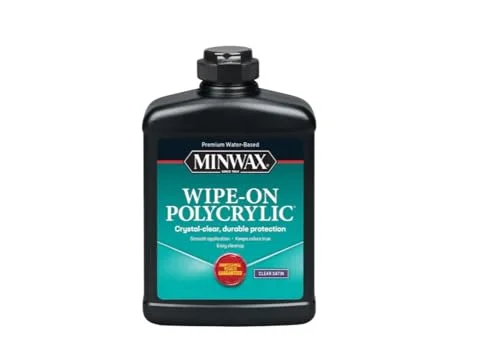 |
Minwax Wipe-On Polycrylic, Clear Satin, 1 Pint – $19.98 Ash’s open, straight grain takes a wipe-on finish beautifully once you get boards home — this water-based topcoat seals and protects without hiding the grain or requiring a brush.
|
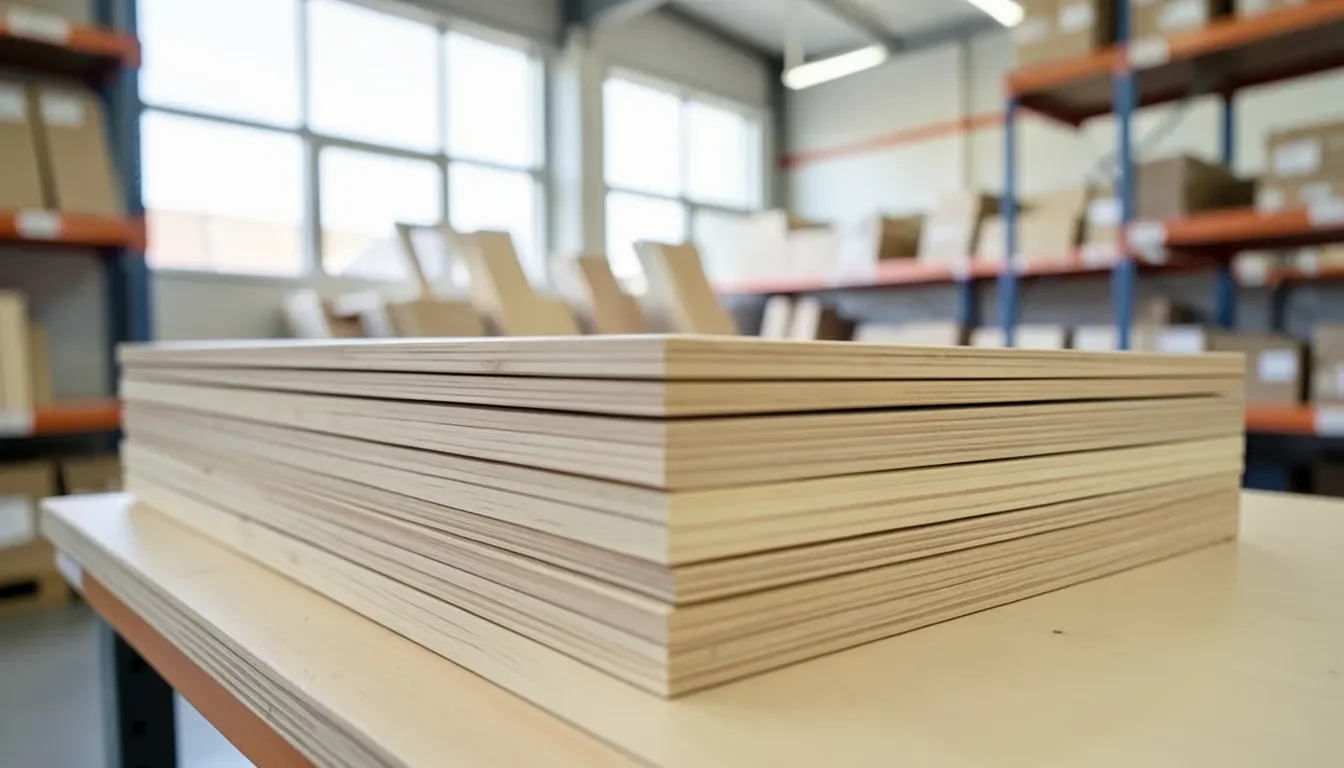
Search Lowe’s own site for “ash” and you’ll find real listings: Ornamental Mouldings-brand unfinished S4S (surfaced-four-sides) ash common board in a handful of sizes, plus a separate “Ash Appearance Boards” category, generally priced from around $13.88 up to about $29.18 depending on length and width. That’s a genuine, currently-listed product line — not a dead category page. What it isn’t is dimensional framing lumber you’ll find in-store at every location the way you would 2×4 pine. It’s a specialty item, more commonly available for online order with in-store pickup or shipping than sitting pre-stacked in the lumber aisle.
Understanding Ash Wood: What Makes It Worth Seeking Out
Before you go hunting for it, it helps to know why ash wood is worth the extra effort compared to grabbing whatever hardwood happens to be in stock. Ash (genus Fraxinus) earns its reputation on strength and workability, not just looks.
Key Characteristics
- Strength and shock resistance: Ash has an excellent strength-to-weight ratio and absorbs impact well, which is exactly why it’s the traditional choice for baseball bats and tool handles.
- Grain pattern: Straight, coarse, and open — visually distinctive and easy to tell apart from tighter-grained woods like maple once you know what to look for.
- Color: White ash, the common lumber species, ranges from creamy white sapwood to pale-to-medium brown heartwood, sometimes with darker streaks.
- Workability: Machines cleanly, takes screws and nails without much splitting if you pre-drill, glues well, and accepts stain and finish evenly.
- Durability: Resistant to everyday wear, which is why it shows up in flooring and high-use furniture.
Common Uses for Ash Boards
- Furniture: Tables, chairs, and cabinets that need to hold up to daily use.
- Cabinetry: Strength and finishability make it a solid choice for kitchen and bathroom cabinets.
- Tool handles: Shock absorption makes it the standard pick for hammers, axes, and shovels.
- Sports equipment: Baseball bats, oars, and traditional bows.
- Flooring: Hardness and wear resistance suit heavy-traffic floors.
Why Ash Is Inconsistent at Lowe’s (and Most Big-Box Stores)
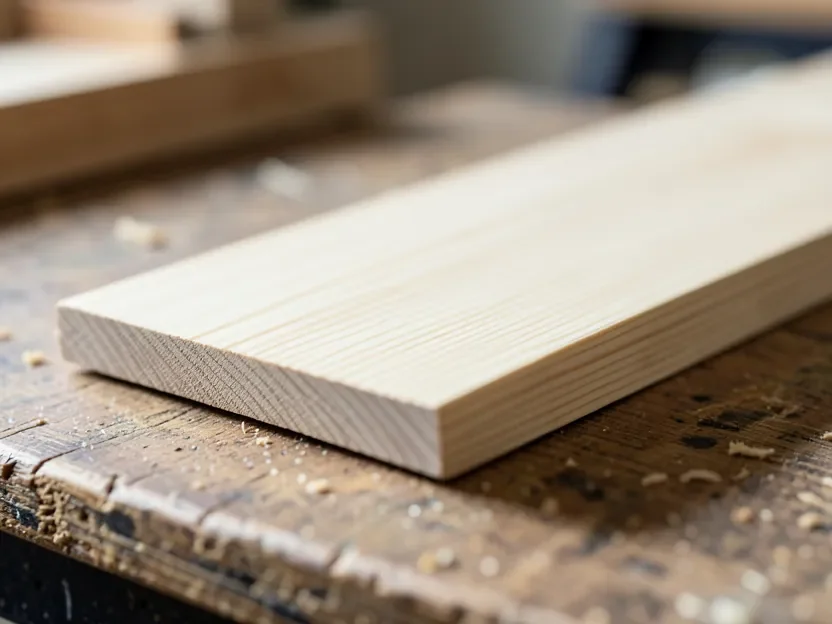
There’s a real, ongoing supply reason behind the inconsistency, not just “big-box stores don’t bother with specialty wood.” The emerald ash borer (EAB), an invasive beetle first found in the U.S. in 2002, has killed hundreds of millions of ash trees across North America and continues to spread. Foresters now expect commercially harvestable ash to grow genuinely scarce within the next one to two decades in parts of its former range. That’s cut into domestic log supply enough that some premium ash lumber sold in the U.S. today is milled from European ash instead. Standard kiln-dried 4/4 ash currently runs roughly $3.75 to $7.25 per board foot at lumberyards, with small retail-quantity purchases landing at the higher end of that range — noticeably more than it cost before the EAB outbreak took hold. None of that is a reason to avoid ash; it’s context for why you shouldn’t expect it to be sitting on the shelf the way pine or poplar is, and why it’s worth calling ahead or checking online stock before making a special trip.
On top of the supply picture, three ordinary retail factors stack on top:
- Regional availability: Stores closer to ash’s traditional growing range (the upper Midwest and Northeast) are more likely to stock it locally than stores in the Southwest or Gulf Coast.
- Store format: A large-format Lowe’s in a metro area is far more likely to carry the Ornamental Mouldings ash line than a smaller-footprint suburban or rural store.
- Online vs. in-store: Lowe’s website inventory for specialty appearance boards frequently runs ahead of what’s physically on a given store’s shelf — checking the product page’s “check nearby stores” tool before driving over will save you a wasted trip.
How to Identify Ash Boards in the Store
- Check the label first. Lumber at home improvement stores is tagged by species — look for “Ash” or “White Ash” rather than trying to identify it purely by eye.
- Read the grain. Straight, coarse, and fairly uniform, usually pale cream to light brown.
- Compare with oak. Both are prominent-grained hardwoods, but oak typically shows a “flaky” ray-fleck figure from its medullary rays that ash lacks; ash’s lines run straighter and more uniform.
- Check the heft. Ash is a dense hardwood — pick up a board of comparable size next to a known softwood and the weight difference is obvious.
Understanding Lumber Dimensions and Grades
- Dimensional lumber: Surfaced and cut to nominal sizes — a “1×4″ actually measures about 3/4″ by 3.5”.
- S4S (Surfaced Four Sides): Planed smooth on all faces and edges, ready to use with minimal prep — this is how the Lowe’s Ornamental Mouldings ash boards ship.
- Grades: Based on the number and size of defects like knots and splits. Common or select grade covers most DIY needs; lower grades cost less but need more work cutting around imperfections.
Where Else to Buy Ash Lumber If Lowe’s Comes Up Empty
If your local store has nothing on the shelf and the online listing shows out of stock, you have real alternatives — and given the EAB supply squeeze covered above, it’s worth understanding the current market before you commit. Our full ash wood pricing breakdown and sourcing guide cover the current market in more depth than fits here.
Other Places to Find Ash Lumber
- Local sawmills and lumberyards: Usually the best selection and the best prices for real quality, whether rough-sawn (needs milling) or already S4S. A search for “hardwood lumberyard near me” is a good starting point.
- Specialty online hardwood suppliers: Dedicated hardwood retailers carry ash and ship it, which is often more reliable than checking big-box stock repeatedly.
- Reclaimed sources: Salvaged architectural elements and old furniture sometimes yield usable ash for smaller projects.
Alternative Hardwoods Available at Lowe’s
If ash is out of stock everywhere nearby or priced higher than your project budget allows, these hardwoods are more consistently stocked and offer some overlapping qualities:
| Wood Type | Similarities to Ash | Key Differences | Common Uses |
|---|---|---|---|
| Red or White Oak | Strong, durable, attractive grain. Commonly available. Takes finishes well. | More prominent ray-fleck grain, can be harder to work, slightly heavier. White oak is more water-resistant than red oak. | Furniture, cabinets, flooring, barrels (white oak). |
| Maple (Hard Maple) | Very strong, durable, good workability. | Much finer, less pronounced grain than ash. Can be harder to stain evenly. Lighter color generally. | Furniture, cabinetry, flooring, butcher blocks, instruments. |
| Poplar | Easy to work with, paints well, readily available at nearly every Lowe’s. | Much softer than ash, less durable, often shows green or purple streaks. Grain far less pronounced. Not impact-resistant. | Paint-grade furniture, trim, paneling, utility wood. |
| Birch | Hard, strong, fine-grained, similar density to ash. Takes finishes well. | Finer, more uniform “cathedral” grain than ash. Can resemble maple. | Furniture, cabinetry, plywood, toys. |
Step-by-Step: Buying Ash Boards at Lowe’s (When Available)
Found a stack of ash boards at your local Lowe’s? Here’s how to make a smart selection.
Step 1: Confirm the Species
Check the tag rather than relying on looks alone — other woods can mimic ash’s grain. If the tag is missing or unclear, skip it unless you’re experienced enough to identify it confidently by eye.
Step 2: Inspect for Defects
- Knots: Small, sound knots are usually fine and add character. Large, loose, or missing knots weaken the board.
- Cracks and splits: Check the ends and edges, especially for splitting near the ends.
- Warping and twisting: Sight down the length and face of the board. A slight crown you can plane out is fine; a significant twist or bow isn’t.
- Rot or fungal staining: Dark, soft spots or unusual discoloration can indicate decay.
- Insect damage: Small holes can indicate wood-boring insects — worth a closer look given the EAB context above.
Step 3: Assess Grain Direction and Quality
For most projects, stick with straight-grained lumber. Wild or interlocking grain is harder to mill and finish smoothly, especially for beginners.
Step 4: Consider Moisture Content
Lumber sold at home centers is typically kiln-dried to a stable moisture content around 6–10% for interior use, which reduces future warping and cracking. Wood that feels unusually damp or smells musty may not be properly dried — hard to judge precisely in-store, but worth a quick check.
Step 5: Choose the Right Size and Quantity
Have your project dimensions ready, and buy slightly more than the bare minimum to allow room for cutting around defects and correcting mistakes.
Step 6: Handle with Care
Plan how you’ll transport longer boards, and avoid dragging unwrapped lumber across the floor, which can gouge or split it.
Caring for Your Ash Boards
Storage Tips
- Keep them flat: Store on a level surface, ideally raised off the ground.
- Support evenly: Use stickers (thin wood strips) spaced along the length to prevent sagging.
- Avoid extreme moisture: A dry, climate-controlled space beats a damp basement or humid garage.
- Protect the ends: Seal the ends of longer boards with wax or an end-grain sealer to slow moisture loss and prevent checking.
Acclimatizing Wood
Let your boards sit in the environment where the finished project will live for a few days to a week before cutting and machining. This lets the wood adjust to ambient moisture, reducing movement after the project is done.
Safety First: Working with Ash Lumber
Ash is generally easy to machine, but that doesn’t mean you can skip basic shop safety.
Essential Safety Gear
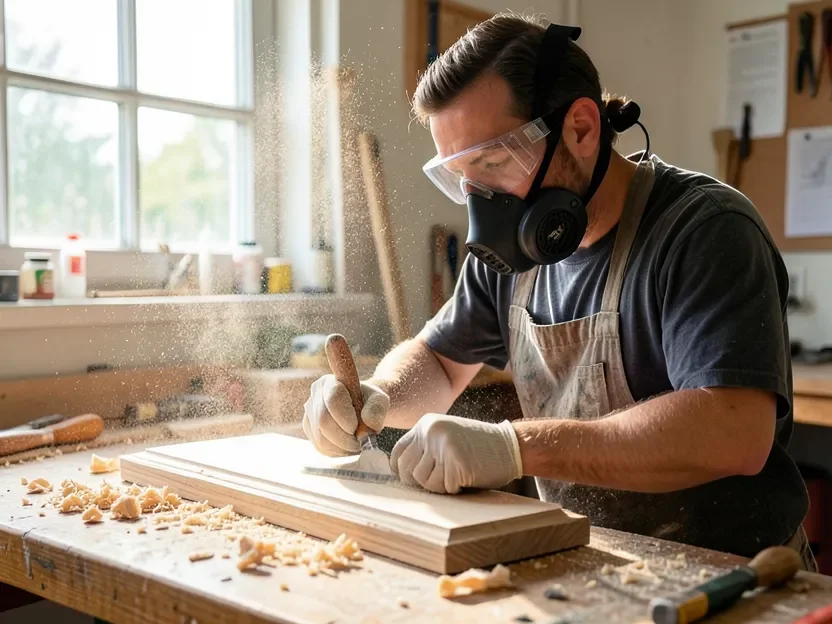
- Safety glasses: Protect against sawdust and flying debris — make sure they fit snugly.
- Hearing protection: Earplugs or earmuffs for extended power-tool use.
- Dust mask or respirator: Hardwood sawdust, ash included, can irritate lungs with repeated exposure.
- Gloves: Useful when handling rough lumber, but remove them around rotating machinery like table saws, where loose fabric can catch.
Tool Safety
Follow the manufacturer’s instructions for every power tool, keep blades sharp (a dull blade needs more force and is more prone to kickback), and never force a cut — let the tool do the work.
Frequently Asked Questions About Ash Boards at Lowe’s
Does Lowe’s regularly stock ash boards, or do you need to special order?
It depends on the store. Lowe’s carries a genuine ash product line (Ornamental Mouldings S4S common boards and a separate appearance-boards category), but it’s a specialty item, not a routine dimensional-lumber stock item. Larger metro stores are more likely to have it on the shelf; smaller stores more often need it ordered online for ship-to-store or home delivery. Checking the product page’s store-availability tool before driving over will save you a wasted trip.
What is the typical price range for ash boards at Lowe’s?
Lowe’s-listed ash appearance and common boards generally run from around $13.88 to $29.18 per board depending on length and width. That’s noticeably higher per board foot than pine or poplar, reflecting both ash’s specialty status at big-box retailers and the broader 2026 market, where standard kiln-dried ash runs roughly $3.75 to $7.25 per board foot at lumberyards. It’s best to confirm current pricing for your store or the online listing before budgeting a project.
Can you order ash boards from Lowe’s online if they aren’t in stock at your store?
Yes — Lowe’s online selection for specialty items like ash frequently runs ahead of individual store inventory, with ship-to-home or ship-to-store options. For a specialty hardwood like ash, checking online first is often more productive than checking the in-store lumber aisle.
How can you tell if boards labeled ash at Lowe’s are really ash?
Trust the official label first. If you want a second check, compare the grain to a known ash sample: straight, coarse, and fairly uniform, typically lighter in color than oak and without oak’s pronounced ray-fleck figure.
What is the best way to finish ash wood?
Ash finishes well. For a natural look, a clear water-based wipe-on topcoat or a tung oil finish shows off the grain without a lot of prep work. Because the grain is open, filling it with an appropriate wood filler before finishing gives a smoother surface for painted projects. It also takes stain and paint readily.
Are ash boards good for outdoor projects?
White ash is moderately durable but not naturally rot-resistant like cedar or redwood. For outdoor use, seal it with a quality exterior-grade finish and prefer covered applications (porch furniture, shaded structures) over direct weather exposure.
Why has ash lumber gotten harder to find and more expensive?
The emerald ash borer, an invasive beetle first detected in Michigan in 2002, has since killed hundreds of millions of ash trees across North America and continues spreading into new regions. That’s tightened domestic log supply enough that some U.S. ash lumber now comes from European sources, and foresters expect commercially harvestable ash to become genuinely scarce in parts of its former range within one to two decades. Kiln-drying (standard for lumber sold at retailers like Lowe’s) kills any pests in the wood itself, so it’s not a safety issue with the boards you buy — it’s a supply-and-price issue upstream, which is exactly why availability at any single retailer is inconsistent right now.
Sponsored / affiliate links. As an Amazon Associate I earn from qualifying purchases. I may earn additional commission from eligible campaigns.