How Many Cords of Wood in a Tree Calculator
Enter a tree’s trunk diameter (measured at breast height) and usable trunk length, and this calculator estimates how many cords of stacked firewood it will yield — roughly 0.3 cords for a 12 in diameter tree, up to 1 cord or more for a large 18-24+ in diameter hardwood.
Quick Answer
Enter a tree’s trunk diameter (measured at breast height) and usable trunk length, and this calculator estimates how many cords of stacked firewood it will yield — roughly 0.3 cords for a 12 in diameter tree, up to 1 cord or more for a large 18-24+ in diameter hardwood.
How Many Cords of Wood in a Tree Calculator
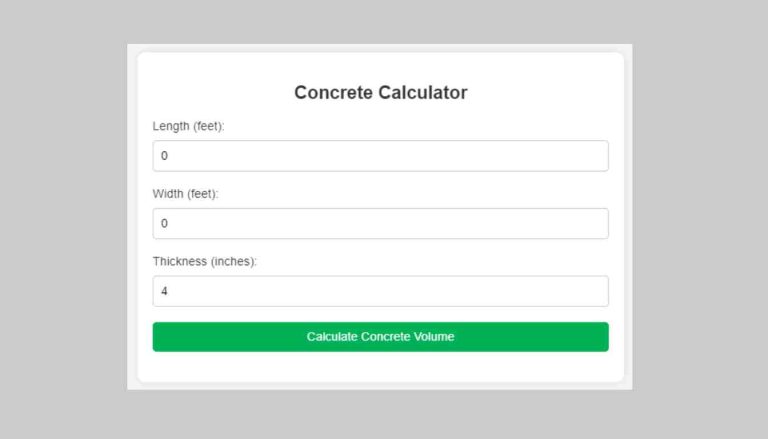
Enter your values below for an instant result, then see the formula, worked example, and common mistakes.
Enter your tree measurements and click calculate.
How to Use This Calculator
Wrap a tape measure around the trunk at 4.5 ft above ground level (the forestry-industry standard measurement point), then divide the circumference by pi (3.14) to get diameter, or measure diameter directly with calipers.
Measure or estimate the trunk length from the ground up to where major branching begins or the trunk becomes too thin to be worth processing — this is the volume that actually becomes firewood, not the tree’s total height.
Denser hardwoods like oak, maple, and ash yield more usable firewood mass per cubic foot of trunk volume than lighter softwoods like pine or fir.
This is a volume-based approximation. A professional forester’s cruise or an actual felling and splitting is the only way to get a precise yield, since branch wood, defects, and rot all affect the real total.
Formula
This calculator estimates solid wood volume using the cylinder formula (pi x radius squared x usable height), then converts that to a stacked cord equivalent using an approximate 1.6x factor — since round, solid wood takes up less space than the same wood after it is bucked into rounds, split, and stacked with natural air gaps.
A standard cord is a stack measuring 4 ft high x 4 ft wide x 8 ft long, totaling 128 cubic feet as stacked (not 128 cubic feet of solid wood — roughly 70-90 cubic feet of that is solid wood, and the rest is air gaps between split pieces).
Reference Table: Approximate Cord Yield by Trunk Diameter
| Trunk diameter (DBH) | Approximate cord yield |
|---|---|
| 12 in | ~0.3 cords (about 1/3 cord) |
| 18 in | ~0.7-1 cord |
| 24 in | ~0.5-1.5 cords (varies with height) |
| 30+ in (large mature tree) | 1.5-2+ cords |
Common Mistakes to Avoid
- Measuring diameter at ground level instead of at breast height (4.5 ft up) — ground-level diameter is always larger due to root flare, which overstates the tree’s actual usable volume.
- Assuming all of a tree’s total height counts as usable firewood — branches, tops, and thin upper trunk sections are typically too small in diameter to be worth bucking and splitting.
- Treating solid wood volume the same as stacked cord volume — once round wood is split and stacked, the pile includes 20-30% air gaps that a solid-volume calculation does not account for.
- Assuming every species yields the same firewood volume per cubic foot of trunk — denser hardwoods pack more usable, longer-burning wood mass into the same trunk volume than softwoods.
When the Estimate May Be Wrong
Actual firewood yield depends heavily on tree form (straight vs. forked/branchy), the amount of rot or defect in the trunk, how efficiently the wood is bucked and split, and species-specific wood density. This calculator gives a rough planning estimate using simplified cylinder-volume geometry; for large-scale or commercial firewood harvesting, a forester’s timber cruise gives a far more accurate yield estimate.
FAQs
How many cords of wood are in an average tree?
It varies enormously with size — a 12 in diameter tree yields roughly 0.3 cords, while an 18 in diameter, 80 ft tall mature hardwood yields roughly one full cord.
How do I measure a tree’s diameter for firewood estimating?
Measure diameter at breast height (DBH), meaning 4.5 ft above ground level, which is the standard forestry measurement point — wrap a tape around the trunk and divide the circumference by pi (3.14), or measure directly with calipers.
Does tree species affect how many cords I get?
Yes — denser hardwoods like oak and maple yield more usable, longer-burning firewood mass per cubic foot of trunk than lighter softwoods like pine or fir, even from a similarly sized tree.
Why is a cord 128 cubic feet if the tree itself is solid wood?
A stacked cord (4x4x8 ft = 128 cu ft) includes natural air gaps between the split, round, and irregularly shaped pieces — typically only about 70-90 cubic feet of a stacked cord is actually solid wood.
Sources and Methodology
Diameter-at-breast-height (DBH) measurement standard and cord-yield-by-diameter estimates sourced from UC ANR (University of California Agriculture and Natural Resources) “Estimating Firewood from Standing Trees” and UNH Cooperative Extension’s published firewood-from-standing-timber guidance, cross-referenced against treeplantation.com’s firewood yield chart.
Sponsored / affiliate links. As an Amazon Associate I earn from qualifying purchases. I may earn additional commission from eligible campaigns.