How Much Weight Does Wood Hold? The Real Factors Explained
There is no single number for how much weight wood holds – the real answer depends on five factors (species, dimensions, span, grade, and orientation) plus one thing most articles on this topic skip entirely: whether the load is vertical or horizontal. A 2×4 standing upright in a wall, carrying weight straight down through its length, behaves completely differently from the same 2×4 laid flat and bridging a gap. Mixing those two situations up is where most of the “wood holds X pounds” claims you’ll find online go wrong. Here’s how each factor actually changes the math, with real reference numbers – and when to stop trusting any single number and check a real span table instead.
The Real Answer: It Depends On Five Factors And The Type Of Load
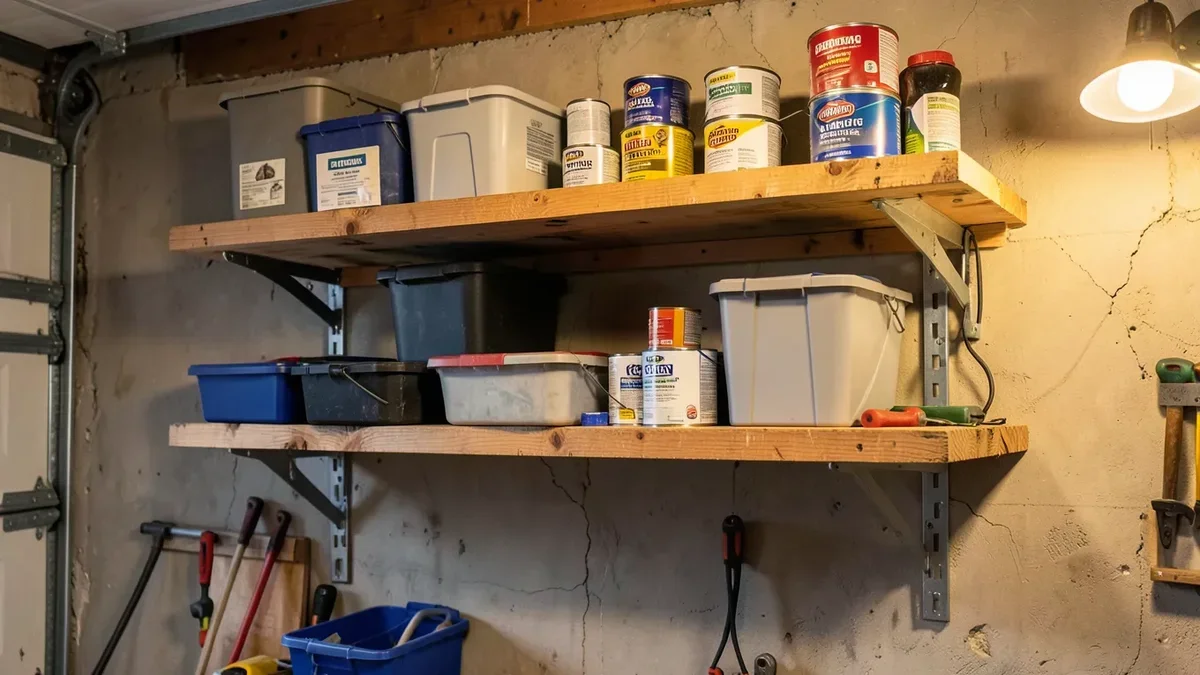
Engineers evaluating a piece of wood ask two separate questions: will it break, and will it sag too much before it breaks? The second limit (deflection) almost always governs first in shelving and framing – a shelf that visibly bows is failing well before it’s close to snapping. Both limits shift depending on the wood’s species, the board’s dimensions, how far it spans unsupported, its structural grade, and which way it’s oriented relative to the load. If you’re loading a shelf specifically, there’s a sixth variable that has nothing to do with the wood itself: what’s actually holding the board to the wall.
Best Heavy-Duty Shelf Bracket Pick
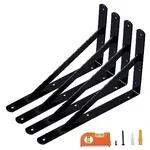 |
NEODROP 4-Pack 12″ Heavy Duty Shelf Brackets – $17.99 The point above about a shelf’s real limit often being the hardware, not the board, is exactly what these are built to fix – powder-coated Q235 steel brackets rated for a combined 800 lbs per pair when anchored into 16-inch wall studs.
|
An underrated bracket will pull out of the wall or bend long before a well-chosen board sags, no matter how strong the wood itself is – so the bracket and the fasteners are as much a part of “how much weight can this shelf hold” as the board.
Vertical Load Vs. Horizontal Load: The Point Most Explanations Skip
This is the single biggest source of confusion behind claims like “a 2×4 can hold 1,000 pounds.” That number is roughly true – but only for a 2×4 standing on end, carrying weight straight down through the length of its fibers, the way a wall stud does. Wood is genuinely strong in compression parallel to the grain, which is why a standard stud wall, built from ordinary construction-grade lumber, can carry the weight of an entire floor or roof above it without any special reinforcement.
Lay that same 2×4 flat and ask it to span a gap – a shelf, a bench top, a joist – and you’ve switched to a bending load, which is a completely different and much less forgiving situation. Under bending, the top of the board is being compressed while the bottom is being stretched (tension), and the wood fibers near the center of the board are barely doing any work at all. That’s why the identical piece of lumber that comfortably holds a house upright can sag or crack under a few hundred pounds once it’s turned sideways and asked to bridge open space. If you take away one thing from this article, it’s this: never apply an “axial” number (a stud, a post, a table leg) to a “bending” situation (a shelf, a joist, a beam) or vice versa.
Species: Denser Wood Holds More, But Not By As Much As People Assume
A wood’s density (measured as specific gravity, its weight relative to an equal volume of water) is a reasonable proxy for its strength, but the spread is smaller than the “hardwood vs. softwood” shorthand suggests. Eastern white pine runs around 0.35 specific gravity, common structural species like Douglas fir and southern yellow pine sit in the 0.45-0.58 range, and dense hardwoods like red oak or hard maple run roughly 0.63-0.72. That means a piece of red oak is meaningfully stronger than white pine of the same dimensions, but it isn’t strong enough to make up for undersizing a board or overspanning it – dimensions and span move the numbers far more than species alone does.
This is also why structural lumber grading (below) always specifies species and grade together – “No. 2 Southern Yellow Pine” and “No. 2 Douglas Fir-Larch” carry different published allowable stress values even at the same grade, because the grade only accounts for defects within a given species, not the species’ baseline strength.
Dimensions: Why A 2×10 Isn’t Just “Bigger” Than A 2×4
Going up in board depth doesn’t add strength in a straight line – it compounds. A board’s resistance to breaking scales roughly with the square of its depth, and its resistance to sagging (stiffness) scales roughly with the cube of its depth. In practical terms, doubling a board’s depth (say, a 2×4 to a nominal 2×8 at the same width and span) doesn’t just double its strength – it can make it several times stiffer against sag. That’s why span tables jump in real capacity so quickly as you move from a 2×4 to a 2×6, 2×8, or 2×10, and why “just use a thicker board” is usually a more effective fix for a sagging shelf than switching to a denser species.
Span: Why The Distance Between Supports Matters More Than People Expect
Span has an outsized effect because both bending stress and sag increase sharply as the unsupported distance grows – not in a straight line, but closer to the square or cube of the added distance, depending on which limit you’re checking. The practical result: doubling a shelf’s span doesn’t just cut its safe load in half, it can reduce it by considerably more than half once sag is the limiting factor, which it usually is. This is the real reason a garage shelf that holds a heavy load comfortably across 24 inches of open span can visibly sag under a much lighter load once you stretch it to 48 inches between brackets – adding a center support is often a bigger improvement than upsizing the board itself.
Grade: Same Species, Different Allowable Load
Structural lumber is graded (Select Structural, No. 1, No. 2, No. 3, Stud grade, and so on) based on the size, number, and location of knots and other defects, because a knot interrupts the wood fibers exactly where bending stress needs them to run continuously. Two boards of the same species and the same dimensions can carry meaningfully different loads if one is a clean No. 1 and the other is a knottier No. 3 – which is exactly why every published span table lists species and grade together, never species alone. If you’re buying lumber for anything load-bearing, the grade stamp on the end of the board is not decorative – it’s the number the span table is keyed to.
Orientation: On Edge Vs. Laid Flat
This is the same depth-cubed relationship from the dimensions section, applied to a single board instead of comparing two different sizes. A 2×8 standing on edge (the way a floor joist is installed) has almost eight times the depth in the direction of the load compared to that same 2×8 laid flat – and because stiffness scales with the cube of that depth, standing it on edge makes it dramatically stronger against sag than laying it flat, even though it’s literally the same piece of wood. That’s why joists, beams, and shelf edging are always installed standing on edge rather than flat, and why a flat-laid board that seems adequate can surprise you by sagging under a load a joist of the same size would shrug off.
For Anything Load-Bearing, Use A Span Table Or Talk To An Engineer
Everything above explains why the numbers move, but it deliberately doesn’t hand you one universal “safe” figure – because for a deck, framing, stair stringers, or any shelf that will carry real, sustained weight, a single online number is exactly the wrong thing to rely on. The American Wood Council publishes span tables for joists and rafters that account for species, grade, spacing, and load type together, and local building codes reference those same tables for anything structural. For a quick estimate on a specific board, species, and span you already have in mind, our own wood weight load calculator walks through the same math used above. But for a deck, a structural shelf, or any project where a failure could hurt someone or damage your home, the right call is a published span table or a local structural engineer – not a rule of thumb from an article, including this one.
Common Myths About Wood’s Weight Capacity
- “Wood holds X pounds” as a universal number. As covered above, the same claim can be true for a vertical stud and wildly wrong for a horizontal shelf – always check whether a number you’ve read applies to axial (compression) or bending load before trusting it.
- “Thicker is always stronger, regardless of orientation.” A thick board laid flat can be weaker against sag than a thinner board of the same species standing on edge, because stiffness depends on depth in the direction of the load, not total material.
- “Hardwood always beats softwood.” Species matters less than dimensions and span. An undersized or overspanned piece of oak can sag more than a correctly sized, correctly spanned piece of pine.
- “If the board doesn’t crack, it’s fine.” Deflection (sag), not breaking, is almost always the real limit for shelving and furniture – a shelf can be well within its “won’t break” range and still sag enough to be unusable or unsafe over time.
Frequently Asked Questions About Wood Weight Capacity
How Much Weight Can A 2×4 Hold?
It depends entirely on orientation. Standing upright as a wall stud carrying weight straight down through its length (compression), a construction-grade 2×4 can carry a substantial load – commonly cited around 1,000 pounds or more in typical residential framing, which is why standard stud walls support entire floors and roofs without special reinforcement. Laid flat and used to span a gap as a shelf or bench top (bending), the same 2×4 holds far less and depends heavily on its unsupported span – a short span might hold a few hundred pounds, while a long span can sag noticeably under a fraction of that.
How Much Weight Can A Wood Shelf Hold?
A wood shelf’s real-world capacity is set by whichever is weakest: the board’s species, dimensions, and span, or the brackets and fasteners holding it to the wall. A properly sized board (thick enough, on a short enough span) mounted with heavy-duty brackets anchored into wall studs can hold well over 100 pounds per linear foot; the same board on flimsy brackets or drywall anchors alone can fail at a fraction of that, regardless of how strong the wood is.
Does The Type Of Wood Affect How Much Weight It Holds?
Yes, but less than most people expect. Denser species like oak and maple are stronger than softer species like pine, roughly in proportion to their specific gravity, but a board’s dimensions, span, and grade typically move the numbers far more than switching species does. An undersized or overspanned hardwood board can still sag more than a correctly sized softwood board.
How Do I Know If My Shelf Or Deck Is Safe To Load?
For everyday shelving, watch for visible sag under load and keep spans reasonably short relative to board thickness – if it’s already bowing empty or under light weight, it’s undersized for its span. For anything structural – a deck, framing, stair stringers, or a shelf meant to carry serious sustained weight – don’t estimate it. Check the American Wood Council’s published span tables for your specific species, grade, and spacing, follow your local building code, or have a structural engineer confirm it.
Conclusion
“How much weight does wood hold” doesn’t have one answer because it isn’t one question – species, dimensions, span, grade, and orientation each move the real number, and vertical (compression) loads and horizontal (bending) loads aren’t comparable at all. Use that understanding to size a shelf or project reasonably, but treat it as context, not a substitute for a real span table or an engineer once a project is genuinely load-bearing. Get the board, the span, and the hardware right, and wood remains one of the most reliable structural materials available for a woodworking shop or a home.
Sponsored / affiliate links. As an Amazon Associate I earn from qualifying purchases. I may earn additional commission from eligible campaigns.