How Much MDF Do I Need? Sheet Count Formula With a Real Example
To find out how much MDF you need: measure each piece’s length and width in feet, multiply to get square footage per piece, add up all pieces, then divide by 32 (the usable area of a standard 4×8 sheet). Add 10–15% for straight cuts or 20–25% if your project has many small or angled pieces, then round up to the next whole sheet.
That’s the formula. The part most guides skip is the waste factor — the percentage you add on top of the raw math to cover cutting mistakes, saw kerf, and the pieces that just don’t nest efficiently on a rectangular sheet. Get the waste factor wrong and you’ll either overspend by a full extra sheet or end up on a second trip to the store mid-project.
Standard MDF Sheet Sizes
Best For Clean MDF Edges
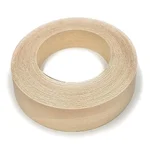 |
Edge Supply Birch Pre-Finished Edge Banding, 3/4in × 50ft – $29.99 MDF’s cut edges are exposed fiber with no natural grain — banding them is what makes a shelf or panel look finished instead of raw.
|
Before calculating anything, know what sheet size you’re actually buying against, since this changes your math:
| Sheet Size | Usable Area | Common Use |
|---|---|---|
| 4 ft × 8 ft (48×96 in) | 32 sq ft | Standard size at most lumberyards and home centers |
| 5 ft × 5 ft (60×60 in) | 25 sq ft | Cabinet shops, easier to handle solo |
| 4 ft × 10 ft (48×120 in) | 40 sq ft | Large panels, fewer seams on big projects |
| 2440 × 1220 mm (metric) | ~26.3 sq ft | Common outside North America |
A Worked Example
Say you’re building a set of built-in bookshelves needing these pieces:
- 2 side panels: 12 in × 84 in each
- 5 shelves: 30 in × 12 in each
- 1 back panel: 30 in × 84 in
Convert each to square feet (length in inches × width in inches ÷ 144), then add them up:
| Piece | Calculation | Square Feet |
|---|---|---|
| Side panels (x2) | (12 × 84 ÷ 144) × 2 | 14.0 sq ft |
| Shelves (x5) | (30 × 12 ÷ 144) × 5 | 12.5 sq ft |
| Back panel | 30 × 84 ÷ 144 | 17.5 sq ft |
| Raw total | 44.0 sq ft |
Add a 15% waste factor for a project with mostly straight rectangular cuts: 44.0 × 1.15 = 50.6 sq ft. Divide by 32 sq ft per standard sheet: 50.6 ÷ 32 = 1.58, which rounds up to 2 full 4×8 sheets. Notice the raw math (44 sq ft) looked like it might squeeze into a single sheet’s worth of material spread across two purchases — the waste factor is what correctly pushes this to 2 full sheets, and skipping it is the single most common reason people run short mid-project.
Choosing the Right Waste Factor for Your Project
| Project Type | Recommended Waste Factor |
|---|---|
| Large rectangular panels (doors, wall panels) | 10% |
| Furniture with mostly straight cuts (shelves, cabinets) | 15% |
| Many small or irregular pieces (crafts, curved cuts) | 20–25% |
| First-time DIYer with a power saw | Add another 5% on top of the above for practice cuts |
How Much a Sheet Weighs, by Thickness
MDF’s density (roughly 45–55 lb per cubic foot depending on the manufacturer) means weight scales predictably with thickness. This matters for two practical reasons: whether you can carry a full sheet alone, and whether your project’s substrate needs extra support:
| Thickness | Approx. Weight (4×8 sheet) | Typical Use |
|---|---|---|
| 1/4 in (6mm) | ~30 lbs | Craft projects, drawer bottoms, thin panels |
| 1/2 in (12mm) | ~60 lbs | Cabinet sides, shelving with support |
| 3/4 in (18mm) | ~95–100 lbs | Tabletops, countertop substrate, load-bearing shelves |
A full 3/4-inch sheet at nearly 100 lbs is a two-person carry for most people — factor that into whether you have a sheet cut down at the store (most home centers will make a few rough cuts for you) or plan to move it yourself.
Frequently Asked Questions
How do I work out how much MDF I need for paneling?
Measure the wall area in square feet, then divide by 32 (the usable area of a standard 4×8 sheet) to get a raw sheet count. Add a 10–15% waste factor for cutting around outlets, corners, and trim, then round up to the next whole sheet.
How much does a 1/2 inch 4×8 sheet of MDF weigh?
Around 55 to 65 pounds, depending on the manufacturer’s density. A 3/4 inch sheet weighs close to 95–100 pounds, and a 1/4 inch sheet is roughly 30 pounds — weight scales almost linearly with thickness.
What thickness of MDF should I use?
Use 1/4 inch for small crafts and drawer bottoms, 1/2 inch for cabinet sides and supported shelving, and 3/4 inch for tabletops, countertops substrates, or any shelf that needs to span a distance without sagging under weight.
Is MDF cheaper than plywood?
Yes, typically. MDF costs less per sheet than comparable-thickness plywood and gives a smoother, knot-free surface that’s easier to paint. Plywood is stronger for structural or load-bearing uses and handles moisture better, so the cheaper choice isn’t always the right one for the job.
Conclusion
The math itself is simple: add up your pieces’ square footage, divide by your sheet size, and round up. The part that actually determines whether you buy the right amount is the waste factor — 10% for simple rectangular cuts, 20%+ for fussy or angled pieces. Work through your own cut list the way the example above does, and you’ll know your real sheet count before you’re standing in the lumber aisle guessing.
Sponsored / affiliate links. As an Amazon Associate I earn from qualifying purchases. I may earn additional commission from eligible campaigns.